

Good Affirmations for Women: Boost Confidence and Self-Love
Good Affirmations For Women
Feeling confident and positive is not always easy. Many women face daily challenges—work, family, self-image, relationships, and even their own thoughts. Negative self-talk can become a habit, making it harder to feel strong and happy. But simple, positive statements called affirmations can help change this. When used regularly, affirmations can boost self-esteem, reduce stress, and create a healthier mindset.
This article explains how affirmations work, why they matter for women, and how to use them effectively. You’ll find practical tips, examples, and real-life scenarios. Whether you want to feel more confident, overcome obstacles, or simply start your day with positivity, these affirmations are designed to make a difference.
Let’s explore how the right words can lead to a better, brighter life.
What Are Affirmations?
Affirmations are positive statements that you say to yourself. They help to challenge negative thoughts and encourage positive beliefs. For example, saying “I am strong” every day can remind you of your strength, even during tough times. These statements are simple but powerful, especially when repeated often.
How Affirmations Affect The Mind
When you repeat an affirmation, your brain begins to accept it as true. This is because of a process called neuroplasticity—the brain’s ability to change and adapt. If you say “I deserve happiness” regularly, your mind starts to believe it, which can change your actions and feelings.
Research shows that positive self-talk can:
- Reduce stress levels
- Improve mood
- Increase motivation
- Lower anxiety
One study found that people who used daily affirmations had lower cortisol (the stress hormone) compared to those who did not. This means affirmations can actually help your body feel better, not just your mind.
Why Women Benefit From Affirmations
Women often face unique pressures—balancing work and family, managing expectations, and dealing with stereotypes. Sometimes, these pressures can lead to self-doubt or anxiety. Affirmations offer a simple, private way to build inner strength and self-worth.
Common Challenges For Women
- Feeling overwhelmed at work or home
- Comparing themselves to others
- Doubting their abilities
- Struggling with body image
- Facing criticism or judgment
These challenges can make it harder to feel confident. Affirmations help by focusing attention on your strengths and positive qualities.
Real-life Example
Imagine a woman preparing for a big presentation. She feels nervous and worries she will make mistakes. By repeating “I am prepared and capable,” she calms her nerves and starts to believe in herself. This small change in mindset can lead to better performance and less stress.
Building Your Own Affirmations
Personal affirmations work best when they are meaningful and specific. Generic phrases may not connect with your real feelings. Instead, use statements that reflect your goals or struggles.
Steps To Create Effective Affirmations
- Identify your challenge. What is bothering you or causing stress?
- Choose a positive outcome. What would you like to feel or achieve?
- Write a simple statement in the present tense. (Example: “I am confident.”)
- Keep it short and clear.
- Repeat it often—morning, evening, or whenever you need a boost.
Example Affirmations
- “I am enough.”
- “I am worthy of love and respect.”
- “I trust myself to make good decisions.”
- “My body is strong and beautiful.”
- “I am in control of my happiness.”
If you want your affirmations to be more powerful, add a reason or emotion. For example: “I am confident because I prepare well for every challenge.”
Popular Affirmations For Women
Here are some of the most common and effective affirmations used by women. These cover different areas—confidence, self-love, motivation, and peace.
Confidence
- “I believe in myself.”
- “I am brave, even when I feel afraid.”
- “I can handle whatever comes my way.”
- “I am proud of my achievements.”
Self-love
- “I accept myself as I am.”
- “I deserve kindness and compassion.”
- “I treat myself with love and respect.”
- “I am grateful for who I am.”
Motivation
- “I am focused and determined.”
- “I am making progress every day.”
- “I turn challenges into opportunities.”
- “I am unstoppable.”
Peace
- “I let go of what I cannot control.”
- “I choose calm over chaos.”
- “I am at peace with myself.”
- “I trust the process of life.”
Using these affirmations daily can help shift your mindset and improve your emotional well-being.
How To Use Affirmations Effectively
Saying an affirmation once is not enough. The key is repetition and belief. Here are ways to make affirmations work for you:
Daily Practice
- Say your affirmations aloud every morning.
- Write them in a journal.
- Repeat them before bed.
- Put sticky notes on your mirror or desk.
Visualization
When you say your affirmation, picture yourself living it. If you say “I am confident,” imagine yourself speaking confidently in a meeting or social event.
Combining Affirmations With Action
Affirmations are most powerful when paired with action. If your affirmation is “I am healthy,” support it by making healthy choices—eating well, exercising, and getting enough sleep.
Tracking Progress
Keep a simple record of how you feel after using affirmations. Notice any changes in mood, confidence, or stress levels. This helps you see their impact and stay motivated.
Affirmations For Different Life Situations
Women face many life stages and challenges. Affirmations can be tailored to specific situations for greater impact.
Work And Career
- “I am skilled and valued at my job.”
- “I am open to new opportunities.”
- “I learn from every experience.”
- “I am respected by my colleagues.”
Relationships
- “I deserve healthy, loving relationships.”
- “I communicate clearly and honestly.”
- “I am a good friend and partner.”
- “I trust others and myself.”
Parenting
- “I am a caring and patient mother.”
- “I do my best for my children.”
- “I learn and grow with my family.”
- “I am proud of my parenting journey.”
Health And Wellness
- “I listen to my body’s needs.”
- “I am worthy of self-care.”
- “I choose healthy habits.”
- “I appreciate my body’s strength.”
Overcoming Fear
- “I face my fears with courage.”
- “I am stronger than my doubts.”
- “I grow through challenges.”
- “I trust my inner wisdom.”
The Science Behind Affirmations
Many people wonder if affirmations really work. Research and psychology support their benefits.
A study by the University of Pennsylvania found that self-affirmation activates parts of the brain linked to reward and positive emotion. Another study showed that people who use affirmations are more likely to stick to healthy behaviors and goals.
How Affirmations Change Behavior
Affirmations help to:
- Reduce self-sabotage
- Increase resilience
- Improve performance
- Lower negative thinking
When you repeat positive statements, you create new mental habits. This makes it easier to act confidently and feel happier.
Data On Affirmations And Well-being
Let’s look at some data comparing women who use affirmations regularly with those who don’t.
| Group | Reported Stress | Self-Esteem | Goal Achievement |
|---|---|---|---|
| Uses Affirmations | Low | High | Frequent |
| Does Not Use Affirmations | High | Medium | Occasional |
This simple comparison shows that women who use affirmations have lower stress and higher self-esteem. They are also more likely to achieve their goals.
Overcoming Common Affirmation Mistakes
While affirmations are simple, some mistakes can make them less effective. Here are tips to avoid these issues:
Not Believing Your Affirmation
If you don’t believe your statement, it won’t help. Start with something you can accept. For example, instead of “I am perfect,” try “I am learning and growing every day. ”
Using Negative Words
Affirmations should be positive. Avoid phrases like “I am not afraid. ” Instead, use “I am courageous. ”
Lack Of Consistency
Saying affirmations once or twice won’t create change. Make them a daily habit. Set reminders or routines to help.
Ignoring Emotions
If your affirmation feels empty, add emotion or context. For example, “I am proud of myself for finishing this project. ”
Comparison Table: Common Mistakes Vs. Effective Affirmations
| Common Mistake | Effective Approach |
|---|---|
| Too vague: "I want to be happy." | Specific: "I choose happiness in my daily life." |
| Negative: "I am not weak." | Positive: "I am strong." |
| Unrealistic: "I am perfect." | Realistic: "I am improving every day." |
| Irregular practice | Daily routine |

Credit: notesbythalia.com
Affirmations For Self-image And Body Positivity
Many women struggle with body image. Affirmations can help build a healthier, more positive view.
Powerful Body Positivity Affirmations
- “I love and honor my body.”
- “I celebrate my unique beauty.”
- “I am grateful for my body’s abilities.”
- “My worth is not defined by appearance.”
Example Scenario
A woman feels uncomfortable in social situations because of her body shape. By repeating “I am beautiful and confident,” she starts to feel better about herself. Over time, this reduces anxiety and improves her self-image.
Customizing Affirmations For Personal Growth
Affirmations are not one-size-fits-all. Tailor them to your goals and needs for best results.
Steps To Personalize
- Think about your biggest challenge right now.
- Choose a positive outcome you want.
- Write an affirmation that fits your life.
- Use language that feels natural to you.
Example: Career Growth
If you want to advance in your job, use affirmations like:
- “I am ready for new opportunities.”
- “I am confident in my skills.”
- “I take steps toward my goals every day.”
Personalized affirmations feel more genuine and are more likely to create change.
Using Affirmations With Other Self-care Practices
Affirmations work well with other self-care habits. Combining them can increase their impact.
Meditation
Use affirmations during meditation. Focus on your breath and repeat your statement quietly.
Journaling
Write your affirmations in a journal every morning. This helps you track progress and stay motivated.
Exercise
Say affirmations while walking, running, or doing yoga. For example, “I am strong and energetic. ”
Comparison Table: Self-care Practice With Affirmations
| Self-Care Practice | How to Use Affirmations | Benefits |
|---|---|---|
| Meditation | Repeat affirmations during quiet time | Calms mind, increases positivity |
| Journaling | Write affirmations daily | Tracks progress, builds habit |
| Exercise | Say affirmations while moving | Boosts energy, self-esteem |
| Visualization | Imagine yourself living the affirmation | Strengthens belief, inspires action |
Affirmations For Women In Leadership
Women in leadership roles often face added pressure—expectations, criticism, and high responsibility. Affirmations can help build confidence and resilience.
Leadership Affirmations
- “I am a strong and effective leader.”
- “I inspire others with my actions.”
- “I make wise decisions.”
- “I handle challenges with grace.”
Real-life Example
A woman leading a team feels uncertain during a crisis. By repeating “I am calm and capable,” she focuses on solutions, not fear. This helps her lead confidently and earn respect.

Credit: organizedwithkids.com
The Power Of Positive Language
The words you use matter. Positive language can change how you see yourself and how others see you.
Impact On Relationships
When you speak kindly to yourself, you become more patient and understanding with others. This can improve friendships, family bonds, and work relationships.
Example: Changing Self-talk
Instead of saying “I always mess up,” say “I learn from every experience. ” This shift helps you feel more hopeful and less discouraged.
Data: Positive Language And Happiness
Research shows that people who use positive self-talk are:
- 40% more likely to feel happy
- 30% less likely to experience depression
- 50% more likely to achieve personal goals
This data highlights the value of affirmations and positive language in everyday life.
Affirmations For Difficult Times
Life is not always easy. During tough moments, affirmations can help you stay strong and hopeful.
Coping Affirmations
- “I am resilient and can handle difficulties.”
- “I trust that things will improve.”
- “I have the strength to overcome challenges.”
- “Every day is a new beginning.”
Practical Tip
During stressful events, pause and repeat your affirmation slowly. This helps calm your mind and gives you a sense of control.
How Long Does It Take For Affirmations To Work?
Many women wonder how soon they will see results. The answer depends on your consistency, belief, and how deeply you connect with your affirmation.
Typical Timeline
- Some feel better after a few days.
- Others notice change after a few weeks.
- Deep changes may take months.
The key is to stay patient and persistent. Small improvements build up over time.
Insight: Measuring Progress
Notice changes in your mood, confidence, and actions. Even small shifts show that your affirmations are working.
Practical Tips For Lasting Results
Affirmations are most effective when you use them thoughtfully. Here are practical ways to get lasting results:
- Choose affirmations that feel true and meaningful.
- Use them daily, not just when you feel bad.
- Combine with other positive habits—exercise, healthy eating, meditation.
- Adjust your affirmations as your goals change.
- Share your affirmations with a friend for support.
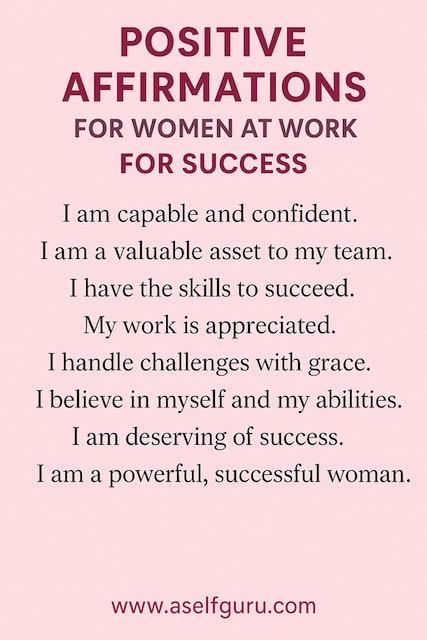
Credit: aselfguru.com
Non-obvious Insights Most Beginners Miss
- Emotion adds power: Adding feeling to your affirmation (like pride, gratitude, or excitement) makes it more effective. For example, “I am proud of my progress.”
- Physical movement helps: Saying affirmations while walking or moving can increase their impact. Your body and mind work together, reinforcing the positive message.
- Affirmations can change relationships: When you feel better about yourself, you interact differently with others. This can improve your family, friendships, and work life.
- Small changes matter: Even if you don’t believe your affirmation at first, regular practice can create small shifts in thinking. Over time, these small changes add up.
Frequently Asked Questions
What Are The Best Affirmations For Boosting Confidence?
Effective confidence affirmations include “I believe in myself,” “I am capable of achieving my goals,” and “I am proud of who I am. ” The best affirmation is one that feels real and helps you focus on your strengths.
How Often Should I Use Affirmations?
For best results, use affirmations daily. Morning and evening routines work well. You can also use them during stressful moments or before important events. Consistency is key.
Can Affirmations Help With Anxiety And Stress?
Yes, affirmations can lower anxiety and stress. Positive self-talk reduces negative thinking and helps you feel more in control. Pair affirmations with breathing exercises for extra support.
Should I Write Or Speak My Affirmations?
Both methods are effective. Speaking affirmations aloud helps your mind hear the positive message. Writing them in a journal makes the habit stronger. Some women do both for better results.
Are There Scientific Studies Supporting Affirmations?
Yes. Studies show that affirmations can activate positive parts of the brain, lower stress hormones, and improve self-esteem. For more details, see research from the American Psychological Association.
Empowering yourself with affirmations is simple, but the effects can be powerful. By choosing words that lift you up, practicing daily, and believing in your own strength, you can create a more positive life. Try a few affirmations from this article or create your own—see how your mindset and happiness improve over time.
Remember, you deserve kindness, confidence, and joy.
