

What are Positive Affirmations for Women: Uplift Your Mindset
What Are Positive Affirmations For Women
Every woman faces unique challenges, both in her personal life and at work. Sometimes, these challenges make her question her own strength, beauty, or value. Positive affirmations are simple phrases or statements that help women build confidence, self-love, and resilience.
When spoken or repeated daily, these words can change beliefs, boost mood, and help overcome negative thinking. Many women use affirmations to feel more empowered, improve their mental health, and unlock their true potential.
In this article, you will discover what positive affirmations really are, why they matter for women, and how to use them effectively. You will see practical examples, real-life benefits, and tips for making affirmations part of your daily routine. If you have ever doubted yourself, felt overwhelmed, or wanted to feel stronger, affirmations can be a powerful tool for you.
Understanding Positive Affirmations
Positive affirmations are short, uplifting statements you say to yourself. Their goal is to change your mindset from negative to positive. For example, instead of thinking “I am not good enough,” you say “I am worthy and capable. ” These phrases help you focus on your strengths and possibilities instead of your fears or limitations.
How Affirmations Work
Affirmations work by changing your thoughts and beliefs over time. Your brain listens to what you repeat, and eventually, these words become part of how you see yourself. Research shows that positive self-talk can reduce stress and improve overall well-being. When you use affirmations daily, they help you:
- Build self-confidence
- Increase motivation
- Reduce anxiety
- Improve performance
- Strengthen resilience
Science Behind Affirmations
Several studies have explored the impact of positive affirmations. For example, a research paper found that self-affirmation activates reward centers in the brain, making you feel more positive and motivated. Another study showed that affirmations can reduce the effects of stress and help you cope with difficult situations.
Affirmations are not magic, but they do help shift your focus from problems to possibilities.
Why Women Need Positive Affirmations
Women often face extra pressure from society, family, and work. They may feel the need to meet high expectations or deal with criticism about their appearance, achievements, or choices. These pressures can lead to self-doubt, insecurity, or even anxiety and depression. Positive affirmations help women fight these negative feelings and build a strong foundation of self-worth.
Common Challenges Women Face
- Body image issues: Many women struggle with how they look, often because of unrealistic beauty standards.
- Career obstacles: Women may deal with gender bias, pay gaps, or lack of recognition at work.
- Balancing roles: Juggling family, career, and personal goals can be stressful.
- Self-doubt: Feeling not good enough or comparing oneself to others.
- Emotional health: Women are often expected to be strong, but may feel vulnerable inside.
Positive affirmations help women see their value, beauty, and strength, no matter what others say or what challenges come their way.
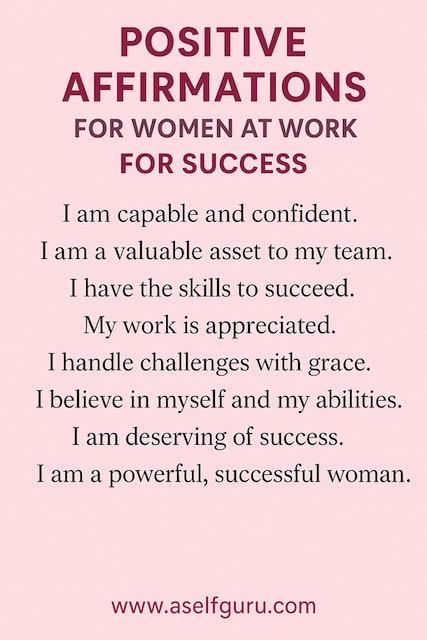
Credit: aselfguru.com
Examples Of Positive Affirmations For Women
Affirmations can be personal and unique. Here are some powerful examples that many women find helpful:
- I am strong and capable.
- I deserve love and respect.
- My body is beautiful and unique.
- I am confident in my abilities.
- I am enough just as I am.
- I trust myself to make good decisions.
- I embrace change and growth.
- I choose happiness and peace.
- I forgive myself for past mistakes.
- I am proud of who I am becoming.
Women can create their own affirmations or use these examples. The most important thing is to speak words that feel true and positive.
How To Use Positive Affirmations Daily
Affirmations work best when you use them regularly. Here are practical steps to make affirmations part of your daily life:
- Pick 3-5 affirmations that feel meaningful to you.
- Write them down in a notebook, on sticky notes, or in your phone.
- Repeat them aloud every morning and evening.
- Say them with feeling—not just as empty words.
- Visualize yourself living these affirmations.
- Use reminders on your mirror, desk, or phone.
- Adjust affirmations as your needs change.
Some women like to combine affirmations with meditation, deep breathing, or journaling. Others repeat affirmations during stressful moments or before important events. The key is consistency.
Common Mistakes When Using Affirmations
- Saying words you do not believe at all
- Using too many affirmations at once
- Forgetting to repeat them regularly
- Choosing negative or doubtful phrases
- Not connecting emotionally with the words
Start small and choose affirmations that match your goals and feelings. Over time, you will see real changes in your mindset.
Areas Where Positive Affirmations Help Women
Affirmations are not only about confidence. They support women in many parts of life, from health to relationships. Here are five main areas:
1. Self-esteem And Confidence
Many women struggle with low self-esteem. Affirmations like “I am worthy” or “I am proud of myself” help boost confidence. This makes it easier to face challenges, try new things, and speak up.
2. Body Positivity
Body image is a common issue for women. Affirmations such as “My body is unique and valuable” help women accept and love their bodies. This leads to better self-care and less anxiety about appearance.
3. Career Growth
Work can be stressful, especially with gender bias or competition. Affirmations like “I am skilled and successful” or “I deserve recognition” help women stay motivated and confident at work.
4. Relationships
Healthy relationships depend on self-respect and communication. Affirmations such as “I deserve kindness” or “I am a loving partner” help women set boundaries and build stronger connections.
5. Emotional Health
Women often carry emotional burdens. Affirmations like “I release stress” or “I choose joy” support mental health and help manage emotions.
Real-life Stories: Women Who Changed With Affirmations
Many women have shared how affirmations changed their lives. Let’s look at a few examples:
Sarah’s Story: Building Confidence
Sarah was shy and always doubted herself at work. She started using the affirmation “I am confident and capable. ” After two months, she felt more comfortable speaking in meetings and asking for new projects. Her boss noticed her growth and gave her more responsibility.
Lisa’s Journey: Body Acceptance
Lisa struggled with body image for years. She wrote “My body is beautiful and strong” on her bathroom mirror. Every morning, she repeated it. Slowly, she stopped criticizing herself and began to enjoy exercise and healthy eating, not just for looks but for well-being.
Priya’s Success: Overcoming Anxiety
Priya often felt anxious before job interviews. She used “I am calm and prepared” as her daily mantra. With regular practice, she managed her nerves and performed better in interviews. She landed her dream job and still uses affirmations to stay positive.
These stories show that affirmations can lead to real change, but only with time, commitment, and belief.
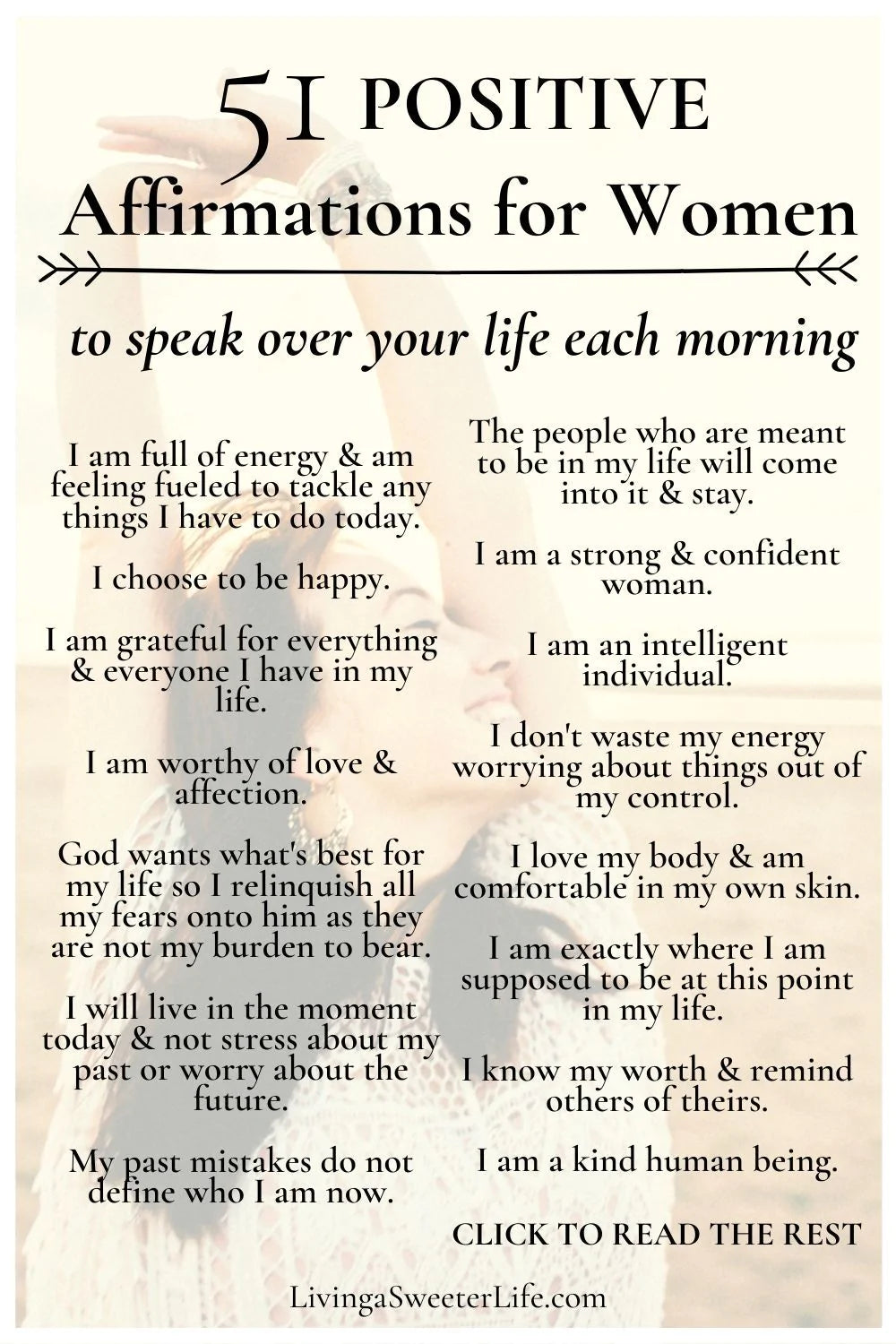
Credit: livingasweeterlife.com
Comparing Affirmations To Other Self-help Methods
Many people wonder if affirmations are better than other methods, like meditation or therapy. Here’s a comparison:
| Method | Main Benefit | Ease of Use | Cost | Time Needed |
|---|---|---|---|---|
| Affirmations | Change mindset, boost confidence | Very easy | Free | 5-10 min/day |
| Meditation | Calm mind, reduce stress | Moderate | Free/Paid | 10-30 min/day |
| Therapy | Deep emotional healing | Requires appointment | Paid | 1 hr/week |
| Journaling | Understand thoughts, track progress | Easy | Free | 10-20 min/day |
Affirmations are simple, free, and quick. They can be combined with other self-help methods for best results.
Creating Your Own Positive Affirmations
Ready to create your own affirmations? Follow these practical steps:
- Identify your main challenge. Is it confidence, stress, body image, or something else?
- Write a positive statement in the present tense. Example: “I am brave.”
- Avoid negative words. Say “I am healthy” instead of “I am not sick.”
- Keep it short and clear. Use simple language.
- Make it personal. Use your name or “I.”
- Repeat and adjust. Change your affirmations as you grow.
Here are some examples for different needs:
- For career: “I am successful in my work.”
- For relationships: “I attract loving and supportive people.”
- For health: “I am strong and energetic.”
- For motherhood: “I am a caring and wise mother.”
- For personal growth: “I welcome new opportunities.”
Tips For Making Affirmations More Effective
Not all affirmations work the same for everyone. Here are ways to make them more powerful:
1. Use Visualization
Imagine yourself living the affirmation. If you say “I am confident,” picture yourself speaking in front of people with ease.
2. Add Emotion
Feel the meaning behind the words. Smile or touch your heart as you repeat them.
3. Make It Routine
Link affirmations to daily habits. Say them while brushing your teeth, walking, or before sleeping.
4. Write Them Down
Journaling your affirmations helps you remember and believe them.
5. Share With Others
Talk about your affirmations with friends or family. This adds support and accountability.
6. Adjust With Time
As your needs change, update your affirmations. Growth means new goals and new words.
Myths And Misconceptions About Positive Affirmations
Some people think affirmations are just wishful thinking. Others believe they do not work. Let’s clear up common myths:
Myth 1: Affirmations Are Only For Weak People
Reality: Anyone can use affirmations, even strong and successful women. They help everyone grow.
Myth 2: Affirmations Fix Everything Overnight
Reality: Affirmations take time and practice. They are not magic, but they do change thoughts step by step.
Myth 3: You Must Say Affirmations Perfectly
Reality: There is no perfect way. The most important thing is to believe and repeat them.
Myth 4: Affirmations Ignore Real Problems
Reality: Affirmations help you face problems with a positive mindset. They do not replace therapy, action, or support.
Data On Women And Positive Affirmations
Many studies and surveys show that women benefit from affirmations. Here are some key findings:
- A survey of women who used daily affirmations found that 82% felt more confident after one month.
- 60% reported better mood and less stress with regular affirmation practice.
- Another study showed that affirmations helped women reduce negative self-talk by 40%.
- Women using affirmations alongside therapy or coaching often see faster improvement.
These numbers show that affirmations are not just words—they bring real results.
Affirmations For Special Situations
Some moments in life need extra support. Here are affirmations for special cases:
For Mothers
- I am patient and loving with my children.
- I trust my instincts as a mother.
- I balance caring for others with self-care.
For Women In Leadership
- I lead with courage and wisdom.
- I inspire those around me.
- My voice matters in every meeting.
For Women Facing Illness
- My body is healing every day.
- I am strong, even in hard times.
- I trust my doctors and my own strength.
For Women After Breakups
- I deserve happiness and love.
- I am whole and complete on my own.
- I learn and grow from every experience.
For Women Starting New Careers
- I am open to new opportunities.
- I learn quickly and adapt easily.
- I trust myself to succeed.
Affirmations And Cultural Diversity
Women come from many backgrounds. Affirmations can be adapted to fit different cultures, languages, and traditions. For example, some women use spiritual or religious phrases. Others use affirmations in their native language. The most important thing is that affirmations feel true and personal.
Global Approaches
| Region | Common Themes in Affirmations | Language Used |
|---|---|---|
| North America | Self-worth, success, body positivity | English, French, Spanish |
| Asia | Family, wisdom, inner peace | Hindi, Mandarin, Japanese |
| Africa | Community, resilience, heritage | Swahili, Arabic, Yoruba |
| Europe | Balance, joy, self-expression | English, German, Italian |
Using affirmations that fit your culture and language makes them even more powerful.
Non-obvious Insights For Beginners
Many beginners miss these key points:
- Affirmations need belief and action. Saying words without belief or action does not work. Combine affirmations with real steps toward your goals.
- Affirmations can reveal hidden fears. If a phrase feels uncomfortable, it may show an area you need to work on. Use this feeling as a guide for growth.
Most people focus only on the words. The real power comes from combining affirmations with belief, emotion, and action.

Credit: notesbythalia.com
The Role Of Social Support In Affirmations
Affirmations are more effective when shared. Women who practice affirmations with friends, groups, or online communities often see faster progress. Support and encouragement add motivation. You can join local workshops, online forums, or social media groups focused on affirmations.
Affirmations And Mental Health
Positive affirmations are a great tool for managing stress, anxiety, and depression. They help women challenge negative thoughts and build a healthier mindset. Mental health professionals often recommend affirmations as part of a self-care routine. However, affirmations are not a substitute for medical help or therapy.
If you feel overwhelmed or depressed, seek help from a professional. Affirmations can support your healing, but they are not the only answer.
Using Affirmations With Children
Mothers often use affirmations with their children. Teaching kids to say positive phrases builds their self-esteem early. Simple affirmations like “I am smart” or “I am kind” help children become confident and resilient.
Women who use affirmations with their families create a positive environment. Kids learn to handle stress and challenges better.
Resources For Women Wanting To Start
If you want to learn more about affirmations, there are books, apps, and websites that help. Some popular resources include:
- Mobile apps for daily affirmations
- Guided affirmation videos on YouTube
- Online communities and forums
- Books on self-love and confidence
One helpful resource is Psychology Today, which explains self-talk and its impact on mental health.
Frequently Asked Questions
What Are Positive Affirmations?
Positive affirmations are short, uplifting statements that you repeat to yourself. They help change negative thoughts to positive ones and improve your confidence, motivation, and well-being.
How Often Should I Use Affirmations?
For best results, use affirmations daily. Say them in the morning, before bed, or during stressful moments. Regular practice helps your brain accept the positive messages.
Can Affirmations Help With Anxiety And Depression?
Affirmations can support mental health by reducing negative self-talk and improving mood. However, they are not a replacement for professional help. If you have severe anxiety or depression, combine affirmations with therapy or medical support.
Do I Have To Say Affirmations Out Loud?
Saying affirmations out loud is helpful because it makes the words more powerful. However, you can also write them down, think them silently, or repeat them during meditation.
What If I Do Not Believe My Affirmations?
It is normal to feel doubt at first. Start with affirmations that feel a little believable. As you repeat them and see small changes, your belief will grow. Adjust your affirmations to match your feelings and progress.
Positive affirmations for women are simple, but they bring deep change. They help fight self-doubt, boost confidence, and support growth in every area of life. By practicing affirmations regularly and combining them with belief and action, women can become stronger, happier, and more resilient.
If you are ready to take the first step, start today with a phrase that lifts you up. Over time, you will see your mindset and your life transform.
