

What are Good Affirmations for Kids: Boost Confidence Daily
What Are Good Affirmations For Kids
Children grow up in a world full of challenges, new experiences, and constant learning. In these early years, their thoughts and beliefs about themselves take shape, often lasting into adulthood. One powerful tool that parents, teachers, and caregivers can use to help kids develop a strong, positive self-image is affirmations. These are short, positive phrases that children can say to themselves to build confidence, resilience, and a healthy mindset. But what makes a good affirmation for kids? And how can adults introduce and use affirmations in a way that truly benefits children? This article explores the answers in detail, offering practical guidance, examples, and insights for nurturing a child's emotional growth.
Why Affirmations Matter For Kids
Affirmations are not just feel-good words. When used correctly, they help rewire the brain by reinforcing positive beliefs and reducing negative self-talk. For kids, this means learning to trust their abilities, manage stress, and approach life with optimism. Research shows that positive self-affirmation is linked to better emotional regulation, improved academic performance, and higher self-esteem.
The language children use about themselves shapes how they see the world and their place in it.
For example, a child who regularly says, "I am kind" is more likely to act with kindness. This positive cycle helps them build relationships and feel good about who they are. Likewise, affirmations like "I can keep trying" encourage perseverance, even when things get tough.
What Makes An Affirmation Good For Kids?
Not every positive phrase works as an effective affirmation for children. The best affirmations for kids are:
- Simple and clear: Easy to understand and remember.
- Positive: Focused on strengths and abilities, not on what the child should avoid.
- Present tense: Stated as if already true (e.g., "I am brave" instead of "I will be brave").
- Personal: Using "I" statements to connect directly with the child.
- Action-oriented: Sometimes linked to behaviors, not just feelings.
A good affirmation should feel believable to the child. If the phrase feels too far from their current experience, it may not have the desired effect. For example, instead of "I am the best at everything," a child might connect better with "I try my best and learn every day.
"
50 Powerful Affirmations For Kids
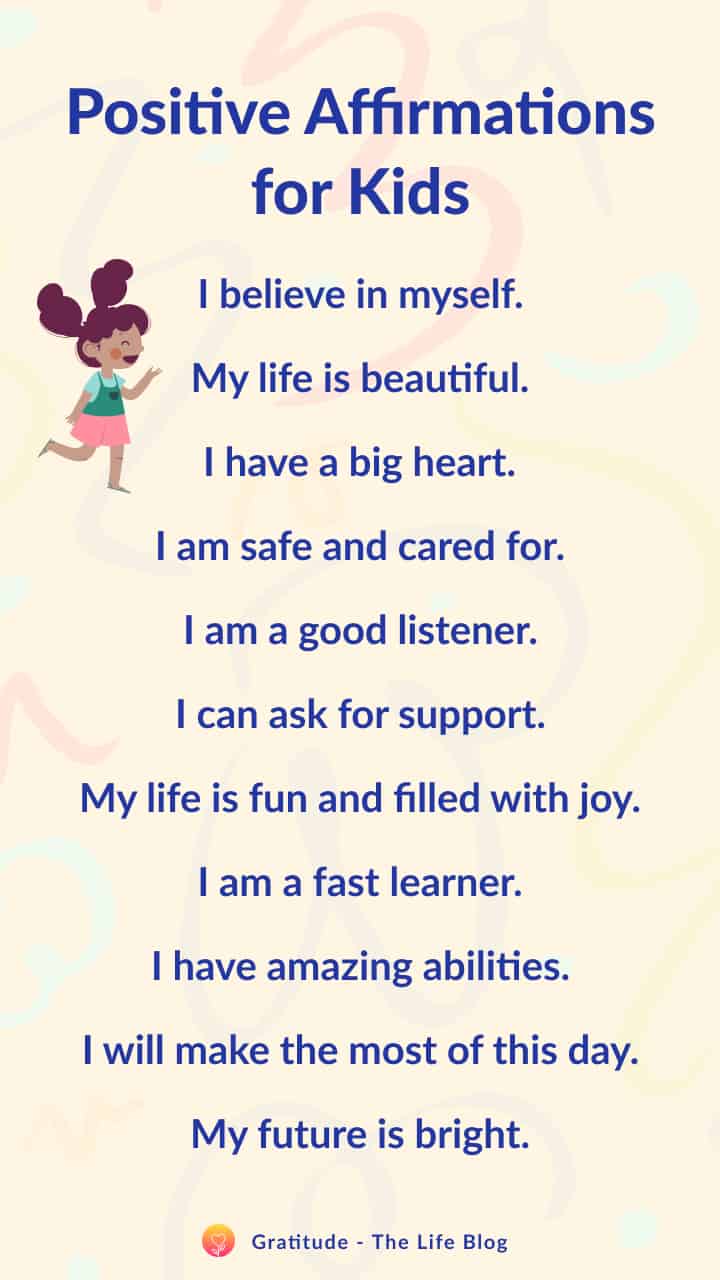
Here are 50 affirmations that are especially effective for children. These cover different areas such as self-esteem, kindness, learning, and resilience.
- I am loved.
- I am important.
- I am a good friend.
- I can learn new things.
- I am creative.
- I am brave.
- I can ask for help when I need it.
- I am kind to others.
- I make good choices.
- I am unique.
- I can do hard things.
- I am proud of who I am.
- I am a good listener.
- I respect others.
- I try my best every day.
- I am responsible.
- I care about my feelings.
- I can calm myself when upset.
- I am honest.
- I am helpful.
- I forgive myself for mistakes.
- I learn from my mistakes.
- I am patient.
- I like to share.
- I am grateful for what I have.
- I enjoy learning.
- I am strong.
- I am safe.
- I can solve problems.
- I am funny and joyful.
- I make a difference.
- I believe in myself.
- I can reach my goals.
- I am friendly.
- I take care of my body.
- I am curious.
- I can try again if I fail.
- I am generous.
- I am gentle with myself.
- I am loyal.
- I am trustworthy.
- I am a good team member.
- I help others feel better.
- I am a good sport.
- I am open to new ideas.
- I respect nature.
- I am thoughtful.
- I am polite.
- I am loved just as I am.
- I can make today a great day.
These phrases work best when matched to a child's needs and personality. For instance, a shy child may benefit from "I am brave," while a child who feels left out might need "I am important" or "I am a good friend.
"
How To Introduce Affirmations To Kids
Helping children use affirmations is more than just telling them what to say. It's about creating a positive routine and making the phrases meaningful. Here are steps for introducing affirmations:
- Model the practice: Adults should use affirmations themselves. When children hear parents or teachers say "I am patient," they learn by example.
- Choose together: Let the child pick affirmations that feel right to them. This gives a sense of ownership.
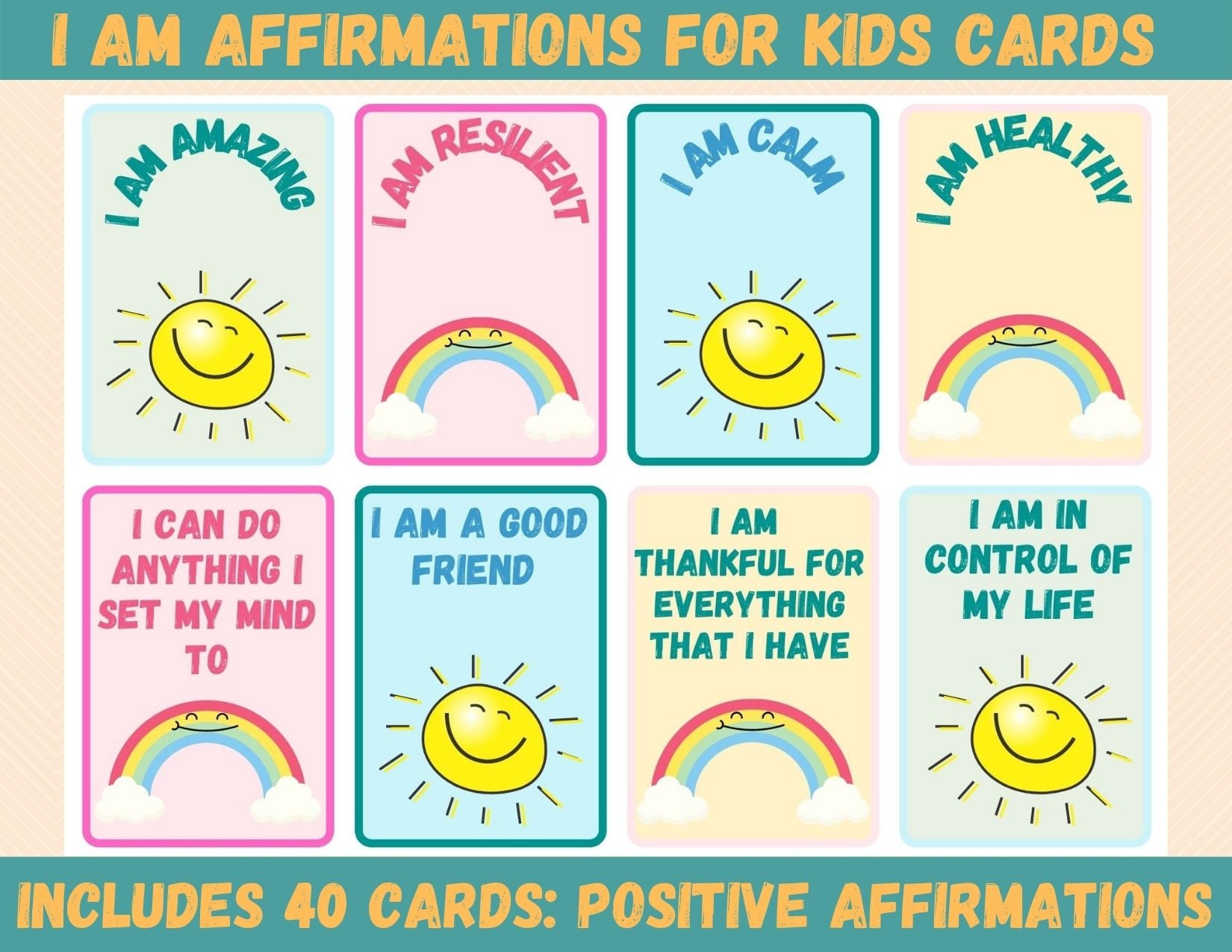
- Keep it fun: Use games, songs, or art. For example, children can create affirmation cards or posters.
- Repeat daily: Encourage saying affirmations at set times (morning, bedtime, before school).
- Connect to actions: After a success, repeat the matching affirmation ("You tried your best! ").
- Discuss the meaning: Talk about what each affirmation means. Ask how it makes them feel.
Example Routine
A simple morning routine could be:
- Wake up
- Read three affirmations aloud in front of the mirror
- Smile and take a deep breath
This daily habit can take less than five minutes but makes a big difference over time.
Credit: blog.gratefulness.me
The Science Behind Affirmations
Affirmations are not just wishful thinking. They are backed by psychology and neuroscience. Studies show that repeating positive statements can activate the brain's reward centers, reduce stress, and boost motivation. For kids, this is especially important because their brains are still developing.
Research published in the journal "Child Development" found that children who practiced self-affirmation were better able to cope with social and academic challenges. Another study showed that positive self-talk can lower anxiety and improve problem-solving skills.
Here is a comparison of benefits between kids who use affirmations and those who do not:
| Area | With Affirmations | Without Affirmations |
|---|---|---|
| Self-Esteem | Higher | Lower |
| Resilience | Improved | Weaker |
| Stress Management | Better | Poorer |
| Academic Confidence | Increased | Decreased |
Good affirmations help children face difficulties with a growth mindset. When they believe they can learn and improve, they are less likely to give up.
Tailoring Affirmations For Different Age Groups
Children of different ages have different needs and understanding. A four-year-old and a twelve-year-old will connect with affirmations in different ways. Here is a guide for tailoring affirmations by age:
Ages 3-6
- Use very simple phrases.
- Make it playful.
- Focus on feelings and basic actions.
Examples: "i Am Kind," "i Can Share," "i Am Strong."
Ages 7-10
- Use slightly longer phrases.
- Discuss meaning and examples.
- Encourage connection to school and friendships.
Examples: "I can learn from mistakes," "I am a good friend," "I try my best."
Ages 11-13
- Use more complex ideas.
- Discuss self-image, goals, and peer relationships.
- Allow for personalizing affirmations.
Examples: "I am proud of who I am," "I can reach my goals," "I am open to new ideas."
Here is a quick comparison:
| Age Group | Type of Affirmation | Example |
|---|---|---|
| 3-6 | Simple, playful | I am kind |
| 7-10 | Action-focused | I can learn from mistakes |
| 11-13 | Personal growth | I am proud of who I am |

Credit: www.thepathway2success.com
Common Mistakes When Using Affirmations With Kids
Even with the best intentions, adults sometimes make errors when teaching affirmations. Here are common mistakes and how to avoid them:
- Forcing affirmations: Pushing a child to say phrases they do not believe or understand can backfire. Allow them to choose and adapt affirmations.
- Ignoring feelings: If a child feels upset, simply telling them to "be positive" can feel dismissive. Acknowledge feelings first, then use affirmations gently.
- Being unrealistic: Affirmations like "I am perfect" or "I never get angry" set false expectations. Focus on growth and effort instead.
- Lack of consistency: Using affirmations once or twice will not have a big impact. Make it a regular habit.
- Skipping explanation: Kids need to understand what the words mean. Take time to talk about each affirmation.
A practical tip: If a child resists an affirmation, ask what they would prefer. Their words may be more powerful than any script.
Integrating Affirmations In School And Home Life
Affirmations become even more effective when woven into daily routines at home and school. Here are some creative ways to include affirmations:
- Morning meeting in class: Start the day with one group affirmation.
- Affirmation wall: Let children post their favorite affirmations on a wall or board.
- Bedtime reflection: End the day by repeating a positive phrase.
- Journaling: Older kids can write affirmations in a journal and reflect on them.
- Sports and activities: Coaches can use affirmations before games ("I am a good teammate").
These routines help children see affirmations as a normal part of life, not just a special exercise.
Example: Family Affirmation Jar
Families can create an "affirmation jar" where everyone writes positive phrases on slips of paper. Each morning, a child picks one and reads it aloud. This practice brings affirmations into the family culture and makes the process interactive.
When Affirmations Don’t Seem To Work
Sometimes, children repeat affirmations but do not show immediate changes. This is normal. Like any skill, the benefits of affirmations build slowly. If a child feels stuck or negative, support them with empathy and patience.
It's also important to recognize that affirmations are not a replacement for real support. Children need love, encouragement, and help solving problems, not just positive words.
If a child struggles with deep emotional issues (like anxiety or low self-esteem), affirmations can be part of the solution but not the whole answer. In these cases, consider seeking help from a teacher, counselor, or mental health professional.
Making Affirmations Multisensory
Children learn best when multiple senses are involved. Here are ways to make affirmations more engaging:
- Visual: Draw or write affirmations with colorful markers or stickers.
- Auditory: Record the child saying affirmations and play them back.
- Movement: Add gestures or dance to each phrase.
- Tactile: Make affirmation bracelets or necklaces with positive words.
These techniques help affirmations stick in the memory and become part of the child's identity.
Cultural Sensitivity In Affirmations
Every child comes from a unique background. Good affirmations respect and celebrate this diversity. For example, affirmations can include words from a child's home language, or phrases that reflect their cultural values ("I am proud of my heritage").
This helps children feel seen and valued for who they are, building a deeper sense of self-worth.
The Role Of Adults: Modeling And Encouragement
The way adults use affirmations matters as much as the words themselves. Children learn through observation. When parents, teachers, or caregivers model self-affirmation, it sends a powerful message.
For instance, a teacher who says, "I am learning new things every day" shows students that growth is lifelong. A parent who says, "I made a mistake, but I am still a good person" models self-forgiveness.
Encouragement is also key. Celebrate when children use affirmations, even in small ways. Positive feedback reinforces the practice and makes it enjoyable.
Measuring Progress With Affirmations
How can you tell if affirmations are working? While there's no single test, you can look for signs such as:
- Increased confidence in new situations
- Greater willingness to try after setbacks
- More positive self-talk ("I can do this" instead of "I can't")
- Better emotional regulation (handling anger, disappointment, or stress)
Keep a simple journal or checklist to track changes over weeks or months. Teachers can observe classroom behaviors, while parents may notice shifts at home.
Here’s a simple way to track changes:
| Area | Before Affirmations | After Affirmations |
|---|---|---|
| Trying New Things | Hesitant | More willing |
| Handling Mistakes | Gets upset easily | Recovers faster |
| Talking About Self | Negative ("I'm not good at this") | Positive ("I can learn this") |
Two Non-obvious Insights For Parents And Teachers
While many resources talk about the basics of affirmations, here are two subtle points most beginners miss:
- Timing matters: The impact of affirmations is greater during emotionally charged moments—before a test, after a conflict, or during a challenge. Instead of only using affirmations when things are calm, use them when feelings are strong. This helps children anchor positive beliefs in real situations.
- Affirmations can spark conversation: Sometimes, an affirmation will bring up feelings or doubts. For example, a child might say, "I am brave," but then admit, "I don't always feel brave." This is a valuable teaching moment. Discuss what bravery means and share times when you felt the same way. This turns affirmations into a tool for emotional connection, not just self-talk.
Credit: www.etsy.com
Affirmations And Special Needs
Children with special needs, such as learning differences or social challenges, can especially benefit from affirmations. For these kids, the world often sends messages that they are "behind" or "different. " Affirmations like "I learn in my own way" or "I am proud of my progress" help them see their strengths.
If a child has trouble speaking, use visuals, sign language, or assistive technology to share affirmations. The key is to make the process accessible and meaningful for every child.
Where To Find More Resources
Many organizations and websites offer affirmation cards, books, and audio resources for kids. Teachers can find printable affirmation sets, while parents can download apps that remind children to repeat their phrases. For a well-researched overview, see this Child Mind Institute guide.
Frequently Asked Questions
What Age Should Kids Start Using Affirmations?
Children as young as three can start using simple affirmations. At this age, keep phrases short and use playful methods. As children grow, affirmations can become more complex and personal.
How Often Should Kids Say Affirmations?
Daily repetition works best. Saying affirmations in the morning, at bedtime, or before a challenge helps build the habit. Consistency is more important than the number of times per day.
Can Affirmations Replace Therapy Or Counseling?
No. Affirmations are a helpful tool but not a substitute for professional help. If a child struggles with anxiety, depression, or serious emotional challenges, seek support from a qualified mental health provider.
What If My Child Doesn’t Believe The Affirmation?
This is common. Start with affirmations that feel true or close to their experience. Over time, as the child sees positive results, they may believe more challenging affirmations. It’s okay to adapt phrases to match their feelings.
Are There Risks To Using Affirmations?
Used correctly, affirmations are safe and positive. Problems arise if children are pushed to use unrealistic phrases or if their real feelings are ignored. Always combine affirmations with emotional support and open conversation.
Children are shaped by the words they hear and repeat. Good affirmations, chosen with care and used with love, can help kids build a strong sense of self, face life’s challenges, and grow into confident, resilient adults. By making affirmations part of everyday life, parents and educators offer children a gift that lasts for years to come.
