

What are Daily Affirmations for Kids: Boosting Confidence Daily
What Are Daily Affirmations For Kids
Every parent wants their child to feel happy, confident, and ready to face the world. But children, just like adults, have days when they feel unsure, sad, or worried. In these moments, words can have a powerful effect. This is where daily affirmations for kids come in. These are short, positive sentences that children repeat to themselves. They help kids believe in their own abilities, build self-esteem, and create a healthier mindset. But what exactly are daily affirmations for kids, and how do they work? Let’s explore their meaning, benefits, and how to make them part of a child’s daily routine.
Understanding Daily Affirmations For Kids
Daily affirmations are positive statements that encourage children to think good thoughts about themselves and the world. These sentences are simple, easy to remember, and usually focus on strengths, kindness, and possibilities. For example, a child might say, “I am brave,” or “I can try my best.
” The goal is to help children develop a positive inner voice.
Affirmations work by repeating positive messages until the mind starts to believe them. For kids, this process is especially important because their beliefs about themselves are still forming. When children repeat affirmations, they start to build a foundation of self-worth and resilience that can support them through challenges.
Why Are Affirmations Important For Children?
Children face many pressures, from schoolwork to friendships to social media. Sometimes, these pressures can make them doubt themselves. Daily affirmations can help by:
- Boosting self-esteem: Kids learn to value themselves and recognize their strengths.
- Encouraging a growth mindset: Affirmations remind children that they can improve with effort.
- Reducing anxiety: Positive statements can calm worries and help children feel safe.
- Improving behavior: Kids who feel good about themselves are more likely to act with kindness.
- Building emotional resilience: Affirmations help children bounce back after setbacks.
Research shows that children who use positive self-talk are more likely to succeed in school and have better mental health. According to a study published in the journal “Child and Adolescent Mental Health,” children who practiced affirmations showed a significant increase in emotional well-being and academic motivation.

Credit: wholeheartedschoolcounseling.com
How Do Daily Affirmations Work?
The human brain responds to repetition. When kids repeat affirmations, they create new pathways in the brain. Over time, these positive pathways become stronger. This process is called neuroplasticity. For children, whose brains are still developing, affirmations can have a lasting impact.
Let’s look at a simple example. Imagine a child who often says, “I’m not good at math. ” If they start using the affirmation, “I can learn math with practice,” they slowly change their mindset. After a few weeks, the child may feel less afraid of math and more willing to try.
Affirmations are most effective when:
- They are specific to the child’s needs.
- Repeated every day, ideally in the morning or before bed.
- Supported by adults, such as parents or teachers.
- Said with feeling and belief, not just as empty words.
Common Types Of Affirmations For Kids
Affirmations can cover many areas of life. Here are some common categories:
1. Self-esteem Affirmations
These help children feel good about who they are.
- “I am important.”
- “I love who I am.”
- “I am unique and special.”
2. Confidence Affirmations
These boost a child’s belief in their abilities.
- “I can do hard things.”
- “I believe in myself.”
- “I am brave.”
3. Kindness And Empathy Affirmations
These focus on treating others well.
- “I am kind to others.”
- “I listen to my friends.”
- “I care about how others feel.”
4. Growth Mindset Affirmations
These teach children to embrace learning and challenges.
- “I learn from my mistakes.”
- “I keep trying, even when it’s hard.”
- “I can improve with practice.”
5. Calming Affirmations
These help children manage stress or anxiety.
- “I am calm and relaxed.”
- “I can handle big feelings.”
- “I take deep breaths when I feel worried.”
Examples Of Daily Affirmations For Different Ages
Children of different ages need different types of affirmations. Here is a comparison of age-appropriate affirmations:
| Age Group | Example Affirmations |
|---|---|
| Preschool (3-5 years) | "I am loved." "I share with my friends." "I am a good helper." |
| Early Elementary (6-8 years) | "I can solve problems." "I am a good listener." "I can make new friends." |
| Late Elementary (9-11 years) | "I can stand up for myself." "I am responsible." "I learn from challenges." |
| Pre-Teens (12+ years) | "I accept myself." "I can handle difficult situations." "I make positive choices." |
Choosing the right affirmation for a child’s age helps them connect with the words and believe in their power.
Benefits Of Daily Affirmations For Kids
Daily affirmations offer many advantages. Here are some of the most important:
- Stronger self-confidence: Children begin to trust themselves and their abilities.
- Better emotional health: Affirmations can reduce sadness, stress, and anxiety.
- Improved relationships: Kids who practice affirmations are more likely to show empathy and kindness.
- Academic success: Positive thinking can lead to better focus and motivation in school.
- Greater resilience: Children learn to recover from mistakes or failures.
A review in the journal “Frontiers in Psychology” found that positive self-statements increased motivation and protected against negative emotions in children.
But the benefits go beyond just feeling good. Children who grow up with positive self-talk are more likely to try new things, face challenges, and handle criticism in a healthy way.
How To Introduce Affirmations To Kids
Introducing daily affirmations should feel natural and fun. Here are some tips for parents and teachers:
- Start with simple, short affirmations. Use positive words that a child can understand.
- Make it a routine. Say affirmations at the same time every day, such as before breakfast or bedtime.
- Say them together. Children are more likely to join in if adults participate too.
- Use a mirror. Looking in a mirror while saying affirmations helps children connect with their own image.
- Add actions or gestures. For example, children can put a hand on their heart or give themselves a hug.
- Decorate the home or classroom. Write affirmations on sticky notes, posters, or cards and place them where children can see them.
- Personalize affirmations. Let children help create their own affirmations.
Here’s a practical routine to follow:
- Morning: After getting ready, repeat 2–3 affirmations together.
- Afternoon: Choose one affirmation to say after school.
- Night: End the day with a calming affirmation before sleep.
Making Affirmations Fun For Kids
If affirmations feel like homework, children may lose interest. Keeping things playful and creative makes a big difference. Some ideas include:
- Affirmation jars: Write affirmations on small slips of paper and keep them in a jar. Each day, pick one to read.
- Songs and chants: Turn affirmations into a song or chant. Music helps children remember words better.
- Art projects: Let children draw pictures that match their favorite affirmations.
- Affirmation cards: Create colorful cards with affirmations and pictures. Shuffle and pick a card each day.
- Affirmation walks: Say affirmations out loud while walking or moving around.
Adding movement, color, and sound helps children feel excited about their affirmations. It also helps the positive messages stick in their minds.

Credit: www.thepathway2success.com
Mistakes To Avoid When Using Affirmations With Kids
While affirmations are powerful, they can lose their effect if used incorrectly. Here are some common mistakes and how to avoid them:
- Using affirmations that are too complex. Children need simple, age-appropriate language.
- Ignoring a child’s feelings. If a child is upset, don’t force them to repeat affirmations. Instead, acknowledge their feelings first.
- Making affirmations unrealistic. Avoid statements that feel impossible to the child, like “I am perfect.”
- Repeating without emotion. Encourage children to say affirmations with meaning, not just recite them.
- Not practicing regularly. Affirmations need to be part of a daily routine to work.
If children resist, try new ways to make affirmations fun or ask them to help choose the statements they like.
The Science Behind Affirmations
Research in psychology shows that affirmations can really change how we think and feel. This is based on a theory called self-affirmation theory. According to this theory, when people remind themselves of their values and strengths, they handle stress better and are less affected by negative experiences.
A study published in "Social Cognitive and Affective Neuroscience" showed that people who practiced self-affirmation had more activity in the brain’s reward centers. This means their brains responded positively to their own encouraging words.
For children, the science suggests that affirmations can:
- Lower stress hormones.
- Improve problem-solving under pressure.
- Increase motivation and willingness to try new things.
Still, it is important to remember that affirmations work best as part of a bigger support system, not as the only solution for emotional problems.
How Parents And Teachers Can Model Affirmations
Children learn best by watching adults. When parents and teachers use affirmations themselves, children are more likely to join in. Modeling positive self-talk can be as simple as:
- Saying, “I am proud of myself for trying,” after finishing a task.
- Admitting mistakes with, “I can learn from this.”
- Using calming affirmations out loud when feeling stressed.
When adults show that affirmations are useful, children see their value. It also creates a positive environment at home or in the classroom.
Comparing Affirmations To Other Positive Practices
Affirmations are just one tool for building a child’s confidence and emotional health. Other practices include mindfulness, gratitude, and goal-setting. Here’s how they compare:
| Practice | Main Focus | How It Helps Kids |
|---|---|---|
| Affirmations | Positive self-talk | Builds self-esteem, confidence, and resilience |
| Mindfulness | Awareness of the present moment | Reduces stress, improves focus, calms emotions |
| Gratitude | Thankfulness for good things | Boosts happiness, reduces negative thinking |
| Goal-setting | Planning and achieving | Increases motivation, teaches responsibility |
Combining affirmations with these other practices can give children a stronger, more balanced sense of well-being.
Making Affirmations Inclusive
Every child is different. Affirmations work best when they reflect a child’s background, culture, and personal experiences. Here’s how to ensure affirmations are inclusive:
- Use affirmations that honor a child’s language or family traditions.
- Include statements about diversity and acceptance, such as “I value people who are different from me.”
- Allow children to create their own affirmations that feel true for them.
An often-missed insight is that affirmations should never force a child to ignore their real struggles. Instead, affirmations can acknowledge both strengths and challenges. For example, “Sometimes I feel sad, and that’s okay. I can ask for help. ”
Practical Tips For Long-term Success
Building a habit of daily affirmations takes time. Here are some tips for making affirmations stick:
- Be patient. It may take weeks before children feel comfortable with affirmations.
- Celebrate progress. Notice and praise when a child uses positive self-talk.
- Mix it up. Change affirmations from time to time to keep things fresh.
- Connect affirmations to real-life events. After a challenge, remind children of an affirmation that fits the situation.
- Encourage children to share affirmations with others. This helps build a positive community.
One practical tip that many parents miss: record your child’s voice saying their favorite affirmations and play it back. Hearing their own voice makes affirmations even more powerful.
The Role Of Technology In Affirmations
Today, many families use technology in their daily routines. There are apps and online videos designed to help children practice affirmations. Some features to look for include:
- Guided audio affirmations for different ages.
- Animated videos that make affirmations fun.
- Reminders and notifications to help build a habit.
While technology can be helpful, it’s important to balance screen time and real-life practice. Use digital tools as a support, not a replacement for personal connection.
For more ideas on positive self-talk for kids, organizations like the Child Mind Institute offer helpful resources.
Sample Affirmation Routines For Kids
Here are two sample routines you can try with your child:
Morning Routine
- Stand in front of a mirror.
- Take three deep breaths together.
- Say three affirmations:
- “Today is a new day.”
- “I am ready to learn.”
- “I am kind and helpful.”
- Give a high-five or hug.
Bedtime Routine
- Sit together in a quiet space.
- Ask your child to think of one good thing from the day.
- Say two calming affirmations:
- “I did my best today.”
- “I am safe and loved.”
- End with a gentle goodnight.
These routines help children start and end their days with positive thoughts.
Real-life Stories: How Affirmations Changed Kids’ Lives
Stories can show how powerful affirmations can be. Here are two examples:
Case 1: A shy 7-year-old girl struggled with making friends. Her teacher introduced daily affirmations like “I am friendly” and “I can meet new people.” Within a month, she started greeting classmates and joining group games.
Case 2: An anxious 10-year-old boy was afraid of failing tests. His parents helped him use affirmations such as “I can try my best” and “I am more than my grades.” Gradually, his test anxiety went down, and his grades improved.
These stories show that with time and support, affirmations can help kids overcome fears and build confidence.
Addressing Skepticism: Do Affirmations Really Work?
Some people wonder if affirmations are just “feel good” words without real impact. While affirmations are not a magic cure, research and experience show they can make a real difference, especially for children.
Here are some reasons why affirmations work:
- They help change negative thinking patterns.
- They encourage a positive self-image.
- They support emotional growth and resilience.
For best results, affirmations should be honest, specific, and used regularly. They work best when adults also model positive self-talk and provide encouragement.
Frequently Asked Questions
What Age Should Children Start Using Affirmations?
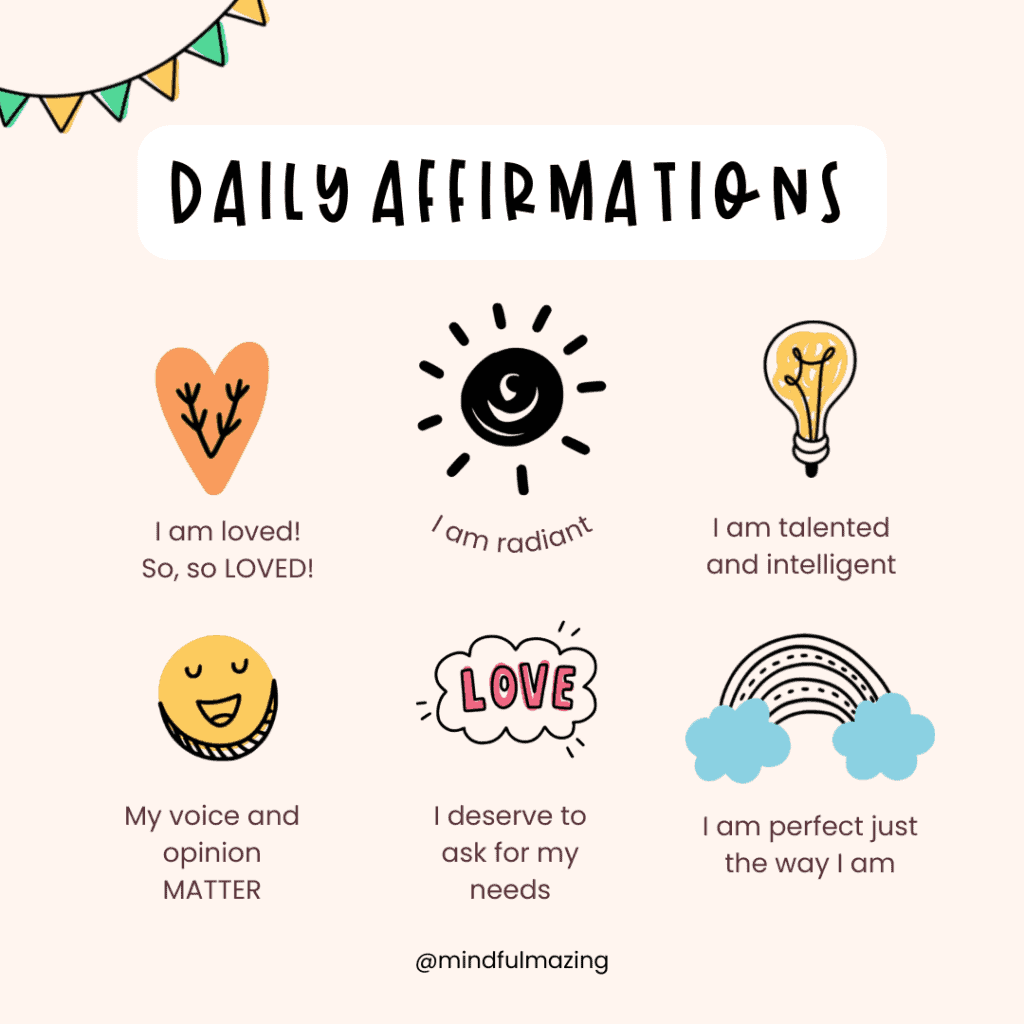
Children As Young As 3 Years Old Can Start Using Simple Affirmations. At This Age, Keep Statements Short And Easy To Understand, Like “i Am Loved.” As Children Grow, You Can Use More Complex Affirmations That Match Their Needs.
Credit: www.mindfulmazing.com
How Often Should Kids Say Their Affirmations?
Daily Practice Is Best. Saying Affirmations In The Morning Or Before Bed Helps Build A Routine. Some Children Enjoy Saying Them During Transitions, Like Before School Or After A Challenge.
What If My Child Doesn’t Believe Their Affirmations?
It’s Normal For Children To Doubt Affirmations At First. Start With Statements That Feel True Or Possible. Gradually, As They See Small Successes, Their Belief Will Grow. Encourage Them Without Pressure And Let Them Change Affirmations As Needed.
Can Affirmations Help With Anxiety Or Bullying?
Yes, Affirmations Can Be A Helpful Tool For Children Who Feel Anxious Or Face Bullying. Positive Self-talk Can Make Kids Feel Stronger And More In Control. However, If Anxiety Or Bullying Is Severe, It’s Important To Seek Extra Support From Professionals.
Should Affirmations Replace Other Emotional Support?
Affirmations Are One Tool Among Many. They Work Best When Combined With Love, Support, Healthy Routines, And, If Needed, Professional Help. Use Affirmations As A Part Of A Child’s Overall Well-being Plan.
Teaching children daily affirmations is a simple yet powerful way to help them grow into confident, kind, and resilient people. With patience, creativity, and regular practice, these positive statements can become a lifelong source of strength for any child.
