

The Best Affirmations for Kids
Children face many challenges while growing up. School, friendships, and family life can feel overwhelming. Sometimes, kids struggle with self-confidence, anxiety, or negative thoughts. One simple way to help them is through affirmations. These positive statements can build self-esteem and resilience. But what makes an affirmation truly work for a child? And how do you use them in daily life?
This article explores the best affirmations for kids. You will learn how affirmations help, discover examples for different ages and situations, and get practical advice for making them a habit. Whether you are a parent, teacher, or caregiver, you can use these tools to support a child’s growth.
Why Affirmations Matter For Children
Children’s minds are like sponges. They absorb words, feelings, and experiences around them. Positive language shapes their self-image and beliefs. When children hear encouraging statements, they start to believe them.
Studies show that self-affirmation can improve mood, reduce stress, and support learning. Research from the American Psychological Association highlights that affirmations can help children face challenges and build mental strength. For example, saying “I am brave” before a difficult task can reduce anxiety. Over time, affirmations help children build a positive mindset.
One non-obvious insight is that affirmations are most effective when they are:
- Personal and relevant to the child
- Spoken with feeling and belief
- Repeated regularly, not just once
Another insight: Affirmations should be realistic. Saying “I am perfect” may not help a child. Instead, “I try my best” supports effort and growth.
How To Choose The Best Affirmations For Kids
Not all affirmations are equal. The best ones are:
- Simple and easy to remember
- Positive (focus on strengths, not weaknesses)
- Age-appropriate
- Connected to real situations
Think about what a child needs most. Are they struggling with schoolwork? Feeling lonely? Facing a change? Choose affirmations that fit their needs.
Here is a quick comparison between strong and weak affirmations:
| Strong Affirmation | Weak Affirmation |
|---|---|
| I can solve problems. | I hope I won't fail. |
| I am a good friend. | I wish people liked me. |
| I learn from mistakes. | I don't make mistakes. |
The strong affirmations are clear, positive, and focus on growth. Weak affirmations are uncertain and negative.
The Best Affirmations For Kids: Examples By Age
Every child is unique. Age, personality, and environment matter. Here are affirmations for three main age groups:
Preschool (ages 3–5)
At this age, children need simple words. They are learning about feelings and relationships.
- I am loved.
- I can share.
- I am kind.
- I can try new things.
- I am safe.
- I have good ideas.
- My feelings matter.
- I am a helper.
Example: Before preschool, a parent can say, “You are a kind friend. You can help others today.”
Elementary (ages 6–11)
School-aged children face more challenges. They may struggle with learning, making friends, or sports.
- I am smart and capable.
- I can solve problems.
- I learn from mistakes.
- I am brave.
- I can ask for help.
- I am a good friend.
- I can do hard things.
- I am proud of myself.
- I respect others.
- I try my best.
Example: A child worried about a test can say, “I try my best. I am smart. I can ask for help if I need it.”
Tweens And Teens (ages 12–17)
Older kids face peer pressure, academic stress, and self-doubt. Affirmations should address independence and resilience.
- I am strong.
- I am unique.
- I can make good choices.
- I am enough.
- I am responsible for my actions.
- I can handle challenges.
- I trust myself.
- I am growing every day.
- My voice matters.
- I can change my world.
Example: Before a difficult conversation, a teen can remind themselves, “My voice matters. I can speak up for myself.”
Affirmations For Specific Situations
Affirmations can be powerful when used for a specific purpose. Here are examples for common challenges:
School Stress
Children may feel nervous before tests, presentations, or new classes.
- I am prepared.
- I can learn new things.
- I stay calm and focused.
- I am proud of my effort.
Friendship And Social Skills
Social situations can be tough for kids.
- I am a good friend.
- I listen to others.
- I can make new friends.
- I treat people with kindness.
Family Changes
Moving, divorce, or new siblings can cause anxiety.
- My family loves me.
- I can adapt to change.
- I am important.
- I am part of a team.
Sports And Activities
Performance pressure can lead to self-doubt.
- I do my best.
- I am a team player.
- I enjoy learning new skills.
- I can improve with practice.
Anxiety And Fear
For children who struggle with worries:
- I am safe.
- I can breathe and relax.
- I face my fears.
- I am brave.
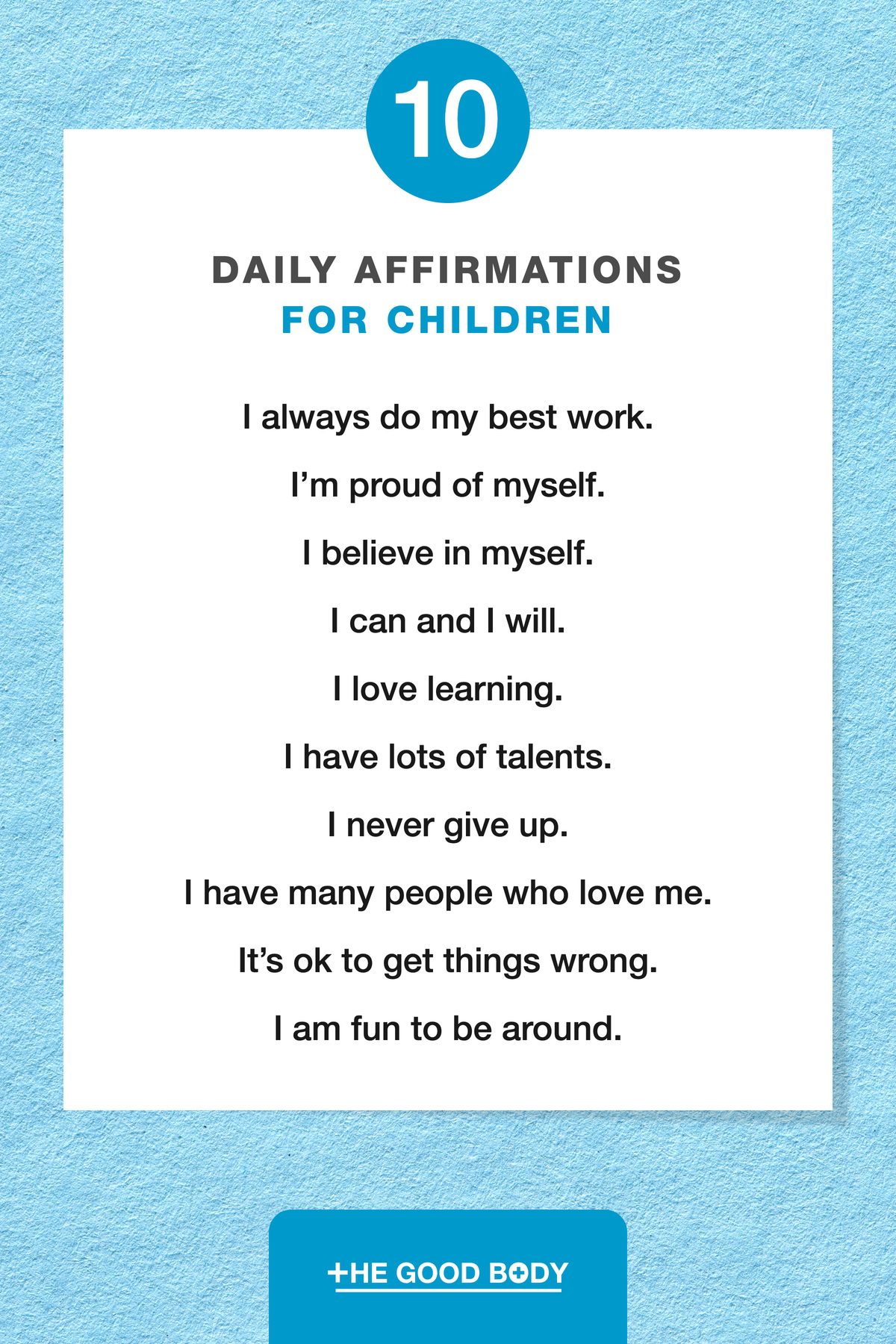
Credit: www.thegoodbody.com
How To Use Affirmations With Kids
Affirmations work best when they become part of daily life. Here are proven ways to help children use affirmations:
- Repeat them together: Say affirmations in the morning, before school, or at bedtime.
- Write them down: Put positive statements on sticky notes, notebooks, or mirrors.
- Make it playful: Use songs, rhymes, or games to make affirmations fun.
- Connect to real life: Link affirmations to daily actions. For example, after sharing, say, “You are a kind friend!”
- Encourage children to create their own: Let them choose words that feel meaningful.
A common mistake is forcing affirmations that feel unnatural. Kids should believe the words, not just repeat them. Listen to their feelings and adjust as needed.
The Science Behind Affirmations
There is real data supporting the use of affirmations in childhood. For example, a study from Stanford University found that children who practiced self-affirmation performed better on academic tasks. Another research review highlights that positive self-talk can reduce anxiety and improve motivation.
Here is a summary of major benefits:
| Benefit | Key Finding |
|---|---|
| Improved Self-Esteem | Children who use affirmations feel more confident. |
| Better Academic Performance | Self-affirmation can boost learning and test scores. |
| Lower Anxiety | Positive self-talk reduces stress before challenges. |
| Resilience | Affirmations help kids bounce back after setbacks. |
One insight many parents miss: Affirmations are not just “nice words.” They change how a child’s brain reacts to stress. When a child repeats positive statements, it can rewire negative thought patterns.
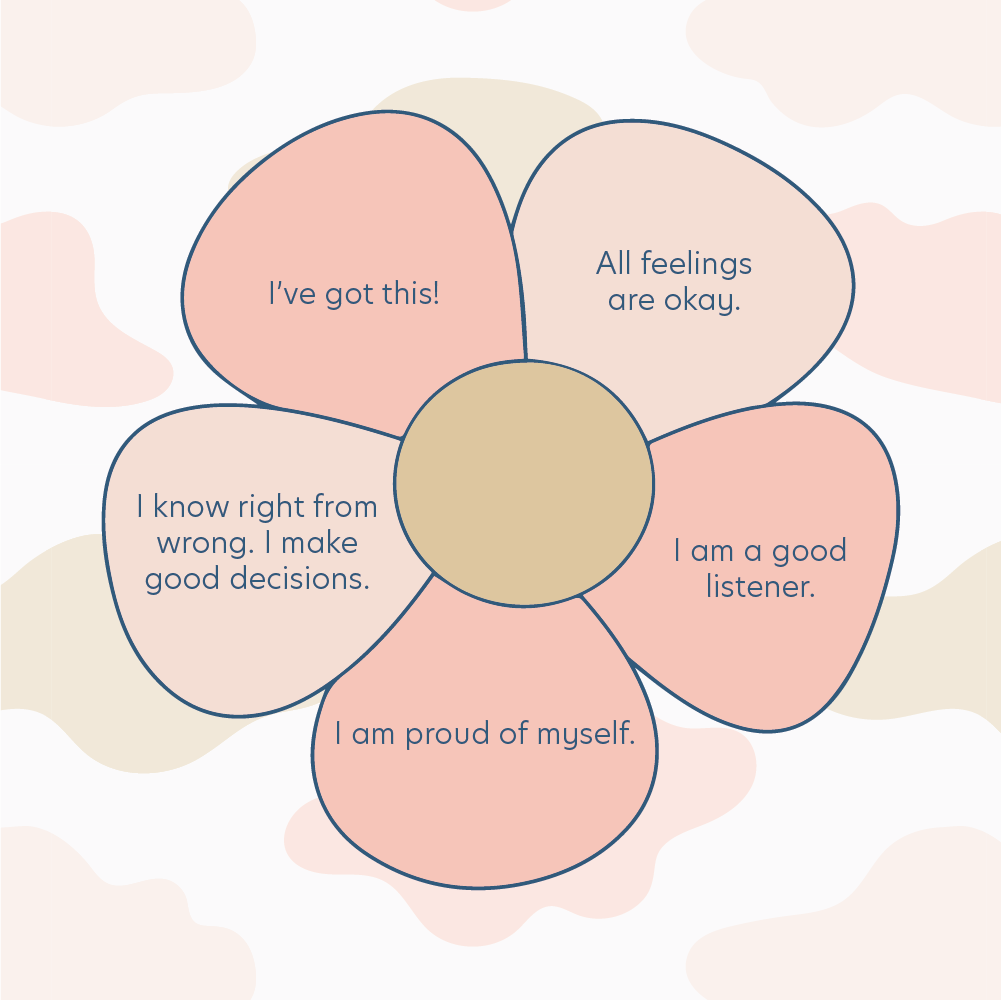
Credit: brightpathkids.com
Creating Personalized Affirmations
Generic affirmations may not always fit. Personalized statements make a bigger impact. Here’s how to create custom affirmations:
- Identify the challenge: What is the child struggling with? (e.g., making friends, math anxiety)
- Find strengths: What qualities does the child have? (e.g., kindness, curiosity)
- Build a positive statement: Combine strength and challenge. Example: “I am curious and can learn math.”
Make sure affirmations are:
- Short and easy to say
- Positive (avoid “not” or “never”)
- Believable to the child
Try using a “fill-in-the-blank” approach. For example:
- “I am _____ (positive quality).”
- “I can _____ (skill or action).”
- “I feel _____ (positive emotion).”
Encourage kids to write or draw their affirmation. This adds ownership and helps them remember.
Mistakes To Avoid When Using Affirmations
Many adults use affirmations without seeing results. Here are common mistakes:
- Too complex: Long or complicated statements are hard to remember.
- Not age-appropriate: Younger kids need simple words.
- Lack of repetition: Saying an affirmation once is not enough.
- Forced or insincere: Kids can tell if you don’t believe the words.
- Ignoring feelings: If a child feels sad, listen first before using affirmations.
A helpful tip: Affirmations should match the child’s mood and needs. Sometimes, listening and empathy are more powerful than positive statements.
Using Affirmations In The Classroom
Teachers can use affirmations to create a positive classroom culture. Here are practical ways:
- Start the day with a group affirmation. Example: “We are learners. We help each other.”
- Use affirmations for specific subjects. Math: “I can solve problems.” Reading: “I enjoy stories.”
- Encourage students to share their own affirmations.
- Post affirmations around the classroom.
Some teachers use “affirmation circles. ” Each child takes a turn saying a positive statement about themselves or a classmate. This builds community and confidence.
Affirmations For Kids With Special Needs
Children with special needs may face extra challenges. Affirmations can help, but must be adapted:
- Use clear, simple language.
- Connect affirmations to strengths and abilities.
- Include visual supports (pictures or symbols).
Examples for children with learning differences:
- I learn in my own way.
- I am patient with myself.
- I can ask for help.
- I am proud of my progress.
For children with autism, affirmations can be paired with visual schedules or social stories.
How Parents Can Model Affirmations
Children learn by example. If parents use affirmations, kids are more likely to believe them. Try these steps:
- Say your own affirmation aloud each day. Example: “I am patient. I am learning too.”
- Share positive self-talk during tough moments.
- Celebrate small wins with affirmations.
One practical idea: Create a family affirmation board. Each member writes their favorite statement. Update it every week.
Affirmations And Emotional Intelligence
Emotional intelligence is the ability to understand and manage feelings. Affirmations can build this skill. For example:
- “I can name my feelings.”
- “I respect my emotions.”
- “I can calm myself.”
Children who use affirmations learn to recognize their thoughts and feelings. This helps with self-control, empathy, and decision-making.

Credit: www.thepathway2success.com
Making Affirmations A Habit
Consistency is key. Here are simple ways to build an affirmation habit:
- Morning routine: Start each day with a positive statement.
- Bedtime ritual: End the day with an affirmation.
- Use reminders: Notes, posters, or phone alarms.
- Share with friends: Encourage kids to say affirmations together.
Here is a comparison of effective vs. ineffective habits:
| Effective Habit | Ineffective Habit |
|---|---|
| Daily repetition | Random use |
| Personalized statements | Generic phrases |
| Connection to real-life actions | No link to behavior |
Small changes can make affirmations stick. For example, turn them into a fun chant or use a reward system.
Affirmations For Difficult Times
Life is not always easy. Children face grief, bullying, or failure. Affirmations can support them during tough moments.
Examples:
- I am strong enough to face this.
- I am not alone.
- I am worthy of respect.
- I can get through hard times.
One insight: Affirmations are not a magic fix. They work best when combined with support, listening, and care.
Beyond Words: Visual And Creative Affirmations
Some children connect better with pictures or actions than words. Try these creative approaches:
- Draw or paint an affirmation.
- Use sign language or gestures.
- Create an affirmation collage.
- Write a story or poem using positive statements.
This makes affirmations more engaging and memorable.
The Role Of Caregivers And Teachers
Adults play a big role in making affirmations work. Here are ways to help:
- Listen to the child’s needs.
- Encourage positive self-talk.
- Celebrate progress, not just results.
- Model affirmations in your own behavior.
One non-obvious tip: Notice when a child uses positive self-talk on their own. Reinforce it with praise.
Common Questions About Affirmations For Kids
Many people wonder if affirmations really work. Here are answers to frequent questions:
Are Affirmations Just “wishful Thinking”?
No. Affirmations are grounded in psychology. They help children focus on strengths and change negative patterns. They are not magic, but they support growth.
How Many Affirmations Should A Child Use?
Start with one or two. Too many can feel overwhelming. Choose statements that fit the child’s needs.
Should Affirmations Be Spoken Or Written?
Both work. Speaking makes affirmations feel real. Writing or drawing adds memory. Mixing methods is best.
What If My Child Doesn’t Believe The Affirmation?
Start small. Use statements that feel true. For example, “I can try my best. ” Over time, confidence grows.
Can Affirmations Help With Learning Disabilities?
Yes. Affirmations support self-esteem and motivation. Adapt language to the child’s ability. Combine with other supports for best results.
Frequently Asked Questions
How Often Should Affirmations Be Repeated?
Affirmations are most effective when repeated daily. Morning and bedtime routines work well. Consistency helps build new habits and beliefs.
Can Affirmations Help With Anxiety In Children?
Yes. Studies show affirmations can reduce stress and calm nerves. Try pairing affirmations with breathing exercises for better results.
What Is The Best Way For Parents To Introduce Affirmations?
Start by modeling positive self-talk. Share simple statements and invite your child to join. Keep it playful and relaxed.
Are There Any Risks To Using Affirmations With Kids?
Affirmations are safe for most children. However, avoid statements that feel false or forced. Listen to your child’s feelings and adjust as needed.
Where Can I Learn More About Affirmations And Child Psychology?
You can read more about the science and practical tips from the American Psychological Association. Their website offers research and advice for parents and educators.
Final Thoughts
Affirmations are simple but powerful tools for helping children grow. The best affirmations for kids are positive, personal, and connected to real life. They build self-esteem, resilience, and emotional intelligence. With regular practice, affirmations can shape a child’s mindset for years to come.
Remember, affirmations are not just words. They are a way to support, encourage, and guide children through every challenge and triumph. Whether you are a parent, teacher, or caregiver, you can help kids build the confidence they need to succeed.
Choose the right affirmations, use them daily, and watch your child’s self-belief blossom.
