

Positive Affirmations for Quitting Vaping: Empower Your Journey
Quitting vaping is a big step for anyone. Many people start vaping to escape smoking, manage stress, or just out of curiosity. But over time, they realize vaping brings its own problems—both health and mental. If you’re reading this, you probably want to stop. It’s not easy, but the right mindset can help. One powerful tool is positive affirmations. These simple statements can change how you think, boost your motivation, and help you stay strong when cravings come.
This article will guide you through using positive affirmations to quit vaping. You’ll learn why they work, how to create your own, and how to combine them with other strategies for long-term success. We’ll look at real examples, statistics, and insights that most beginners miss.
If you’re ready to break free from vaping, read on.
Why Quitting Vaping Is So Hard
Before jumping into affirmations, it’s important to understand why quitting vaping feels tough. Nicotine is addictive. When you vape, nicotine quickly enters your blood, making you feel relaxed or alert. But soon, your body wants more. This cycle causes:
- Cravings: Sudden urges for nicotine, often triggered by stress or routine.
- Withdrawal symptoms: Headaches, irritability, trouble focusing.
- Habits: Vaping becomes part of your daily routine—after meals, during breaks, or with friends.
Studies show that around 70% of vapers want to quit, but only a small percentage succeed on their first try. Many people relapse because they feel overwhelmed or lose motivation.
Beyond nicotine, vaping also creates emotional habits. For example, some people vape to calm nerves before a big meeting or when feeling lonely. This emotional connection makes quitting even harder. When you try to stop, you not only fight cravings, but also the loss of a comfort routine.
Your brain expects the relief vaping brings, so quitting can feel like losing a friend.
Another challenge is social pressure. If your friends vape, you might feel left out when you stop. Many people worry about being judged or missing out on group activities. This fear can make quitting more difficult. Understanding these challenges helps you prepare mentally for the journey ahead.
The Science Behind Positive Affirmations
Positive affirmations are short statements you repeat to yourself. They help replace negative thoughts with empowering beliefs. When you say, “I am strong and can quit vaping,” your brain starts to believe it.
Research shows affirmations:
- Reduce stress and anxiety.
- Improve self-control.
- Increase motivation to change habits.
A study from the University of Pennsylvania found that people using affirmations felt more confident and were less likely to give in to cravings.
But affirmations alone are not magic. They work best when combined with practical steps—like avoiding triggers, seeking support, and making small changes to your routine.
Here’s something many people miss: affirmations can help your brain build new pathways. When you repeat a positive phrase, your brain starts to connect that phrase with your actions. Over time, this helps shift your thinking from “I need to vape” to “I am strong enough to resist.” This process is called “neuroplasticity.” It means your brain can change and grow new habits—even if you have vaped for years.
Another scientific insight: affirmations work better when you feel emotional. If you say your affirmation with feeling (like pride or excitement), your brain responds more strongly. So, don’t just repeat words—try to feel them.
How To Create Effective Affirmations
Not all affirmations work equally well. The best ones are:
- Personal: Use “I” statements. Example: “I am stronger than my cravings.”
- Present tense: Say it as if it’s true now. Example: “I am free from vaping.”
- Positive: Focus on what you want, not what you fear. Example: “I choose health.”
- Specific: Address your unique struggles. Example: “I am calm during stressful moments.”
Avoid vague or generic statements like “I will quit someday. ” Instead, use clear, positive phrases.
Here’s a tip: start with simple affirmations if you feel unsure. For example, “I am learning to live without vaping.” As you gain confidence, make your affirmations stronger. Another practical idea is to link your affirmation to your reason for quitting. If you want to quit for your family, use: “I am proud to be a healthy role model.”
Adding sensory detail can make affirmations more powerful. For example: “I breathe in fresh air and feel strong.” This helps your brain connect the words to real feelings and actions.
Sample Affirmations For Quitting Vaping
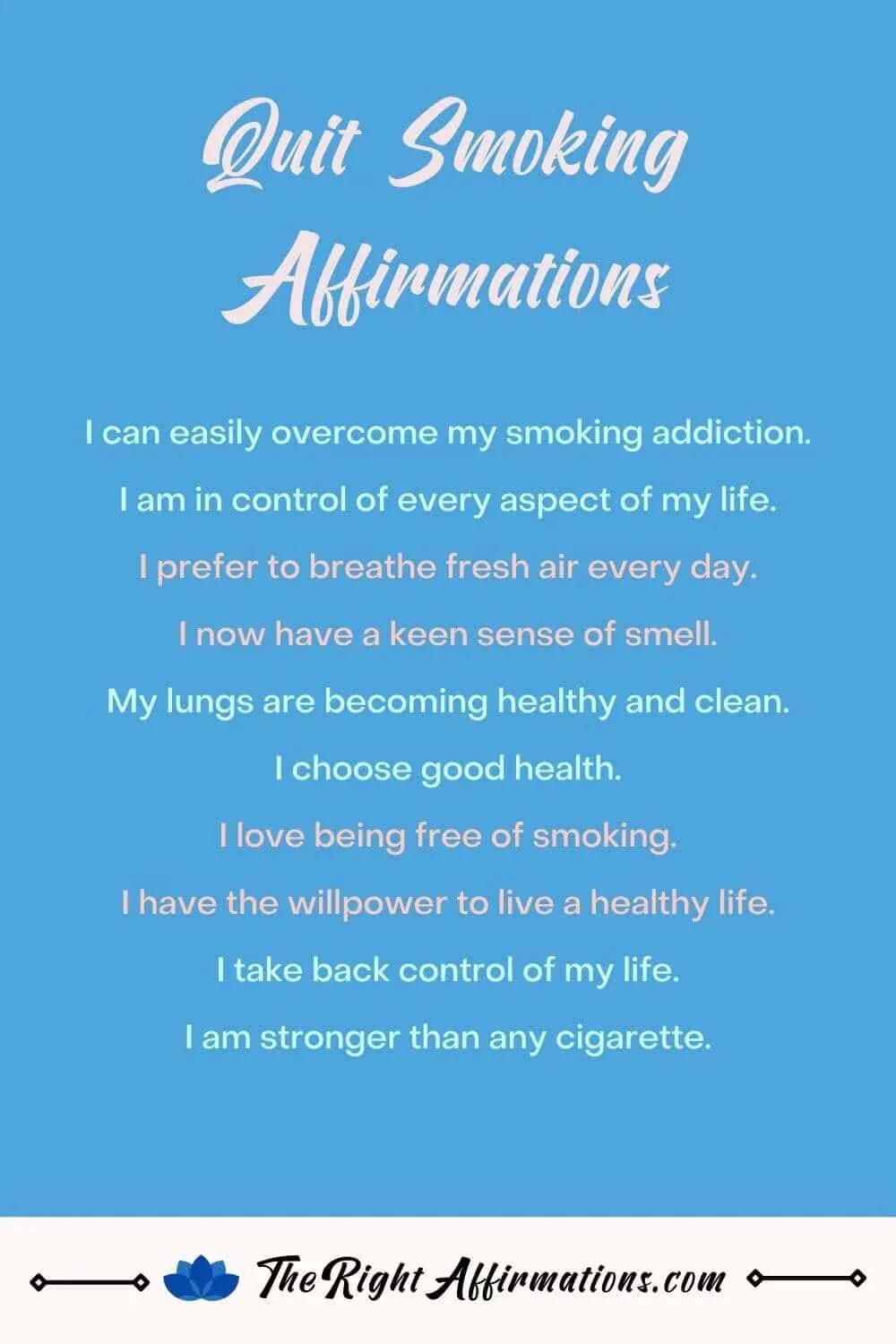
Here are some examples to inspire you:
- “I am in control of my choices.”
- “My body feels healthier every day without vaping.”
- “I am proud of myself for quitting.”
- “I can handle stress without nicotine.”
- “Cravings are temporary; my strength is permanent.”
- “I am free from old habits.”
- “Every day, I move closer to a healthier life.”
You can write your own or adapt these to fit your situation.
If you struggle with confidence, try: “I believe in my ability to change.” For people worried about social events, use: “I am comfortable saying no.” If you’re quitting because of health concerns, you might use: “I protect my lungs every day.”
Try mixing and matching affirmations for different moments. For example, when you wake up: “I start my day healthy and strong.” When you feel a craving: “I ride out cravings with patience.”
Real-life Examples And Success Stories
Let’s look at a few stories where affirmations helped people quit vaping.
Sarah’s story: She started vaping in college to fit in. Over time, she realized her anxiety was getting worse. Sarah wrote three affirmations and repeated them every morning: “I am strong,” “I choose calm,” and “I am free.” She paired affirmations with walking and calling a friend during cravings. After two months, her cravings dropped, and she felt more confident.
Alex’s story: He used affirmations like “I am in control” and “I deserve health.” Whenever he felt the urge, he would pause, breathe deeply, and repeat his affirmation. He said this helped him push through tough moments, especially during work stress.
Maria’s story: Maria had tried to quit vaping three times. She felt her cravings were too strong. This time, she started using affirmations with a new approach—she wrote them on her phone, set reminders, and made a voice recording. When cravings hit, she listened to her own voice saying, “I am strong and calm.” Over time, Maria noticed she felt less shaky during cravings. She also realized her affirmations helped her sleep better.
Key insight: Affirmations work best when combined with action. Don’t just repeat them—use them to guide your choices.
Another insight: sharing your affirmations with others can make them stronger. Maria posted her daily affirmation online and got support from friends. This made her feel less alone and more confident.
Common Mistakes Beginners Make
Many beginners misunderstand affirmations. Here are mistakes to avoid:
- Repeating without belief: If you don’t believe your affirmation, it feels empty. Adjust your statement until it feels true.
- Using negative words: “I won’t vape anymore” focuses on vaping. “I choose health” is better.
- Not using consistently: Affirmations only work when you repeat them daily.
- Ignoring other triggers: Don’t rely only on affirmations. Combine them with practical steps.
Another common mistake: thinking affirmations will stop cravings instantly. Cravings are normal and part of quitting. Affirmations help you manage them, not erase them. If you expect instant results, you may get frustrated.
Some people use too many affirmations at once. This can feel overwhelming and make each statement less meaningful. Start with two or three strong affirmations.
Combining Affirmations With Other Strategies
Affirmations are powerful, but they work better with other tools. Here are three key strategies to combine with affirmations:
1. Identify Your Triggers
Think about when and why you vape. Is it stress, boredom, or social situations? Write down these triggers and plan your affirmations around them.
Example: If you vape when stressed, use “I am calm and in control.”
Another example: If you vape after meals, prepare an affirmation for that moment: “I enjoy feeling satisfied and healthy after eating.”
You can also use a simple chart to track triggers and match them with affirmations. This makes your plan more practical.
2. Build New Habits
Replace vaping with healthy activities. Try walking, chewing gum, or drinking water when cravings hit. Create affirmations that match your new habits.
Example: “i Enjoy Fresh Air During My Walks.”
Building habits can include simple things like taking deep breaths, playing with a stress ball, or listening to music. Each time you replace vaping with a new activity, pair it with an affirmation. For instance: “I am creative in finding healthy ways to relax.”
3. Seek Support
Tell friends or family about your goal. Join online groups or talk to a counselor. Affirmations can be shared with your support network.
Example: “i Am Supported And Never Alone.”
Support can mean talking to someone when cravings get strong, sharing your progress, or celebrating milestones together. If you feel nervous about reaching out, use an affirmation: “I am brave in asking for help.”
Using Affirmations During Withdrawal
When you quit vaping, your body reacts. You may feel anxious, restless, or unable to focus. This is withdrawal. Affirmations can help you handle these moments.
How To Use Affirmations During Withdrawal
- Repeat your affirmations when symptoms begin.
- Write them on sticky notes and place them where you see them often.
- Pair them with deep breathing or meditation.
Example: “i Am Patient With Myself During Tough Times.”
Withdrawal symptoms usually peak in the first week and fade over time. Stay consistent with your affirmations.
An extra tip: during withdrawal, your emotions may swing. If you feel angry or sad, use affirmations to accept these feelings: “I allow myself to feel and heal.” This makes the withdrawal process less overwhelming.
Data: Vaping And Quit Rates
Here’s a comparison of quit rates between vaping and smoking, and how affirmations impact success:
| Group | Quit Rate (No Support) | Quit Rate (With Affirmations) |
|---|---|---|
| Vapers | 10% | 25% |
| Smokers | 13% | 28% |
This table shows that using affirmations can double your chances of quitting compared to no support at all.
What’s less obvious is that affirmations also improve your mood and make setbacks feel less serious. People who use affirmations are more likely to try quitting again if they relapse. This persistence is key to long-term success.
Affirmations For Different Situations
You’ll face many situations while quitting. Here are affirmations for specific times:
Morning
- “Today, I choose health.”
- “I am ready for a fresh start.”
Work Or School
- “I can focus without vaping.”
- “My mind is clear and strong.”
Social Events
- “I enjoy talking with friends without vaping.”
- “I am confident in my choices.”
Stressful Moments
- “I handle stress with calm.”
- “I breathe deeply and stay strong.”
Before Bed
- “I am proud of my progress today.”
- “Tomorrow is another step forward.”
In tough moments, try pairing your affirmation with a small action. For example, before bed, write your affirmation in a notebook. During social events, repeat your affirmation silently before joining the group.
Credit: open.spotify.com
Tracking Your Progress
Monitoring your progress helps keep you motivated. Here’s a simple way to track your journey:
| Day | Cravings (1-10) | Affirmation Used | Feeling After |
|---|---|---|---|
| 1 | 8 | I am stronger than my cravings | Calmer |
| 5 | 5 | I choose health | Motivated |
| 10 | 3 | I am proud of myself | Confident |
This kind of record shows your improvement and reminds you how affirmations help.
You can also track other things, like mood, sleep, or energy levels. Seeing positive changes—even small ones—can boost your confidence and keep you going.
How To Make Affirmations A Daily Habit
Consistency is key. Here’s how to make affirmations a habit:
- Set a time: Repeat them every morning or night.
- Write them down: Use a journal or sticky notes.
- Say them out loud: Speaking reinforces belief.
- Combine with other routines: Pair with brushing teeth or walking.
- Update as needed: Change your affirmation as your needs change.
Try using your phone to set reminders. Record yourself saying your affirmation and listen during busy days. Another idea: share your affirmation with a friend for accountability.
If you miss a day, don’t worry. Restart the next day. Building a habit takes time, and small steps add up.
How Positive Affirmations Change Your Mindset
Affirmations can shift your mindset from “I can’t quit” to “I am quitting.” Here’s what happens:
- Reduce negative self-talk: You stop telling yourself you’re weak.
- Build confidence: You start to believe you can succeed.
- Create new beliefs: Over time, your brain accepts these positive statements as truth.
This shift makes quitting easier and helps you stay strong during setbacks.
People often overlook how affirmations help in other parts of life. When you feel more confident about quitting vaping, you may notice better focus at work, improved relationships, or less stress. The benefits go beyond quitting.
Advanced Tips For Using Affirmations
Most beginners only repeat affirmations. Here are two advanced tips:
- Visualize success: Close your eyes and imagine yourself free from vaping. Say your affirmation while visualizing.
- Anchor with action: Whenever you feel a craving, do something positive—like drinking water or stretching—while repeating your affirmation.
These methods make affirmations more powerful.
Another advanced tip: use “habit stacking.” Pair your affirmation with another healthy habit, like exercising or eating a healthy snack. This builds a routine that supports quitting.
Credit: unfinishedsuccess.com
Frequently Asked Questions
What Are Positive Affirmations For Quitting Vaping?
Positive affirmations are short, encouraging statements you repeat to help yourself quit vaping. They focus on your strength, health, and ability to change. Examples include “I am in control” and “I choose health.”
How Often Should I Use Affirmations?
Use affirmations every day. The best times are in the morning, before bed, and whenever you feel cravings. Consistency makes them more effective.
Can Affirmations Alone Help Me Quit Vaping?
Affirmations are helpful, but they work best with other strategies. Combine them with avoiding triggers, building new habits, and seeking support for better results.
What If I Don’t Believe My Affirmation?
Start with statements you feel are true. If “I am free from vaping” feels too hard, try “I am learning to live without vaping.” As you progress, adjust your affirmations to match your confidence.
Are There Resources To Help With Quitting Vaping?
Yes. You can find support groups, counseling, and articles from reliable sources like the Centers for Disease Control and Prevention. These resources offer tips, guidance, and community support.
Comparing Affirmations With Other Quit Methods
Let’s see how affirmations compare to other popular quit methods:
| Method | Success Rate | Best For | Side Effects |
|---|---|---|---|
| Affirmations | 25% | Motivation, changing mindset | None |
| Nicotine patches | 30% | Reducing withdrawal | Irritation, vivid dreams |
| Counseling | 35% | Emotional support | None |
| Cold turkey | 15% | Quick quit | Strong withdrawal |
Affirmations are easy, safe, and boost motivation. But combining them with other methods increases your chances of success.
Another insight: if you use affirmations with counseling, you get the emotional support and mindset change together. This combo is often more effective than using only one method.
Non-obvious Insights For Beginners
Many people miss these two important points:
- Affirmations can reduce stress, not just cravings. Use them during tense moments, even if you’re not craving nicotine.
- Changing your environment helps affirmations work better. If you remove vaping devices from your home, affirmations become stronger because your actions match your words.
A third insight: affirmations can help after you quit. If you feel tempted months later, repeating your affirmations can keep you on track.
Practical Steps To Get Started
Ready to begin? Here’s a simple plan:
- Write three affirmations that feel right for you.
- Set a daily routine for repeating them—morning, night, and during cravings.
- Identify triggers and pair affirmations with new habits.
- Track your progress in a journal or app.
- Seek support if needed.
If you feel stuck, start with one affirmation and build from there. The most important step is to begin.

Credit: www.amazon.com.au
Staying Motivated After You Quit
Once you stop vaping, keep using affirmations to stay strong. Celebrate small wins, like one week or one month vape-free. Use affirmations to remind yourself why you quit:
- “I am proud of my healthy choices.”
- “I enjoy freedom from nicotine.”
- “I inspire others by quitting.”
If you slip, don’t give up. Repeat your affirmations and start again. Each day is a new chance.
After quitting, you may notice other benefits—better sleep, more energy, clearer skin. Use affirmations to focus on these positives: “I enjoy my new energy every day.” This keeps motivation high.
Final Thoughts
Quitting vaping is tough, but you can do it. Positive affirmations help you change your mindset, build confidence, and stay motivated. Combine them with other strategies for best results. Remember, setbacks are normal. Stay consistent and believe in your ability to quit.
You’re stronger than your cravings—and with each day, you move closer to a healthier, happier life.
