

Positive Affirmations Benefits for Kids: Boosting Confidence Daily
Positive Affirmations Benefits For Kids
Children are often described as sponges. They absorb words, emotions, and experiences from their environment. What they hear and believe about themselves shapes their confidence, motivation, and sense of self-worth. Positive affirmations—simple, encouraging statements—are powerful tools that can help kids build a strong foundation for emotional health and resilience.
While many parents know about affirmations, few understand their deep impact or how to use them effectively for children. This article explores why positive affirmations matter for kids, how they benefit their growth, and practical ways to make them part of daily life.
What Are Positive Affirmations?
Positive affirmations are short, uplifting statements meant to encourage a healthy mindset. For kids, affirmations can sound like:
- “I am brave.”
- “I can learn new things.”
- “I am loved.”
These phrases are repeated regularly, either aloud or silently, to help children believe in their abilities and value. Unlike praise, which depends on external validation, affirmations encourage kids to recognize their own strengths.
Affirmations are not magic words, but they can change how children view themselves and the world. When used consistently, they help kids develop inner strength and a positive outlook.
Why Kids Need Positive Affirmations
Children face many challenges—school pressure, social comparison, family changes, and sometimes bullying. They are still learning how to handle disappointment and criticism. Many kids struggle with self-doubt or negative thinking, especially if they hear criticism often.
Positive affirmations help children:
- Counter negative thoughts: Kids learn to replace doubt or worry with encouragement.
- Build resilience: Affirmations prepare children to face challenges and bounce back from setbacks.
- Strengthen self-esteem: Repeating positive words helps kids recognize their worth.
- Encourage growth mindset: Affirmations focus on effort and learning, not just talent.
Research shows that children who use positive self-talk are more likely to try new things, handle stress better, and feel happier in everyday life.
The Science Behind Affirmations For Kids
Many studies show that positive affirmations can change thinking and behavior. When children repeat encouraging words, their brains create new connections. This process is called neuroplasticity—the brain’s ability to grow and adapt.
A key insight is that affirmations work best when they are:
- Personal (related to the child’s own strengths)
- Believable (not too distant from reality)
- Repeated consistently
In one study, children who practiced positive self-talk before a test felt less anxious and performed better. Another experiment found that kids with low self-esteem benefited most from daily affirmations, showing improved confidence within weeks.
The brain is most flexible in childhood, so early use of affirmations can have lasting effects. Parents, teachers, and caregivers can help kids build these positive habits.
Emotional Benefits Of Positive Affirmations
Boosting Self-esteem
Self-esteem is how children feel about themselves. Low self-esteem can lead to sadness, anxiety, or avoidance of challenges. Positive affirmations help kids build a healthy self-image.
For example, a child who says “I am capable” before tackling homework is more likely to feel confident and try harder. Over time, kids who use affirmations see themselves as strong and valuable.
Reducing Anxiety And Stress
Children often worry about school, friendships, or family problems. Positive affirmations help calm these fears by focusing attention on strengths and possibilities.
A study found that children who practiced affirmations had lower stress levels compared to those who did not. They felt more relaxed and handled difficult situations better.
Supporting Emotional Regulation
Kids sometimes struggle to manage big emotions like anger or sadness. Affirmations give them tools to pause, reflect, and choose a positive response.
For instance, repeating “I can handle my feelings” or “I am in control” helps children manage emotional outbursts. This builds emotional intelligence and resilience.
Social Benefits Of Positive Affirmations
Improving Peer Relationships
Children with positive self-talk are more open to making friends and sharing. Affirmations like “I am kind” or “I am a good friend” encourage respectful and empathetic behavior.
Kids who feel confident are less likely to be bullied or bully others. They understand their worth and are comfortable expressing themselves.
Enhancing Communication Skills
Affirmations promote self-assurance, which helps kids speak up in class or join group activities. Children who believe “My ideas matter” or “I can express myself” become better communicators.
Social confidence grows when kids use positive language about themselves and others.
Cognitive And Learning Benefits
Fostering Growth Mindset
A growth mindset means believing that skills can improve with effort. Affirmations support this by encouraging kids to value learning and persistence.
For example, saying “I can improve with practice” helps children see mistakes as learning opportunities. This attitude leads to higher motivation and better school performance.
Increasing Motivation
Children often need encouragement to start homework or try new activities. Affirmations like “I am motivated” or “I am a hard worker” inspire effort and focus.
Kids who use affirmations are more likely to set goals and work toward them, even when tasks are difficult.
Enhancing Problem-solving
Positive self-talk helps kids approach challenges calmly. Instead of giving up, they try different solutions. Affirmations such as “I can find answers” or “I am creative” help children become more resourceful.
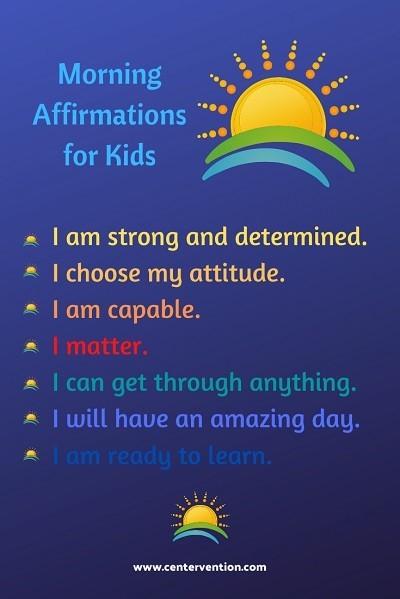
Credit: www.centervention.com
How To Introduce Positive Affirmations To Kids
Bringing affirmations into a child’s life should be gentle and playful. Here are some practical ways:
- Model affirmations: Parents can say positive statements about themselves and their child.
- Make it fun: Use songs, games, or art to create affirmations.
- Keep it simple: Use short, clear phrases that match the child’s age.
- Repeat regularly: Practice affirmations daily, such as before school or bedtime.
Children may feel shy at first. Encourage them by joining in and making it a shared activity.
Example Routine
A morning routine could include:
- Saying three affirmations together (“I am smart,” “I am kind,” “I am ready for today”)
- Writing or drawing affirmations in a journal
- Using sticky notes with positive words around the house
Age-appropriate Affirmations
Affirmations should fit the child’s understanding. Here’s how they can be tailored:
| Age Group | Example Affirmations | Best Method |
|---|---|---|
| Preschool (3–5) | "I am loved" "I am safe" | Picture cards, songs |
| Early Elementary (6–8) | "I can learn" "I am a good friend" | Morning routines, drawing |
| Late Elementary (9–11) | "I can solve problems" "I am creative" | Journaling, group activities |
| Middle School (12+) | "I can handle challenges" "I am confident" | Discussion, self-reflection |
Adjust affirmations as children grow and their needs change.
Practical Tips For Parents And Teachers
Consistency Matters
Affirmations are most effective when used regularly. Set aside a few minutes each day for practice. This could be during meals, before school, or at bedtime.
Make It Personal
Help kids choose affirmations that feel true for them. Personal statements are more powerful than generic ones.
Use Visual Reminders
Place sticky notes or posters with affirmations where children can see them—on the fridge, bathroom mirror, or desk.
Encourage Expression
Let kids write their own affirmations or decorate them with drawings. This increases ownership and engagement.
Avoid Over-correction
If a child struggles with an affirmation, don’t force it. Offer support and gently encourage belief, but respect their feelings.
Common Mistakes When Using Affirmations
Affirmations are simple, but some mistakes can reduce their impact:
- Choosing unrealistic statements: If a child says “I am perfect,” they may not believe it. Use affirmations that feel achievable.
- Inconsistent practice: Sporadic use won’t build habits. Make affirmations part of daily routines.
- Ignoring emotions: If a child feels sad or angry, affirmations alone may not help. Combine them with listening and empathy.
- Using negative language: Avoid phrases with “not” or “never.” Focus on positive words.
- Overloading with affirmations: Too many statements at once can be confusing. Start with 2–3 and add more over time.
How Affirmations Compare To Other Parenting Tools
Parents often use praise, rewards, or discipline to guide behavior. How do affirmations fit in?
| Method | Main Focus | Long-term Effect | Potential Limitation |
|---|---|---|---|
| Affirmations | Internal belief | Builds resilience and self-esteem | Needs consistency and sincerity |
| Praise | External approval | Boosts confidence temporarily | Can create dependency |
| Rewards | Motivation for tasks | Encourages effort | May reduce intrinsic motivation |
| Discipline | Correcting behavior | Sets boundaries | Can affect self-worth if too harsh |
Affirmations support long-term growth and self-reliance. They work best when combined with other supportive parenting strategies.
Examples Of Effective Affirmations For Kids
Here are some affirmations that children enjoy and benefit from:
- “I am important.”
- “I can try again if I fail.”
- “I am a good listener.”
- “I am patient.”
- “I can ask for help.”
- “I am proud of myself.”
- “I can make new friends.”
- “I am full of ideas.”
- “I am responsible.”
- “I am safe.”
Let children pick favorites or create their own. This makes affirmations more meaningful.
Real-life Stories And Results
Case Study: Building Confidence
A teacher noticed a shy student who avoided reading aloud in class. The teacher introduced daily affirmations: “I am a good reader,” “I can speak clearly.” After several weeks, the student began volunteering to read. Confidence grew, and the student’s grades improved.
Case Study: Handling Stress
A parent used affirmations with a child who feared tests. Together, they practiced “I am prepared,” “I can do my best. ” The child reported feeling less anxious and was able to focus better during exams.
Case Study: Improving Peer Relationships
A group of children at a community center practiced “I am kind,” “I am a good friend” during activities. Over time, the kids became more cooperative and supportive. There were fewer conflicts, and friendships strengthened.
These stories show that affirmations are not just theory—they create visible change.
Data And Statistics On Affirmations For Kids
While affirmations are simple, their impact is measurable. A review of several studies found:
- Children who used affirmations daily showed a 25% improvement in self-esteem scores.
- Those practicing positive self-talk had lower anxiety by up to 30% compared to peers.
- Affirmations led to better academic performance for 40% of students in one school survey.
These numbers show why affirmations deserve attention in parenting and education.
Overlooked Insights: What Most Parents Miss
The Power Of Context
Affirmations are more effective when matched to the child’s current challenges. For example, during friendship troubles, “I am a good friend” is more helpful than “I am smart. ” Parents often miss this detail and use generic phrases.
Body Language Matters
Kids copy not just words but tone and gestures. When parents say affirmations with a smile and confident posture, children feel the emotion behind the words. This makes affirmations more believable.
How Affirmations Support Kids With Special Needs
Children with learning difficulties, autism, or anxiety often face extra challenges. Affirmations can help them:
- Build confidence for new tasks
- Handle sensory overload
- Reduce frustration
Research shows that children with special needs benefit from affirmations tailored to their experience. For example, “I can try new things” or “I am strong even when things are hard. ”

Credit: www.thepathway2success.com
Integrating Affirmations Into School And Community
Schools and community groups can use affirmations to support all children. Here are some ideas:
- Affirmation circles: Students share positive statements in a group, creating a supportive atmosphere.
- Classroom posters: Display affirmations to remind children throughout the day.
- Morning announcements: Start the day with an affirmation for everyone.
Community centers can create workshops or art projects around positive self-talk.
Measuring Success: How To Know Affirmations Are Working
Parents and teachers may wonder if affirmations are making a difference. Signs of success include:
- Children show higher confidence
- They take more risks and try new activities
- Less negative self-talk (“I can’t” becomes “I’ll try”)
- Improved mood and behavior
Keep track by asking children how they feel, noticing changes in attitude, and celebrating progress.
Expert Recommendations For Using Affirmations
Psychologists and child development experts suggest:
- Start with simple, age-appropriate statements
- Make affirmations a daily habit
- Encourage children to personalize their affirmations
- Combine affirmations with active listening and support
- Avoid using affirmations to dismiss real concerns
For further guidance, refer to Psychology Today.
Comparison: Affirmations Vs. Negative Self-talk
Many children struggle with negative self-talk, such as “I am not good enough.” Here’s how affirmations counter this:
| Negative Self-Talk | Positive Affirmation | Impact |
|---|---|---|
| "I can't do this" | "I can try my best" | Encourages effort |
| "Nobody likes me" | "I am a good friend" | Builds social confidence |
| "I always mess up" | "I learn from mistakes" | Promotes growth mindset |
| "I'm not smart" | "I can learn new things" | Increases motivation |
Replacing negative thoughts with positive affirmations changes how children see themselves and the world.
Building Long-term Habits
Affirmations are most powerful when they become a lifelong habit. Here’s how to keep momentum:
- Review and update affirmations as children grow
- Celebrate small successes (“You used your affirmation today!”)
- Practice in different settings—home, school, sports
- Encourage children to support friends with affirmations
Habits built in childhood can last into adulthood, shaping self-confidence and resilience.
Frequently Asked Questions
What Is The Best Age To Start Using Positive Affirmations With Kids?
Children can begin using affirmations as early as preschool. Simple statements work best for young kids. As they grow, affirmations can become more complex and personalized. The key is to match the language to the child’s understanding.
How Many Affirmations Should A Child Use Each Day?
Start with 2–3 affirmations daily. Quality is more important than quantity. As children become comfortable, they can add more. Too many at once can be overwhelming.
Can Affirmations Help Children With Learning Difficulties Or Anxiety?
Yes, positive affirmations are helpful for kids with special needs or anxiety. Tailor affirmations to fit the child’s challenges. For example, “I can try again” or “I am strong” can support children facing extra difficulties.
How Do I Know If Affirmations Are Working For My Child?
Look for signs like increased confidence, less negative self-talk, willingness to try new things, and improved mood. Ask your child how they feel and notice changes in behavior. Affirmations take time, so be patient and consistent.
Are There Risks Or Downsides To Using Affirmations With Kids?
Affirmations are safe when used sincerely and appropriately. Avoid unrealistic statements that children can’t believe. Don’t use affirmations to dismiss real feelings or problems. Combine affirmations with support and listening for best results.
Positive affirmations are simple yet powerful tools for helping children grow into confident, resilient, and happy individuals. When parents, teachers, and caregivers make affirmations part of daily life, children learn to trust themselves and face challenges with optimism. The benefits reach far beyond childhood, supporting lifelong well-being and success.
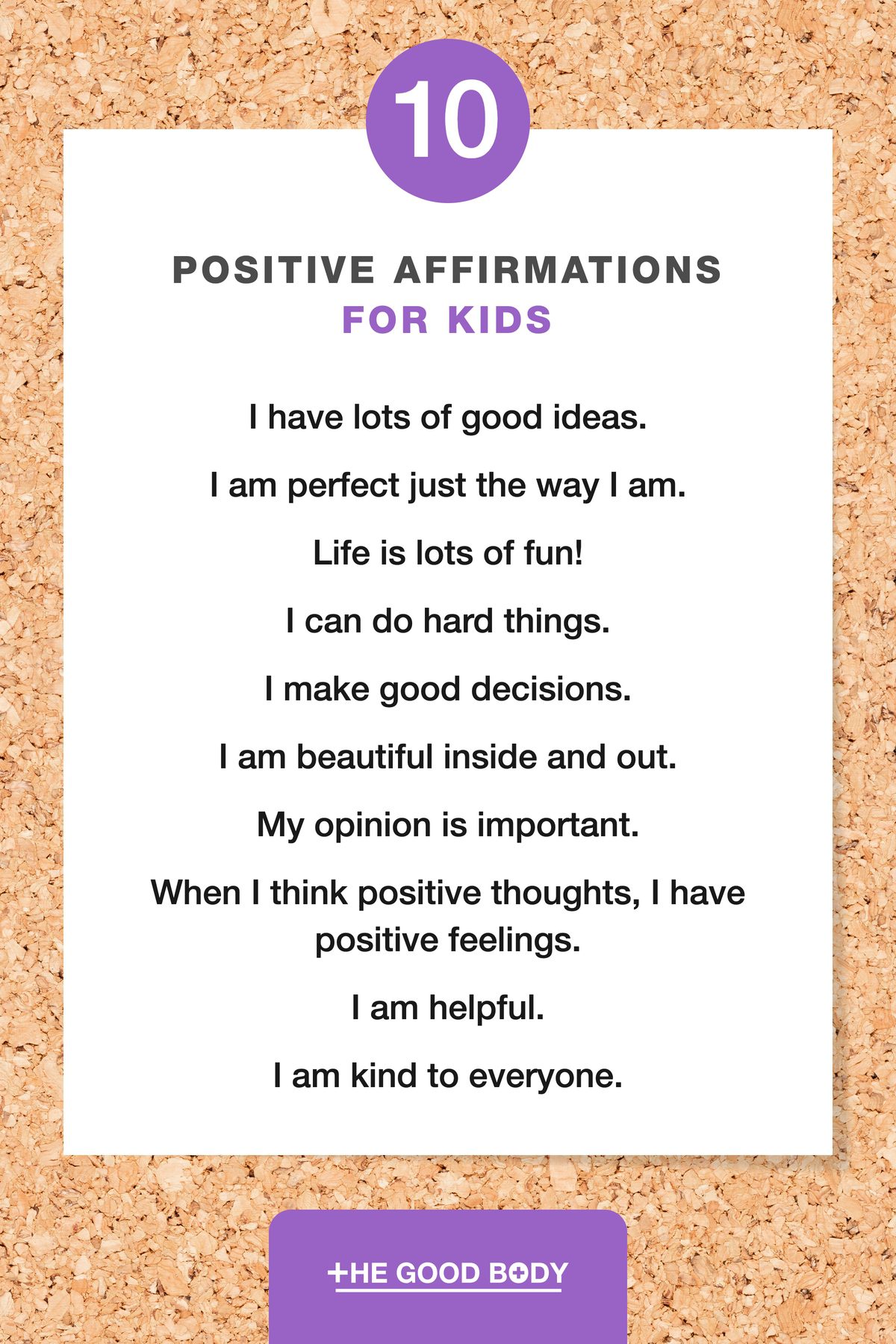
Credit: www.thegoodbody.com
