

Positive Affirmation on Health: Transform Your Wellness Today
Positive Affirmation On Health
Feeling healthy is more than just eating well or exercising. It’s also about what you believe about yourself and your body. Positive affirmations are simple statements that can help you build a healthy mindset. Many people use these phrases to support healing, boost energy, and manage stress. When you repeat positive thoughts, your mind starts to accept them as truth. This can change your habits and even improve your physical well-being.
Some people think affirmations are only for motivation. In reality, they can help you focus on good health, fight negative self-talk, and feel stronger when dealing with illness or challenges. Research shows that positive self-talk lowers stress hormones and supports recovery.
In this article, you’ll learn how affirmations work, how to create your own, and the best ways to use them for health. You’ll also find real-life examples, data, and practical advice to make positive affirmations a part of your daily routine.
Understanding Positive Affirmations
What Are Positive Affirmations?
Positive affirmations are short, encouraging phrases you say to yourself. They are usually spoken in the present tense, such as “I am healthy” or “My body is strong.” The main goal is to help you focus on your strengths, not your weaknesses. Affirmations are not magic, but they can train your mind to support healthy actions and choices.
Why Do Affirmations Matter For Health?
Your thoughts and beliefs influence your actions. If you believe you can get healthier, you are more likely to make healthy choices. Negative thinking can cause stress, which affects your body. Positive affirmations break this cycle. They help you shift from worry to confidence.
Studies show that positive self-talk can:
- Lower stress levels
- Improve immune function
- Support healing and recovery
- Boost motivation for healthy habits
Here’s a comparison of how positive vs. negative self-talk can influence health:
| Type of Self-Talk | Impact on Health | Examples |
|---|---|---|
| Positive | Reduces stress, supports healing, improves mood | “I am healing every day.” |
| Negative | Raises stress, lowers immunity, increases anxiety | “I will never get better.” |
The Science Behind Affirmations
Positive affirmations help change your thinking patterns. When you repeat them, your brain creates new connections. This is called neuroplasticity. Over time, your mind becomes more open to new beliefs and behaviors. A study published in the journal “Brain and Behavior” found that people who practiced positive self-talk had lower stress and better health outcomes compared to those who did not.
Another non-obvious insight: affirmations can help you feel more in control during illness. If you’re dealing with a chronic condition, positive statements can reduce feelings of helplessness and boost your sense of agency.
How Affirmations Influence Physical Health
Stress Reduction
Stress is linked to many health problems, including heart disease and weakened immunity. Positive affirmations lower stress by changing how you respond to challenges. For example, saying “I am calm and strong” during a stressful moment can help your body relax.
A survey by the American Psychological Association showed that people who used affirmations regularly felt less stress and reported fewer headaches, stomach issues, and fatigue.
Boosting Immune System
Your immune system fights off illness. When you are stressed or feel negative, your body produces more cortisol, a stress hormone. High cortisol levels can weaken your immune system. Positive affirmations help lower cortisol, supporting your body’s natural defenses.
Here’s a table comparing cortisol levels in people using affirmations vs. those not using them:
| Group | Average Cortisol Level | Reported Health |
|---|---|---|
| Affirmation Users | Low | Better |
| Non-Users | High | Poor |
Supporting Recovery
Many people use positive affirmations when recovering from surgery or illness. Saying “My body heals quickly” can help you stay motivated and patient. In hospitals, nurses often encourage patients to use positive phrases. This helps reduce anxiety and supports faster healing.
Encouraging Healthy Habits
Affirmations are useful for building new habits. For example, saying “I enjoy healthy food” can make you more likely to choose fruits and vegetables. One non-obvious insight: affirmations work best when paired with action. Saying “I am active and fit” while actually walking or exercising creates a stronger effect.
Creating Effective Health Affirmations
Key Elements Of A Good Affirmation
Not all affirmations are the same. To be effective, they should:
- Be positive: Focus on what you want, not what you fear.
- Use present tense: Say “I am” instead of “I will be.”
- Be specific: “I am energetic and full of life” is better than “I feel good.”
- Match your values: Choose phrases that feel meaningful to you.
Examples Of Health Affirmations
Here are some examples for different health goals:
- Physical health: “I am strong and healthy.”
- Mental health: “I am peaceful and calm.”
- Healing: “My body recovers quickly and fully.”
- Healthy eating: “I choose foods that nourish me.”
- Fitness: “I enjoy moving my body every day.”
How To Personalize Your Affirmations
You can create your own affirmations by:
- Identifying your health goal (e.g., better sleep, weight loss, more energy).
- Writing a positive statement about that goal.
- Making sure it feels true or possible.
If you struggle to believe your affirmation, try starting with “I am learning to…” or “I am becoming…”. For example, “I am learning to care for my body” can feel easier than “I am perfectly healthy. ”
How To Use Positive Affirmations For Health
Daily Practice
Consistency is important. Try saying your affirmations:
- In the morning, to start your day with a healthy mindset.
- Before meals, to support healthy choices.
- Before sleep, to relax and encourage healing.
Speaking, Writing, And Listening
You can use affirmations in different ways:
- Speak them aloud to yourself.
- Write them in a journal.
- Listen to recorded affirmations.
Some people use sticky notes or phone reminders. Others record their affirmations and play them back.
Combining Affirmations With Visualization
Visualizing yourself healthy while saying affirmations can make them stronger. For example, imagine yourself feeling energetic as you say “I am full of energy. ” This helps your brain accept the positive message.
Using Affirmations During Challenges
When you face illness, pain, or setbacks, affirmations can help you stay hopeful. For example, during a tough time, saying “I am resilient” can support your mental and physical strength.
Real-life Stories And Examples
Overcoming Chronic Illness
Maria was diagnosed with a chronic condition. She felt scared and hopeless. Her doctor suggested positive affirmations. Maria began saying “My body is healing” every morning. Over time, she felt more optimistic and started to exercise again. Her symptoms improved, and her mood lifted.
Supporting Weight Loss
David struggled with weight for years. Negative self-talk made him feel guilty. He switched to affirmations like “I enjoy healthy foods” and “I am proud of my progress. ” This helped him stay motivated and celebrate small wins.
Managing Stress At Work
Fatima faced daily stress at her job. She began using “I am calm and focused” before important meetings. This lowered her anxiety and helped her perform better. Her coworkers noticed her positive attitude.
Recovering From Surgery
After knee surgery, John used “My body heals fast” and “I am getting stronger. ” He did his physical therapy and repeated his affirmations. His recovery was smoother, and he felt encouraged.
Common Mistakes When Using Affirmations
Using Vague Or Negative Statements
Affirmations work best when they are specific and positive. Avoid phrases like “I don’t want to be sick. ” Instead, use “I am healthy and strong. ”
Not Believing The Affirmation
If you don’t believe your affirmation, it won’t help much. Adjust your statement to something you can accept. For example, change “I am healthy” to “I am improving my health each day. ”
Inconsistency
Repeating affirmations only once or twice is not enough. Make them a daily habit. Set reminders or link them to routines, like brushing your teeth.
Ignoring Action
Affirmations are most powerful when combined with action. For example, saying “I am fit” is better when you also walk or exercise. Don’t rely only on words—take steps toward your goal.
Comparing Yourself To Others
Don’t compare your progress to others. Affirmations are personal. Focus on your own journey and growth.
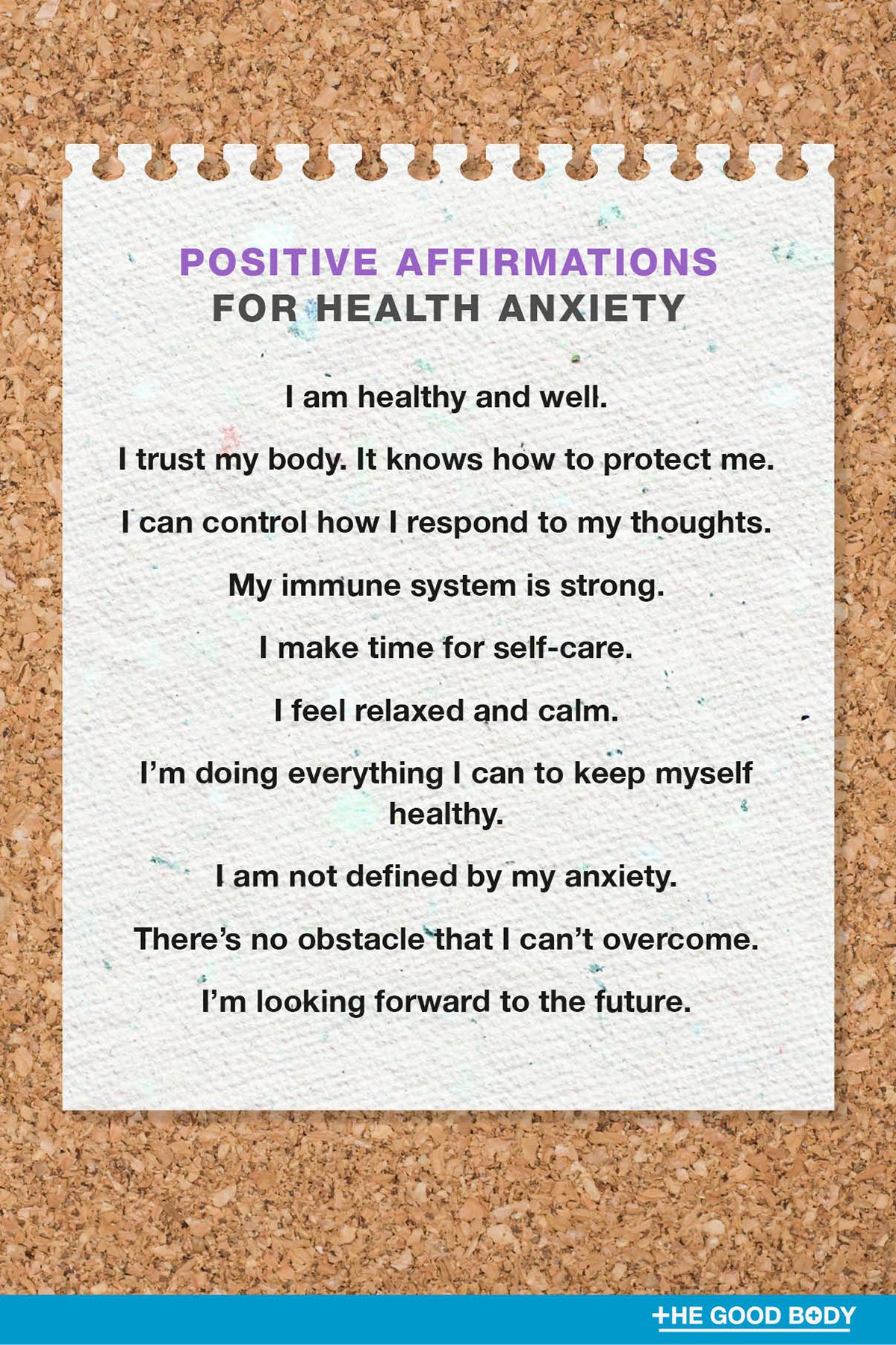
Credit: www.thegoodbody.com
Data And Statistics On Affirmations And Health
Impact Of Affirmations On Health Outcomes
Research shows that people who use positive affirmations have better health outcomes. In one study, participants who used daily health affirmations:
- Reported 30% less stress
- Had 25% fewer sick days
- Felt more motivated to exercise
Mindset And Recovery Rates
Another study found that patients with a positive mindset recovered faster from illness. Those who used affirmations had shorter hospital stays compared to those who did not.
Popularity Of Affirmations
A survey by the National Wellness Institute found:
- 60% of people use affirmations for health
- 75% of users say affirmations help them feel better
- 55% use affirmations for stress management
Here’s a comparison of affirmation users vs. non-users:
| Health Factor | Affirmation Users | Non-Users |
|---|---|---|
| Stress Levels | Lower | Higher |
| Exercise Frequency | More | Less |
| Recovery Speed | Faster | Slower |
Practical Tips To Get Started With Health Affirmations
Choose The Right Affirmation
Pick a phrase that fits your health goal. If you want better sleep, use “I am relaxed and ready for rest. ” If you want more energy, try “I am full of energy. ”
Practice Every Day
Consistency builds new habits. Try repeating your affirmation every morning and night. You can also use reminders or write them in a journal.
Pair With Healthy Actions
Affirmations work best with action. If your goal is fitness, say “I am active” while walking or exercising. This creates a stronger connection.
Track Your Progress
Write down how you feel before and after using affirmations. Notice any changes in mood, energy, or health. Celebrate improvements, no matter how small.
Adjust When Needed
If your affirmation feels too hard to believe, change it. For example, start with “I am learning to be healthy. ” As you gain confidence, update your statement.
Use Technology
Apps and audio recordings can help you practice affirmations. Some apps send daily reminders or play positive phrases.
Get Support
Share your affirmations with friends or family. They can encourage you and help you stay consistent.
Health Affirmations For Specific Needs
For Physical Healing
- “My body is strong and heals quickly.”
- “Every cell in my body supports my health.”
For Mental Well-being
- “I am calm and peaceful.”
- “My mind is clear and focused.”
For Healthy Eating
- “I choose foods that nourish me.”
- “I enjoy healthy meals.”
For Fitness And Activity
- “I am active and fit.”
- “I love moving my body.”
For Stress Management
- “I am calm and relaxed.”
- “I handle challenges with ease.”
For Sleep And Rest
- “I am relaxed and ready for rest.”
- “My body and mind rest deeply.”
Combining Affirmations With Other Health Strategies
With Meditation
Meditation helps calm your mind and body. Saying affirmations during meditation increases their power. For example, repeat “I am healthy” while focusing on your breath.
With Exercise
Pair affirmations with movement. Say “I am strong” while lifting weights or “I am energetic” while jogging.
With Healthy Eating
Before meals, use affirmations like “I choose nourishing foods. ” This helps you make better choices and enjoy your food.
With Journaling
Write your affirmations in a journal. Reflect on how they make you feel. This builds self-awareness and supports your goals.
With Medical Treatment
Affirmations can support medical care. They don’t replace treatment, but they help you stay positive and motivated. For example, “I trust my doctors and my body’s ability to heal. ”
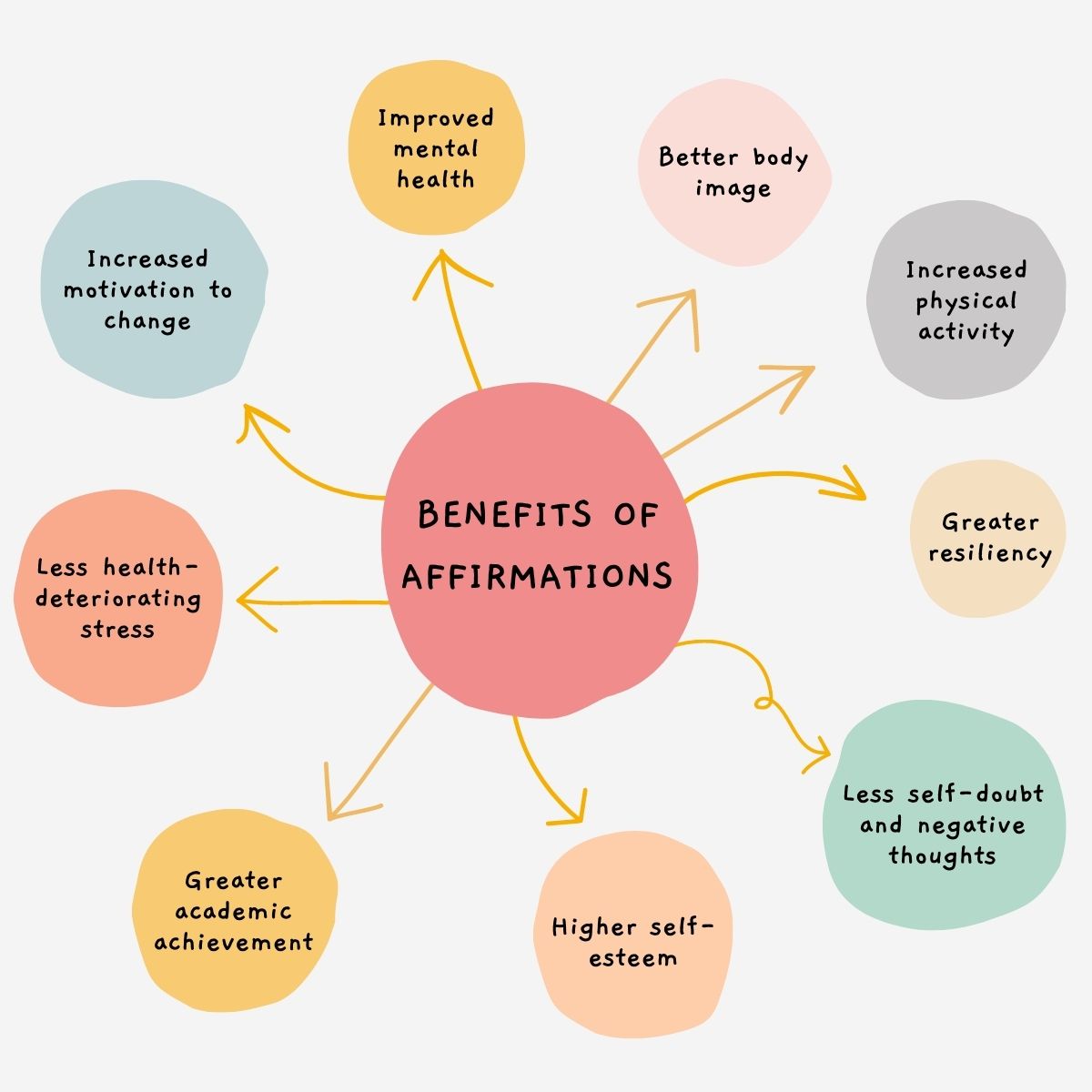
Credit: biteoutoflifenutrition.com
The Role Of Affirmations In Long-term Health
Positive affirmations are not just for quick fixes. They build a strong foundation for lifelong health. When you use affirmations daily, you develop a healthier mindset. This supports better choices, resilience, and well-being.
Long-term affirmation practice can:
- Reduce stress and anxiety
- Improve self-esteem
- Support healthy habits
- Boost recovery from illness
- Enhance quality of life
Many people find that their health improves as their mindset becomes more positive. Remember, affirmations are a tool—not a cure. They work best when combined with healthy actions and choices.
Frequently Asked Questions
How Do I Create My Own Health Affirmation?
Start by identifying your health goal. Write a positive statement in the present tense, such as “I am energetic and strong. ” Make sure it feels true or possible. Adjust if needed. Keep it short and meaningful.
Can Affirmations Heal Illness?
Affirmations cannot cure illness by themselves. They help you stay positive, motivated, and resilient. Use them alongside medical treatment and healthy habits for best results.
How Often Should I Use Affirmations?
Daily practice is best. Repeat your affirmations in the morning, before meals, or before sleep. Consistency helps build new habits and supports health improvements.
What If I Don’t Believe My Affirmation?
If your affirmation feels too hard to believe, change it to something softer. For example, use “I am learning to be healthy” or “I am improving every day. ” As your confidence grows, update your statement.
Are There Any Scientific Studies On Health Affirmations?
Yes, research shows that positive affirmations can lower stress, support healing, and improve health outcomes. For more information, see this medical research paper.
Building a healthy mindset takes time, but positive affirmations are a simple and powerful tool. They help you focus on your strengths, stay motivated, and support both mental and physical health. With daily practice, you can change your habits, feel more confident, and enjoy a better quality of life.
Try adding affirmations to your routine, and notice how your health and outlook improve.

Credit: cultdesi.com
