

List of Best Affirmations
Every day, millions of people use affirmations to shape their mindset, boost confidence, and overcome challenges. But what makes an affirmation truly powerful? It’s not just positive words. It’s the right message, spoken with belief and repeated often. Whether you want to improve your self-esteem, reduce stress, or achieve goals, the best affirmations can help you create lasting change.
In this article, you’ll find a carefully chosen list of the best affirmations for different areas of life. You’ll also see how affirmations work, practical tips for using them, and real examples. If you’re new to affirmations or want to make them more effective, you’ll discover non-obvious insights and guidance that many beginners miss.
Let’s explore how simple words can help transform your thoughts and actions.
Why Affirmations Matter
Affirmations are more than motivational phrases. They are statements you repeat to yourself, aimed at reshaping your thoughts and beliefs. Scientific studies have shown that using affirmations can reduce stress, increase confidence, and support mental health. For example, research published in the journal "Social Cognitive and Affective Neuroscience" found that self-affirmation activates areas of the brain linked to self-processing and reward.
You might wonder why saying words to yourself can change anything. The answer lies in how the brain works. When you repeat positive statements, your brain starts to believe them. Over time, this changes how you think, feel, and act.
Affirmations are especially useful for those facing self-doubt, anxiety, or negative thinking. They give you a tool to break old patterns and build new habits.
Another reason affirmations matter is their ability to interrupt negative self-talk. Many people don’t realize how often they think or say negative things about themselves. For example, you might silently repeat, “I’m not good enough,” or “I’ll never succeed. ” These thoughts become habits.
Positive affirmations work by replacing these old scripts with healthier ones, helping you develop a more supportive inner voice.
If you’re struggling with motivation or feeling stuck, affirmations can help shift your perspective. They encourage you to see possibilities instead of limitations. Over time, this shift can lead to better decisions, improved relationships, and greater satisfaction in life. People who use affirmations regularly often report feeling more hopeful, more resilient, and more in control of their emotions.
How To Use Affirmations Effectively
It’s easy to read affirmations, but making them work takes practice. Here are some proven steps:
- Choose affirmations that feel true or possible. If they sound fake, your mind may resist.
- Repeat them daily. Morning and evening are best, but any time works.
- Say affirmations aloud. Hearing your own voice makes them stronger.
- Write them down. This helps fix the words in your mind.
- Visualize the meaning. Imagine the affirmation as real in your life.
Many beginners skip the last two steps. Writing and visualization make affirmations much more powerful, but are often ignored. Try combining these methods for best results.
Another overlooked method is pairing affirmations with physical actions. For example, while saying “I am strong and capable,” try standing tall with good posture. This sends a message to your brain that you are embodying the affirmation. Movement and posture can reinforce your belief in the words you are saying.
Some people find it helpful to use reminders throughout the day. You can set phone alerts or post sticky notes around your home or workspace. Seeing your affirmations often keeps them top of mind and encourages repetition, which is key for lasting change.
For those who struggle with believing affirmations, try adjusting the wording. Instead of saying “I am successful,” use “I am learning how to be successful. ” This small change makes the statement feel more genuine and easier to accept. Over time, you can shift to stronger affirmations as your belief grows.
Self-esteem And Confidence Affirmations
Building self-esteem starts with how you talk to yourself. Here are some top affirmations for confidence:
- “I am worthy of respect and love.”
- “I trust myself to make good decisions.”
- “I am confident in my abilities.”
- “I accept myself just as I am.”
- “I am proud of who I am becoming.”
These affirmations help you focus on your strengths and silence inner criticism. Even if you don’t fully believe them now, repeating them can change your self-image.
It’s important to use affirmations that match your current needs. For example, if you often doubt your choices, “I trust myself to make good decisions” can be especially helpful. If you struggle with accepting your appearance or personality, “I accept myself just as I am” provides a gentle reminder to value yourself.
Another useful tip is to combine affirmations with gratitude. For example, you can say, “I am grateful for my strengths and confident in my abilities. ” This blends positive self-talk with appreciation, which helps reinforce the message.
Comparing Self-esteem Affirmations
Let’s see how different affirmations focus on various aspects of self-esteem:
| Affirmation | Main Focus | Best for |
|---|---|---|
| I am worthy of respect and love. | Self-worth | Low confidence |
| I trust myself to make good decisions. | Self-trust | Indecisiveness |
| I am proud of who I am becoming. | Growth | Personal development |
Notice how the focus changes. Choosing the right affirmation for your needs makes your practice more effective.
If you’re not sure which affirmation to use, reflect on where you struggle most. Do you doubt your worth? Do you feel unsure about your choices? Matching your affirmation to your challenge will help you see quicker results.
Stress Relief And Calmness Affirmations
Stress is common, but affirmations can help you stay calm. Here are some favorites:
- “I am calm and peaceful.”
- “I release tension and welcome relaxation.”
- “I breathe in calm, I breathe out stress.”
- “My mind is clear and focused.”
- “I handle challenges with grace.”
If you feel overwhelmed, try repeating these during stressful moments. Breathing deeply while saying them increases their effect.
Some people find it helpful to pair affirmations with a relaxation routine. For example, you can say “I am calm and peaceful” while listening to soothing music or practicing deep breathing. This creates a stronger link between the affirmation and the feeling of calmness.
Another example: During a stressful commute or at work, pause for a minute and repeat, “I handle challenges with grace.” This can help you respond calmly instead of reacting with frustration.
Practical Tip
Many people repeat affirmations only when they feel stressed. But practicing them daily builds resilience. It’s like preparing your mind for future challenges, not just reacting to current problems.
One non-obvious insight is to use stress-relief affirmations during times of calm. This helps your brain associate these statements with relaxation, making it easier to access that feeling when stress arises.
Success And Motivation Affirmations
Motivation often fades, especially when facing obstacles. Affirmations can keep you focused on your goals:
- “I am dedicated and persistent.”
- “I achieve what I set my mind to.”
- “I am open to new opportunities.”
- “I embrace challenges as chances to grow.”
- “Success comes naturally to me.”
These statements help you stay positive, even when progress is slow. They remind you that hard work and belief go hand in hand.
If you’re stuck on a project or goal, try saying “I achieve what I set my mind to” before you start working. This can help you approach tasks with more energy and confidence.
Another practical example: If you feel discouraged after a setback, use “I embrace challenges as chances to grow.” This reframes the difficulty as a learning opportunity, rather than a failure.
Comparing Motivation Affirmations
Consider how some affirmations boost action, while others encourage a growth mindset:
| Affirmation | Type | Benefit |
|---|---|---|
| I am dedicated and persistent. | Action-focused | Builds discipline |
| I embrace challenges as chances to grow. | Mindset-focused | Reduces fear of failure |
| Success comes naturally to me. | Outcome-focused | Boosts confidence |
Pick the type that matches your current needs for maximum impact.
Health And Wellness Affirmations
Physical and mental health are linked. Affirmations can encourage healthy habits and positive attitudes:
- “I honor my body and mind.”
- “I choose foods that nourish me.”
- “I am full of energy and vitality.”
- “My body heals itself naturally.”
- “I am grateful for my health.”
For those struggling with illness or fatigue, these statements can help shift focus from problems to possibilities.
It’s easy to overlook mental health when thinking about wellness. Using affirmations like “I honor my mind” or “I am patient with myself” supports emotional healing and self-compassion. For physical health, you can tie affirmations to healthy actions. For example, say “I choose foods that nourish me” before meals, or “I am full of energy and vitality” before exercise.
Non-obvious Insight
Many people use health affirmations only for physical issues. But they work for mental wellness too. Saying “I honor my mind” can help reduce self-judgment and encourage self-care.
If you’re recovering from an illness, using “My body heals itself naturally” can provide hope and remind you to trust the healing process. Pairing affirmations with gratitude, such as “I am grateful for my health,” makes them even more effective.
Relationships And Love Affirmations
Healthy relationships depend on how you see yourself and others. Here are some affirmations for love and connection:
- “I give and receive love freely.”
- “I attract positive, caring people.”
- “I am open to deep, meaningful connections.”
- “I communicate honestly and kindly.”
- “I forgive others and myself.”
Using these statements can improve your relationships by encouraging trust, kindness, and openness.
If you’re feeling lonely or disconnected, try “I attract positive, caring people. ” This helps you focus on possibilities and builds hope. During arguments, repeating “I communicate honestly and kindly” can set a positive intention and change the mood.
Practical Example
When facing conflict, try saying “I communicate honestly and kindly” before talking. This sets your intention and can change the outcome.
Another tip: If you struggle with forgiveness, use “I forgive others and myself.” Repeat it when you feel anger or resentment. Over time, this can help release negative emotions and improve your relationships.
Abundance And Prosperity Affirmations
Money worries are common, but affirmations can help create a mindset of abundance. Try these:
- “I am open to receiving abundance.”
- “Money flows to me easily and freely.”
- “I am worthy of prosperity.”
- “I use my resources wisely.”
- “Opportunities for growth surround me.”
These affirmations focus on positive beliefs about money and success, not just material wealth.
If you’re facing financial challenges, use “I am worthy of prosperity” to remind yourself that you deserve success. Before making financial decisions, say “I use my resources wisely” to encourage thoughtful choices.
Common Mistake
Many people think affirmations about money are selfish. Actually, believing you are worthy helps you make better decisions and share abundance with others.
Another insight: Focusing on abundance doesn’t mean ignoring problems. It means believing solutions are possible and that you have the power to create change.
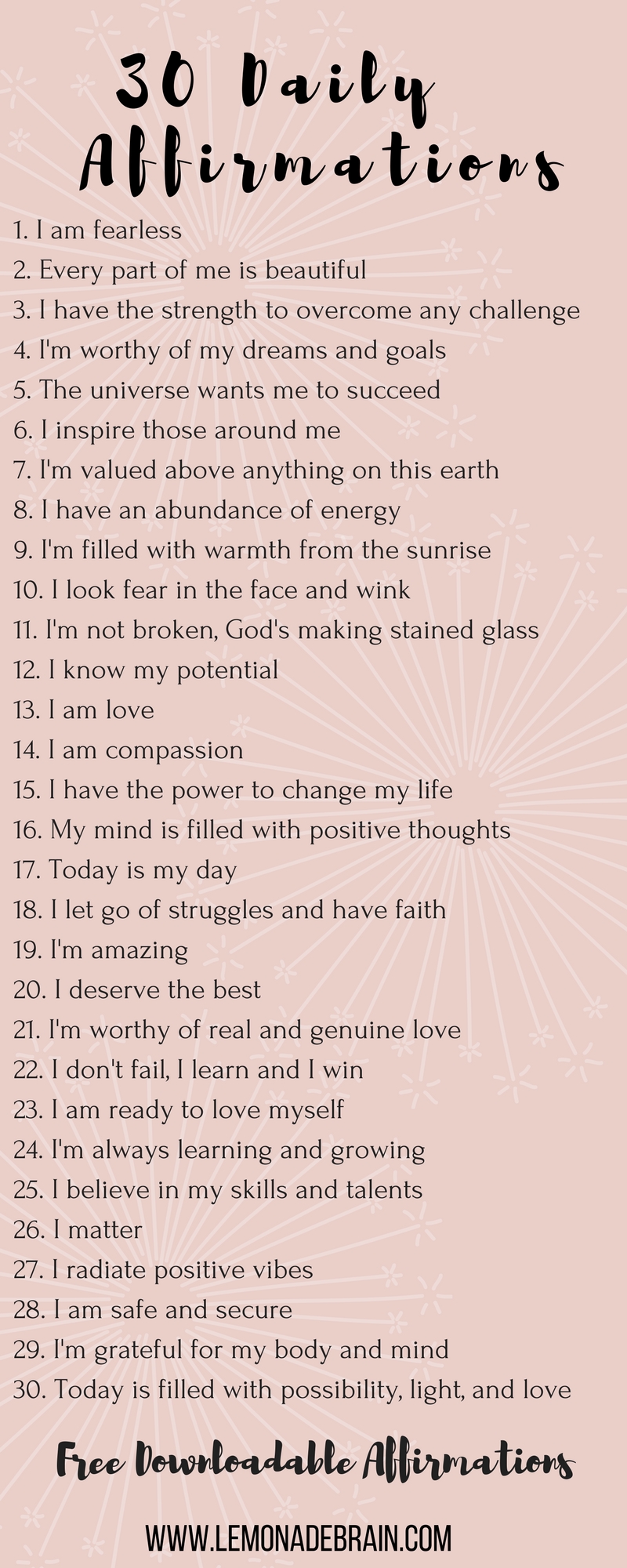
Credit: lemonadebrain.com
Affirmations For Personal Growth
Personal growth is about learning, improving, and becoming your best self. Here are some top affirmations:
- “I am always learning and growing.”
- “I welcome change in my life.”
- “I trust the journey of growth.”
- “I am resilient and adaptable.”
- “I celebrate my progress every day.”
These statements help you stay open to new experiences and see challenges as opportunities.
If you’re going through a big life change, use “I welcome change in my life. ” This helps reduce fear and builds acceptance. When facing setbacks, “I am resilient and adaptable” reminds you of your inner strength.
Data Insight
A survey by the American Psychological Association found that people who use growth affirmations regularly report higher satisfaction with life and greater resilience.
Another tip: Celebrate small wins by saying “I celebrate my progress every day.” This keeps you motivated and helps you notice positive changes.
Affirmations For Work And Career
Work can bring stress, but affirmations help you stay motivated and confident:
- “I am capable and skilled at my job.”
- “I handle work challenges with wisdom.”
- “My efforts are valued and appreciated.”
- “I am moving forward in my career.”
- “I create positive outcomes at work.”
Repeat these before important meetings or tasks. They help reduce anxiety and boost performance.
If you’re feeling stuck or undervalued, use “My efforts are valued and appreciated. ” This can shift your mindset and help you notice the good things in your work life.
Comparison Table: Career Affirmations
| Affirmation | When to Use | Expected Result |
|---|---|---|
| I am capable and skilled at my job. | Before starting work | Confidence boost |
| My efforts are valued and appreciated. | When feeling overlooked | Sense of purpose |
| I handle work challenges with wisdom. | During stressful tasks | Calm and focus |
Choosing the right moment to use each affirmation increases its impact.
If you’re preparing for a job interview, use “I am capable and skilled at my job” to build confidence. During difficult projects, repeat “I handle work challenges with wisdom” to stay calm and focused.

Credit: thechiclife.com
Affirmations For Students And Learning
Learning new things can be tough. Affirmations help students stay motivated:
- “I am focused and ready to learn.”
- “I understand new concepts easily.”
- “I enjoy discovering new ideas.”
- “I am patient with myself as I learn.”
- “I achieve my academic goals.”
If you’re struggling with exams or difficult subjects, use these to boost confidence and reduce anxiety.
Another tip is to use learning affirmations during study breaks. For example, say “I am patient with myself as I learn” after making a mistake. This helps reduce frustration and encourages persistence.
Non-obvious Tip
Many students use affirmations only before tests. But repeating them daily can build a positive attitude toward learning, not just performance.
If you want to improve your memory, try “I understand new concepts easily” and visualize yourself remembering information. This creates a positive expectation and reduces anxiety.
Spiritual And Mindfulness Affirmations
Mindfulness and spirituality involve being present and connecting with your deeper self. Here are some affirmations:
- “I am connected to my inner wisdom.”
- “I trust the flow of life.”
- “I find peace in each moment.”
- “I am grateful for the beauty around me.”
- “I am guided by intuition.”
These statements help you feel calm, centered, and connected.
If you’re struggling with uncertainty, use “I trust the flow of life. ” This encourages acceptance and reduces worry.
Practical Insight
Affirmations for mindfulness work best when combined with meditation or deep breathing. This enhances their calming effect.
Another tip: Use “I am grateful for the beauty around me” during walks in nature or quiet moments. This builds appreciation and deepens your sense of peace.
How To Create Your Own Affirmations
While ready-made affirmations are powerful, creating your own makes them personal and meaningful. Here’s how:
- Start with “I am” or “I choose”. These phrases tell your brain the statement is about you.
- Keep it positive and simple. Avoid negative words.
- Focus on what you want, not what you fear. For example, use “I am confident” instead of “I am not afraid.”
- Be specific. If possible, name the quality or outcome you wish to build.
Example: If you want to improve your public speaking, try “I am a confident and clear speaker.”
Add emotion and visualization to your custom affirmation. For instance, imagine yourself speaking confidently in front of an audience as you say the words. This makes the affirmation feel real and speeds up the process of change.
Common Mistakes Beginners Make
Some people find affirmations don’t work. Here are common reasons:
- Choosing statements that feel fake. If you don’t believe them, your mind resists.
- Repeating them without feeling. Saying words without emotion reduces impact.
- Inconsistent practice. Affirmations need regular repetition to change your mindset.
- Ignoring visualization. Imagining the affirmation as real helps your brain accept it.
If you avoid these mistakes, your affirmations will be much more effective.
Another error is trying too many affirmations at once. Start with one or two, and build up as you gain confidence. Quality is more important than quantity.
Measuring Affirmation Impact
You might ask: How do I know if affirmations are working? Here are signs:
- You feel more positive and confident
- Negative thoughts become less frequent
- You take action toward your goals
- Stress feels easier to manage
For a more objective approach, keep a journal. Write your chosen affirmations and note any changes in mood or behavior after a few weeks.
You can also set small goals linked to your affirmations. For example, if you use “I am confident,” aim to speak up once in a meeting or class. Track your progress and notice any improvements. This helps you see real results and stay motivated.
Scientific Evidence And Real Examples
Affirmations are backed by science. Studies show that regular use can lower stress and improve performance. For example, a study in the journal "Psychological Science" found that students who used self-affirmations before tests performed better, especially those who felt anxious.
Real-world examples abound. Athletes use affirmations before competitions. Business leaders use them to stay motivated. Even therapy programs teach affirmations as part of mental health treatment.
If you want to learn more, check out the research on Psychology Today. It explains how affirmations help rewire your brain and improve well-being.
Another practical example: Olympic athletes often use affirmations such as “I am prepared and ready” before events. This helps them focus, stay calm, and perform at their best. In therapy, affirmations like “I am safe and strong” are used to help people recover from trauma or anxiety.

Credit: www.thepathway2success.com
Data Table: Common Affirmation Benefits
Here’s a table showing the benefits of using affirmations regularly:
| Benefit | Percentage of Users Reporting Improvement | Example Outcome |
|---|---|---|
| Self-esteem | 68% | Greater confidence |
| Stress reduction | 75% | Feeling calmer |
| Motivation | 60% | Taking action on goals |
| Health habits | 55% | Better choices |
These numbers are based on surveys and research from psychological studies. Not everyone sees immediate results, but most people report improvement after consistent practice.
Another non-obvious insight: The biggest gains come from combining affirmations with action. For example, saying “I am motivated” and then setting a small goal each day.
Tips For Sustaining Your Affirmation Practice
Sticking with affirmations is key. Here are some tips:
- Set a reminder. Use your phone or calendar to schedule affirmation time.
- Combine with other habits. Repeat affirmations while walking, exercising, or meditating.
- Share with others. Saying affirmations with a friend or group increases motivation.
- Celebrate progress. Notice small changes and reward yourself.
Even small daily effort can lead to big changes over time.
Another tip: Change your affirmations as your goals evolve. Update your practice to match new challenges or achievements. This keeps your affirmations fresh and relevant.
Frequently Asked Questions
What Are Affirmations?
Affirmations are positive statements you repeat to yourself, designed to change your thoughts and beliefs. They help you build confidence, reduce stress, and support personal growth.
How Often Should I Use Affirmations?
For best results, repeat affirmations daily. Morning and evening are ideal, but any time works. Consistent practice is more important than timing.
Do Affirmations Really Work?
Yes, scientific studies show that affirmations can improve mood, reduce stress, and help you achieve goals. The key is choosing statements you believe and repeating them regularly.
Can I Create My Own Affirmations?
Absolutely. Personal affirmations are often more powerful because they match your unique goals and challenges. Follow the steps above to make your own.
Why Don’t Affirmations Work For Everyone?
Sometimes, people choose affirmations that feel fake or repeat them without feeling. It’s important to pick statements that feel possible and practice with emotion and consistency.
Closing Thoughts
Affirmations offer a simple way to change your mindset and improve your life. The best affirmations are clear, positive, and meaningful to you. By repeating them daily, writing them down, and visualizing their truth, you can build confidence, reduce stress, and reach your goals.
Remember, real change takes time and practice. Start with a few affirmations that matter most to you and notice the difference over weeks and months. With patience and belief, you’ll see positive shifts in your thoughts, feelings, and actions.
If you ever feel stuck, remember: the act of repeating positive statements is a small step, but it can lead to big results. Keep going, adjust your affirmations as you grow, and celebrate every improvement. Over time, these words will become part of how you see yourself and your world.
