

How to Write Effective Affirmations for Lasting Positive Change
How To Write Effective Affirmations
Affirmations are simple sentences you repeat to yourself, usually to change your mindset or habits. Many people use affirmations to build confidence, reduce stress, or reach goals. But not all affirmations work the same way. If you want to see real results, you need to create effective affirmations that suit your needs.
This guide gives you everything you need to know about writing powerful affirmations. You’ll learn how affirmations work, how to write your own, common mistakes to avoid, and practical techniques to make them part of your daily life. Whether you’re new to affirmations or want to improve your skills, you’ll find insights and strategies here that go beyond basic advice.
What Are Affirmations?
Affirmations are positive statements that help you change your thoughts, feelings, or actions. You repeat them regularly to reprogram your mind. For example, saying “I am confident” every morning can help you feel more confident over time.
How Affirmations Work
Your brain is shaped by the thoughts you repeat. If you often think negative things like “I can’t do this,” your brain starts to believe them. Affirmations replace these negative thoughts with positive ones. Over time, this can change your beliefs, which affect your actions and outcomes.
Psychologists call this process self-talk. Studies show that positive self-talk can improve motivation, mood, and even performance in tasks. When you use affirmations regularly, you’re training your mind to see possibilities instead of limits.
Common Uses
People use affirmations for many reasons, such as:
- Building self-confidence
- Reducing anxiety
- Improving focus
- Achieving personal goals
- Changing habits
- Boosting happiness
The key is to use affirmations that match your needs and values.
Why Some Affirmations Work Better Than Others
Not every affirmation is effective. The way you write and use affirmations makes a big difference.
The Science Behind Effective Affirmations
Research shows that affirmations work best when they feel believable and are connected to your real goals. For example, if you’re very shy, saying “I am the most outgoing person in the world” may feel false. Your mind rejects it, and it doesn’t help.
A study published in the journal “Social Cognitive and Affective Neuroscience” found that affirmations are more powerful when they focus on your core values and are phrased in a way you accept. So, writing affirmations carefully is essential.
Key Factors For Success
- Personal relevance: Affirmations must matter to you.
- Believability: They should feel possible, not forced.
- Clarity: Simple, clear statements are easier to remember and repeat.
- Consistency: Repeating them daily is important.
How To Write Effective Affirmations
Writing good affirmations is a skill. Follow these steps to create affirmations that really work for you.
Step 1: Identify Your Goal
Start with a clear goal. What do you want to change or achieve? The goal can be:
- Feeling more confident
- Reducing stress
- Improving your health
- Building better habits
- Achieving a specific target
Write your goal in a simple sentence. This helps you focus your affirmation.
Step 2: Use Present Tense
Affirmations should be in the present tense. Instead of saying “I will be confident,” say “I am confident.” This tells your mind that the change is happening now.
Examples:
- “I am strong.”
- “I eat healthy foods.”
- “I handle challenges with calm.”
Step 3: Keep It Positive
Avoid negative words. Focus on what you want, not what you don’t want. For example, instead of “I am not afraid,” say “I am brave. ”
Positive statements create positive feelings. This makes your affirmation more effective.
Step 4: Make It Personal
Use “I” or “my. ” This makes the affirmation about you.
Examples:
- “I trust my decisions.”
- “My work matters.”
- “I love my body.”
Step 5: Be Specific
Vague affirmations are less powerful. Be as specific as possible.
Instead of “I am successful,” try:
- “I complete my tasks with focus and energy.”
- “I achieve my goals step by step.”
Step 6: Keep It Short And Simple
Long affirmations are hard to remember and repeat. Aim for one sentence, or two at most.
Example:
- “I am calm and focused during meetings.”
Step 7: Add Emotion
Affirmations work better when you feel them. Add words that spark emotion, like “excited,” “grateful,” or “proud. ”
Examples:
- “I am grateful for my progress.”
- “I am excited to learn new things.”
Examples Of Effective Affirmations
Here are examples for different goals. Notice how they follow the steps above.
Confidence
- “I am confident in my abilities.”
- “I speak clearly and with purpose.”
- “I trust myself to make good choices.”
Stress Reduction
- “I am calm in stressful situations.”
- “I breathe deeply and relax my mind.”
- “I let go of worry and focus on solutions.”
Health
- “I enjoy nourishing my body with healthy food.”
- “I move my body with energy and joy.”
- “I am grateful for my strong, healthy body.”
Success
- “I achieve my goals through hard work.”
- “I am proud of my progress every day.”
- “I welcome new opportunities.”
Relationships
- “I communicate with kindness and respect.”
- “I listen deeply and understand others.”
- “I am surrounded by love and support.”

Credit: www.youtube.com
Common Mistakes When Writing Affirmations
Even experienced users make mistakes. Avoid these to get better results.
- Using negative words (“I am not afraid”)
- Using future tense (“I will be successful”)
- Making them too long or complex
- Choosing affirmations that feel false or unrealistic
- Being too vague (“I am happy”)
- Forgetting to make it personal (“Success is easy”)
- Lacking emotional impact
Many beginners try to fix negative beliefs with “opposite” affirmations. But this can feel fake. Instead, focus on believable, gradual change.
Practical Ways To Use Affirmations
Writing affirmations is only the first step. Using them daily makes them powerful.
Daily Repetition
Repeat your affirmation at the same time each day. Morning and evening are good choices. Say them out loud, write them, or think them.
Visualization
Picture yourself living your affirmation. If your affirmation is “I am confident in meetings,” imagine yourself speaking confidently in a meeting.
Writing Practice
Write your affirmation in a notebook every day. This helps you remember and feel it.
Mirror Technique
Stand in front of a mirror and say your affirmation. Look into your eyes as you speak.
Recording
Record your affirmations and listen to them. Hearing your own voice can boost belief.
Reminder Notes
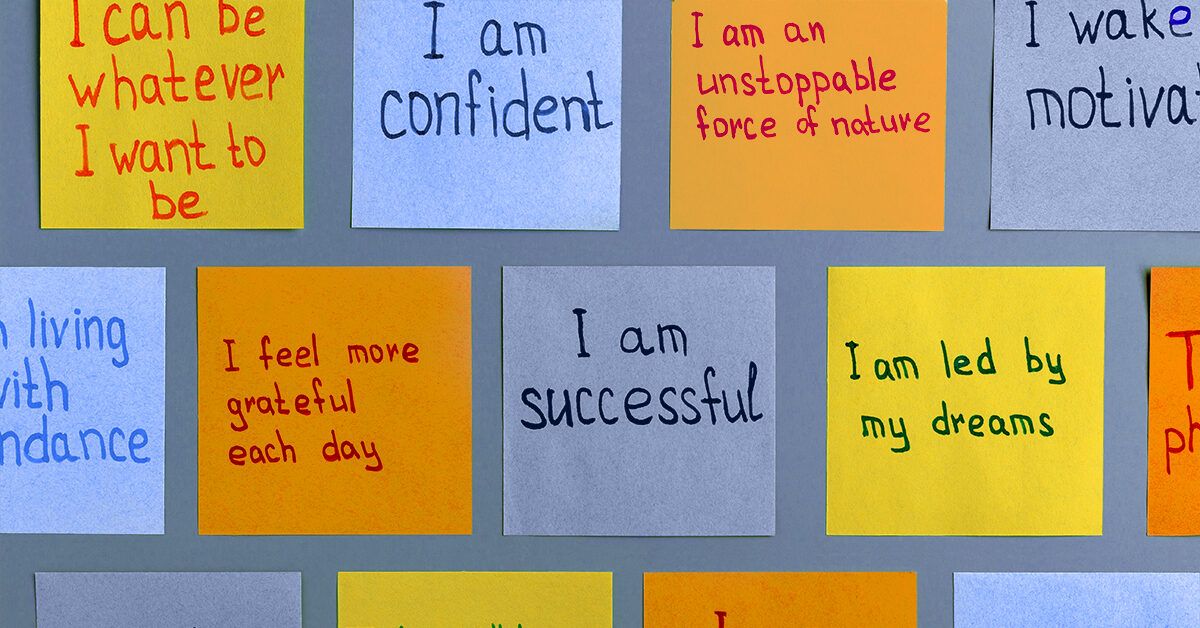
Place sticky notes in places you see often (desk, bathroom, kitchen). This keeps your affirmation top of mind.
Habit Tracker
Use a tracker or calendar to mark each day you repeat your affirmation. This builds consistency.
How Long Does It Take For Affirmations To Work?
Results depend on your starting point and how often you use affirmations. Some people notice changes in days. For others, it takes weeks or months.
Research suggests that repeating affirmations for at least 21 days can help form new beliefs. However, lasting change often takes longer. The key is daily practice and patience.
How To Make Affirmations More Powerful
Beyond writing and repeating, there are ways to make affirmations work even better.
Combine With Action
Affirmations should inspire you to act. If your affirmation is “I am healthy,” pair it with healthy actions like eating well or exercising.
Use Visualization
See yourself living your affirmation. This builds mental images that your brain accepts as real.
Emotional Engagement
Feel the emotion behind your affirmation. Smile or breathe deeply as you repeat it.
Customize For Different Areas
Write different affirmations for work, health, relationships, and personal growth.
Challenge Limiting Beliefs
If you notice resistance, write a gentle affirmation to bridge the gap. For example, if “I am confident” feels too hard, try “I am learning to feel more confident every day. ”
Real-life Examples And Success Stories
Many people have used affirmations to change their lives. Here are examples that show how affirmations can work in practice.
Sarah: Building Confidence At Work
Sarah felt nervous in meetings. She started using the affirmation, “I speak clearly and confidently. ” She repeated it daily and pictured herself speaking in meetings. Within a month, her colleagues noticed her new confidence.
Mike: Improving Health Habits
Mike wanted to eat healthier. He wrote, “I enjoy healthy foods every day. ” He put this affirmation on his fridge. By seeing and repeating it, he began making better food choices.
Ana: Reducing Stress
Ana felt stressed about exams. She used, “I am calm and focused during tests. ” She repeated it before studying and before each exam. Her anxiety dropped, and her grades improved.
Data: Affirmations Compared With Other Mindset Techniques
Affirmations are just one tool. Let’s compare them with other popular mindset methods.
| Technique | Purpose | Time Required | Evidence of Effectiveness |
|---|---|---|---|
| Affirmations | Change self-talk | 1-5 minutes/day | Moderate to strong, especially for self-esteem |
| Meditation | Reduce stress and improve focus | 10-20 minutes/day | Strong, well-researched |
| Visualization | Build belief and motivation | 5-10 minutes/day | Moderate, especially in sports |
| Journaling | Process thoughts and emotions | 10-15 minutes/day | Moderate, helps with clarity |
This shows that affirmations are quick to use and can have a strong effect, especially when combined with other tools.
Comparing Types Of Affirmations
There are different kinds of affirmations. Some focus on general self-esteem, others target specific goals.
| Type | Example | Best For | Common Mistake |
|---|---|---|---|
| Self-esteem | I am worthy and loved | Building confidence | Too vague |
| Goal-focused | I achieve my sales target | Motivation for tasks | Not believable |
| Habit-change | I enjoy exercising daily | Forming new habits | Forgetting action |
| Emotional | I am calm and patient | Managing feelings | Ignoring triggers |
Choose the type that fits your needs, and avoid common mistakes for each.
How To Adjust Affirmations Over Time
As you grow, your needs change. So should your affirmations.
Review And Update
Check your affirmations every month. Are they still relevant? Do they feel real? Adjust the wording if needed.
Progress Tracking
Keep a journal or tracker. Write down how you feel before and after using your affirmation. This helps you see progress and areas to improve.
Overcoming Stuck Points
If you’re not seeing results, try:
- Changing the affirmation to make it more believable
- Adding emotional words
- Combining it with action steps
For example, instead of “I am successful,” try “I am learning new skills every day. ”
How Many Affirmations Should You Use?
You don’t need dozens of affirmations. One to three is enough for most people. Too many can feel overwhelming.
Focus on key areas of your life. For beginners, start with one. As you become comfortable, add more.
Affirmations For Different Life Stages
Affirmations can help at any age or stage. Here are examples for different groups.
Students
- “I am focused and ready to learn.”
- “I understand new ideas easily.”
- “I handle exams with calm.”
Professionals
- “I am organized and productive.”
- “I lead with confidence and kindness.”
- “I grow in my career every day.”
Parents
- “I am patient and loving.”
- “I support my children’s growth.”
- “I balance family and self-care.”
Retirees
- “I enjoy each day with gratitude.”
- “I stay active and engaged.”
- “I value my experience and wisdom.”
Credit: psychcentral.com
Non-obvious Insights: What Beginners Often Miss
1. The Role Of Belief
Beginners often think repeating any affirmation will work. But belief is key. If your mind rejects the affirmation, it won’t stick. Start with statements you can accept, even if they are small steps.
2. Emotional Triggers
Affirmations are stronger when they address emotional triggers. For example, if you feel anxious before public speaking, use a specific affirmation before the event.
3. Combining With Physical Actions
Affirmations linked to action are more effective. For example, “I am energetic” works best when you also stretch or move your body as you say it.
4. The Power Of Writing
Writing your affirmation by hand activates different parts of your brain. This makes it more memorable and powerful than just saying it.
5. Measuring Progress
Track your feelings and actions. Many people forget to measure progress, but this helps you know what works and adjust as needed.
Data: Affirmation Impact On Wellbeing
Let’s look at some data showing how affirmations can impact wellbeing.
| Study Group | Affirmation Practice | Reported Improvement | Area of Improvement |
|---|---|---|---|
| High school students | Daily for 4 weeks | 60% | Self-confidence |
| Corporate employees | Daily for 6 weeks | 45% | Stress management |
| Weight-loss group | Daily for 8 weeks | 50% | Healthy habits |
| Retired adults | Daily for 5 weeks | 55% | Life satisfaction |
This data shows that regular affirmation practice can lead to meaningful improvements in different areas.

Credit: www.binauralbeatsfreak.com
How To Troubleshoot Affirmations
If you’re not seeing results, try these steps:
- Check if your affirmation feels believable
- Make it more specific
- Add emotion or action
- Change the time or way you repeat it
Sometimes, working with a coach or counselor can help you design better affirmations.
Using Affirmations With Children
Affirmations can help children build confidence and manage emotions. Keep them simple and fun.
Examples:
- “I am brave.”
- “I am a good friend.”
- “I can learn new things.”
Encourage children to say their affirmation out loud or write it in a journal.
Digital Tools For Affirmations
Many apps and websites help you create and track affirmations. They offer reminders, examples, and progress tracking.
Popular options include:
- Affirmation reminder apps
- Journaling apps
- Meditation apps with affirmation sections
Technology can make it easier to build a daily habit.
When To Seek Professional Help
Affirmations are not a replacement for therapy or medical care. If you struggle with serious anxiety, depression, or trauma, talk to a professional. Affirmations can support your recovery, but they are not a cure.
Frequently Asked Questions
What Is The Best Time To Use Affirmations?
The best time is when your mind is calm and focused, such as in the morning or before bed. Some people use affirmations during breaks, before stressful events, or whenever negative thoughts appear.
How Many Times Should I Repeat An Affirmation Daily?
Repeating an affirmation 3 to 10 times is common. The key is consistency. Saying it once with full attention can be more powerful than repeating it many times without feeling.
Can Affirmations Help With Anxiety?
Yes, affirmations can help reduce anxiety by changing negative self-talk. Choose affirmations that focus on calm and confidence. If anxiety is severe, combine affirmations with other methods like breathing exercises or therapy.
Do Affirmations Work For Everyone?
Affirmations can help most people, but results vary. If affirmations feel fake or forced, try changing the wording. For some, other tools like visualization or journaling may be more effective.
Where Can I Find More Research About Affirmations?
Reliable research can be found on psychology websites and in scientific journals. A good starting point is Positive Psychology, which offers articles and studies about the impact of affirmations.
Writing effective affirmations is not just about repeating words. It’s about creating statements that fit your goals, beliefs, and feelings. By following the steps and insights in this guide, you can build affirmations that help you grow and succeed. Remember, the most powerful affirmations come from your own experience and values.
Start today, keep it simple, and let your affirmations support your journey.
