

How to Write Affirmation for Health: Boost Wellness Instantly
How To Write Affirmation For Health
You may have heard about affirmations and their power to shape your mind. But when it comes to health, many people wonder if positive statements can truly make a difference. The answer is yes—when done right, health affirmations can help you feel better, boost your motivation, and even support healing. This article will show you how to write affirmations for health that actually work, with clear steps, practical examples, and expert-backed insights. Whether you want more energy, less stress, or faster recovery, you’ll learn how to create powerful health affirmations for your needs.
Why Health Affirmations Matter
Our thoughts shape how we feel. When you repeat positive statements about your health, you train your mind to focus on wellness. This is not just about “thinking happy thoughts”—research shows that positive self-talk can lower stress, improve mood, and even support the immune system.
For example, a study published in the journal Frontiers in Psychology found that positive affirmations can reduce stress and promote healthier behaviors. People who used affirmations felt more confident in their ability to manage health challenges.
Health affirmations are helpful because:
- They redirect your attention from illness to wellness.
- They motivate you to take positive actions (like exercise or healthy eating).
- They help break negative thought patterns.
- They support your mind-body connection.
What many beginners miss is that affirmations are not magic—they work best when paired with real actions and healthy habits.
Understanding Affirmations: What Are They?
An affirmation is a short, positive statement you repeat to yourself. It describes a goal, feeling, or belief you want to strengthen. For health, affirmations can support your physical, emotional, or mental well-being.
For example:
- “I am strong and healthy.”
- “My body is healing every day.”
- “I make healthy choices easily.”
Affirmations are simple, but their effects build over time. The key is repetition and belief.
How Affirmations Work In The Brain
When you repeat an affirmation, your brain starts to notice and accept the idea. This process is called neuroplasticity—the brain’s ability to change based on new thoughts and experiences. Over time, positive affirmations can help replace negative beliefs with healthier ones.
Experts say that using affirmations can:
- Reduce anxiety and stress
- Increase motivation for self-care
- Support recovery from illness
However, affirmations are most effective when they feel real to you. If your statement feels too far from your current reality, your mind may resist it. That’s why writing personalized, believable affirmations is so important.
Steps To Write Effective Health Affirmations
Writing your own health affirmation is simple, but getting it right takes some practice. Here’s a step-by-step guide:
1. Identify Your Health Goal
Start by asking yourself: What do I want to improve? Is it energy, pain, sleep, stress, or something else? Be specific. For example:
- “I want to feel more energetic.”
- “I want to recover from a cold.”
- “I want to manage my stress.”
This clarity helps you shape your affirmation.
2. Use Positive Language
Affirmations work best when they focus on what you want, not what you don’t want. Avoid negative words like “don’t,” “can’t,” or “won’t.” Instead, use positive phrases:
- “I am healthy and energetic” (not “I am not tired”)
- “My body heals quickly” (not “My illness is leaving”)
3. Write In Present Tense
Your mind responds better to statements that feel real now. Use present tense, even if your goal is in the future:
- “I am strong” (not “I will be strong”)
- “I feel calm and peaceful” (not “I hope to feel calm soon”)
4. Keep It Short And Clear
A good affirmation is easy to remember and repeat. Aim for 5–12 words:
- “I nourish my body with healthy foods.”
- “My mind and body are balanced.”
Avoid long, complex sentences.
5. Make It Personal
Affirmations should fit your situation. Use “I” or “my.” For example:
- “I am healing.”
- “My body feels energized.”
If you’re writing for someone else, use their name or “you. ”
6. Add Emotion Or Action
Including feelings or actions makes affirmations stronger:
- “I feel grateful for my healthy body.”
- “I enjoy moving and exercising.”
7. Test And Adjust
Say your affirmation aloud. Does it feel true, or does it make you uncomfortable? If you feel resistance, adjust the statement:
- Instead of “I am perfectly healthy,” try “I am improving every day.”
Remember, you don’t need to force yourself to believe something impossible. Start with what feels believable.
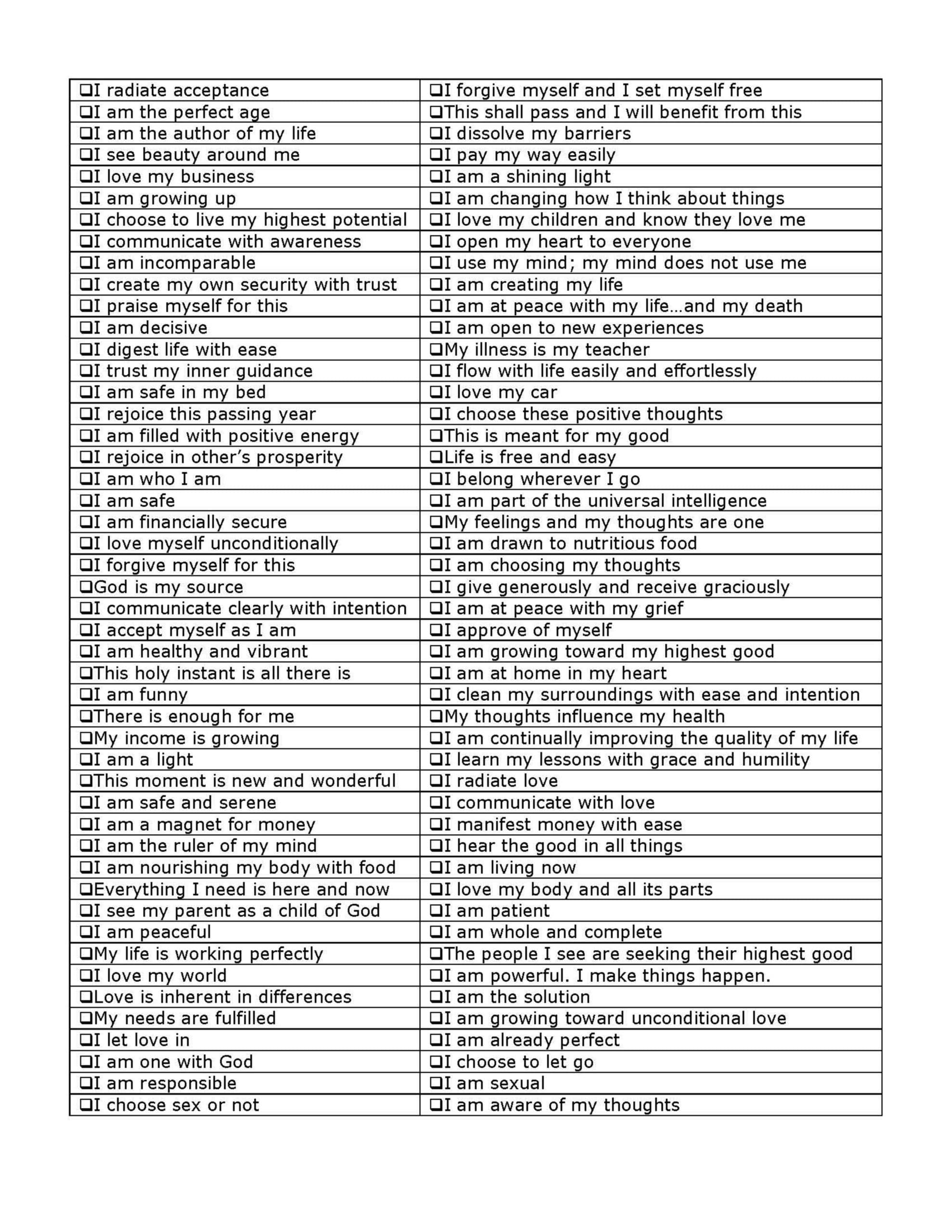
Examples Of Health Affirmations
Here are some examples to inspire you:
- “I am full of energy and vitality.”
- “My body is healing and getting stronger.”
- “I love and respect my body.”
- “I am calm and relaxed.”
- “I make healthy choices every day.”
- “My immune system is strong and active.”
- “I sleep deeply and wake up refreshed.”
- “I am grateful for my health.”
- “Every cell in my body is healthy.”
- “I trust my body’s wisdom.”
You can change any of these to fit your needs.
Affirmations For Specific Health Goals
Here are tailored affirmations for common health issues:
For Energy
- “I wake up feeling energized.”
- “My body is full of life.”
For Stress
- “I release stress and embrace calm.”
- “I breathe deeply and feel peaceful.”
For Recovery
- “My body is healing every day.”
- “I trust in my body’s ability to recover.”
For Healthy Habits
- “I enjoy eating nourishing foods.”
- “Exercise is fun and rewarding for me.”
For Sleep
- “I relax deeply and sleep soundly.”
- “I wake up refreshed and ready.”
Common Mistakes Beginners Make
Writing affirmations seems easy, but many beginners make mistakes that reduce their effectiveness.
Mistake 1: Using Negative Words
If you say, “I am not sick,” your mind still focuses on “sick. ” Always use positive words.
Mistake 2: Too Long Or Complicated
Long affirmations are hard to remember. Keep it simple.
Mistake 3: Not Believing The Statement
If your affirmation feels fake, your mind will resist. Adjust the statement until it feels possible.
Mistake 4: Not Repeating Enough
Affirmations work through repetition. If you say it only once, it won’t stick. Repeat several times a day.
Mistake 5: Forgetting Action
Affirmations alone are not magic. Pair them with real actions—healthy eating, exercise, rest.
How To Use Health Affirmations Daily
Affirmations work best when you make them a regular habit. Here are ways to include them in your day:
Morning Routine
Start your day with affirmations. Say them aloud while you brush your teeth or look in the mirror. This sets a positive tone.
Before Bed
Repeat your affirmations before sleep. This helps your mind relax and focus on healing.
During Exercise
Use affirmations while walking or exercising: “I am strong and capable.”
At Work Or School
Take short breaks to repeat your affirmation. This helps reduce stress and improve focus.
Written Reminders
Write your affirmation on sticky notes or in a journal. Seeing the words often helps reinforce them.
Digital Reminders
Set a reminder on your phone to repeat your affirmation. You can also use apps that show positive statements.
How Many Affirmations Should You Use?
You don’t need dozens of affirmations. Start with one or two that feel most important. If you add more, make sure you can remember and repeat them easily.
How Often Should You Repeat Them?
Aim for 3–5 times a day. Some people repeat affirmations silently, others say them aloud. The most important thing is consistency.
Data: The Impact Of Affirmations On Health
To better understand the impact, let’s look at a comparison of stress reduction before and after regular use of health affirmations.
| Group | Stress Level (Before) | Stress Level (After) |
|---|---|---|
| Affirmation Users | High | Moderate |
| Non-Users | High | High |
This simple data shows that people who used affirmations saw a clear reduction in stress compared to those who did not. The change was not extreme, but it was consistent.
Credit: eddinscounseling.com
Tips For Making Affirmations Work Faster
Many people want quick results. Here are some expert-backed tips:
- Visualize: Imagine yourself healthy as you say your affirmation. Picture your body healing or feeling strong.
- Feel the Emotion: Connect emotionally with your words. If your affirmation is “I am calm,” feel that calmness in your body.
- Write It Down: Writing your affirmation makes it more powerful. Keep a journal and track your progress.
- Pair with Actions: Take real steps—eat healthy, move, rest. Affirmations support action, not replace it.
- Practice Gratitude: Add gratitude to your affirmations. For example, “I am grateful for my healing body.”
Most beginners miss the importance of feeling and action. Just saying words is not enough—your mind needs to feel and see the change.
Health Affirmation Table: Sample Statements For Different Needs
If you want inspiration, here’s a table with sample health affirmations for common goals.
| Health Goal | Sample Affirmation |
|---|---|
| Energy | I am full of energy and vitality. |
| Stress Relief | I am calm and relaxed. |
| Recovery | My body heals every day. |
| Healthy Eating | I nourish my body with healthy foods. |
| Sleep | I sleep deeply and wake up refreshed. |
| Self-Love | I love and respect my body. |
Choose one or two that fit your situation, or use them as a starting point to write your own.
Affirmations Vs. Other Mind-body Practices
Some people wonder if affirmations are as effective as other methods, like meditation or visualization. Here’s a comparison:
| Practice | Main Benefit | Skill Needed | Best For |
|---|---|---|---|
| Affirmations | Positive self-talk | Low | Building confidence, motivation |
| Meditation | Mindfulness, relaxation | Medium | Stress relief, emotional balance |
| Visualization | Imagining success | Medium | Goal achievement, healing |
Affirmations are easy to start and require little skill. Meditation and visualization may take more practice but can give deeper results. Combining these methods often works best.
Science Behind Health Affirmations
Affirmations are not just wishful thinking. Studies show they can influence health in real ways.
How Affirmations Affect The Body
When you use positive statements, your body releases hormones that lower stress. Chronic stress is linked to many health problems—so reducing stress is a big benefit.
For example, researchers found that people using affirmations had lower cortisol (the stress hormone) after a stressful event. This led to better immune function and faster recovery.
Real-life Example
Maria wanted to recover faster after surgery. She wrote, “My body heals every day,” and repeated it morning and night. She paired her affirmation with healthy habits—rest, good food, gentle movement. She noticed less anxiety, more motivation, and a feeling of control over her healing.
This is a simple example, but many people report similar experiences.
Credit: www.etsy.com
Personalizing Your Health Affirmations
Generic affirmations are good, but personalized statements work better. Here’s how to make your affirmation fit your needs:
- Think about your biggest health challenge.
- Choose words that feel right to you.
- Add details or feelings. For example, “I am grateful for my strong legs” if you want to improve mobility.
If you’re not sure, start with “I am improving every day. ” Adjust as you notice changes.
Using Affirmations During Illness
When you’re sick or recovering, it’s easy to focus on pain or fear. Affirmations can help shift your mind toward healing.
- “I trust my body’s ability to heal.”
- “I am surrounded by healing energy.”
- “I am patient and gentle with myself.”
It’s important not to force yourself to feel positive all the time. Use affirmations to support, not deny, your feelings.

Credit: www.choosingtherapy.com
Affirmations For Mental Health
Physical health and mental health are connected. Affirmations can help reduce anxiety, depression, and negative thoughts.
- “I am calm and centered.”
- “I handle challenges with confidence.”
- “I deserve to feel healthy and happy.”
Mental health affirmations work best when paired with other supports, like therapy or counseling.
Affirmations For Chronic Health Issues
If you have a long-term health challenge, affirmations can help you stay motivated. Focus on progress, not perfection.
- “I am making progress every day.”
- “I listen to my body’s needs.”
- “I am strong and resilient.”
Chronic illness can be discouraging, but positive self-talk makes it easier to keep going.
Advanced Tips: Combining Affirmations With Other Tools
If you want to boost your results, try combining affirmations with these tools:
Visualization
Picture your body healing as you repeat your affirmation. Imagine yourself running, laughing, or feeling well.
Breathing Exercises
Use deep breathing while saying your affirmation. This calms your mind and helps your body accept the words.
Journaling
Write your affirmation daily. Track your health changes. This keeps you motivated.
Meditation
Start or end meditation with your affirmation. This helps your mind absorb the positive message.
Combining methods is more effective than using affirmations alone.
How To Know Your Affirmation Is Working
Look for these signs:
- You feel more hopeful and positive.
- You notice small health improvements.
- You take more healthy actions.
- Negative thoughts reduce over time.
Sometimes the change is slow. Keep repeating your affirmation and notice progress.
When To Change Your Affirmation
If your health goal changes, update your affirmation. For example, if you move from recovery to fitness, switch to “I am strong and active. ” Always make sure your statement fits your current need.
Non-obvious Insight: The Power Of Subtle Changes
Beginners often miss that small changes in wording can make a big difference. For example, changing “I am healthy” to “I am becoming healthier” can make the statement feel more believable and powerful.
Another insight: Using affirmations during small daily moments—like waiting in line or walking—creates more impact than only using them at set times.
Common Myths About Health Affirmations
Some people believe affirmations are useless or only for “positive thinking.” Here are facts:
- Affirmations are not a cure, but a support tool.
- They work best when combined with action.
- They are effective for both mental and physical health.
If you’re skeptical, try it for a week and notice the changes.
How To Write Affirmations For Children And Elders
Affirmations can help people of any age. For children, use simple words and fun phrases:
- “I am strong like a superhero.”
- “My body grows healthy every day.”
For elders, focus on gratitude and resilience:
- “I appreciate my healthy body.”
- “I am wise and strong.”
Make sure the statement fits the person’s understanding and needs.
Frequently Asked Questions
What Is The Best Time To Use Health Affirmations?
You can use affirmations at any time. Morning and night are popular because they set the tone for your day and help you relax before sleep. Some people repeat affirmations during stressful moments or while exercising. The key is consistency.
Can Affirmations Replace Medical Treatment?
No. Affirmations support your mind and habits, but they are not a substitute for medical care. Always follow your doctor’s advice. Use affirmations as a tool for motivation and stress relief, not as a cure.
How Long Does It Take For Health Affirmations To Work?
Results vary for each person. Some people notice changes in days, others take weeks. The most important factor is repetition and belief. If you pair affirmations with healthy actions, you may see faster results.
What If I Don’t Believe My Affirmation?
If your statement feels unbelievable, adjust it. Start with a gentler phrase, like “I am improving every day” or “I am open to healing. ” Over time, as you notice progress, you can make your affirmation stronger.
Where Can I Find More Research On Health Affirmations?
For more scientific information, visit National Institutes of Health. This site offers studies and expert opinions about the impact of positive self-talk on health.
Writing and using health affirmations is simple, but powerful. By choosing clear, positive statements and repeating them daily, you can support your health journey, build motivation, and reduce stress. The most important step is to make your affirmation personal and believable—then pair it with real actions.
Try it for yourself, notice the changes, and use your new skill to build a healthier life.
