

How Often Do You Repeat Affirmations: Unlock Lasting Results
How Often Do You Repeat Affirmations
Many people want to build positive habits or change their thinking. One simple tool for this is affirmations. These are short, positive statements you say to yourself. You may have heard that repeating affirmations can help with confidence, stress, or even reaching goals. But how often should you repeat affirmations? Is once a day enough, or do you need to say them many times? This article answers these questions in detail. You’ll learn how frequency affects results, how to find your perfect routine, and the science behind repetition. If you’re new to affirmations or want to use them better, you’ll get practical advice and real examples here.
What Are Affirmations?
Affirmations are positive statements you say or write to yourself. These statements focus on what you want to believe or achieve. For example:
- “I am confident.”
- “I can handle challenges.”
- “I deserve success.”
The goal is to change your mindset. When you repeat affirmations, you train your brain to accept these ideas. Over time, this can help you feel better, improve your actions, and reach your goals.
Affirmations are more than just “feel-good” phrases. They’re tools that help guide your mind toward positive beliefs and away from negative thinking. If you often say, “I’m not good enough,” your brain starts to believe it. But if you change this to, “I am capable,” you can slowly train your mind to accept new beliefs.
Why People Use Affirmations
Most people use affirmations for:
- Self-confidence: To feel more sure about themselves.
- Stress control: To stay calm in hard situations.
- Goal setting: To stay focused and motivated.
- Changing habits: To break negative thinking patterns.
Affirmations are easy to use and don’t need any special equipment. You can say them out loud, write them down, or even think them silently.
People also use affirmations in areas like sports, business, relationships, and health. For example, athletes might repeat, “I am strong and focused,” before a competition. Someone trying to eat healthier might say, “I make good choices for my body. ” The great thing is you can use them anywhere and anytime, making them a flexible tool for personal growth.
Non-obvious insight: The wording of an affirmation matters. Using positive, present-tense language (“I am calm” instead of “I won’t be anxious”) makes them more powerful because your brain responds better to statements about what you want, not what you don’t want.
Why Repetition Matters
Repeating affirmations is not just about saying words. The real change comes from consistent repetition. Let’s explore why this matters.
How Repetition Affects Your Brain
When you repeat a statement often, your brain starts to believe it. This is called neuroplasticity—your brain changes based on what you focus on. The more you repeat an affirmation, the stronger this new belief becomes.
Imagine your mind as a path through a field. If you walk the same path every day, it becomes easier to follow. Affirmations work the same way. The more you repeat them, the easier it is for your brain to believe and follow these new ideas.
For example, if you always say “I am confident,” your brain will slowly accept this as true. It’s like building a new path in your mind.
Consistency Vs. Quantity
Some people think repeating affirmations many times in one day is best. Others believe that regular, daily repetition works better. Research suggests that consistency matters more than quantity. It’s better to repeat affirmations daily than to say them a hundred times in one day and then stop.
Non-obvious insight: Your brain learns best when repetition happens over time, not just all at once. This is why daily practice is more powerful than doing too much in a single session.
Also, the way you feel when repeating affirmations is important. If you just rush through them, your brain pays less attention. But if you take your time and focus, the repetition has a stronger effect.
How Often Should You Repeat Affirmations?
There is no single answer, but experts recommend certain routines. Here’s what works for most people:
Daily Repetition
Most people see good results by repeating their affirmations every day. Saying your affirmations once in the morning and once in the evening is a strong routine. This helps start and end your day with positive thoughts.
If you’re new to affirmations, begin with once a day and notice how you feel. As you get comfortable, you can add a second session. Consistency is more important than the number of times you repeat them in one sitting.
Multiple Times Per Session
It’s common to repeat each affirmation 3 to 10 times per session. For example, you might say, “I am confident” ten times in the morning. Repeating each one several times makes it stronger.
Some people like to count on their fingers, use a string of beads, or write the affirmation down each time. These tricks can help you stay focused during each session and make the process feel more meaningful.
Weekly And Monthly Consistency
Repeating affirmations daily for at least 30 days helps your brain accept them. If you skip days, your progress slows down. Try to stick to your routine as much as possible.
A month of regular practice is usually enough to notice changes, but some deep-rooted beliefs may take several months. Don’t get discouraged if you don’t feel different right away. Change builds over time.
Personalizing Your Routine
Some people need more repetition, while others need less. You might notice that repeating an affirmation five times feels right for you. Listen to your feelings and adjust as needed.
If you notice you’re losing focus or feeling bored, reduce the number of repetitions or try a different affirmation. If you feel your belief is getting stronger, you can slowly lower the frequency or add new affirmations.
Non-obvious insight: The best routine is the one you can keep doing without stress. If your routine feels like a chore, you’re less likely to stick with it. Find a balance that fits your life.
Factors That Influence How Often You Repeat Affirmations
Not everyone needs the same routine. Here are the main factors that affect frequency:
| Factor | How It Changes Repetition |
|---|---|
| Goal Type | Big goals may need more frequent repetition |
| Emotional State | If you feel stressed, repeating affirmations more often helps |
| Belief Strength | If you doubt your affirmation, repeat it more |
| Time Available | Busy people may repeat less often but with more focus |
| Personal Preference | Some people like frequent repetition, others prefer fewer sessions |
Example: Changing A Deep Belief
Suppose you want to believe “I am good enough,” but you have strong doubts. You might repeat this affirmation five times in the morning, five times at lunch, and five times at night. Over time, you’ll notice your doubts fading.
This approach works well if you’re trying to overcome years of negative self-talk. For example, if you grew up hearing that you’re not smart enough, changing that belief will likely require more frequent repetition. Using reminders, like sticky notes on your mirror, can help reinforce the message throughout your day.
Example: Stressful Days
If you have a stressful day, you may need to repeat your affirmations more often. For example, before a big meeting, say your affirmations to help calm your mind.
You can even create a special “emergency” affirmation for tough moments, like, “I am calm and in control,” and repeat it as needed. Some people keep a list of their favorite affirmations on their phone so they can access them during stressful times.
Non-obvious insight: It’s not just about how many times you repeat. It’s also about when you repeat. Timing can make your affirmations more powerful.
For instance, repeating an affirmation right after a negative thought or difficult event can help you break the cycle of negativity more quickly.
Best Times To Repeat Affirmations
Timing can affect how well affirmations work. Here are the best times to repeat them:
Morning Routine
Saying affirmations in the morning helps set a positive mood for the day. Your mind is fresh and ready to accept new ideas.
Many people find that even just five minutes of affirmations in the morning can make them feel more hopeful and motivated. If you use a mirror, you can also practice “mirror work,” where you look at yourself while repeating your statements.
This can make the words feel more real and personal.
Evening Routine
Repeating affirmations before bed helps your brain process them overnight. This can improve your sleep and reduce stress.
Your mind is more relaxed at night, which makes it easier to accept new beliefs. Many people find that affirmations at bedtime help them let go of worries and sleep better. If you want, you can combine affirmations with deep breathing or gentle music.
During Stressful Moments
If you feel anxious or worried, say your affirmations right away. This can help calm you and give you confidence.
For example, if you’re about to give a speech or face a difficult conversation, take a moment to say your affirmations silently or softly. This can reduce nerves and help you feel more in control.
While Doing Activities
Some people repeat affirmations while walking, exercising, or doing chores. This makes the practice feel natural and easy to fit into your day.
You can even set reminders on your phone to repeat affirmations during work breaks. This keeps your mind focused and makes it easier to stick with the habit.
| Time | Effectiveness |
|---|---|
| Morning | Sets a positive tone for the day |
| Evening | Helps relax and reinforce beliefs |
| Stressful moments | Reduces anxiety and boosts confidence |
| During activities | Makes repetition easier and consistent |
Non-obvious insight: Pairing affirmations with a regular activity (like brushing your teeth or making coffee) helps you remember to do them every day.
How Many Affirmations Should You Use?
Repeating too many affirmations at once can make the practice less effective. Experts suggest using 3 to 5 affirmations at a time. This helps you focus and remember your statements.
Choosing Your Affirmations
Pick statements that matter most to you. For example:
- “I am confident.”
- “I am healthy.”
- “I am calm.”
Ask yourself what you truly want to believe or change about yourself. The more personal your affirmation, the more powerful it will be. Avoid copying affirmations that don’t feel true to you.
Repeating a small number helps you focus your energy. If you use ten or more, you may forget some or lose motivation.
Rotating Affirmations
If you have many goals, rotate your affirmations. Use three today, then three different ones tomorrow. This keeps your practice fresh.
Some people create an “affirmation bank” or list. Each week, they pick a few to focus on. When one belief feels stronger, they swap in a new affirmation.
Non-obvious insight: You don’t have to stick to the same affirmations forever. Change them as your needs change.
For example, once you feel more confident, you might focus on affirmations about creativity or relationships.
The Science Behind Affirmation Repetition
Studies show that repetition helps change beliefs. One research study found that repeating positive statements daily for several weeks improved self-esteem and reduced stress.
Research in psychology explains that when you focus on positive messages, your brain starts to see more opportunities and less danger in the world. This is called the reticular activating system—it helps your mind notice things that are important to you.
How Long It Takes To See Results
Most people notice changes after 2 to 4 weeks of daily repetition. Some feel better sooner, but lasting change takes time.
If you have deep-rooted beliefs, it might take longer. Don’t get discouraged if you don’t see instant results. Think of affirmations as planting seeds. With care and patience, they will grow.
Why Some Affirmations Work Faster
If your affirmation is close to what you already believe, it works faster. For example, if you already feel somewhat confident, “I am confident” will take less time. If your affirmation is very different from your current belief, it needs more repetition.
Non-obvious insight: Combining affirmations with positive action (like trying something new) helps the belief grow faster. If you say “I am healthy” and also choose a healthy snack, your brain connects the words to real action, making the affirmation stronger.
Common Mistakes With Affirmation Frequency
Repeating affirmations is simple, but many beginners make mistakes. Avoid these:
- Repeating too much at once: Saying an affirmation 50 times in a row can feel forced and tiring.
- Skipping days: Consistency matters. Missing days slows your progress.
- Using too many affirmations: Focus on a few statements for best results.
- Rushing the practice: Take your time. Say each statement slowly and with meaning.
- Not believing the statement: If it feels fake, adjust your affirmation or repeat it more.
Non-obvious insight: Quality matters more than quantity. Saying affirmations with feeling is better than just repeating words.
Also, avoid making your affirmations negative or future-based, like “I will not fail” or “I will be happy someday. ” Always use positive and present-tense language.

Credit: www.affirmations.online
How To Make Affirmation Repetition Effective
Repeating affirmations works best when you do it right. Here are tips:
Say Them With Feeling
Don’t just say words. Feel the meaning. Imagine the affirmation is already true. This helps your brain accept the idea.
If you struggle to feel the affirmation, try saying it while looking in the mirror or while smiling. This can help your brain connect the words to positive emotions.
Use Visuals
Some people find it helps to write affirmations or use sticky notes. Seeing the words reinforces the message.
Try placing notes in places you see often, like your bathroom mirror, fridge, or computer. You can also create a vision board with your affirmations and pictures that inspire you.
Combine With Meditation
Repeating affirmations during meditation makes them stronger. You’re relaxed, and your brain is open to new ideas.
You can try closing your eyes, taking deep breaths, and focusing on your affirmation. Let the words sink in as you relax.
Track Your Progress
Write in a journal how you feel before and after repeating affirmations. Over time, you’ll notice changes.
You might notice you feel less anxious, more hopeful, or more motivated. Writing this down helps you see your progress and keeps you motivated to continue.
Non-obvious insight: If you record yourself saying your affirmations, listening to your own voice can boost their power, especially if you play the recording during times you feel low or need encouragement.
Examples Of Affirmation Repetition Routines
Here are real routines people use:
Example 1: Morning And Evening
- Repeat 3 affirmations, 5 times each, every morning and evening.
- Total: 30 repetitions per day.
This routine is great for building a new habit. Try pairing your affirmations with another morning activity, like brushing your teeth, to help you remember.
Example 2: Stressful Days
- Repeat 2 affirmations, 10 times each, before meetings or stressful events.
- Total: 20 repetitions as needed.
You can keep a small card in your pocket with your “emergency” affirmations for quick access during tough moments.
Example 3: Busy Schedule
- Repeat 1 affirmation, 5 times, while commuting.
- Total: 5 repetitions per day.
If you use public transport, you can repeat affirmations silently or listen to a recorded version on your phone.
Example 4: Deep Change
- Repeat 1 affirmation, 10 times, three times a day.
- Total: 30 repetitions per day.
This is useful for overcoming deep doubts or changing a habit you’ve had for years. Add reminders on your phone if you tend to forget.
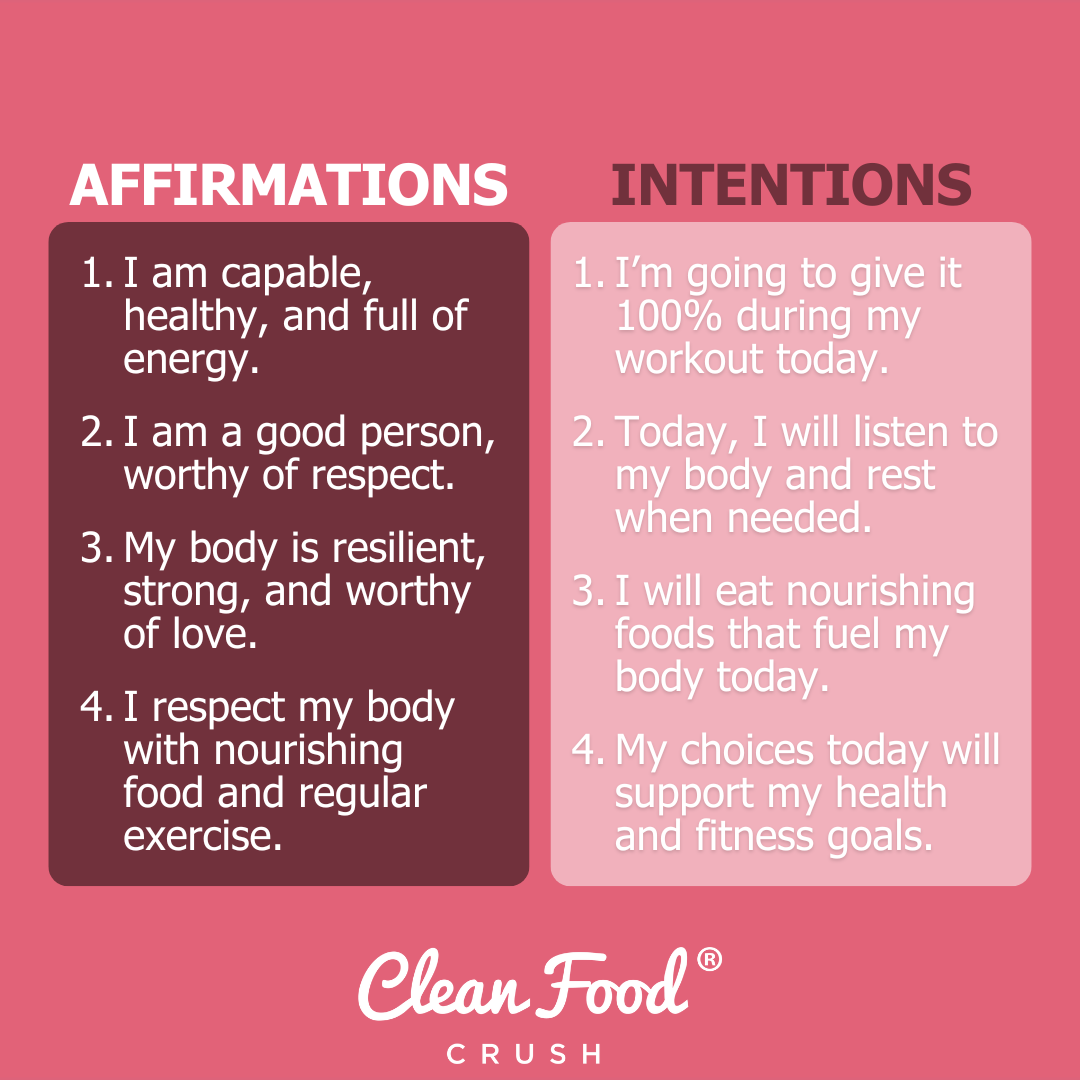
Each person finds what works best. Try different routines and see which gives you results.
Credit: cleanfoodcrush.com
Comparing Affirmation Repetition Methods
Some people use spoken affirmations. Others write them down, listen to recordings, or use apps. Here’s how these methods compare:
| Method | Ease of Use | Effectiveness |
|---|---|---|
| Spoken | Very easy | High (if said with feeling) |
| Written | Moderate | High (visual reinforcement) |
| Audio Recordings | Easy | Good (if listened regularly) |
| Apps/Reminders | Easy | Good (helps with consistency) |
Non-obvious insight: Combining two methods (such as speaking and writing) often leads to better results.
For example, you might say your affirmation out loud and then write it down. Or you could listen to a recording of yourself saying your affirmations while commuting.
How To Know If You’re Repeating Enough
You may wonder if your routine is working. Here are signs you’re repeating affirmations enough:
- You start to believe the statements.
- Your actions match your affirmations.
- You feel more positive or confident.
- You notice less stress or worry.
You might also find yourself thinking your affirmation during the day, even when you didn’t plan to. This is a sign it’s becoming a natural part of your thinking.
If you don’t see changes after several weeks, try repeating more often or adjust your affirmations.
Non-obvious insight: If you notice resistance or discomfort when repeating a statement, it often means you’re working on an area that needs extra attention. Don’t give up—keep going, or adjust the wording to make it feel more believable.

Credit: tiffanywoodfield.com
Adjusting Your Affirmation Routine
It’s normal to change your routine as you go. Here’s how:
- If you feel bored, try new affirmations.
- If you don’t believe the statements, repeat more often.
- If you’re too busy, repeat fewer affirmations with more focus.
- If you see good results, keep your routine or try adding new goals.
You can also try different times of day or new methods (like switching from spoken to written) if your routine starts to feel stale.
Non-obvious insight: Your affirmation routine should fit your life, not force you to change your schedule.
Making your practice easy and enjoyable is the best way to make it last.
Practical Tips For Beginners
Starting with affirmations can be confusing. Here are simple tips:
- Begin with 3 affirmations you care about.
- Repeat each affirmation 5 times every morning.
- Write them down in a journal.
- Track how you feel after each session.
- Adjust repetition based on your results.
Use reminders on your phone or sticky notes to help you remember. Don’t judge yourself if you miss a day—just pick up where you left off.
If you miss a day, don’t worry. Just start again. The key is to keep going.
Non-obvious insight: You can make affirmations part of family or group routines. For example, parents and children can say affirmations together, which can help build everyone’s confidence.
Research And Real-world Results
Many studies show that repeating affirmations helps with confidence and stress. For example, one study showed that students who used daily affirmations felt less anxious before exams.
In real life, people use affirmations for many reasons:
- Athletes repeat affirmations before games to boost performance.
- Business leaders use them to stay focused.
- Students use them to feel calm before tests.
Therapists sometimes suggest affirmations for clients dealing with anxiety or low self-esteem. Some schools teach children to use affirmations to help with learning and social skills.
If you want to read more about the science, visit Wikipedia.
Frequently Asked Questions
How Many Times A Day Should I Repeat Affirmations?
Most experts recommend repeating each affirmation 3 to 10 times per session, and doing this once or twice daily. For beginners, try 5 times in the morning and 5 times in the evening.
Can I Repeat Affirmations Too Much?
Repeating affirmations too much at once can feel forced and tiring. It’s better to spread them out over the day. Focus on quality, not just quantity.
How Long Does It Take For Affirmations To Work?
Most people notice changes after 2 to 4 weeks of daily repetition. Deep beliefs may take longer. Stay consistent and patient.
Should I Say Affirmations Out Loud Or Silently?
Saying affirmations out loud is often more effective because it engages your mind and body. However, silent repetition or writing also works well, especially in public places.
What If I Don’t Believe My Affirmations?
If you struggle to believe your affirmations, repeat them more often or adjust the statement. For example, change “I am confident” to “I am becoming more confident. ” This makes it easier to accept.
Repeating affirmations is a powerful tool for changing your mindset. The key is to practice regularly, focus on a few statements, and say them with feeling. You don’t need to repeat them hundreds of times each day. Consistency, timing, and belief are what matter most.
With patience and practice, you’ll notice real changes in your thoughts and actions.
