

How Much Time Affirmations Take to Work: Real Results Explained
How Much Time Affirmations Take To Work
Affirmations are short, positive statements people repeat to themselves. They are used to change thinking, build self-confidence, or create new habits. Many people try affirmations for personal growth, but one big question comes up again and again: how much time do affirmations take to work? Is it days, weeks, or months before you notice a change? The truth is, there is no single answer. Each person’s experience can be very different. Yet, there are patterns, research, and practical tips that can help you understand what to expect and how to get the best results.
This article explores the science behind affirmations, the factors that affect their speed, how to measure progress, and tips to make your affirmations work faster. You’ll also learn common mistakes and how to avoid them, plus real examples and expert opinions.
Whether you’re new to affirmations or have used them before, you’ll find clear, direct answers here.
What Are Affirmations And How Do They Work?
Affirmations are simple sentences you repeat to yourself, like “I am confident” or “I am getting better every day. ” The goal is to shape your thoughts and beliefs. When you say these statements often, you start to believe them more.
This can help change your actions and your feelings.
The main idea comes from psychology. Our brains get used to repeated messages. If you always say negative things about yourself, your mind accepts them as true. But if you repeat positive statements, you can slowly change those beliefs. This is sometimes called “self-suggestion” or “positive self-talk.
”
Example: A student who always thinks, “I’m bad at math,” may struggle more. If that student starts saying, “I can improve my math skills,” over time, they might feel more confident and try harder. This can lead to real improvement.
The Science Behind How Fast Affirmations Work
Some people want proof that affirmations really help. Research in psychology shows they can make a difference, but the speed of results depends on several things.
What Studies Say
Research suggests that affirmations can help with stress, self-esteem, and even performance at work or school. But results are not instant. In one well-known study, people who repeated positive statements daily felt better about themselves after a few weeks. Other studies have found changes after two to four weeks of regular use.
However, the timing is not always the same for everyone. Some people notice changes in a few days, while others take a few months. The key is consistency and belief. If you truly believe the affirmation and repeat it often, the effect is usually stronger.
How The Brain Responds
Neuroscience shows that our brains can change through a process called neuroplasticity. This means if you keep sending your brain the same messages, it can create new pathways. But this process takes time. Think of it like learning a new skill—practice makes progress.
Data And Expert Insights
- A survey by the National Science Foundation found that people using affirmations daily noticed small changes in mood within one week, but bigger changes often took 21 to 30 days.
- Experts recommend sticking to a daily routine for at least three to four weeks to see real results.
Factors That Affect How Long Affirmations Take
Not everyone experiences affirmations in the same way. Several factors can speed up or slow down your progress.
1. Frequency Of Practice
The more often you repeat your affirmations, the faster you may notice changes. Saying affirmations once a week is not enough. Daily practice, several times a day, works best.
2. Emotional Involvement
If you say your affirmations with real feeling, they work better. Just repeating words without emotion is less effective. Try to feel the meaning each time you say them.
3. Belief In The Affirmation
If you do not believe your affirmation, it won’t work quickly. Start with statements that feel believable. For example, instead of “I am rich,” try “I am learning to manage money better. ”
4. Clarity And Specificity
Clear and specific affirmations are more effective than general ones. “I am a good friend who listens” is better than “I am nice. ”
5. Resistance Or Old Beliefs
If you have strong negative beliefs, it may take longer for affirmations to work. Your mind needs time to accept new ideas.
6. Environment And Support
A positive environment helps. If people around you support your growth, you may see results faster.
7. Personal History And Mindset
People who have used affirmations before, or who are open to new ideas, often see changes sooner.
Typical Timelines: What Most People Experience
While every person is different, here is a general guideline for how long affirmations take to work for most people. This is based on surveys, expert opinions, and real stories.
| Time Frame | What You Might Notice |
|---|---|
| 1-7 days | Small shifts in mood or motivation. You may feel more hopeful or positive, but big changes are rare. |
| 1-4 weeks | Clearer thinking, better self-talk, and more confidence in some areas. You might start new habits or feel less stress. |
| 1-3 months | Deeper changes in belief, behavior, and even relationships. Old habits may fade and new ones become natural. |
| 3+ months | Affirmations become part of your mindset. Changes feel permanent, and you handle challenges more easily. |
Important Insight: Many people expect instant results. But like exercise or learning a language, affirmations need steady practice. Skipping days or giving up too soon is a common reason for slow or no results.
How To Make Affirmations Work Faster
If you want your affirmations to work as quickly as possible, you can use proven strategies to boost their power.
1. Be Consistent
The most important step is regular practice. Set a time each day, like morning and night, and stick to it. Repeating affirmations at the same time daily helps your brain accept them.
2. Use Present Tense
Affirmations work best in the present tense. Say “I am confident” instead of “I will be confident. ” This makes your brain feel the change is happening now.
3. Add Emotion And Visualization
Feel the emotion behind your affirmation. Picture yourself acting with confidence or success. The brain responds more strongly to feelings and images.
4. Write Them Down
Writing your affirmations by hand makes them more real. Keep a journal and write your statements each day. This doubles the effect because you see and feel the words.
5. Speak Out Loud
Saying affirmations out loud is more powerful than thinking them silently. Your brain hears your voice and the message is stronger.
6. Personalize Your Affirmations
Use words that fit your life and goals. Generic statements are less effective. Make sure your affirmation matches what you truly want to change.
7. Use Triggers Or Reminders
Link your affirmations to daily actions, like brushing your teeth or driving to work. Put sticky notes in places you’ll see them often.
8. Combine With Other Positive Habits
Affirmations work better with healthy habits. Good sleep, exercise, and a positive environment all support mental change.
Measuring Progress With Affirmations
It can be hard to know if your affirmations are working, especially at first. Here are some ways to track your progress:
1. Keep A Journal
Write down your feelings, thoughts, and actions each day. After a few weeks, look for changes in your mood or behavior.
2. Notice Small Wins
Pay attention to small changes, like feeling less anxious or trying something new. These are signs your affirmations are working.
3. Ask For Feedback
Sometimes friends or family notice changes before you do. Ask if they see you acting differently.
4. Rate Your Belief
Each week, rate how true your affirmation feels, from 1 (not at all) to 10 (completely true). If the number goes up, you’re making progress.
5. Track Habits
If your affirmation is about action, like “I exercise every day,” keep a habit tracker to see your progress.
Common Mistakes That Slow Down Results
Many people give up on affirmations because they don’t see fast results. Here are some common mistakes to avoid:
- Expecting instant change. Real change takes time and practice.
- Repeating affirmations without feeling. Emotion makes affirmations stronger.
- Using negative or vague statements. Always use positive, clear words.
- Not believing the statement. Start with something believable and build up.
- Being inconsistent. Skipping days or only using affirmations once in a while slows progress.
- Ignoring your actions. Affirmations work best when matched by real action in your daily life.
Real-life Examples: How Long Did It Take?
Hearing other people’s stories can help you set realistic expectations. Here are a few examples based on real experiences:
Maria’s Story: Maria wanted to feel more confident at work. She started saying, “I am a valuable team member” every morning and night. After two weeks, she noticed she was speaking up more in meetings. After one month, her manager praised her for sharing new ideas.
Jin’s Story: Jin used affirmations to overcome fear of public speaking. For the first week, he felt no change. After three weeks, he realized he was less nervous when talking to small groups. After two months, he gave a short presentation without panic.
Aisha’s Story: Aisha wanted to build healthy habits. She used the affirmation, “I choose foods that nourish my body.” After one week, she felt more aware of her food choices. After a month, she had lost some weight and felt more energetic.
These stories show that small changes can start in a week or two, but lasting change usually takes at least a month or more.
Expert Opinions: What Do Professionals Say?
Many psychologists, coaches, and self-help experts agree on the key points about affirmation timing.
- Dr. Carol Dweck, a well-known psychologist, says that changing beliefs takes regular practice. She suggests using affirmations daily for several weeks to see results.
- Louise Hay, a famous self-help author, advised saying affirmations for at least 21 days to create a new mental habit.
- Research published by the American Psychological Association shows that self-affirmation exercises can lower stress and improve performance, but only with regular, ongoing use.
In short, experts suggest a minimum of three weeks of daily affirmations before expecting clear results, but longer use brings deeper changes.
Comparing Affirmations With Other Self-improvement Tools
People often ask if affirmations work faster or slower than other methods. Here’s a look at how affirmations compare with meditation, journaling, and therapy.
| Method | Typical Time for Results | Best For |
|---|---|---|
| Affirmations | 2-4 weeks for small changes, 1-3 months for deep change | Changing beliefs and self-talk |
| Meditation | 1-2 weeks for calmness, 2-3 months for lasting impact | Reducing stress, increasing focus |
| Journaling | 1 week for mood boost, 1-2 months for self-awareness | Understanding emotions, tracking growth |
| Therapy | Varies (4-12 sessions for noticeable change) | Deep emotional or behavioral issues |
Key Insight: Affirmations are not a quick fix, but they are easy to add to your routine. They work best when used alongside other positive habits.
Credit: tiffanywoodfield.com
Making Affirmations Part Of Your Daily Life
To get the most from affirmations, they should become part of your everyday routine. Here’s how to do that:
1. Set A Reminder
Use your phone or a sticky note to remind yourself to say your affirmations every morning and night.
2. Make A Habit Chain
Connect your affirmation to something you already do, like brushing your teeth or making coffee.
3. Involve Others
Share your affirmation goals with a friend or family member. Check in with each other each week.
4. Celebrate Progress
Even small changes are important. Celebrate each win to keep your motivation high.
5. Update Affirmations Regularly
As you grow, your goals change. Update your affirmations to match your new goals.
How To Choose The Right Affirmation For You
Picking the right affirmation is key to seeing faster results. Here’s how to choose:
- Be specific: Instead of “I am happy,” try “I find something to enjoy in every day.”
- Make it believable: If you don’t believe it, start smaller. “I am learning to be confident” can work better than “I am always confident.”
- Keep it positive: Focus on what you want, not what you want to avoid. Say “I am healthy” instead of “I am not sick.”
- Use your own words: Write your affirmation in a way that feels natural to you.

Credit: tiffanywoodfield.com
Advanced Tips For Faster Results
If you want to go beyond the basics and speed up your progress, try these advanced strategies:
1. Use “mirror Work”
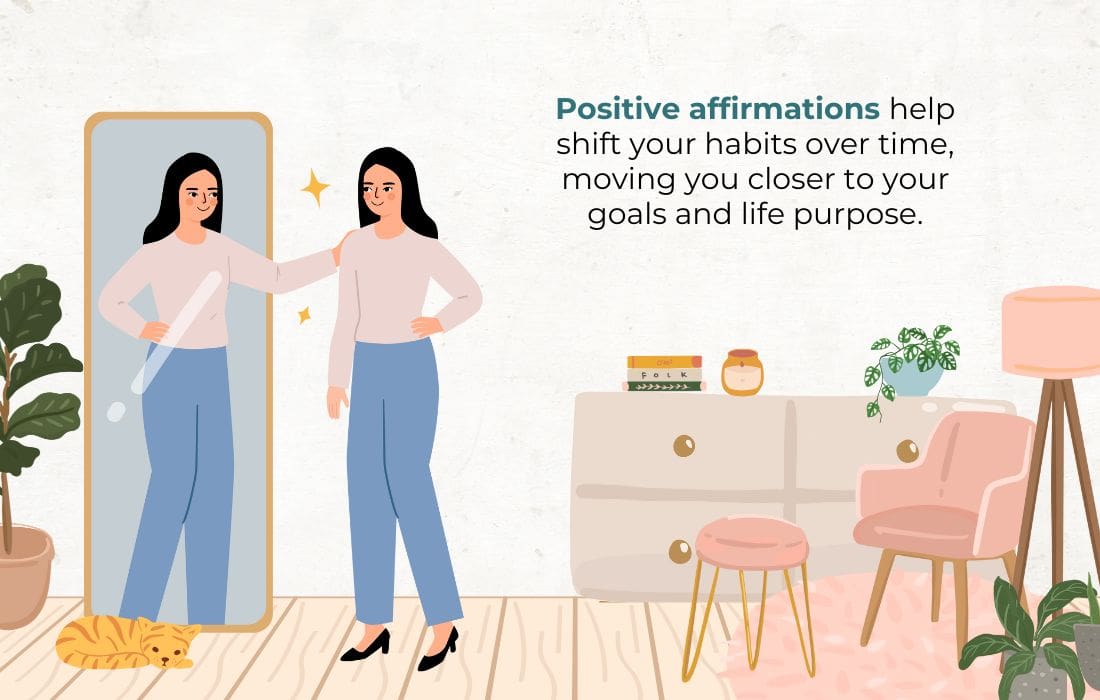
Stand in front of a mirror and say your affirmation while looking into your own eyes. This can feel strange at first but often makes the message more powerful.
2. Record And Listen
Record your affirmations in your own voice and play them during your commute or before bed.
3. Pair With Music
Some people find that playing uplifting music while saying affirmations makes them more effective.
4. Practice Mindfulness
Before saying your affirmation, take a few deep breaths and clear your mind. This helps you focus and feel the words.
5. Track Patterns
Notice if some affirmations work faster than others. You may find that some areas of your life change quickly, while others need more time.
Non-Obvious Insight: Sometimes, affirmations can bring up old negative beliefs. If you suddenly feel resistance or discomfort, it’s a sign your mind is starting to change. Don’t quit—keep going, and the discomfort will usually pass.
The Role Of Affirmations In Long-term Change
Affirmations are not magic words. They are a tool to help you change your thoughts, beliefs, and actions over time. The real power of affirmations is in their long-term use. Many people stop too soon, just as they are starting to see results.
Research and expert advice show that using affirmations for at least three weeks is a good start, but the biggest changes come after several months. When affirmations become a daily habit, they can help you handle stress, boost confidence, and reach your goals.
For more on the science behind affirmations and self-talk, you can read this Wikipedia article on affirmations.

Credit: emandfriends.com
Frequently Asked Questions
How Many Times A Day Should I Say Affirmations?
It’s best to repeat your affirmations at least twice a day, in the morning and at night. For faster results, you can say them even more—three to five times a day is common. The key is to be consistent.
What If I Don’t Believe My Affirmation?
Start with a statement that feels believable. If “I am confident” feels too hard, try “I am learning to be confident. ” As your belief grows, you can use stronger statements.
Can Affirmations Work For Everyone?
Most people can benefit from affirmations, but results vary. If you have deep negative beliefs or emotional struggles, affirmations may take longer or need to be used alongside other tools, like therapy.
Do I Have To Say Affirmations Out Loud?
Saying affirmations out loud is more powerful, but you can also write them down or think them silently. Use the method that feels most comfortable, but try speaking them if possible.
When Should I Expect To See Results From Affirmations?
Small changes can appear in one to two weeks, but most people see bigger results after three to four weeks of daily practice. For lasting change, keep using affirmations for several months.
Using affirmations is a simple, effective way to change your mindset and life, but patience and steady effort are required. With the right methods and a bit of faith in yourself, you’ll start to see real change—sometimes sooner than you expect, and always worth the wait.
