

Daily Affirmation Benefits: Transform Your Mindset and Life
Practicing daily affirmations has become popular among people who want to improve their mindset, build self-confidence, and handle life’s challenges. Even though the idea may sound simple—repeating positive statements to yourself—science and personal experience both show that daily affirmations can have a real impact. If you’ve ever wondered whether affirmations really work, or if you want to understand their true value, this article will take you through the key benefits of daily affirmations, how they work, and how you can make the most of them.
Daily affirmations are more than just positive thinking. They are specific, focused sentences that you say or write to yourself, designed to challenge negative thoughts and reshape your beliefs. Many people use affirmations to motivate themselves, set intentions, and deal with stress.
In this article, you’ll learn how daily affirmations influence your brain, boost your self-esteem, and help you reach your goals. Along the way, we’ll share research findings, examples, and practical advice so you can get the most from this simple yet powerful practice.
What Are Daily Affirmations?
Daily affirmations are short, positive statements aimed at encouraging a healthy mindset. You repeat them every day to reinforce beliefs about yourself and your life. Common examples include:
- “I am capable of handling whatever comes my way.”
- “I am worthy of love and respect.”
- “I believe in my ability to achieve my goals.”
The main idea is to replace negative self-talk with positive, supportive thoughts. This isn’t about ignoring problems—it’s about building a foundation of self-belief to handle those problems better.
The Science Behind Daily Affirmations
Researchers have studied how affirmations affect the brain and behavior. A key concept is called self-affirmation theory. This theory suggests that when people remind themselves of their strengths, values, or skills, they become more open to feedback and less defensive.
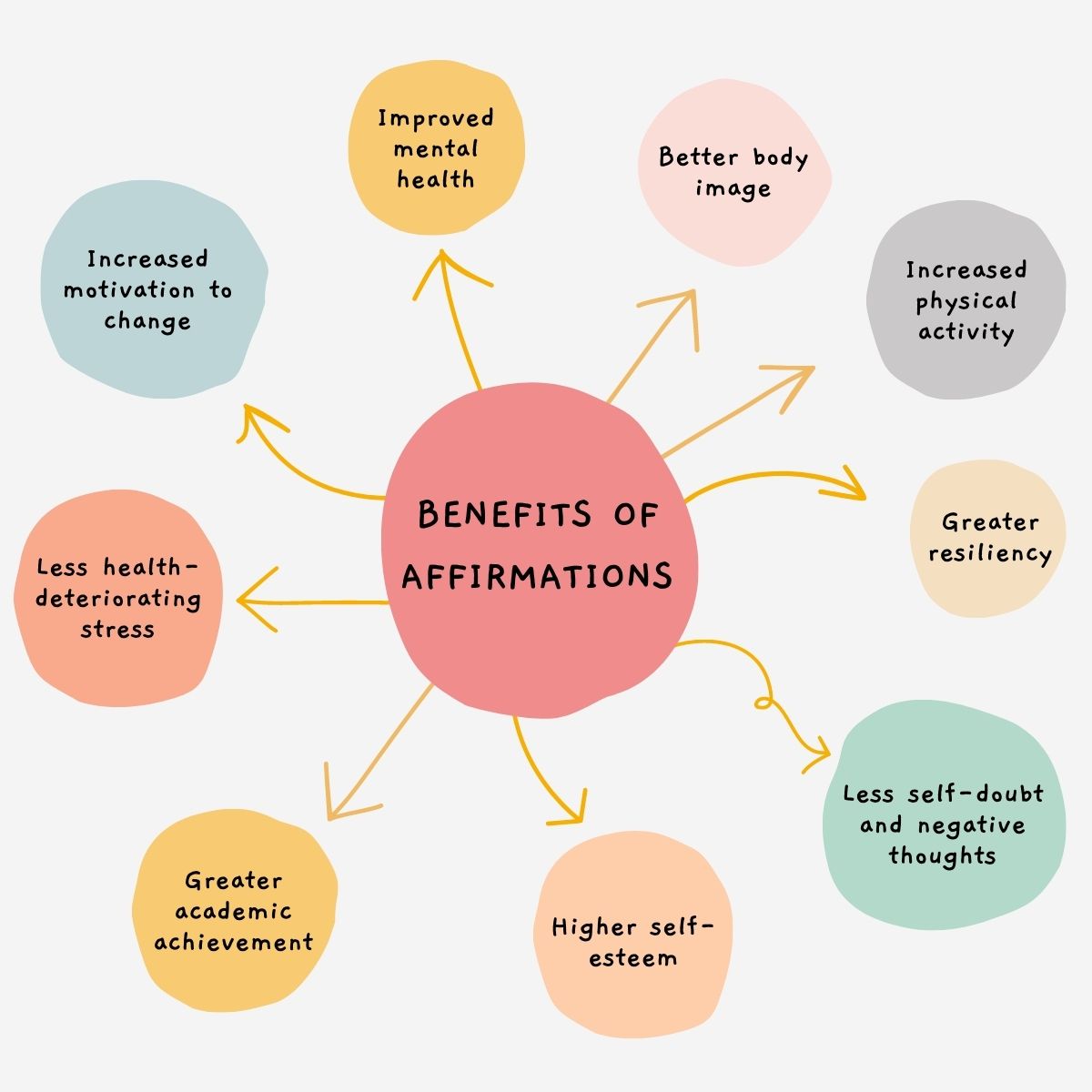
Brain scans show that repeating affirmations activates the reward centers in the brain. These areas are linked to motivation and positive emotion. In some studies, people who practiced daily affirmations showed:
- Lower levels of stress
- More resilience after setbacks
- Better performance on tasks
One study published in the journal Social Cognitive and Affective Neuroscience found that people who used self-affirmations had greater activity in regions of the brain linked to self-processing and valuation. This means affirmations can literally “rewire” how we see ourselves.
Emotional Benefits Of Daily Affirmations
Reduced Stress And Anxiety
Many people struggle with negative thoughts that increase stress and anxiety. Daily affirmations can help break this cycle. When you start your day by telling yourself positive things, you focus on possibilities instead of worries.
People who use affirmations regularly often report:
- Feeling calmer in difficult situations
- Recovering faster after bad news or mistakes
- Less rumination (repeating negative thoughts)
Small studies have shown that people who use affirmations before a stressful event (like a job interview) feel less anxious and perform better. This is because affirmations remind you of your strengths and past successes, which builds emotional resilience.
Boosted Self-esteem
Low self-esteem can make you doubt your abilities and avoid challenges. Affirmations are a simple way to build self-confidence. By repeating statements like, “I am good enough,” you start to believe it.
Research shows that people with higher self-esteem are more likely to:
- Try new things
- Recover after failure
- Stand up for themselves
Affirmations help by creating a new mental habit. Instead of automatically thinking, “I can’t do this,” your mind starts to say, “I’ll give it a try. ”
Improved Mood
A regular affirmation practice can lift your mood. When you focus on positive thoughts each day, it’s easier to spot good things in your life. This doesn’t mean you’ll never feel sad, but it can help stop negative emotions from taking over.
Some people combine affirmations with gratitude practices. For example, after repeating an affirmation, you might also name something you’re thankful for. This double focus on positivity can be especially powerful for improving your overall mood.
Cognitive Benefits Of Daily Affirmations
Rewiring Negative Thought Patterns
Negative thinking can become a habit. When you repeat certain thoughts, your brain strengthens those pathways. Affirmations work by creating new, positive pathways in your brain.
For example, if you often think, “I always mess up,” try changing that to, “I am learning and growing every day. ” Over time, your brain will start to accept the new thought as true.
This process is called neuroplasticity. It’s the brain’s ability to change and adapt. Daily affirmations use this natural ability to help you think in healthier, more helpful ways.
Improved Focus And Clarity
Affirmations are most effective when they are specific and goal-oriented. For example, “I am focused and productive at work today.” When you repeat this, you remind yourself of your intention.
Many people find that affirmations help them:
- Stay on task
- Avoid distractions
- Remember what matters most
By setting a clear mental direction each day, affirmations can make it easier to avoid getting lost in worries or doubts.
Enhanced Problem-solving Skills
When you believe in your ability to handle problems, you’re more likely to try new solutions. Affirmations like, “I am resourceful and creative,” encourage you to approach challenges with a growth mindset.
Studies show that people who use affirmations are often more flexible in their thinking. They see obstacles as opportunities to learn, not as proof they should give up.
Credit: biteoutoflifenutrition.com
Physical Benefits Of Daily Affirmations
Lowered Stress Hormones
Chronic stress can affect your health. It raises levels of cortisol, a hormone linked to anxiety, weight gain, and poor sleep. Studies suggest that practicing daily affirmations may help reduce cortisol levels.
In one experiment, people who used self-affirmations before stressful tasks had lower blood pressure and felt calmer. While affirmations are not a cure for medical problems, they can be a helpful tool for managing daily stress.
Improved Sleep Quality
Worry and self-criticism can make it hard to fall asleep. Affirmations can calm your mind before bed. For example, repeating, “I am safe and at peace,” can help signal to your body that it’s time to rest.
Some people create a bedtime routine that includes gentle affirmations. Over time, this can improve sleep quality by lowering stress and promoting relaxation.
Boosted Immune System
There’s growing evidence that a positive mindset can help the body fight illness. Stress weakens the immune system, but positive emotions and beliefs can strengthen it. While affirmations are not a replacement for medical care, they support overall wellness by reducing stress and encouraging healthy habits.
Social Benefits Of Daily Affirmations
Better Relationships
How you feel about yourself affects how you interact with others. People who use daily affirmations often report:
- More patience with friends and family
- Greater ability to forgive mistakes (theirs and others’)
- Healthier boundaries
When you believe you are worthy of respect and kindness, you’re more likely to expect that from others—and give it in return.
Improved Communication
Affirmations can help you express your needs and feelings more clearly. For example, repeating, “I deserve to be heard,” can make it easier to speak up in meetings or difficult conversations.
People with a positive self-image tend to:
- Ask for help when needed
- Share their ideas confidently
- Handle criticism without feeling crushed
Increased Empathy
When you are kind to yourself, it becomes easier to show kindness to others. Daily affirmations often encourage self-compassion, which naturally leads to greater empathy for people around you.
This can make you a better listener, friend, or partner. It also helps you understand that everyone struggles sometimes, just like you.
Practical Benefits In Daily Life
Achieving Goals
Successful people often use affirmations to keep their goals in mind. By repeating statements like, “I stay committed to my goals,” you remind yourself of your purpose.
Affirmations can help you:
- Stay motivated
- Push through setbacks
- Celebrate progress
It’s important to pair affirmations with action. Telling yourself you’ll do something is a start, but following through builds real confidence.
Building Consistency And Discipline
Repeating affirmations every day is a practice in itself. It teaches self-discipline and helps you build good habits. People who make affirmations part of their routine often find it easier to:
- Wake up on time
- Stick to exercise plans
- Keep promises to themselves
This consistency spreads to other areas of life, making it easier to reach long-term goals.
Greater Sense Of Purpose
Affirmations can help you clarify what matters most. For example, “I make a positive difference in the world,” reminds you of your values. This sense of purpose can guide your choices and give meaning to daily actions.
How To Create Effective Daily Affirmations
Not all affirmations work the same way for everyone. To get the best results, keep these tips in mind:
- Use present tense. Say “I am confident,” not “I will be confident.”
- Be specific. Instead of “I am successful,” try “I do my best in every project at work.”
- Keep it positive. Avoid negative words like “don’t” or “won’t.”
- Make it personal. Choose words that feel true for you.
- Repeat regularly. Say your affirmations every morning, or whenever you need a boost.
Below is a comparison of effective vs. less effective affirmations:
| Effective Affirmation | Less Effective Affirmation |
|---|---|
| I am calm and focused under pressure. | I don’t want to feel anxious anymore. |
| I treat myself with kindness every day. | I won’t be so hard on myself. |
| I am learning and growing from my experiences. | I hope things get better. |
Common Mistakes When Using Affirmations
Even though affirmations are simple, there are some common mistakes beginners make:
- Being too vague: “I am happy” is less powerful than “I find joy in my daily routines.”
- Not believing the words: If you say something that feels false, your mind will resist it. Start with statements you can accept.
- Using negative language: Affirmations should be about what you want, not what you want to avoid.
- Lack of consistency: Affirmations work best with daily practice, not just when you remember.
- Ignoring action: Saying affirmations is helpful, but they should inspire you to take real steps toward your goals.
Examples Of Powerful Daily Affirmations
Here are some examples to inspire your own practice. Choose a few that resonate with you, or use them as templates to write your own:
- “I am resilient and can handle challenges with grace.”
- “My thoughts and actions create my future.”
- “I deserve success and happiness.”
- “I am grateful for the good things in my life.”
- “I trust myself to make good decisions.”
- “I am proud of how far I have come.”
- “Every day, I get stronger and wiser.”
- “I am open to new opportunities.”
- “I let go of what I cannot control.”
- “I am worthy of love and respect.”
When And How To Practice Daily Affirmations
The best time to use affirmations is when your mind is calm and open. Many people choose:
- Morning: Sets a positive tone for the day.
- Before bed: Clears away negative thoughts from the day.
- During stress: Helps reset your mindset in difficult moments.
You can say affirmations out loud, write them in a journal, or repeat them silently. Some people like to look in the mirror while saying them for extra impact. The key is regular, mindful repetition.
Here’s a simple daily routine for using affirmations:
- Take a few deep breaths to relax.
- Choose 2-3 affirmations that fit your goals.
- Repeat each one slowly, focusing on the meaning.
- Visualize yourself living the truth of the affirmation.
- End with a moment of gratitude or reflection.
Who Can Benefit From Daily Affirmations?
Anyone can use affirmations, but they can be especially helpful for:
- People with anxiety or low self-esteem
- Students facing exams
- Athletes preparing for competition
- Employees wanting to improve work performance
- Parents managing family stress
Even children can learn simple affirmations, like “I am smart and kind.” Teaching kids this practice early can help them build emotional resilience for life.
How Daily Affirmations Compare To Other Mindset Tools
Affirmations are just one tool for improving your mindset. Here’s a comparison with other popular methods:
| Method | Main Focus | Best For |
|---|---|---|
| Daily Affirmations | Changing self-talk and beliefs | Building confidence, reducing stress |
| Gratitude Journaling | Focusing on positives | Improving mood, finding joy |
| Meditation | Calming the mind | Reducing anxiety, improving focus |
| Visualization | Imagining success | Achieving goals, building motivation |
Many people find the best results by combining two or more of these tools. For example, you might start your day with affirmations and end it with a gratitude journal.
How To Measure The Impact Of Daily Affirmations
It’s natural to wonder if affirmations are really making a difference. Here are some ways to track your progress:
- Journaling: Write down your affirmations and note any changes in mood or behavior.
- Mood tracking: Rate your stress or happiness each day and look for patterns.
- Feedback from others: Sometimes, people around you notice changes before you do.
- Goal progress: Are you moving closer to your goals or feeling more confident?
Remember, changes may be small at first. Consistency is key. Over time, you may notice you handle setbacks better, feel more positive, or find it easier to stick to good habits.
Non-obvious Insights About Daily Affirmations
- Affirmations can expose hidden doubts. If an affirmation makes you feel uncomfortable, it could point to a limiting belief you didn’t realize you had. Use this as a chance to explore why and adjust your affirmation to feel more believable.
- Writing affirmations by hand can increase their power. Research shows that writing things down helps your brain remember and believe them. Try keeping a notebook just for your affirmations.
- Pairing affirmations with physical movement (like walking or stretching) can help reinforce the message. The body and mind are connected, and movement can make your affirmations feel more real.
- Changing your affirmations as you grow is important. What works for you today may not fit your needs next year. Review and update your affirmations regularly.
- Affirmations work even if you don’t “feel” them at first. With practice, your brain will start to accept them as true, especially if you back them up with small actions.
Key Research And Real-world Examples
One famous study found that students who used self-affirmations before exams had higher grades and less stress than those who did not. Another research project showed that people struggling with weight loss who used daily affirmations were more likely to stick to their healthy habits.
Top athletes often use affirmations before competitions. For example, Olympic champions are known to repeat phrases like, “I am strong and prepared,” to calm nerves and boost focus.
You can read more about the science of affirmations in this summary from the Positive Psychology website.
Credit: www.thegoodbody.com
How To Stick With Affirmations For The Long Term
Like any habit, affirmations take time to become natural. Here are some tips for staying consistent:
- Set reminders: Use your phone or sticky notes to remind yourself.
- Make it fun: Create art or music with your favorite affirmations.
- Share with a friend: Practicing together can build accountability.
- Celebrate progress: Notice when your mindset shifts, even a little.
Don’t worry if you miss a day. Just return to your practice as soon as you can. Over time, affirmations can become a natural part of your daily routine.
Common Myths About Daily Affirmations
It’s important to separate fact from fiction. Here are some myths and the truth behind them:
- “Affirmations are just wishful thinking.” In reality, affirmations can change thought patterns, especially when paired with action.
- “You have to believe them 100% right away.” Actually, belief grows with repetition and experience.
- “Affirmations are only for people with problems.” Everyone can benefit from positive self-talk, no matter how confident they already are.
- “They only work if you say them out loud.” Silent repetition, writing, or visualization can also be effective.
- “You should never change your affirmations.” Adjusting your affirmations as your goals evolve is a sign of growth.

Credit: www.kelphr.com
Frequently Asked Questions
How Long Does It Take To See Results From Daily Affirmations?
Results can vary. Some people notice a shift in mood or confidence within a few days. For deeper changes, like breaking old habits, it may take several weeks of daily practice. The key is regular, consistent repetition.
Can Daily Affirmations Help With Anxiety Or Depression?
Affirmations can support mental health by encouraging positive thinking and self-compassion. However, they are not a replacement for therapy or medical treatment. If you struggle with severe anxiety or depression, it’s important to seek professional help.
What If I Don’t Believe My Affirmations At First?
It’s normal to feel skeptical in the beginning. Start with statements that feel possible, even if they’re small. As you see positive changes, you can gradually use stronger affirmations. Pairing affirmations with action also helps build belief.
How Many Affirmations Should I Use Each Day?
There’s no fixed rule. Most people start with 2-5 affirmations. The quality matters more than quantity. Choose affirmations that truly match your goals and needs, and focus on them with intention.
Do I Need To Say Affirmations Out Loud For Them To Work?
Saying affirmations out loud can make them more powerful, but it’s not required. Writing them down, thinking them quietly, or visualizing can also be effective. The most important thing is to repeat them regularly and mindfully.
Practicing daily affirmations is a simple, proven way to boost your mindset and well-being. Whether you want to reduce stress, build confidence, or achieve your goals, this habit can make a real difference. Start small, stay consistent, and let your affirmations guide you toward a more positive, empowered life.
