

Best Morning Affirmations for Kids: Boost Confidence Every Day
Best Morning Affirmations For Kids
Every morning can shape the rest of the day. For kids, starting with positive thoughts helps them feel more confident, focused, and happy. Morning affirmations are short, powerful sentences that children say to themselves. These words remind them of their strength, kindness, and abilities.
When used regularly, affirmations build a strong mindset and help kids face challenges with courage.
Many parents and teachers notice that children who practice daily affirmations smile more and worry less. Affirmations are like gentle reminders that kids are important, loved, and capable. These simple sentences can help children manage stress, improve self-esteem, and even do better in school.
But not all affirmations are the same. The best affirmations for kids use words they understand and ideas they can believe.
This article will help you discover the best morning affirmations for kids, explain why they work, and show you how to use them at home. You will also find tables comparing common and unique affirmations, tips for making affirmations fun, and answers to the most asked questions.
By the end, you will have everything you need to help your child start the day with a positive heart and a strong mind.
Why Morning Affirmations Matter For Kids
Starting the day with positive self-talk helps children build emotional strength. Kids face many small challenges daily, from making friends to learning new things. When they repeat positive affirmations, they develop a healthy belief in themselves. Research shows that positive affirmations can:
- Lower stress levels in children
- Improve classroom performance
- Increase feelings of safety and belonging
- Help manage emotions and reduce anxiety
For example, a child who says “I am brave” before a school presentation often feels less nervous. Over time, these positive beliefs become part of who they are.
Morning is the perfect time for affirmations because children’s minds are fresh. The thoughts they have in the morning can color the whole day. If a child starts with hope and confidence, they are more likely to handle problems calmly.
The Science Behind Affirmations
Affirmations use the power of neuroplasticity—the brain’s ability to change based on what we think and do. When kids repeat positive statements, their brains create new pathways. This makes positive thinking easier over time.
One study found that children who practiced affirmations each day showed better mood and higher motivation at school. Another report from the American Psychological Association notes that affirmations can help children bounce back after setbacks.
How To Choose The Best Morning Affirmations For Kids
The best affirmations are:
- Short and simple – Easy for kids to remember and say.
- Positive – Focus on what children want to feel or do, not what they want to avoid.
- Personal – Use “I am…” statements, so kids own their words.
- Believable – Children must feel the affirmation could be true for them.
For example, “I am a good friend” works better than “I am never mean. ” The second focuses on what the child should not do, which can feel negative.
Let’s compare some examples of effective and less-effective affirmations for kids:
| Effective Affirmation | Why It Works | Less Effective Affirmation | Why It Fails |
|---|---|---|---|
| I am kind. | Simple, positive, easy to believe. | I will not be rude. | Focuses on negative; hard for kids to connect with. |
| I am a helper. | Encourages helpful behavior as identity. | I won’t get in trouble. | Centers on fear, not growth. |
| I can try new things. | Promotes bravery and curiosity. | I am not scared. | Reminds child of fear, not strength. |
The best affirmations match the child’s age and experience. Younger kids need very simple words, while older children can use more detailed statements.
Top 35 Morning Affirmations For Kids
Here are some of the most powerful morning affirmations for children. Mix and match these with your child, or let them choose their favorites.
- I am loved.
- I am strong.
- I am smart.
- I am brave.
- I am a good friend.
- I am kind to others.
- I am important.
- I can do hard things.
- I believe in myself.
- I am a good listener.
- I am creative.
- I am a problem solver.
- I am helpful.
- I am grateful for today.
- I am patient.
- I am honest.
- I can learn new things.
- I am unique.
- I am calm and relaxed.
- I am in control of my feelings.
- I am a leader.
- I am responsible.
- I am proud of myself.
- I am a good sport.
- I am friendly to everyone.
- I am safe.
- I am full of energy.
- I am growing every day.
- I am a hard worker.
- I am gentle with myself and others.
- I am focused.
- I am grateful for my family.
- I am a good helper at home.
- I am ready for a great day.
- I am enough.
Not every affirmation will fit every child. Encourage kids to choose the ones that feel best for them. Sometimes, children like to write their own affirmations for a special personal touch.
Making Affirmations Fun And Engaging
Kids love to play and be creative. If affirmations feel like a boring task, children lose interest quickly. Here are ways to make morning affirmations enjoyable:
- Affirmation cards: Write each affirmation on a colorful card. Let your child pick one each morning.
- Affirmation mirror: Tape affirmations to the bathroom mirror. Every time your child brushes their teeth, they see positive words.
- Affirmation song: Turn affirmations into a simple song or chant. Music makes words easier to remember.
- Affirmation jar: Fill a jar with folded affirmations. Each morning, your child pulls out a new one.
- Affirmation art: Let kids draw pictures to go with each affirmation.
This keeps the practice fresh and exciting. For children who struggle with reading, parents can say affirmations aloud and have kids repeat them.
Example: Morning Affirmation Routine
A simple routine might look like this:
- After waking up, your child picks an affirmation card.
- They say the affirmation three times while looking in the mirror.
- You both do a “high five” to celebrate starting the day positively.
Small routines like this quickly become a happy habit. Kids look forward to this positive start.
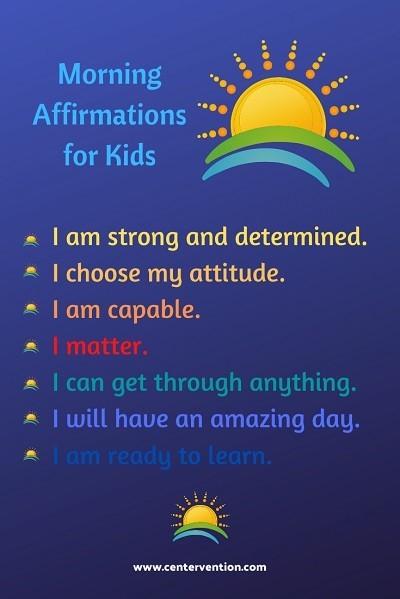
Credit: www.centervention.com
Age-appropriate Affirmations
Children at different ages understand things in unique ways. The right affirmation for a preschooler is not always right for a teenager. Let’s look at how you can match affirmations to your child’s age.
| Age Group | Best Type of Affirmation | Example |
|---|---|---|
| 3–5 years (Preschool) | Very simple, focus on being loved and safe | I am loved. I am safe. |
| 6–8 years (Early Primary) | Short, focus on trying and kindness | I can try new things. I am kind. |
| 9–12 years (Late Primary) | More detailed, focus on abilities and choices | I am a problem solver. I am responsible. |
| 13+ years (Teens) | Complex, focus on identity and self-worth | I am enough. I am proud of who I am. |
As children grow, involve them in creating their own affirmations. This gives them ownership and makes the practice more meaningful.
Practical Tips For Parents And Teachers
For affirmations to work, they must be used regularly and with care. Here are some proven tips:
- Model affirmations yourself. Say your own affirmations out loud where your child can hear. Kids learn best by watching adults.
- Be consistent. Practice affirmations every morning, even on weekends. Routine builds habits.
- Stay positive but honest. If a child is having a bad day, do not force them to say “I am happy.” Instead, try “I am strong, even when I feel sad.”
- Use real-life examples. After your child does something brave, say, “That’s just like your affirmation: ‘I am brave!’”
- Celebrate small wins. When kids use affirmations, notice their effort. Praise the habit, not just the result.
Common Mistakes To Avoid
- Too many affirmations at once. This can overwhelm children. Start with 2–3 affirmations and add more over time.
- Using adult language. Keep words simple and clear.
- Focusing only on problems. Avoid affirmations that mention fears or weaknesses.
- Skipping days. If you miss a day, just start again. Consistency is key, but perfection is not needed.
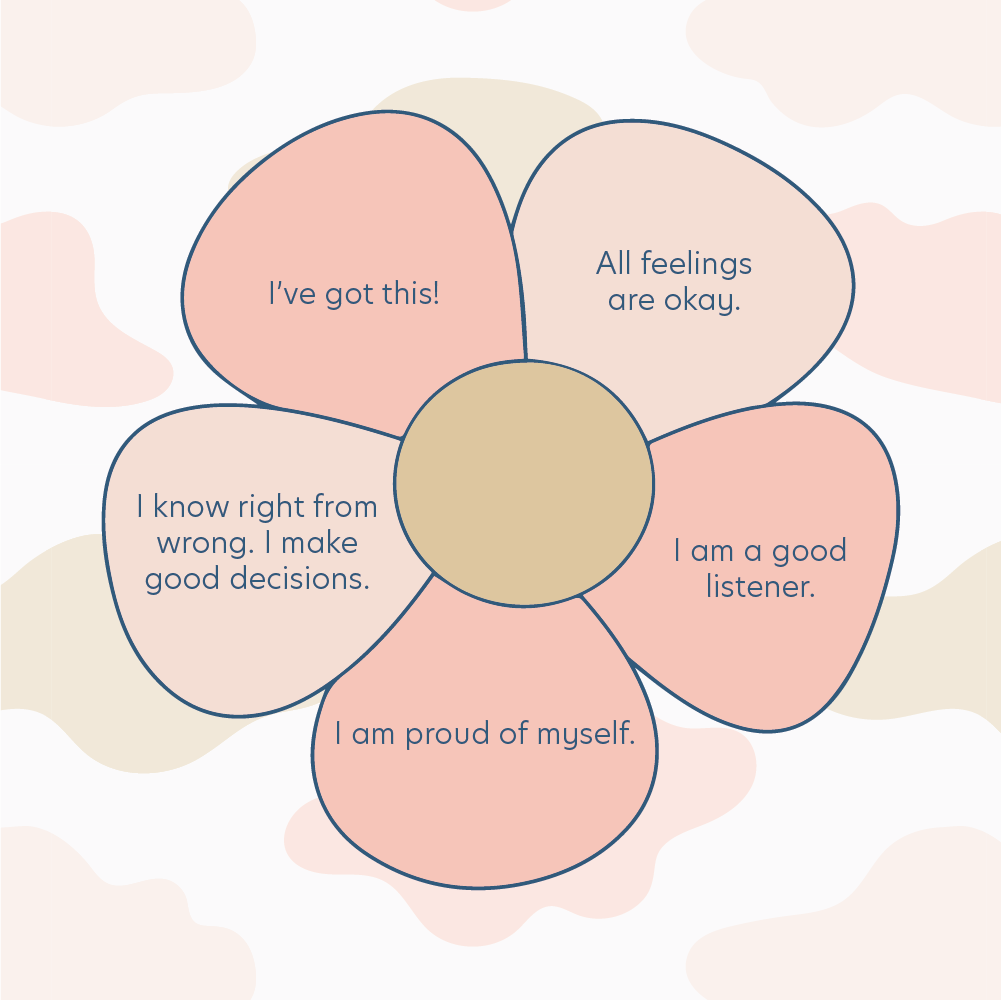
Credit: brightpathkids.com
Unique Affirmation Ideas For Different Needs
Every child is different. Some kids need extra support with confidence, others with anxiety, and some with social skills. Here are unique affirmation suggestions for special needs:
For Building Confidence
- I am proud of who I am.
- I trust myself.
- I can do new things.
- My ideas matter.
For Reducing Anxiety
- I can handle what happens today.
- I am safe.
- I can ask for help when I need it.
- I breathe in calm, I breathe out worry.
For Friendships And Social Skills
- I am a good friend.
- I listen to others.
- I am kind and caring.
- I respect differences.
Not all affirmations work for every child. Let your child try different ones to see which feel right.
How To Measure The Impact Of Affirmations
Parents often wonder if affirmations are working. While changes are not instant, there are signs you can look for:
- Your child seems more willing to try new things.
- They talk more positively about themselves.
- They recover from mistakes more quickly.
- They use affirmations when stressed or upset.
For a more detailed look, you can use a simple chart to track changes over time.
| Week | Willing to Try New Things | Talks Positively About Self | Recovers from Setbacks |
|---|---|---|---|
| Week 1 | Sometimes | Rarely | Slowly |
| Week 2 | Often | Sometimes | More quickly |
| Week 3 | Usually | Often | Quickly |
This chart helps you see small improvements and encourages you to keep going.
Real-life Stories: How Affirmations Help Kids
Parents and teachers around the world report positive changes when using morning affirmations with children. Here are two examples:
Olivia, age 7, was shy and often afraid to speak in class. Her parents started saying “I am brave” and “I have good ideas” with her every morning. After a few weeks, Olivia began raising her hand more. She told her parents, “I feel like I can try, even if I’m scared.”
Liam, age 10, struggled with making friends. His teacher introduced “I am a good friend” and “I am kind to others” as daily affirmations. Liam started saying these before school. He soon began playing with classmates more and even invited a new student to join his group.
These stories show that affirmations are not magic words. They work when used with love, patience, and real-life support.
Adapting Affirmations For Different Cultures And Languages
Affirmations must feel personal and true. For children from different cultures or who speak different languages, it helps to:
- Translate affirmations into the child’s home language.
- Use cultural values in affirmations, such as respect for elders or community.
- Involve family in saying affirmations together.
If you are not sure which words to use, ask your child what feels important to them. This helps build trust and makes affirmations more powerful.

Credit: www.thepathway2success.com
Using Affirmations With Other Positive Habits
Affirmations work best when combined with other healthy habits. Here are a few ideas:
- Practice deep breathing with each affirmation.
- Pair affirmations with morning stretches or yoga.
- Write affirmations in a gratitude journal.
- Say affirmations before a healthy breakfast.
This connects positive words to positive actions, making the effects even stronger.
Frequently Asked Questions
What Is The Best Age To Start Morning Affirmations With Kids?
Children as young as three can start using simple affirmations like “I am loved” or “I am safe. ” The key is to use short, positive words that match their understanding. Older children can use more complex affirmations. It is never too early or too late to start.
How Long Does It Take To See Results From Using Affirmations?
Most children show small changes in mood or behavior within a few weeks of daily practice. For bigger changes, it can take a few months. Remember, affirmations are not a quick fix but a long-term habit. Consistency is more important than speed.
Can Affirmations Help Children With Anxiety Or Learning Challenges?
Yes, affirmations can help children with anxiety or learning differences feel more confident and calm. Choose affirmations that match their needs, such as “I can handle what happens today” or “I am a good learner. ” For children with speech delays, parents or teachers can model the affirmations aloud.
Should Parents Or Teachers Correct Children If They Say An Affirmation Wrong?
It is best to gently repeat the affirmation correctly, rather than pointing out a mistake. The goal is to help kids feel positive, not judged. If a child makes up their own positive version, celebrate their creativity.
Where Can I Find More Resources Or Examples Of Affirmations For Kids?
Trusted parenting websites, child psychologists, and school counselors often share free affirmation lists. For more research and examples, you can visit the Positive Psychology website, which offers helpful guides and science-based tips.
Helping your child start the day with strong, positive words is a gift that lasts. With the right affirmations, a little creativity, and daily practice, you can help your child build the confidence and resilience they need for a happy, successful life.
Morning affirmations are a simple tool—but their impact can last a lifetime.
