

Best Affirmations for Health Anxiety: Calm Your Mind Today
When your mind is filled with worries about your health, everyday life can feel overwhelming. You notice every little ache or strange feeling in your body, and your thoughts run wild. This is what many call health anxiety. It can make you feel scared, lost, and even trapped in a loop of negative thinking. But you are not alone, and there are ways to feel better.
One powerful tool you can use is affirmations. These are positive statements you repeat to yourself to change your thoughts and feelings. While affirmations are not magic, they help many people reduce anxiety and build a calmer, healthier mindset. In this article, you will discover the best affirmations for health anxiety, understand how and why they work, and learn how to use them in your daily life. You will also see examples, practical tips, and answers to common questions.
Understanding Health Anxiety
Health anxiety is also known as hypochondria or illness anxiety disorder. People with health anxiety often worry a lot about their health, even if doctors say they are fine. They might search for symptoms online, check their body often, or ask others for reassurance. These habits can make anxiety worse.
Research shows that about 5% to 10% of people experience strong health anxiety at some point in life. Even more have mild worries about health. Stress, past illness, and even social media can increase these fears.
Why Health Anxiety Feels So Real
When you are anxious, your brain is always looking for danger. If you feel a pain in your chest, your mind may quickly jump to the worst-case scenario. This is your body’s natural way to protect you, but it can cause problems if it happens too often.
Negative thinking fuels health anxiety. Common thoughts are:
- “What if I have a serious disease?”
- “Why do I feel this way?”
- “Maybe the doctor missed something.”
These thoughts are powerful, but you can learn to question and change them.
How Affirmations Help With Health Anxiety
Affirmations are short, positive statements you say or think again and again. They help you break the cycle of negative thinking and start believing new, healthier ideas.
The Science Behind Affirmations
Studies show that positive self-talk can change the way you see yourself and your health. When you repeat affirmations, your brain slowly forms new pathways. This process is called neuroplasticity. It means your thoughts and feelings can change over time.
For example, one study found that people who used affirmations felt less stress and improved their overall well-being. This is because affirmations:
- Interrupt negative thoughts
- Build self-confidence
- Calm the body’s stress response
Common Myths About Affirmations
Some people think affirmations are just wishful thinking. But in reality, they work best when you:
- Choose statements you truly believe (even if just a little)
- Repeat them often, especially when feeling anxious
- Use them with other healthy habits, like deep breathing or exercise
Best Affirmations For Health Anxiety
Below you will find 35 affirmations designed for health anxiety. These are grouped by purpose, so you can pick what fits your needs.
Affirmations For Calming The Mind
- “I am safe in this moment.”
- “My body knows how to heal.”
- “I trust my body’s wisdom.”
- “This feeling will pass.”
- “I choose peace over worry.”
- “I am more than my thoughts.”
- “I release what I cannot control.”
Each of these helps you focus on the present and reminds you that anxiety is often temporary.
Affirmations For Trusting Your Body
- “My body is strong and resilient.”
- “Every day, my body works to keep me healthy.”
- “I am grateful for what my body can do.”
- “My body deserves kindness and care.”
- “I honor my body’s signals without fear.”
Trust is the opposite of fear. These statements help you see your body as a friend, not an enemy.
Affirmations For Reducing Fear
- “It’s okay to feel anxious; it does not mean something is wrong.”
- “Not every sensation needs my attention.”
- “I allow myself to relax and let go.”
- “Worry does not change the outcome.”
- “I am learning to let go of fear.”
Repeating these can reduce the urge to check your body or search for symptoms.
Affirmations For Building Self-compassion
- “I am patient with myself.”
- “I forgive myself for worrying.”
- “I treat myself with kindness.”
- “I am doing the best I can.”
- “I am worthy of care and love.”
Health anxiety often brings guilt or shame. Self-compassion affirms your value.
Affirmations For Seeking Support
- “It’s okay to ask for help.”
- “I am supported by people who care.”
- “I trust my healthcare team.”
- “I can share my feelings with others.”
Support reduces anxiety’s power. These statements help you remember you are not alone.
Affirmations For Moving Forward
- “Each day, I grow stronger.”
- “I am making progress, even if it’s slow.”
- “I focus on what I can control.”
- “Small steps lead to big changes.”
Progress is not always fast. These affirmations keep you motivated.
Affirmations For Letting Go
- “I release what no longer serves me.”
- “I choose to let go of worries today.”
- “I trust the process of healing.”
- “I do not need to have all the answers.”
- “I am open to feeling better.”
Letting go is a skill you can develop with practice.
How To Use Affirmations Effectively
Affirmations work best when you use them often and with intention. Here is how you can add them to your routine.
1. Choose Affirmations That Feel True
If you pick a statement you completely do not believe, it can make anxiety worse. Start with affirmations that feel possible or close to your experience. For example, if “I am healthy” feels untrue, try “I am learning to trust my body.
”
2. Repeat Them Throughout The Day
The more you practice, the stronger the effect. Try these ideas:
- Say affirmations out loud every morning and night.
- Write them in a journal.
- Set reminders on your phone.
- Place sticky notes where you see them often.
3. Use Affirmations During Anxiety
When you notice anxious thoughts, pause and say your chosen affirmation slowly. Take a deep breath as you repeat it. This can help calm your mind and body.
4. Combine With Relaxation Techniques
Pair affirmations with:
- Deep breathing: Inhale slowly as you say your affirmation, exhale and relax.
- Progressive muscle relaxation: Tense and relax each muscle group while repeating a phrase.
- Mindfulness: Focus on the present moment as you use your affirmations.
5. Track Your Progress
Keep a simple record of how you feel before and after using affirmations. Over time, you may notice changes in your mood and worry levels.
Mistakes To Avoid When Using Affirmations
- Forcing yourself to believe something too positive
- Using affirmations only when you feel anxious (try to use them daily)
- Expecting instant results
- Comparing your progress with others
Remember, affirmations are a tool, not a cure. They work best as part of a healthy routine.
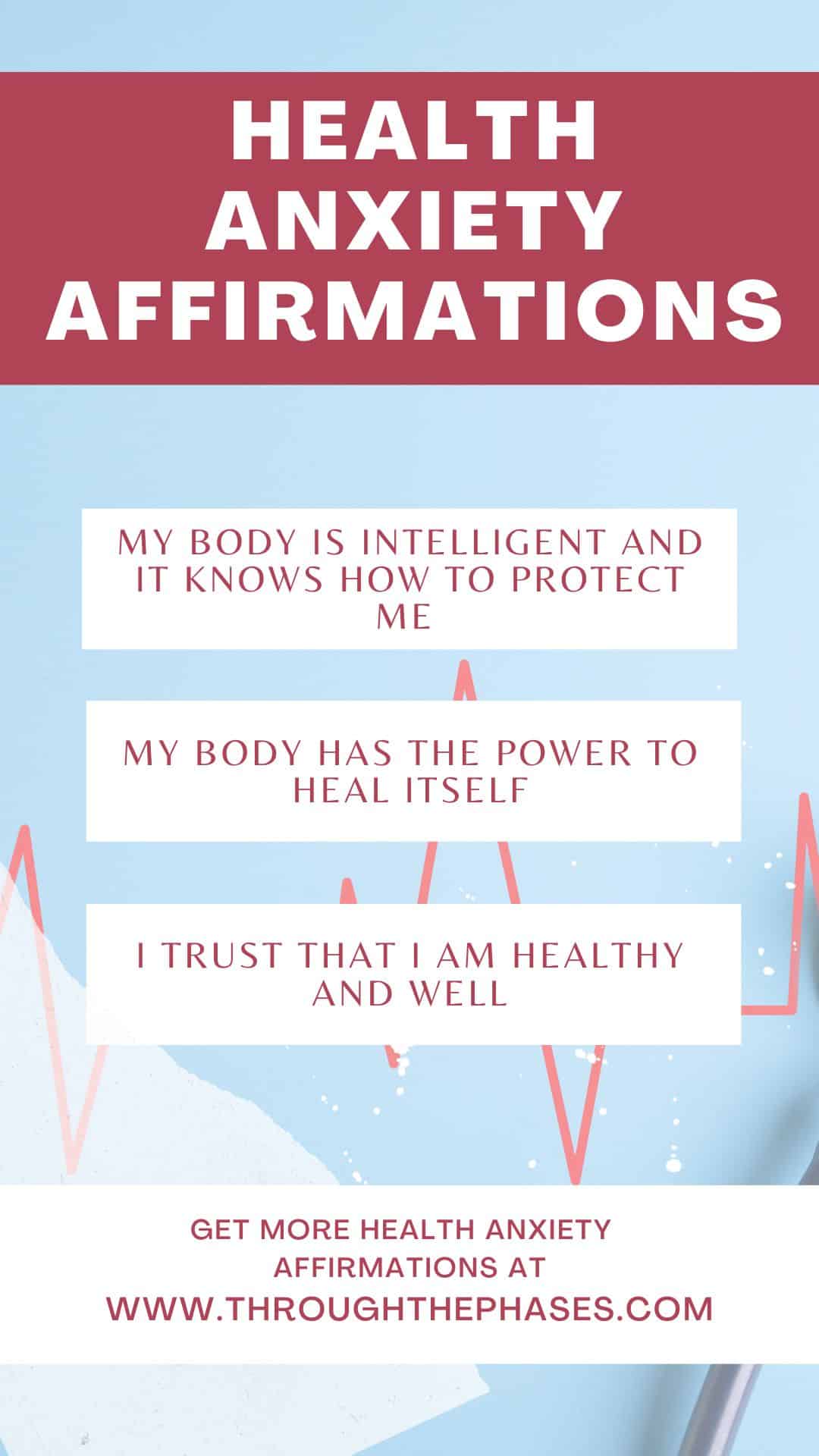
Credit: www.throughthephases.com
Example Affirmation Routines
Here are two sample routines you can try. Adjust them to fit your lifestyle.
Morning Routine
- Wake up and stretch.
- Take three slow breaths.
- Read or say 3–5 affirmations from the list above.
- Write one positive thought in your journal.
Evening Routine
- Sit quietly before bed.
- Close your eyes and take deep breaths.
- Repeat your favorite affirmations until you feel calm.
- Reflect on one thing you are grateful for.
These routines help set a positive tone for your day and prepare your mind for restful sleep.
Real-life Stories: How Affirmations Changed Lives
Many people with health anxiety have found comfort in affirmations. Here are two examples:
Maria’s Story: Maria struggled with chest pains and constant worry about her heart. She learned to say, “This feeling will pass. I am safe in this moment.” At first, she was not sure it would help. But after a few weeks, she noticed her panic attacks became less frequent. She also started sleeping better.
James’s Story: James checked his body every hour and searched for symptoms online. He started using the affirmation, “Not every sensation needs my attention.” This helped him reduce checking behaviors. Over time, he gained confidence to enjoy daily activities again.
Everyone’s experience is different, but these stories show that change is possible.

Credit: www.amazon.com
Comparing Affirmations To Other Coping Tools
Affirmations are just one part of managing health anxiety. Let’s see how they compare to other common tools.
| Tool | What It Does | Best For | Limitations |
|---|---|---|---|
| Affirmations | Change negative thoughts, build confidence | Daily practice, quick relief | May take time to feel results |
| Deep Breathing | Calms physical symptoms of anxiety | Panic attacks, stress | Does not address thoughts directly |
| Cognitive Behavioral Therapy (CBT) | Changes thinking and behavior patterns | Long-term improvement | Needs a trained therapist |
| Medication | Reduces anxiety symptoms | Severe cases | Possible side effects |
| Exercise | Reduces stress hormones, boosts mood | Overall well-being | Needs regular effort |
Using several tools together often works best.
Creating Your Own Health Anxiety Affirmations
While ready-made affirmations are helpful, making your own can be even more powerful. Here is a simple process:
- Identify your main worry. Example: “I am scared of getting sick.”
- Challenge the worry. Ask, “Is this always true?”
- Create a positive, believable statement. Example: “My body is doing its best to keep me healthy.”
Tips for writing your own:
- Use the present tense (“I am,” “I choose”)
- Keep it short and simple
- Avoid negative words (“not,” “never”). Instead of “I am not sick,” say “I am getting stronger.”
You can also use a trusted friend or therapist to help you find the right words.
Credit: www.thegoodbody.com
Health Anxiety Vs. Normal Health Awareness
It’s normal to care about your health. But health anxiety is different from healthy awareness. Here’s a quick comparison:
| Health Anxiety | Normal Health Awareness |
|---|---|
| Constant worry about illness | Occasional concern about health |
| Frequent checking for symptoms | Listening to your body as needed |
| Difficulty trusting doctors | Seeking medical advice when appropriate |
| Negative impact on daily life | Motivates healthy choices |
If you notice anxiety is controlling your life, affirmations and other tools can help you find balance.
When To Seek Professional Support
Affirmations can help most people, but sometimes health anxiety needs extra support. Here are signs you might benefit from talking to a professional:
- Anxiety stops you from working, socializing, or sleeping
- You cannot control checking or seeking reassurance
- Physical symptoms are severe or worsening
- You feel hopeless or depressed
A therapist can help with techniques like CBT or other counseling. In some cases, medication may be helpful. Combining affirmations with therapy often brings the best results.
For more information, you can visit the National Institute of Mental Health.
Additional Tips For Managing Health Anxiety
- Limit online symptom searches. These often increase worry.
- Practice regular exercise to lower stress.
- Eat balanced meals and stay hydrated.
- Get enough sleep. Fatigue makes anxiety worse.
- Spend time with supportive friends and family.
- Set small, realistic health goals.
- Celebrate progress, even small steps.
- Try mindfulness or meditation apps.
- Remember, setbacks are normal. Be kind to yourself.
Frequently Asked Questions
What Are Affirmations For Health Anxiety?
Affirmations for health anxiety are positive statements that help you challenge and change negative thoughts about your health. They remind you to focus on the present, trust your body, and reduce fear. Examples include “I am safe in this moment” and “My body is strong and resilient.”
How Long Does It Take For Affirmations To Work?
The effect of affirmations depends on how often you use them and your belief in the statements. Some people feel calmer after a few days; for others, it takes weeks. The key is consistency—repeat your affirmations every day, even if you do not see instant results.
Can Affirmations Cure Health Anxiety?
Affirmations alone are not a cure for health anxiety, but they are a helpful tool. They work best with other healthy habits, like exercise, therapy, or talking to friends. If your anxiety is severe, it is important to seek support from a mental health professional.
What If I Do Not Believe My Affirmations?
It is normal to feel unsure at first. Start with affirmations that feel possible, not perfect. For example, if “I am healthy” feels untrue, try “I am learning to trust my body. ” Over time, small shifts in thinking can build trust and confidence.
Should I Stop Seeing My Doctor If I Use Affirmations?
No. Affirmations are not a replacement for medical care. If you have new, serious, or unexplained symptoms, always talk to your healthcare provider. Use affirmations to manage anxiety, but trust your doctor for medical advice.
---
Changing your thoughts about your health takes time, patience, and practice. Affirmations are a simple but powerful tool to help you break the cycle of worry and build a calmer, healthier mind. Start by choosing a few affirmations from this article, repeat them daily, and notice how your feelings change.
If anxiety is still strong, remember that help is available, and you are never alone on your journey to peace.
