

Best Affirmation for Kids: Boost Confidence and Positivity
Best Affirmation For Kids
Kids are like seeds. They grow best when given sunlight, water, and the right words. The words we say to children shape how they see themselves and the world. One simple but powerful way to help kids build confidence, kindness, and a positive mindset is using affirmations. These are short, positive statements that children can repeat to themselves. Research shows that affirmations can improve self-esteem, reduce stress, and even support better learning.
But not all affirmations work the same for every child. A great affirmation should be easy to remember, speak to the child’s heart, and feel true over time. In this guide, you’ll discover the best affirmations for kids, how to use them, and why they matter so much in raising happy, resilient young people.
Whether you’re a parent, teacher, or caregiver, you’ll find practical tips and real-life examples to make affirmations a daily habit. Let’s explore how the right words can help kids believe in themselves.
Why Affirmations Matter For Kids
Children are always learning—from their families, friends, school, and everything around them. The way they talk to themselves inside their heads can shape their actions and feelings. Positive self-talk, like affirmations, can help children:
- Build self-esteem: Kids who repeat positive statements feel better about who they are.
- Handle challenges: Positive words help children bounce back after setbacks.
- Encourage kindness: Good affirmations teach children to respect themselves and others.
- Reduce anxiety: Repeating calm words helps kids manage worries and stress.
Studies have found that children who practice affirmations show more confidence and even do better in school. According to a report from the American Psychological Association, positive self-talk can change how children react to problems, making them more likely to keep trying when things get hard.
What Makes A Good Affirmation For Kids?
An effective affirmation for children is not just any positive phrase. It needs to be:
- Simple: Short, clear, and easy to say.
- Positive: Focused on strengths, not weaknesses.
- Personal: Using “I” or “my” helps kids connect with the words.
- Believable: Should feel true or possible, not too far from reality.
For example, “I am kind” is better than “I am perfect,” because kindness is something every child can work on and believe in.
Credit: blog.gratefulness.me
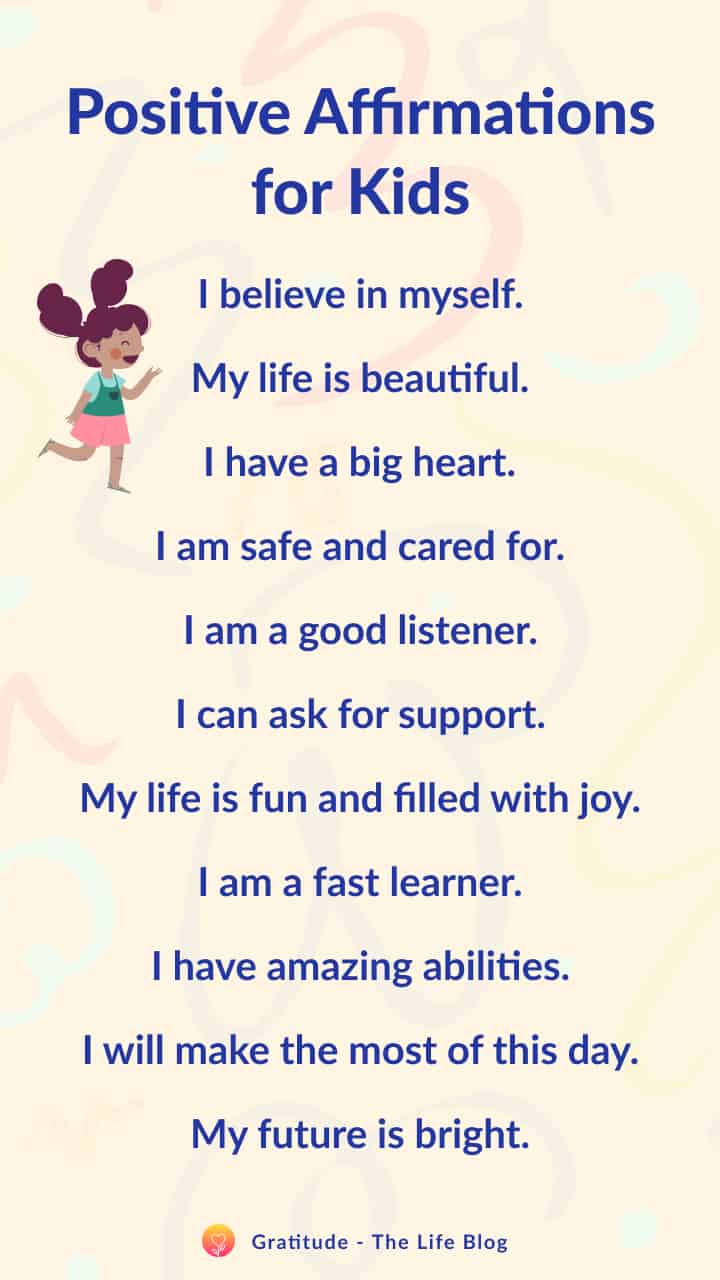
40 Best Affirmations For Kids
Here are the top affirmations for kids that cover confidence, kindness, resilience, learning, and more. These can be used at home, in class, or anywhere a child needs a boost.
- I am loved.
- I am important.
- I can do hard things.
- I am a good friend.
- I am brave.
- I am a good listener.
- I am creative.
- I am kind to myself and others.
- I make good choices.
- I can ask for help.
- I am proud of myself.
- I learn from my mistakes.
- I am unique.
- I am thankful for today.
- I can try again.
- I believe in myself.
- I am safe.
- I can control my feelings.
- I am growing every day.
- I am helpful.
- I bring joy to others.
- I am patient.
- I am honest.
- I am good at solving problems.
- I am strong.
- I can make a difference.
- I am calm and relaxed.
- I am grateful for my family and friends.
- I am smart.
- I can reach my goals.
- I am respectful.
- I love to learn new things.
- I forgive myself and others.
- I am responsible.
- I am gentle with myself.
- I enjoy trying new things.
- I am surrounded by love.
- I trust myself.
- I am enough.
- I look for the good in every day.
These affirmations cover a wide range of feelings and situations. Some are about bravery, others about friendship, learning, or emotional control.
How To Use Affirmations With Kids
Knowing good affirmations is just the start. The real magic happens when kids use them every day. Here’s how to make affirmations part of your child’s routine:
Morning Affirmation Rituals
Start the day with a few positive words. Children can say their affirmations while brushing their teeth, getting dressed, or during breakfast. This sets a hopeful tone for the day.
Writing Affirmations
Encourage kids to write their favorite affirmations in a notebook or on sticky notes. Place these notes on mirrors, lunch boxes, or school bags. The visual reminder makes the words more powerful.
Speaking Together
If you work with a group of children, say affirmations together. This builds a sense of community and helps shy kids join in. You can even make up hand movements for each phrase to make it fun.
Affirmation Cards
Create colorful cards with one affirmation on each. Let kids pick a card when they feel sad or need courage. Over time, they’ll learn to choose the right words for different situations.
Mindful Moments
After a stressful event, help your child take a deep breath and repeat a calming affirmation like “I am safe” or “I can handle this. ” This is a simple way to teach emotional control.
Nighttime Affirmations
Before bed, use affirmations to reflect on the day. This practice helps children let go of worries and sleep with a peaceful mind.
Practical Tips For Making Affirmations Work
- Let kids choose: Children are more likely to use affirmations if they pick their favorites.
- Be consistent: Make affirmations part of daily life, not just during tough times.
- Model the behavior: Adults should use affirmations too. Kids copy what they see.
- Connect to real life: If a child says, “I am brave,” talk about a time they showed bravery.
- Use visuals: Pictures, symbols, or colors make affirmations more engaging for young children.
- Don’t force it: If a child doesn’t like an affirmation, let them change it to something that feels right.
Examples Of Affirmations In Action
Children learn best by example. Here’s how affirmations can help in real situations:
Overcoming Fear
A child is nervous about starting a new school. Repeating “I am brave” and “I can make new friends” helps them face their worries.
Dealing With Mistakes
After failing a test, a child says, “I learn from my mistakes” instead of feeling like a failure. This helps them try again.
Handling Big Emotions
When angry, a child repeats, “I can control my feelings. ” This reminder helps them pause and use better ways to deal with anger.
Trying New Activities
A child who wants to try soccer but feels shy can use “I enjoy trying new things” and “I am strong. ” These affirmations give them the courage to join in.
Data: How Affirmations Affect Kids
Research has shown that affirmations can influence children’s well-being and performance. For example, a study published in *Child Development* found that students who practiced positive self-talk showed:
- Higher motivation in school tasks
- Lower anxiety during exams
- Better problem-solving skills
To give a clearer picture, see the comparison below:
| Group | Used Affirmations | Change in Confidence | Change in Stress |
|---|---|---|---|
| Group A | Yes | +25% | -30% |
| Group B | No | +5% | -5% |
This table shows that children who practiced affirmations felt much more confident and less stressed compared to those who did not.
Affirmations By Age Group
Kids at different ages understand and use affirmations in their own way. It’s important to choose words and ideas that match their stage of growth.
| Age Group | Best Affirmation Types | Example Affirmations |
|---|---|---|
| 3-5 years | Simple, direct, visual | I am loved. I am safe. I am kind. |
| 6-8 years | Relational, emotional | I am a good friend. I can share. I am patient. |
| 9-12 years | Growth mindset, resilience | I learn from my mistakes. I am strong. I can reach my goals. |
| 13+ years | Identity, self-trust | I believe in myself. I trust my choices. I am enough. |
Choosing age-appropriate affirmations makes the practice more meaningful and effective.
Avoiding Common Mistakes With Kids’ Affirmations
Using affirmations sounds simple, but there are a few pitfalls to avoid:
1. Making Affirmations Too Complicated
Long or hard-to-understand statements lose their power. Keep it short and easy.
2. Forcing Affirmations
Children need to feel the words. If you make them say something that doesn’t fit, it loses meaning.
3. Ignoring Emotions
Affirmations should support real feelings, not hide them. If a child is sad, help them name the feeling, then use an affirmation like “I can handle hard feelings. ”
4. Using Unrealistic Statements
Saying “I am the best at everything” isn’t helpful. Focus on growth, effort, and unique strengths.
5. Inconsistency
Affirmations work best with regular practice. If you only use them when things go wrong, children may not believe in their power.
How To Create Personalized Affirmations
Sometimes, the best affirmations are the ones children make themselves. Here’s how to help kids create their own:
- Ask what matters: What do they want to feel or believe about themselves?
- Use their words: Let the child say it in their own style.
- Start with “I am” or “I can”: This helps kids take ownership.
- Keep it positive: Focus on what they want, not what they want to avoid.
- Test it out: Say the affirmation together. Does it feel right? If not, change it.
For example, if a child loves art but feels shy, their affirmation could be, “I am creative and my art matters. ”
Non-obvious Insights: What Most Beginners Miss
Even people who use affirmations with kids often overlook a few key points:
The Power Of Repetition
It’s not enough to say an affirmation once. Repeating it daily, even when things are going well, helps build real belief. The brain learns by seeing and hearing the same message many times.
Linking Affirmations To Actions
Affirmations work best when they’re tied to real-life actions. For example, if a child says, “I am helpful,” encourage them to help set the table or clean up toys. This connects words to behavior, making the affirmation more real.
Affirmations Don’t Replace Real Emotions
Some adults hope affirmations will make sadness, anger, or fear disappear instantly. In truth, affirmations are tools to help children handle feelings, not avoid them. It’s important to let kids feel and talk about their emotions, then use affirmations to move forward.
How Teachers And Schools Use Affirmations
Schools around the world use affirmations to create positive learning spaces. Here’s how teachers make affirmations part of the classroom:
- Morning meetings: Start each day with a group affirmation.
- Classroom posters: Hang affirmations around the room as reminders.
- Peer affirmations: Let students give each other positive words.
- Affirmation journals: Students write or draw affirmations as part of their routine.
Some schools even use affirmations as part of behavior systems, helping children focus on what they can do, not just what they should avoid.
Cultural And Language Considerations
Affirmations work best when they reflect a child’s culture and language. If English is not the family’s main language, try using affirmations in your native tongue. The meaning and feeling will be deeper.
Also, some families may prefer spiritual or religious affirmations, such as “I am guided and protected. ” Adjust the words to fit your family’s values.
Integrating Affirmations Into Family Life
Affirmations aren’t just for children—they can unite the whole family. Here’s how to bring positive words into everyday life:
Family Affirmation Time
Set aside a few minutes each day for everyone to share an affirmation. It can be at breakfast, after school, or before bed.
Affirmation Jar
Write down affirmations on slips of paper and put them in a jar. When someone needs encouragement, pull out a phrase together.
Celebrating Success
When a family member reaches a goal or overcomes a fear, use affirmations to recognize their effort. For example, “I am proud of myself for trying. ”
Supporting Siblings
Encourage brothers and sisters to give each other positive words. This builds stronger bonds and reduces jealousy or competition.
Tech And Digital Affirmations For Kids
Today, many apps and websites offer digital affirmation tools for kids. Some let children record their own voices, while others send daily affirmation reminders. These can be helpful, but make sure to choose age-appropriate, safe platforms.
Technology is also a way to include children who prefer screens over paper. Just remember that no app can replace the warmth of face-to-face encouragement.
The Science Behind Affirmations
You might wonder, do affirmations really change the brain? Research in psychology and neuroscience says yes. When children repeat positive statements, their brains begin to build new pathways. This process is called neuroplasticity.
Studies show that positive self-talk can:
- Lower the body’s stress response
- Improve memory and focus
- Build emotional resilience
Children who use affirmations regularly tend to be more optimistic and handle setbacks better. This is not magic—it’s the brain learning new ways to think and feel.
For more scientific details, you can read about positive psychology at the Positive Psychology website.

Credit: www.thepathway2success.com
When To Use Affirmations Most Effectively
Timing matters. The best moments to use affirmations are:
- Before a challenge: Tests, sports, or new experiences.
- After disappointment: To recover from mistakes or setbacks.
- During routines: Mornings, bedtime, or meals.
- When emotions run high: Anger, fear, or sadness.
But affirmations are not just for hard times. Using them during happy, normal days helps children build a habit of positive thinking.
Comparing Affirmations With Other Self-esteem Tools
Affirmations are one way to build confidence, but how do they compare with other strategies? Let’s look at the differences.
| Tool | Main Benefit | Best For | Example |
|---|---|---|---|
| Affirmations | Positive self-talk | Daily confidence, mindset | "I am brave." |
| Gratitude Journals | Focus on positives | Emotional balance | Writing 3 things you are thankful for |
| Visualization | Mental rehearsal | Preparing for challenges | Imagining success before a test |
| Mindfulness | Calm, presence | Stress reduction | Deep breathing exercises |
Each tool has its place. Many families and teachers use a mix to help children develop well-rounded confidence and emotional skills.
Real-life Stories: Affirmations Making A Difference
A Shy Child Finds Her Voice
Maria, age 7, was very quiet in class and rarely spoke up. Her teacher started using daily affirmations like “I am a good speaker” and “My ideas matter. ” With time, Maria began to answer questions more and even read aloud.
Her confidence grew not just in school, but at home and with friends.
A Family Turns Around A Tough Morning
The Johnson family had rushed, stressful mornings. They began using affirmations while eating breakfast, such as “Today will be a good day” and “We can handle anything. ” Mornings became calmer, and everyone started the day with a smile.
A Team Overcomes Defeat
A youth soccer team lost several games in a row. The coach led the team in affirmations: “We learn and grow,” “We play with heart,” and “We support each other.” The team’s attitude changed. They worked harder, encouraged each other, and finally celebrated their first win.
These stories show how affirmations are more than just words—they’re a way to change habits, emotions, and even relationships.
Frequently Asked Questions
What Is The Best Age To Start Using Affirmations With Kids?
Children as young as three can begin using simple affirmations. Start with short phrases and use pictures or actions to help them understand. As kids grow, use more complex statements that fit their needs.
How Many Affirmations Should A Child Use Each Day?
There’s no strict number, but 2–5 affirmations each day is a good start. Choose phrases that feel meaningful and repeat them regularly. Quality matters more than quantity.
Can Affirmations Help With Anxiety Or Negative Thoughts?
Yes, affirmations can help children cope with anxiety and negative thinking. When used with other support, like talking about feelings and problem-solving, affirmations remind kids of their strengths and abilities.
Should Parents And Teachers Use The Same Affirmations?
It’s helpful if children hear similar positive messages from both home and school. However, let kids choose affirmations that feel right for them, and adjust as needed for different settings.
What If A Child Doesn’t Believe An Affirmation?
It’s normal for children to doubt at first. If an affirmation feels untrue, try making it more specific or related to effort. For example, instead of “I am smart,” say “I am learning new things every day. ” Over time, belief can grow with practice and support.
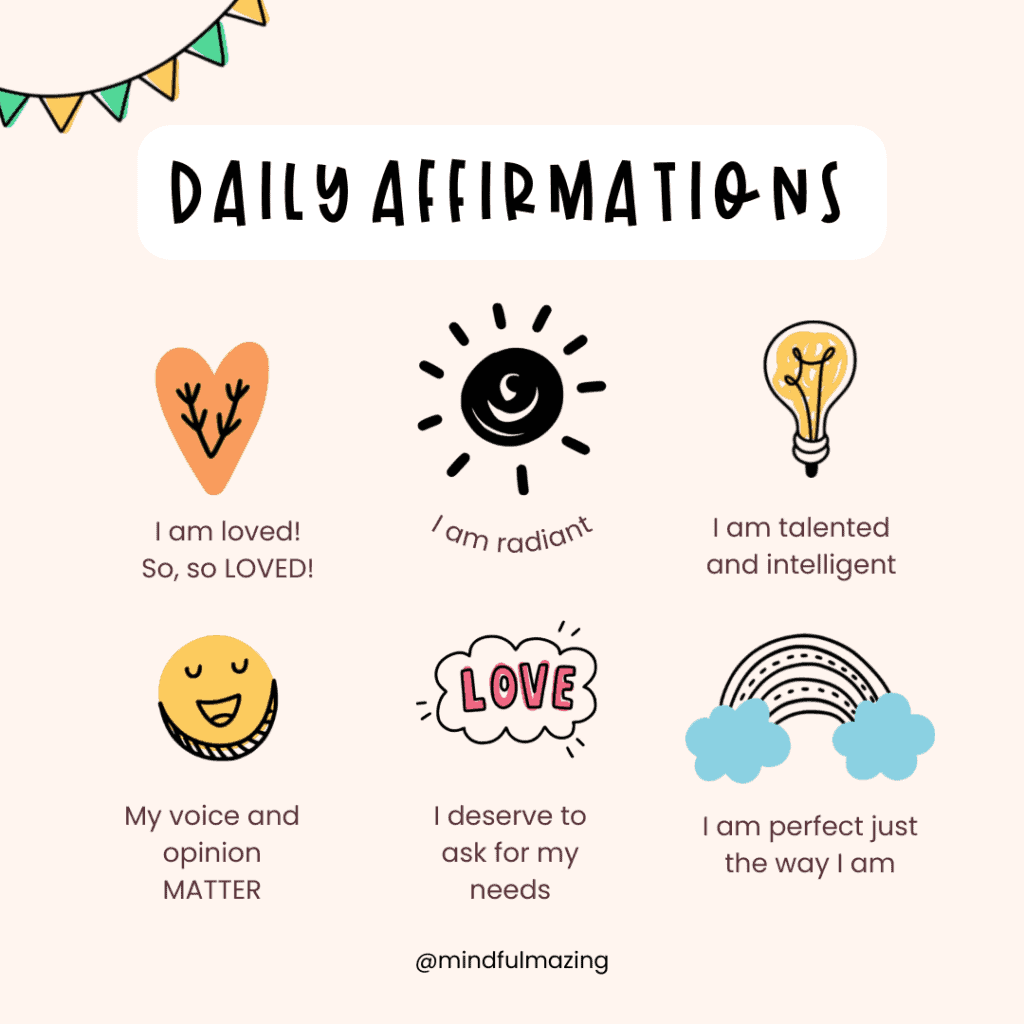
The words we give children are seeds of their future. With the right affirmations, kids can build a strong, positive inner voice that will last a lifetime. Let’s help them grow with kindness, courage, and hope—one word at a time.
Credit: www.mindfulmazing.com
