

Affirmations to Stop Smoking: Transform Your Mindset Today
Quitting smoking is one of the hardest challenges many people face. The craving, the habits, and even the emotional ties to cigarettes can make stopping feel impossible. If you’ve tried to quit before, you might know the frustration of wanting to stop but feeling stuck in old routines. You’re not alone—millions of smokers want to quit but struggle with the same patterns. There’s good news, though: you can use the power of your mind to help break free. Affirmations to stop smoking are a tool that many people overlook, but they can transform your attitude and help you succeed.
Affirmations are positive statements you repeat to yourself, often every day. They help change your thoughts, beliefs, and actions over time. Instead of fighting cravings with willpower alone, affirmations work on the deeper level—your mindset. When you combine affirmations with other quit-smoking strategies, you build a stronger foundation for lasting change.
This article will guide you through everything you need to know about using affirmations to stop smoking, including how they work, which ones are most effective, and practical ways to use them in your daily life.
Why It’s So Hard To Quit Smoking
Many people believe stopping smoking is just about willpower. In reality, it’s more complex. Nicotine addiction changes your brain chemistry, making you crave cigarettes. But there’s another side: the emotional and mental habits built around smoking. For example, you might reach for a cigarette when you’re stressed, bored, or socializing. Over time, your brain connects cigarettes with certain feelings or routines.
Most smokers also struggle with limiting beliefs. These are thoughts like “I’ll never be able to quit,” or “Smoking helps me relax.” Such beliefs can keep you stuck, even if you want to change. Affirmations help challenge and replace these negative beliefs with empowering ones, shifting your mindset toward success.
What Are Affirmations?
Affirmations are short, powerful statements you say or think regularly. They are designed to create positive changes in your life by influencing your subconscious mind. When you repeat affirmations often, you start to believe them. Your actions then follow your new beliefs.
For example, instead of thinking, “I need a cigarette to calm down,” you can say, “I am calm and in control without smoking. ” Over time, this new belief can help you resist cravings.
Affirmations are not magic words. They don’t make change happen instantly. But when used consistently, they can help you change your self-talk, increase your motivation, and build the confidence you need to quit smoking for good.
How Affirmations Help You Stop Smoking
Affirmations to stop smoking work in several ways:
- Rewiring your brain: Repeating positive statements creates new mental pathways, making it easier to think and act differently.
- Breaking negative cycles: Affirmations help interrupt the automatic thoughts and feelings that trigger smoking.
- Boosting confidence: When you feel positive and empowered, you’re more likely to stick with your decision to quit.
- Reducing stress: Many affirmations focus on calmness and inner peace, helping you handle stress without reaching for a cigarette.
- Setting intentions: Affirmations remind you of your goals and keep you focused on the benefits of quitting.
Scientific studies show that self-affirmation techniques can help people change habits, improve health behaviors, and even lower stress. While affirmations alone may not be enough for everyone, they are a valuable part of a complete quit-smoking plan.
The Most Powerful Affirmations To Stop Smoking
Choosing the right affirmations is important. You want statements that speak directly to your challenges and goals. Here are some of the most effective affirmations for quitting smoking, along with explanations for each.
1. “i Am A Non-smoker.”
This simple statement helps you see yourself as someone who doesn’t smoke. It’s powerful because it changes your identity at the core. When you believe you are a non-smoker, your actions will start to match that belief.
2. “i Am Stronger Than Any Craving.”
Cravings can feel overwhelming. This affirmation reminds you that you have the power to say no, even when it’s difficult.
3. “i Choose Health And Freedom.”
Quitting smoking is not about losing something. It’s about choosing something better—health and freedom from addiction.
4. “every Day, I Breathe Easier And Feel Better.”
This helps you notice the positive changes in your body as you quit, reinforcing your motivation.
5. “i Love And Respect My Body.”
This affirmation builds a positive relationship with yourself, making you less likely to harm your body with cigarettes.
6. “i Am Patient With Myself As I Heal.”
Quitting smoking is a journey, not a race. This reminds you to be gentle with yourself during tough moments.
7. “i Control My Actions And Choices.”
You always have a choice. Remembering this gives you confidence to say no to cigarettes.
8. “i Am Free From Smoking, Now And Forever.”
Visualize your life without cigarettes. This affirmation helps you focus on lasting change.
9. “i Handle Stress In Healthy Ways.”
Many people smoke to cope with stress. Use this affirmation to encourage healthier habits, like deep breathing or walking.
10. “with Every Breath, I Become Stronger.”
This ties the act of breathing—something cigarettes once controlled—back to your own health and strength.
11. “i Am Proud Of My Progress.”
Even small steps matter. Celebrate every win, no matter how minor.
12. “my Lungs Are Clean And My Body Is Healing.”
Picture the healing happening inside you. This affirmation uses visualization to encourage positive changes.
13. “i Am Free From The Past.”
Let go of guilt about smoking or past failures. Focus on the present and future.
14. “i Am Supported And Loved.”
Remember the people who want you to succeed. This affirmation builds a sense of community.
15. “i Enjoy Life More Without Cigarettes.”
As you quit, you’ll notice improvements—taste, smell, energy, and more. This helps you focus on those benefits.

Credit: www.amazon.com
Creating Your Own Affirmations
While the examples above are powerful, you might want to create your own. Personal affirmations feel more meaningful and can target your specific challenges.
Here’s how to create effective affirmations for quitting smoking:
- Keep it positive: Focus on what you want, not what you don’t want. For example, say “I am healthy,” instead of “I don’t smoke.”
- Use present tense: Speak as if the change has already happened. This helps your mind accept it as reality.
- Make it believable: Choose statements you can accept. If “I am a non-smoker” feels too far, try “I am learning to live smoke-free.”
- Keep it short: Simple statements are easier to remember and repeat.
- Be specific: Target your triggers or challenges. For example, “I stay calm during work breaks.”
Writing your own affirmations can be a powerful exercise. Take time to think about your reasons for quitting, your biggest challenges, and how you want to feel. Then, craft statements that inspire and motivate you.
How To Use Affirmations To Stop Smoking
Saying an affirmation once isn’t enough. Repetition and consistency matter. Here’s how to get the most from your affirmations:
- Repeat them daily: Say your affirmations every morning and night. Some people write them down or record themselves saying them.
- Use them during cravings: When you feel the urge to smoke, repeat your affirmations out loud or in your mind.
- Write them out: Keeping a journal can help reinforce your beliefs. Write your affirmations each day.
- Combine with deep breathing: Take slow, deep breaths as you say your affirmations. This calms your mind and body.
- Visualize success: As you repeat your affirmations, picture yourself as a happy, healthy non-smoker.
- Set reminders: Place sticky notes on your mirror, fridge, or wallet. These reminders keep you focused throughout the day.
Affirmations work best when you use them regularly, especially during tough moments. Over time, they become a natural part of your thinking.
Combining Affirmations With Other Quit-smoking Strategies
Affirmations are powerful, but they work best as part of a complete quit-smoking plan. Here are some proven methods to combine with your affirmations:
- Nicotine replacement therapy (NRT): Patches, gum, or lozenges can reduce withdrawal symptoms. Use affirmations to stay motivated.
- Support groups: Sharing your journey with others can keep you accountable. Try using affirmations with a group, or share your favorites.
- Exercise: Physical activity helps reduce cravings and stress. Repeat affirmations as you walk, stretch, or work out.
- Healthy habits: Replace smoking with positive routines—drinking water, chewing gum, or deep breathing.
- Professional help: Counselors or quitlines can give personalized advice. They may also suggest affirmation techniques.
Here’s a quick comparison of common quit-smoking methods and how affirmations can enhance each approach:
| Method | How It Helps | How Affirmations Add Value |
|---|---|---|
| Nicotine Replacement | Reduces withdrawal symptoms | Keeps motivation strong during cravings |
| Support Groups | Provides accountability and encouragement | Builds belief in yourself and your support system |
| Exercise | Reduces stress and boosts mood | Reinforces new, healthy identity |
| Professional Counseling | Offers expert guidance | Combines mental strategies for greater success |
Combining these tools can increase your chances of quitting and staying smoke-free.
Common Triggers And Affirmations To Overcome Them
Understanding your triggers is essential. A trigger is anything that makes you want to smoke—stress, coffee, social events, or even certain places. For each trigger, you can create a specific affirmation.
Here are examples of triggers and matching affirmations:
| Trigger | Suggested Affirmation |
|---|---|
| Stress at work | I stay calm and focused, even without cigarettes. |
| After meals | I enjoy the taste of food without needing a cigarette. |
| Social gatherings | I connect with people in healthy, smoke-free ways. |
| Morning routine | Each morning, I breathe fresh air and feel energized. |
| Feeling bored | I use my time for activities that make me happy and healthy. |
Tailoring affirmations to your specific triggers gives you a ready-made response when cravings strike.
Tracking Your Progress With Affirmations
Celebrating your wins is crucial. Quitting smoking is not easy, and every day you stay smoke-free is a victory. Use affirmations to acknowledge your progress.
Some ways to track your journey include:
- Journaling: Write down your affirmations and how you feel each day. Notice patterns—when do you feel strong, and when do you struggle?
- Milestone affirmations: Mark special days (one week smoke-free, one month, etc.) With a unique affirmation, like “I am proud to be smoke-free for one month.”
- Visual reminders: Use a calendar or app to track your progress. Pair each milestone with a new affirmation.
Here’s an example of tracking milestones with affirmations:
| Milestone | Affirmation |
|---|---|
| Day 1 | I am brave for starting my journey today. |
| One week | I am stronger every day I stay smoke-free. |
| One month | I celebrate my commitment to health and freedom. |
| Three months | I am proud of how far I’ve come. |
| Six months | I am a non-smoker, living my best life. |
Recognizing your progress keeps you motivated, even during tough times.
What Most Beginners Miss About Affirmations
Many people try affirmations but give up quickly because they don’t see instant results. Here are two important insights most beginners miss:
- Consistency matters more than perfection. You don’t need to say your affirmations perfectly. What’s important is that you use them regularly, even if you miss a day now and then.
- Affirmations work best when you truly feel them. Don’t just repeat words. Pause and imagine what it feels like to be smoke-free, healthy, and confident. Let those feelings grow stronger each time.
Another point beginners often overlook is the value of combining affirmations with real action. If you only repeat affirmations but keep your old routines, change is harder. Use affirmations as motivation to try new habits, seek support, and reward yourself for progress.
Overcoming Common Challenges With Affirmations
You may face doubts like, “Is this really working?” or “I still want to smoke.” These are normal. Here’s how to handle them:
- If you feel silly: Remember, affirmations are a tool for your mind, just like exercise is for your body. The more you use them, the more natural they feel.
- If cravings are strong: Use your affirmations as a shield. Say them more often during tough moments.
- If you relapse: Don’t give up. Affirmations can help you get back on track. Try, “I forgive myself and start fresh today.”
- If you don’t believe the words: Adjust them until they feel right. For example, “I am learning to be smoke-free.”
A practical tip: record your affirmations in your own voice and listen to them throughout the day. Hearing yourself say positive things can make them feel more real.
The Science Behind Affirmations
Some people wonder if affirmations are just wishful thinking. Research shows they can have real effects on the brain. Scientists have found that self-affirmation activates areas of the brain linked to self-control and reward. This means affirmations can actually help you resist temptations and stick to healthy choices.
Studies also show that people who use affirmations are more likely to follow through on their goals, feel less stressed, and recover from setbacks faster. While affirmations are not a magic solution, they are a proven way to support behavior change, including quitting smoking.
If you want to read more about the science, you can visit this article from the National Institutes of Health.
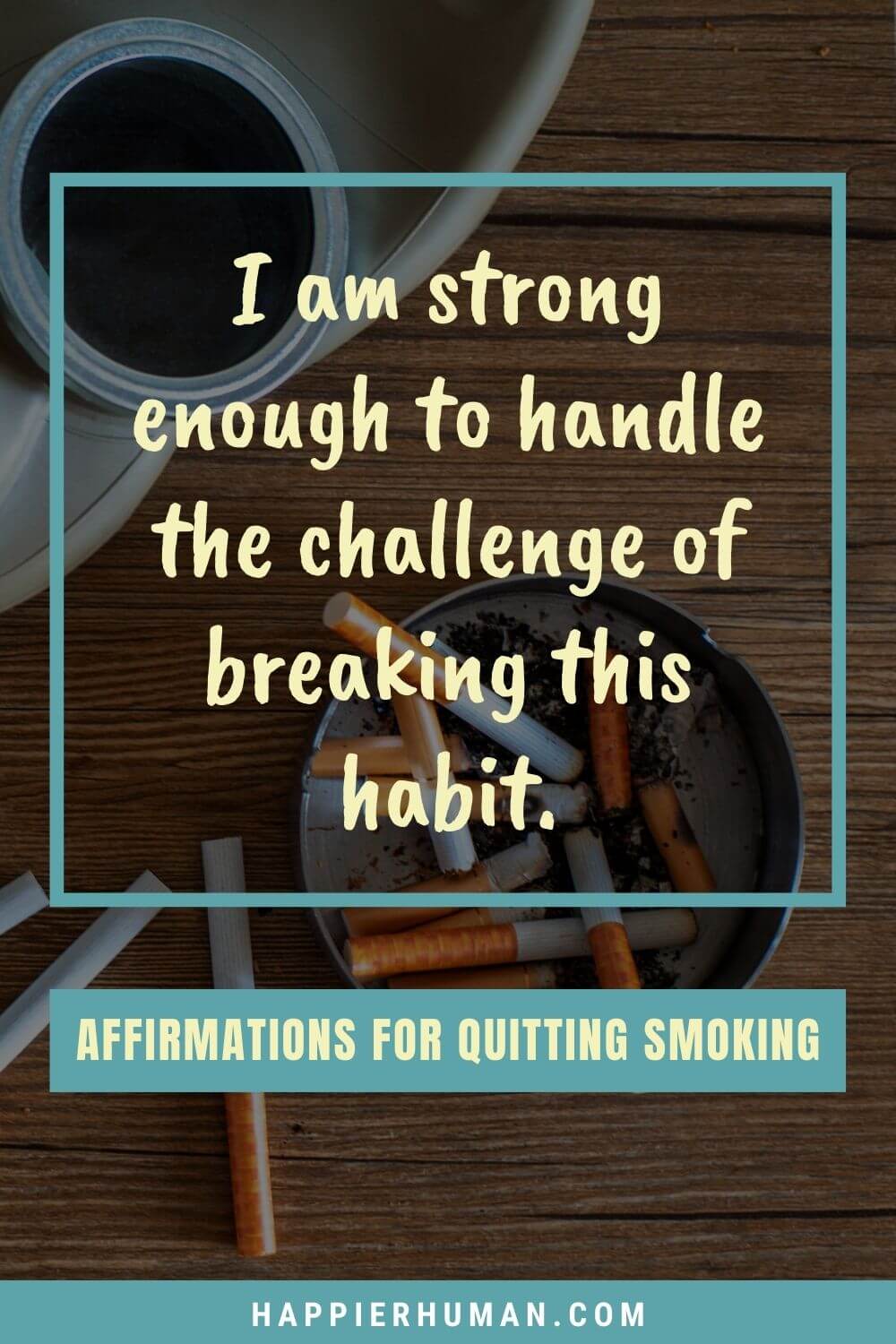
Credit: www.happierhuman.com
Examples Of Real-life Success With Affirmations
Many former smokers credit affirmations for helping them quit. Here are a few real-life examples:
- A man who had smoked for over twenty years used the affirmation “I am free from cigarettes” every morning. He paired this with walks during cravings, and after several months, he felt confident calling himself a non-smoker.
- A woman who always smoked during stressful workdays wrote affirmations on sticky notes for her desk. When she felt overwhelmed, she read, “I handle stress in healthy ways,” and took a deep breath instead.
- A group of friends quit together, texting each other affirmations and encouragement. Sharing their progress made the journey easier and more fun.
These examples show that affirmations can be adapted to fit your personality and life. The key is to make them part of your daily routine.
Additional Tips For Using Affirmations Successfully
- Say affirmations with emotion. The more you feel the words, the more powerful they become.
- Use visualization. Imagine your life as a non-smoker—how you breathe, move, and enjoy life.
- Pair with positive actions. Try drinking water, stretching, or taking a walk while saying your affirmations.
- Seek support. Share your affirmations with family or friends. Ask them to encourage you.
- Be patient. Change takes time. Trust the process, and stay committed to your goal.
Frequently Asked Questions
What Are The Best Times To Say Affirmations To Stop Smoking?
Morning And Evening Are Ideal Because Your Mind Is Calm And Open. You Can Also Use Affirmations During Cravings Or Stressful Moments. The Key Is To Repeat Them Often, Especially When You Need Extra Motivation.
Can Affirmations Replace Other Quit-smoking Methods?
Affirmations Are Powerful But Work Best With Other Methods Like Nicotine Replacement, Support Groups, Or Counseling. Use Affirmations To Boost Your Confidence And Stay Focused On Your Goals.
What If I Don’t Believe My Affirmations At First?
That’s Normal. Start With Statements You Can Accept, Like “i Am Learning To Live Smoke-free.” Over Time, As You Build Success, You’ll Start To Believe Stronger Affirmations.

Credit: www.gamperling-vt.de
How Long Does It Take For Affirmations To Work?
Everyone Is Different. Some People Notice Changes In Days, Others In Weeks. Consistency Is More Important Than Speed. Use Affirmations Daily, And Give Yourself Time To Change.
Are There Any Risks To Using Affirmations?
Affirmations Are Safe For Most People. If You Have Serious Mental Health Concerns, Talk To A Healthcare Provider. Affirmations Are Meant To Support, Not Replace, Medical Advice Or Therapy.
Quitting smoking is one of the best gifts you can give yourself. Affirmations to stop smoking help you build a new mindset, stay motivated, and believe in your ability to change. With patience, practice, and the right support, you can become a non-smoker and enjoy a healthier, happier life.
