

Affirmations About Self Love: Transform Your Mindset Today
Affirmations About Self Love
Feeling good about yourself is not always easy. Many people struggle with negative thoughts, low confidence, and self-doubt. But learning to love yourself can change your life in powerful ways. One simple yet effective tool for building self-love is affirmations. These are positive statements you repeat to help shift your mindset and attitude. Over time, affirmations can help you build inner strength, kindness, and confidence.
This article guides you through the world of self love affirmations—what they are, why they work, how to use them, and how they can reshape your self-image. We’ll cover practical examples, common mistakes, and science-backed insights. Whether you’re just starting out or looking to deepen your self-love journey, you’ll find clear advice and real-life examples to help you grow.
What Are Affirmations About Self Love?
Affirmations about self love are short, positive statements that help you focus on your strengths and worth. By repeating these statements regularly, you train your mind to see yourself in a more caring and positive light.
For example, saying “I am worthy of love and respect” helps break the cycle of negative thinking. Over time, your brain starts to believe these new messages, which can lead to real changes in how you feel and act.
Self-love affirmations are not magic, but they are a powerful support tool. They help you challenge old beliefs, boost your mood, and encourage healthier choices. The key is consistency and sincerity—affirmations work best when you repeat them often and truly want to believe them.
Why Self Love Is So Important
Many people believe that focusing on self love is selfish. In reality, self love is the foundation for emotional health. When you appreciate yourself, you are more resilient, less affected by criticism, and better able to help others.
Here’s why self love matters:
- Emotional Stability: Self love helps you stay calm under stress. You’re less likely to feel overwhelmed by life’s challenges.
- Better Relationships: When you accept yourself, you can connect with others without jealousy or neediness.
- Healthy Boundaries: Self love helps you say “no” when needed and stand up for yourself.
- Motivation: People who love themselves are more likely to pursue goals and recover from setbacks.
Research shows that self love is linked to lower rates of depression and anxiety. It also leads to higher satisfaction in life. If you want to live with more joy, learning to love yourself is a smart place to start.
The Science Behind Affirmations
Affirmations are not just “feel-good” quotes. Psychology research supports their benefits. When you repeat positive statements about yourself, you actually change the way your brain works.
Studies using MRI scans found that affirmations activate the brain’s reward centers. This helps reinforce positive beliefs and makes it easier to handle stress. Affirmations can also reduce the impact of negative experiences, making you more resilient.
One key insight is that affirmations work best when they feel believable. If you choose statements that are too far from your current beliefs, your brain may reject them. Starting with gentle, realistic phrases helps build trust with yourself. Over time, you can use stronger affirmations as your confidence grows.
50 Powerful Affirmations For Self Love
Here are 50 effective affirmations you can use daily. You don’t need to use all at once. Pick a few that speak to you and repeat them each morning or night.
- I am enough just as I am.
- I deserve kindness and respect.
- My feelings matter.
- I believe in myself.
- I am worthy of happiness.
- I trust myself to make good choices.
- I am proud of who I am becoming.
- I accept my flaws—they make me unique.
- My self-worth is not tied to what others think.
- I love the person I am today.
- I am growing stronger every day.
- I forgive myself for past mistakes.
- I am gentle with myself during hard times.
- I honor my needs and desires.
- I choose thoughts that serve me well.
- I bring value to the world.
- I am allowed to take up space.
- My voice matters.
- I trust the journey of my life.
- I am learning to love myself more each day.
- I am proud of how far I’ve come.
- I am open to new opportunities.
- I am grateful for my body and mind.
- I treat myself with kindness.
- I deserve to rest and recharge.
- I am patient with my progress.
- I accept compliments with grace.
- I am free from self-judgment.
- I am deserving of good things.
- I choose to focus on my strengths.
- I am a work in progress, and that’s okay.
- I am more than my past.
- I create my own happiness.
- I am enough, even on tough days.
- I trust myself to learn and grow.
- I am resilient and resourceful.
- I am worthy of love—especially my own.
- I am grateful for who I am.
- I choose to let go of negative self-talk.
- I am committed to loving myself fully.
- I am proud of my achievements, big and small.
- I am not defined by others’ opinions.
- I am in charge of my own happiness.
- I am worthy of forgiveness and healing.
- I celebrate my unique qualities.
- I am open to loving myself more deeply.
- I am a valuable person.
- I am enough, just by being me.
- I honor my journey, with all its ups and downs.
- I am learning to see myself with loving eyes.
You may notice that some affirmations are similar. This is on purpose—repeating similar ideas helps reinforce the message. Pick the ones that feel most powerful for your needs.
How To Use Affirmations For Maximum Impact
Using affirmations is simple, but there are ways to make them work even better. Here are some practical steps:
1. Choose The Right Affirmations
Not every affirmation will feel right for you. Start by picking 3–5 statements that feel positive and believable. If “I love myself completely” feels too strong, try “I am learning to love myself. ”
2. Repeat Consistently
Consistency is key. Say your affirmations each morning, before bed, or whenever you need a boost. Speaking out loud is most effective, but you can also write them down or repeat them silently.
3. Visualize And Feel
As you say each affirmation, pause and imagine what it would feel like if it were true. Try to feel the emotion—pride, peace, or joy. This helps your brain connect the words with real feelings.
4. Write Them Down
Writing affirmations in a journal makes them stronger. Each time you write, you reinforce the message. Some people keep affirmation cards in their wallet or on their mirror for daily reminders.
5. Pair With Action
Affirmations are most powerful when you also take small steps toward self love. For example, if you say “I am worthy of respect,” practice setting a boundary with someone. Aligning words and actions creates real change.
Common Mistakes People Make With Self Love Affirmations
Affirmations are simple, but many people use them in ways that don’t work. Here are some common errors to avoid:
- Choosing Unrealistic Statements: If you repeat something you don’t believe at all, your mind may reject it. Start with gentle affirmations that feel possible.
- Lack of Consistency: Affirmations only work if you use them often. Doing them once a month won’t help.
- Expecting Quick Results: Change takes time. Be patient and keep going even if you don’t feel different right away.
- Ignoring Negative Emotions: Affirmations are not meant to hide or ignore real feelings. Allow yourself to feel sad, angry, or anxious. Use affirmations to support yourself, not to cover up emotions.
- Using Too Many at Once: Focus on a few affirmations at a time. Too many can feel overwhelming and less personal.
How Self Love Affirmations Transform Your Life
The benefits of self love affirmations go beyond feeling good. Here’s how they can shape your daily life:
Improved Confidence
When you repeat affirmations like “I am capable,” you build real confidence. This helps you speak up in meetings, try new things, and handle criticism.
Better Relationships
People who love themselves don’t depend on others for self-worth. This leads to healthier, more balanced relationships with friends, family, and partners.
Stress Reduction
Affirmations help calm the mind. When you practice self love, you’re less likely to be hard on yourself during stressful times.
Greater Motivation
Believing in yourself means you’re more likely to take action toward your goals. You recover faster from setbacks and keep moving forward.
Better Health Choices
People with higher self love are more likely to eat well, exercise, and get enough sleep. They treat their bodies with respect.
Real-life Example: How Affirmations Changed One Person’s Life
Let’s look at a real-life story to show how self love affirmations can make a difference.
Maria struggled with low self-esteem for years. She often thought, “I’m not good enough” and compared herself to others. She felt stuck in her job and had trouble forming close friendships.
A friend suggested she try affirmations. At first, Maria felt silly saying positive things about herself. But she started with “I am learning to accept myself. ” She wrote this in her journal every morning.
After a few weeks, Maria noticed she was less critical of herself. She started saying no to things she didn’t want to do. She applied for a new job, something she never thought possible before. Maria’s relationships improved because she felt more secure and open.
This story is not unique. Many people find that small steps—like daily affirmations—can change how they see themselves and what they believe is possible.
Comparing Affirmations To Other Self Love Practices
Affirmations are just one tool for building self love. How do they compare to other popular practices like journaling, therapy, or meditation? The table below highlights the main differences and benefits.
| Practice | How It Works | Main Benefit | Time Needed |
|---|---|---|---|
| Affirmations | Repeat positive statements daily | Shifts mindset and beliefs | 1–5 minutes/day |
| Journaling | Write thoughts and feelings | Explores emotions, tracks growth | 10–20 minutes/day |
| Therapy | Talk with a counselor | Deep healing, expert support | 30–60 minutes/week |
| Meditation | Focus on breath or present moment | Reduces stress, increases awareness | 5–20 minutes/day |
Affirmations are quick and can be used anywhere. Journaling gives you space to explore your feelings. Therapy offers expert guidance for deeper issues. Meditation helps you become more mindful and less reactive. Combining these tools can give you the best results.
How To Write Your Own Self Love Affirmations
You don’t have to use only pre-made affirmations. Creating your own makes them more personal and powerful. Here’s how:
1. Start With “i Am”
Begin with “I am” or “I” statements. This keeps the focus on you.
2. Keep It Positive
Say what you want to believe or feel, not what you want to avoid. For example, “I am confident” instead of “I am not insecure. ”
3. Make It Present Tense
Use present tense, even if you don’t fully believe it yet. This helps your brain act as if it’s true now.
4. Be Specific
General statements like “I am great” may feel empty. Try “I am proud of my ability to stay calm under pressure. ”
5. Focus On Growth
If you can’t believe a statement yet, use words like “I am learning” or “I am becoming. ”
Here’s a quick example:
- Instead of “I am perfect,” try “I am doing my best and that’s enough.”
The Role Of Self Compassion In Self Love
Self love and self compassion are closely linked. Self compassion means treating yourself with the same kindness you offer a friend. It’s about forgiving mistakes and being gentle with yourself.
Research shows that self compassion leads to less anxiety, better relationships, and higher happiness. It also helps you handle failure and criticism without feeling worthless.
Affirmations support self compassion by changing harsh self-talk into gentle encouragement. For example, instead of thinking “I messed up again,” try “I am learning and growing from every experience. ”
How Affirmations Affect The Brain
You may wonder how saying a few words can change your life. The answer lies in neuroplasticity—the brain’s ability to change and adapt.
When you repeat an affirmation, you’re creating a new mental pathway. The more you use it, the stronger it gets. Over time, positive statements can replace old, negative beliefs.
MRI studies show that self-affirmation activates the ventromedial prefrontal cortex, a part of the brain linked to self-worth and reward. This helps explain why affirmations can boost mood and motivation.
Here’s a simple breakdown:
| Brain Area | Role | Effect of Affirmations |
|---|---|---|
| Prefrontal Cortex | Decision-making, self-reflection | Strengthens positive beliefs |
| Amygdala | Processes emotions | Reduces emotional reactivity |
| Hippocampus | Memory formation | Stores new positive memories |
The more you practice, the easier it gets to think positively. That’s why consistency matters so much.

Credit: mblwrites.com
When Affirmations Don’t Work: What To Do
Sometimes, people try affirmations and feel nothing changes. Here are some reasons why this happens and tips to fix it:
- Affirmations feel fake: If a statement feels untrue, change it to something softer. For example, “I am open to liking myself.”
- You’re too hard on yourself: Notice if you’re criticizing yourself for not feeling better right away. Be patient—change takes time.
- You forget to practice: Set a reminder on your phone or leave notes where you’ll see them.
- You’re using only words: Pair affirmations with small actions. If you say “I care for my body,” drink a glass of water or stretch.
- Underlying issues: Sometimes, deeper issues need more support. Talking to a counselor or therapist can help.
Combining Affirmations With Other Habits
Affirmations work best when part of a larger self-care routine. Try combining them with these habits:
- Gratitude Journaling: Write three things you’re grateful for each day. This shifts focus from what’s missing to what’s positive.
- Mindful Breathing: Spend a few minutes each day focusing on your breath. This calms the mind and makes affirmations more powerful.
- Exercise: Physical movement boosts mood and confidence, making affirmations easier to believe.
- Healthy Boundaries: Practice saying “no” to things that drain you. This supports self love and makes affirmations feel more real.
Comparing Positive And Negative Self Talk
It helps to see the difference between positive and negative self talk. Here’s a simple comparison:
| Negative Self Talk | Positive Self Talk (Affirmation) | Possible Outcome |
|---|---|---|
| I always fail at everything. | I am learning from my mistakes. | Greater resilience, less fear of failure |
| I’m not good enough. | I am enough, just as I am. | Higher self-worth, more confidence |
| Nobody cares about me. | I am worthy of love and care. | Better relationships, more self respect |
Switching from negative to positive self talk is not always easy, but affirmations help you make this shift step by step.
Two Non-obvious Insights About Self Love Affirmations
- Your Tone Matters: It’s not just the words you say, but how you say them. Speaking affirmations with kindness and patience—like you would to a close friend—makes them more effective. If you rush or sound harsh, your mind won’t absorb the message as deeply.
- Affirmations Reveal Your Beliefs: Pay attention to which affirmations feel uncomfortable or hard to say. These often point to areas where you need the most healing. Instead of avoiding these, gently explore why they feel challenging. This self-awareness can lead to deeper growth.
Self Love Affirmations For Different Situations
Affirmations can be tailored for specific moments in life. Here are some examples:
When You Wake Up
- “Today, I choose to love myself.”
- “I am excited for what this day will bring.”
During Stressful Times
- “I am calm and in control.”
- “I am gentle with myself as I face challenges.”
Before A Big Event
- “I am prepared and confident.”
- “I trust myself to do my best.”
When Feeling Insecure
- “I am enough, even if I feel nervous.”
- “I accept myself, flaws and all.”
At Bedtime
- “I am grateful for all I did today.”
- “I forgive myself and let go of worries.”
Using different affirmations at different times helps you stay supported throughout your day.
How To Teach Self Love Affirmations To Children
Children also benefit from learning self love affirmations. The earlier they start, the stronger their self-esteem can become. Here’s how you can help kids use affirmations:
- Keep It Simple: Use short, easy statements like “I am kind” or “I can do hard things.”
- Make It Fun: Turn affirmations into a game or repeat them together in the mirror.
- Model the Behavior: Let children see you using affirmations yourself.
- Praise Effort: Encourage kids to try new things and praise their effort, not just their results.
Helping children build self love early gives them tools for a lifetime of confidence.

Credit: www.amazon.com
Integrating Affirmations Into Your Daily Routine
If you want affirmations to become a lasting habit, make them part of your daily life. Here are some easy ways:
- Mirror Practice: Say your affirmations while looking in the mirror each morning.
- Phone Reminders: Set reminders with your favorite affirmations to pop up during the day.
- Sticky Notes: Place notes on your fridge, computer, or bathroom mirror.
- During Exercise: Repeat affirmations while you walk, run, or do yoga.
- As Part of Meditation: Add affirmations to the end of your meditation session.
The more you practice, the more natural it will feel.
Frequently Asked Questions
What Are The Best Times To Practice Self Love Affirmations?
The best times are when you wake up and before you go to bed. These moments set the tone for your day and help you reflect at night. You can also use affirmations whenever you feel stressed, insecure, or need encouragement.
The key is to repeat them often, so they become part of your thinking.
How Long Does It Take For Affirmations To Work?
Results vary from person to person. Some people notice changes in a few days, while others need weeks or months. Consistency is more important than speed. If you practice daily, you’ll start to notice small shifts in your mood and self-talk.
Over time, these add up to bigger changes.
Can Affirmations Replace Therapy Or Professional Help?
Affirmations are a helpful tool, but they are not a substitute for therapy or medical advice. If you struggle with deep sadness, anxiety, or trauma, talking to a professional is important. Affirmations can work well alongside other support like counseling or medication.
Are There Scientific Studies Supporting Affirmations?
Yes, scientific studies show that affirmations can change brain activity and improve resilience. For example, research found that self-affirmation activates reward centers in the brain and helps people cope with stress. For more details, see this Wikipedia entry on self-affirmation.
What If I Feel Silly Saying Affirmations?
It’s normal to feel awkward at first. Many people do. The feeling usually fades as you practice. If speaking out loud is uncomfortable, try writing affirmations or repeating them in your mind. Over time, you’ll become more comfortable, and the benefits will follow.
Learning to love yourself is a journey, not a race. Affirmations are a gentle, effective way to support yourself every day. With time, patience, and practice, you can build a stronger, kinder relationship with yourself—one positive thought at a time.
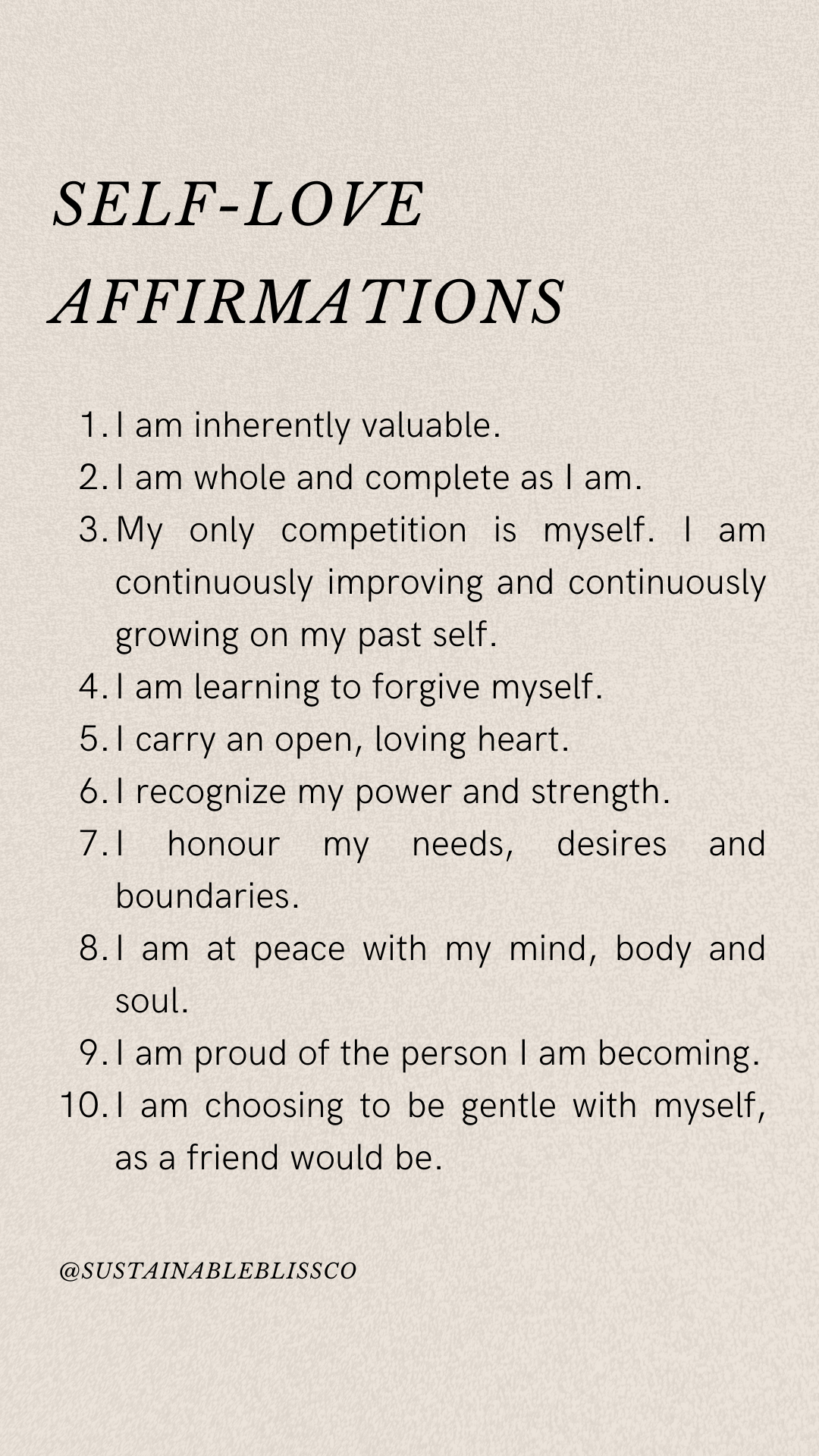
Credit: www.sustainableblissco.com
