

Can Business Casual Be Jeans? Style Tips for Modern Offices
Can Business Casual Be Jeans
Business casual is one of the most confusing dress codes for professionals. Many people wonder: Can jeans be business casual? The answer is not simple. It depends on the company, industry, and even the specific jeans you wear. This article will help you understand when jeans are acceptable for business casual, how to style them, and what mistakes to avoid. You’ll learn what matters most when making jeans work for the office, plus insider tips that most beginners miss.
What Is Business Casual?
Business casual is a dress code that sits between formal business wear and casual clothing. It’s popular in many offices because it’s comfortable but still professional. You don’t need a suit and tie, but you shouldn’t look like you’re going to a picnic.
Key features of business casual:
- Professional but not formal
- Comfortable, yet polished
- Flexible rules (varies by company)
Business casual usually includes collared shirts, blouses, khakis, and sometimes dress pants. Shoes are often closed-toe, like loafers or flats. Accessories are simple and neat.
But jeans? This is where things get tricky. Business casual is not a fixed set of clothing. It’s a style that changes depending on the workplace, region, and even the season. For example, in warmer months, you might see people wearing lighter fabrics, but always in a way that looks neat and purposeful.
It’s about balance—looking relaxed but not sloppy.
Some workplaces use business casual to encourage comfort and creativity. Others use it to avoid the stiffness of formal dress codes. The challenge is understanding where jeans fit into this balance, because they are often seen as too informal.
Are Jeans Business Casual?
The short answer is: sometimes. In many modern workplaces, jeans are accepted as business casual. But there are important rules to follow.
Jeans can be business casual if:
- They are clean and free of rips
- The color is dark (like indigo or black)
- The fit is not too tight or baggy
- They are styled with professional clothing
Some companies allow jeans every day, others only on Fridays. In creative fields (like tech, marketing, design), jeans are more common. In finance, law, or government, jeans are usually not allowed.
Why jeans are controversial:
- Jeans were originally workwear for laborers
- They became casual wear in the 20th century
- Some managers still see jeans as too relaxed
So, always check your company’s policy before wearing jeans to work.
Some companies see jeans as a way to attract younger employees or signal a modern culture. Others stick with tradition, believing jeans send the wrong message to clients or partners. Even within the same company, you might find some departments or teams are more relaxed than others.
A real-life example: At many large tech companies, you’ll see senior managers wearing dark jeans with blazers. In contrast, in a law firm, jeans might not be allowed even in the back office. This difference shows why you can’t rely on a single rule for all workplaces.
Types Of Jeans That Work For Business Casual
Not all jeans are equal. Choosing the right type is key for business casual.
1. Dark Wash Jeans
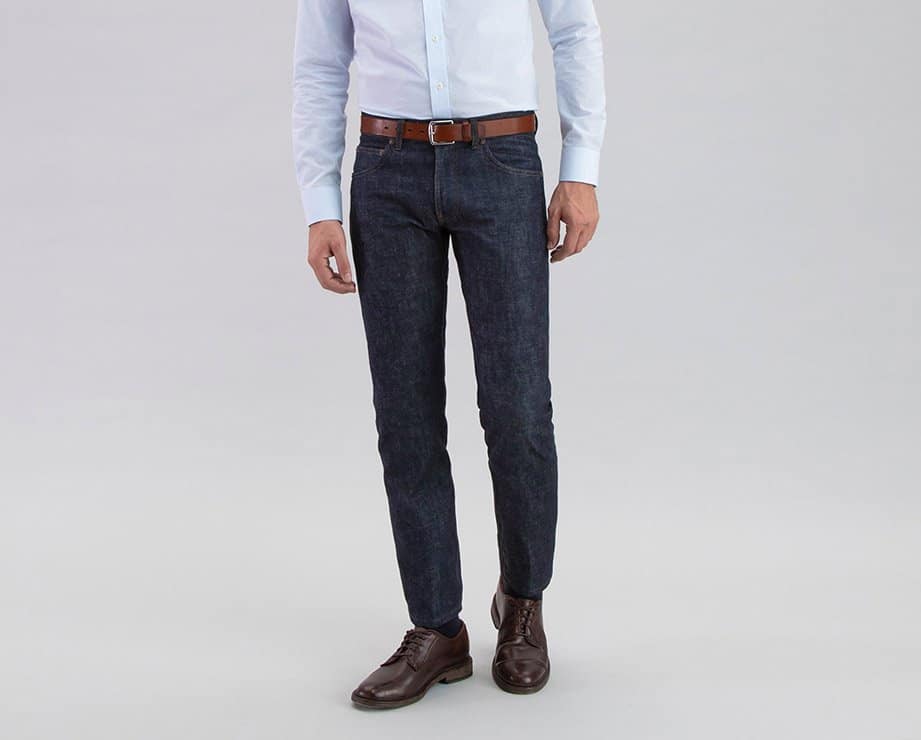
These are the safest choice. Dark blue or black jeans look more professional than light washes. They also pair well with most business casual tops.
2. Straight-leg Jeans
A straight cut gives a classic, clean look. Avoid skinny or overly wide legs, as they can appear too trendy or too relaxed.
3. No Distressing
Jeans with rips, holes, or heavy fading are not business casual. Even subtle distressing can make jeans look informal.
4. No Embellishments
Avoid jeans with embroidery, patches, or shiny details. Anything flashy draws attention and makes the outfit look less professional.
5. Proper Fit
Jeans should fit comfortably. They shouldn’t be skin-tight or saggy. Aim for a fit that follows the lines of your body without clinging or hanging.
6. High Or Mid-rise
Low-rise jeans can look too casual or reveal too much. High-rise and mid-rise styles are safer and more polished.
Examples of jeans that work:
- Dark blue, straight-leg, mid-rise jeans
- Black, boot-cut, high-rise jeans
Examples to avoid:
- Light wash, ripped skinny jeans
- Jeans with glitter or large logos
Also, pay attention to the fabric. Jeans made with a blend of cotton and a bit of spandex are comfortable and hold their shape well, making them look crisp throughout the day. Avoid overly faded denim or jeans with whiskering (lines across the thighs), as these details are more casual.
Another hidden detail: Some jeans have decorative stitching or colored thread. For business casual, stick with simple stitching that matches the denim color.
Comparing Jeans To Other Business Casual Pants
Here’s a quick comparison to help you see where jeans fit in business casual.
| Pant Type | Professional Appearance | Comfort Level | Common in Business Casual |
|---|---|---|---|
| Dress Pants | High | Medium | Very Common |
| Chinos | Medium-High | High | Common |
| Dark Jeans | Medium | High | Sometimes |
| Khakis | Medium | High | Common |
| Light Jeans | Low | High | Rarely |
As you can see, dark jeans offer high comfort and medium professionalism. They’re sometimes allowed, depending on the workplace.
Chinos and khakis are often chosen because they are soft, easy to move in, and available in many colors. Dress pants are usually reserved for more formal days, important meetings, or industries where tradition is important. Jeans, when allowed, bring the highest level of comfort.
For some people, this helps them focus and feel at ease during long hours.
If you want to upgrade your business casual look but don’t want to wear jeans, try a pair of slim-fit chinos in navy or olive. These colors are modern and easy to match with many tops and shoes. Corduroys are another option for colder months; they look polished but are warmer than regular pants.

Credit: www.cottoncashmerecathair.com
How To Style Jeans For Business Casual
The way you style jeans is just as important as the jeans themselves. Here are practical ways to make jeans look professional.
Pair With The Right Top
- Collared shirts: Button-down shirts or polos are classic. Choose shirts in solid colors or subtle patterns, like thin stripes or checks.
- Blouses: For women, a simple blouse adds elegance. Fabrics like silk, cotton, or rayon are best. Avoid flashy prints.
- Sweaters: Fine-knit sweaters look neat and polished. Stick to neutral colors or gentle pastels.
Layering is also useful. You can wear a button-down under a sweater for a smarter look. For extra polish, add a vest or a lightweight cardigan.
Add A Blazer Or Jacket
A blazer instantly boosts the professionalism of jeans. Choose a structured blazer in a neutral color. Navy, black, or gray work well and match most jeans.
If you don’t want a full blazer, try a tailored cardigan or a smart jacket. Avoid jackets that are bulky or have lots of pockets, as these appear more casual.
Shoes Matter
- Loafers: A classic choice, suitable for both men and women.
- Dress shoes: Oxford or derby shoes for men, or low-heeled pumps for women.
- Ankle boots: Look sharp in fall and winter.
- Flats: Simple leather or suede flats are comfortable and professional.
Avoid sneakers, sandals, or athletic shoes. Even high-end sneakers are usually too casual for business settings. Stick with shoes that are clean and have a polished finish.
Accessories
Keep accessories simple. Leather belts, classic watches, and small jewelry work well. For women, stud earrings or a delicate necklace are safe. For men, a leather strap watch is perfect.
Avoid anything too bold or distracting, like chunky bracelets or large bags. If you carry a bag, choose one in a solid color and structured shape.
Example outfit for men:
Dark straight-leg jeans, white button-down shirt, navy blazer, brown loafers.
Example outfit for women:
Black jeans, cream blouse, gray cardigan, black flats.
Quick Styling Tips
- Tuck in your shirt for a cleaner look
- Avoid flashy accessories
- Keep your jeans pressed or ironed
If your jeans wrinkle easily, iron them the night before. For a sharper appearance, use a lint roller to remove dust or pet hair.
For colder months, add a scarf in a solid color. It adds warmth and style without being too casual.
Jeans In Different Industries
Acceptance of jeans varies by industry. Here’s a look at some common fields:
| Industry | Jeans Allowed? | Common Dress Code |
|---|---|---|
| Technology | Often | Business Casual, Smart Casual |
| Finance | Rarely | Business Professional |
| Education | Sometimes | Business Casual |
| Marketing/Creative | Usually | Business Casual, Creative Casual |
| Law | Never | Business Professional |
| Healthcare (Admin) | Rarely | Business Casual |
Tip: If you work in a conservative industry, jeans are probably not business casual. Always observe what your coworkers wear.
In tech, jeans can signal creativity and comfort, but even there, meetings with clients or investors may require dress pants. Marketing and creative agencies value individual expression, so jeans are often paired with unique tops or accessories. In education, policies vary by school or district, but dark jeans are sometimes allowed for teachers and staff.
Healthcare administration is usually stricter. Even when jeans are allowed, they must be paired with formal tops and shoes. Legal and finance industries have the most traditional rules, and jeans are almost never acceptable.
Credit: toddshelton.com
Company Policies: Why They Matter
Every company has its own rules for business casual. Some companies list jeans as acceptable, others don’t. It’s smart to check the employee handbook or ask HR.
Common company rules:
- Jeans allowed only on Fridays (“Casual Friday”)
- Jeans must be dark and free of rips
- No jeans allowed at client meetings
Why companies care:
- They want employees to look professional
- They want to avoid confusion or embarrassment
- They want to maintain a certain image
If you’re unsure, dress up rather than down. It’s better to be slightly overdressed than too casual.
Some companies update their dress code regularly. If your company recently changed leadership or moved offices, check for new policies. When in doubt, ask your manager or HR—most prefer you ask rather than guess.
A helpful trick: Look around during company events or meetings. If you see senior staff in jeans, it’s likely allowed. If everyone wears khakis or dress pants, stick with those.
Common Mistakes When Wearing Jeans For Business Casual
Many people make mistakes when trying to wear jeans in a business casual setting. Here are the most frequent errors and how to avoid them.
1. Wearing Distressed Jeans
Jeans with holes, rips, or heavy fading are never business casual. Even if they’re expensive designer jeans, they look too relaxed.
2. Wearing Light Wash Jeans
Light blue jeans are seen as casual. Choose dark washes instead.
3. Choosing Skinny Or Baggy Fits
Extreme fits (very tight or loose) look unprofessional. Aim for straight or slight bootcut.
4. Skipping Proper Shoes
Sneakers or flip-flops ruin the business casual look. Always wear dress shoes or neat flats.
5. Ignoring Company Policy
Some companies strictly forbid jeans. Wearing them can lead to warnings or embarrassment.
6. Pairing Jeans With Casual Tops
T-shirts, hoodies, and casual sweaters don’t work. Always pair jeans with a business casual top.
7. Forgetting Maintenance
Wrinkled or faded jeans look sloppy. Keep jeans clean and pressed.
Another mistake: Not checking the weather. Wet or muddy jeans can look messy. Always bring a backup pair or choose another pant type if the weather is bad.
Some people forget that jeans stretch and change shape during the day. If your jeans start tight but loosen after hours, make sure they still look professional by midday.
Insider Tips Most Beginners Miss
Many articles miss subtle details that can make or break your business casual look with jeans.
Non-obvious insights:
- Check the pockets: Some jeans have flashy stitching or logos on pockets. These details can look unprofessional.
- Mind the hem: Jeans that are too long or too short look messy. The hem should sit neatly on your shoes.
- Fabric matters: Some jeans are made with stiff, heavy denim. Softer denim with a hint of stretch looks more polished.
- Watch the waistband: Jeans with visible buttons, zippers, or drawstrings can appear too casual.
Practical guidance:
- If you’re new, try observing managers or senior staff. What do they wear on business casual days?
- Always have a backup outfit. If you’re unsure about jeans, bring a pair of dress pants to work.
For women, avoid jeans with flashy side zippers or decorative seams. For men, steer clear of jeans with large back pockets or bold stitching.
Another tip: If you wear jeans, keep the rest of your outfit simple. Too many patterns or bright colors can make the look chaotic. Neutral tops and understated accessories help jeans look professional.
How Jeans Affect Your Professional Image
Your clothing sends a message. Wearing jeans in business casual can make you look approachable, modern, and relaxed. But if done wrong, it can make you appear unprofessional.
Advantages of jeans:
- Comfortable for long days
- Flexible (easy to mix with other items)
- Can help you fit in with younger teams
Risks:
- May look too relaxed for some clients
- Can send the wrong signal in formal meetings
When jeans work best:
- Internal meetings
- Creative brainstorming sessions
- Casual Fridays
When to avoid jeans:
- Client presentations
- Job interviews (unless told otherwise)
- Formal events
If you’re working in a team where everyone wears jeans, you’ll blend in and look approachable. But if you’re leading a meeting or meeting with clients, dress pants show respect and professionalism. For interviews, it’s always better to overdress. Even in casual offices, first impressions matter.
Men Vs Women: Jeans In Business Casual
There are small differences in how men and women wear jeans in business casual settings.
| Gender | Recommended Jeans Style | Common Pairings | Frequent Mistakes |
|---|---|---|---|
| Men | Straight-leg, dark wash | Button-down shirts, blazers, loafers | Wearing faded or baggy jeans |
| Women | Dark wash, bootcut or straight | Blouses, cardigans, flats or ankle boots | Choosing jeans with embellishments |
Both men and women should avoid jeans with flashy details or casual fits.
For men, the safest option is a simple belt and neutral shoes. For women, avoid overly tight jeans or cropped styles that show the ankle unless paired with a formal shoe.
Jeans For Business Casual: Real World Examples
Let’s look at some real scenarios where jeans are accepted as business casual.
Tech company:
Employees wear dark jeans with polos or sweaters. Blazers are optional. Sneakers are sometimes allowed, but most choose loafers.
Marketing agency:
Jeans are common. Employees mix dark jeans with stylish blouses, jackets, and dress shoes. Creative accessories are allowed.
School staff:
Teachers wear black jeans with button-down shirts or cardigans. Shoes are comfortable but professional (like loafers).
Corporate office (Casual Friday):
On Fridays, employees switch from dress pants to dark jeans. They keep their shirts and jackets professional.
Tip:
If you see jeans in your workplace, notice how people style them. Are they paired with blazers or left casual?
A helpful trick: If your office allows jeans, try changing your outfit one piece at a time. Start with jeans and a dress shirt, then add a blazer next week. This gradual approach helps you find what works for your office culture.
Statistics On Jeans In Business Casual
Jeans are becoming more popular in business casual dress codes. A study by the Society for Human Resource Management found:
- 33% of companies allow jeans daily
- 52% allow jeans only on certain days (like Fridays)
- 15% never allow jeans
Another survey showed that dark wash jeans are preferred over light wash by 4:1 in business settings.
The trend is moving toward acceptance, especially in tech and creative fields. But traditional industries are slower to change.
In some regions, jeans are more common. For example, West Coast companies in the US tend to be more relaxed. In Europe, jeans are accepted in creative industries but rarely in banking or law. Knowing your region can help you avoid mistakes.
How To Ask About Jeans At Work
If you’re unsure whether jeans are allowed, here’s how to ask:
- Check the employee handbook
- Email HR or your manager
- Ask coworkers what’s common
- Observe managers and senior staff
If you’re new, it’s safer to start with dress pants. Once you see others wearing jeans, you can try them yourself.
Example question for HR:
“Are dark, non-distressed jeans acceptable as business casual in our office? ”
If your company uses uniforms or has a strict dress code, ask if there are exceptions for special days or events. Some offices allow jeans for charity days or special occasions.

Credit: www.womanandhome.com
Alternatives To Jeans For Business Casual
If jeans aren’t allowed, there are other comfortable options.
- Chinos: Soft cotton pants, available in many colors
- Khakis: Similar to chinos, but often thicker
- Dress pants: More formal, but can be comfortable
- Corduroys: Good for colder months, look polished
These pants offer the same comfort as jeans but are always safe for business casual.
For summer, linen pants are another option. They keep you cool and look sharp if ironed. For winter, wool-blend trousers add warmth without sacrificing style.
The Future Of Business Casual: Jeans Included?
The line between business and casual continues to blur. More offices are accepting jeans, but only under strict guidelines.
Trend observations:
- Startups and tech companies are leading the way
- Older companies are slower to change
- Remote work is making dress codes more flexible
Experts predict that dark jeans will become a staple of business casual in many workplaces. But the classic suit and tie will never fully disappear.
If you want to be ahead of the trend, learn how to style jeans professionally.
In the next few years, as hybrid work continues, expect to see more companies allowing jeans—especially for remote meetings or days in the office without clients. But always remember: professionalism is not just about clothing, but how you carry yourself.
Frequently Asked Questions
Are Jeans Allowed For Business Casual Everywhere?
No, jeans are not allowed everywhere. Some companies and industries accept jeans, others do not. Always check your company policy before wearing jeans.
What Color Jeans Are Best For Business Casual?
Dark wash jeans are best. Dark blue or black jeans look more professional than light washes. Avoid faded or brightly colored jeans.
Can You Wear Jeans With Sneakers For Business Casual?
Most offices do not consider sneakers business casual. Pair jeans with dress shoes, loafers, or neat flats for a professional look.
Are Skinny Jeans Business Casual?
Skinny jeans are usually too casual. Straight-leg or bootcut jeans in a dark wash are safer choices for business casual.
What Should I Do If I’m Unsure About Jeans At Work?
If you’re unsure, ask HR or check the employee handbook. It’s safer to wear dress pants until you see others wearing jeans.
Final Thoughts
Jeans can be business casual—but only if you choose the right pair and style them professionally. The most important factors are fit, color, and company policy. Dark, well-fitted jeans paired with business casual tops and shoes can look polished and modern. But always check your workplace rules and observe what others wear. With careful choices, jeans can be both comfortable and professional for the office.
For more detailed guidelines on business casual dress codes, see the official Society for Human Resource Management resource.
