

Are T Shirts Business Casual? Dress Code Rules Explained
Are T Shirts Business Casual
People often wonder if T shirts are suitable for business casual outfits. This question has become more important as workplaces change and dress codes become less strict. Many companies now allow employees to dress more comfortably, but not every relaxed style fits the business casual standard. In this article, we will explore whether T shirts can be part of business casual attire, the rules around them, and how to wear them smartly if allowed. We’ll also look at differences across industries, practical examples, and mistakes to avoid, so you can confidently decide if a T shirt is the right choice for your next meeting or workday.
What Is Business Casual?
Business casual is a popular dress code in offices and professional settings. It’s less formal than traditional business wear, but still looks neat and professional. The goal is to appear polished without wearing suits and ties every day.
A typical business casual outfit may include:
- Dress pants or khakis
- Button-up shirts or blouses
- Closed-toe shoes
- Blazers or cardigans
You might notice that T shirts are not always listed. That’s because the definition of business casual changes from one company to another. Some places expect a more formal look, while others allow more relaxed options.
The Role Of T Shirts In Business Casual
The idea of wearing T shirts in business casual settings is new for many people. Traditionally, T shirts were seen as casual wear—something you wear on weekends or at home. But fashion trends and workplace culture are changing. Some companies now accept T shirts as part of their business casual dress code, but not all T shirts qualify.
Why Are T Shirts Becoming Popular?
Several reasons explain why T shirts are gaining acceptance:
- Comfort: T shirts are easy to wear and allow more movement.
- Versatility: They come in many styles and colors, making them easy to match with other business casual items.
- Modern workplace culture: Tech companies and creative industries often have relaxed dress codes.
- Remote work: Many people work from home, where comfort is a priority.
Still, there are rules to follow if you want to wear a T shirt in a business casual environment.

Credit: ashanderie.com
Types Of T Shirts: Which Are Acceptable?
Not all T shirts are the same. Some look professional, while others are too casual for the office. Let’s look at different types and see which ones can work.
Classic Crew Neck
A crew neck T shirt is simple and has a round neckline. When made from good-quality fabric and in a solid color, it can look clean and professional. Pairing it with a blazer and dress pants makes it suitable for many business casual offices.
V-neck
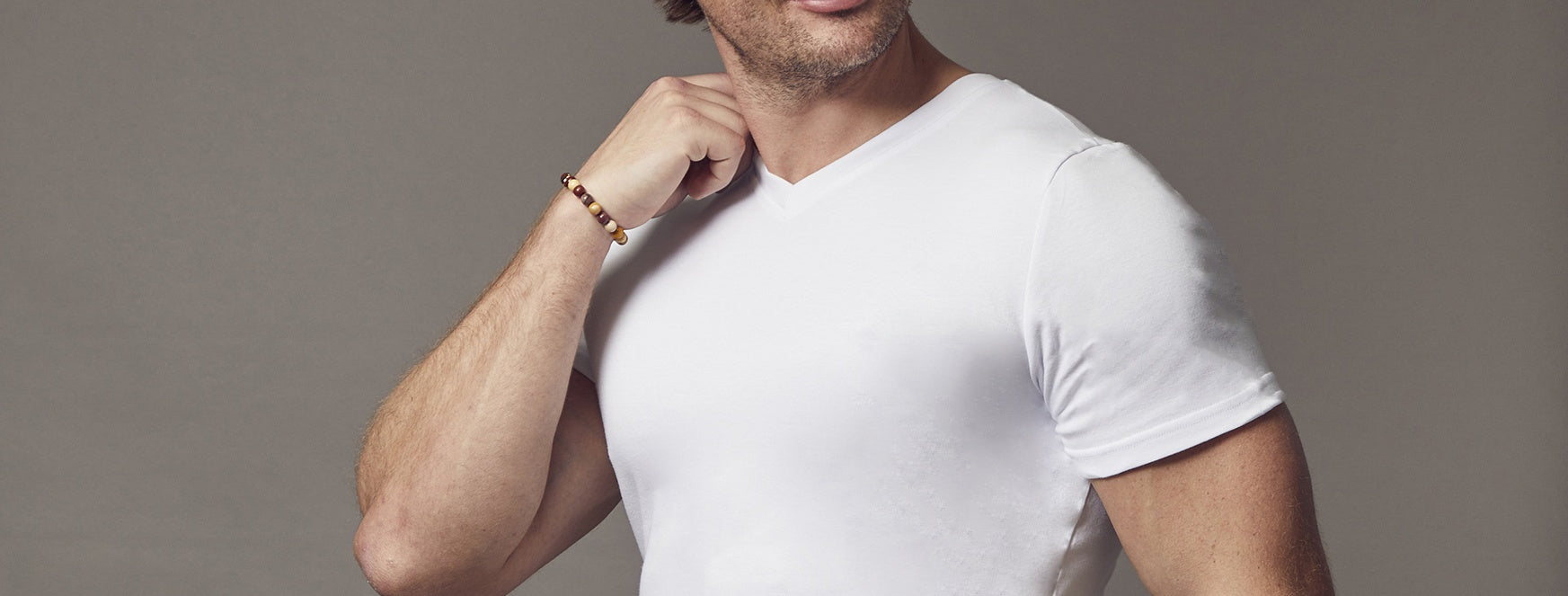
A V-neck T shirt offers a slightly more formal look. The V shape can make the neckline look neat, and it works well under jackets or sweaters.
Polo Shirt
While not a traditional T shirt, a polo shirt is often accepted as business casual. It has a collar and buttons, which add formality.
Graphic And Logo T Shirts
Graphic T shirts and those with large logos or slogans are usually not acceptable for business casual. They look informal and can distract in a professional setting.
Long Sleeve T Shirts
A long sleeve T shirt can look more formal than a short sleeve version. The extra coverage adds a touch of professionalism.
High-quality Materials
The material of the T shirt matters. Choose cotton, modal, or blends with a smooth finish. Avoid thin, faded, or wrinkled fabrics.
Comparison Table: Acceptable T Shirt Types
Here is a comparison of T shirt types and their suitability for business casual:
| T Shirt Type | Business Casual Suitability | Best Use |
|---|---|---|
| Classic Crew Neck (Solid Color) | Often Accepted | Under blazer, with dress pants |
| V-Neck (Solid Color) | Often Accepted | Under sweater or jacket |
| Polo Shirt | Widely Accepted | Alone or layered |
| Graphic/Logo T Shirt | Rarely Accepted | Casual Fridays, creative workplaces |
| Long Sleeve T Shirt | Sometimes Accepted | Cooler weather, layered |
How To Style T Shirts For Business Casual
If your workplace allows T shirts, it’s important to style them correctly. Wearing a T shirt alone is not enough. You need to combine it with other business casual elements.
Pairing With Blazers And Jackets
A blazer instantly makes a T shirt look more professional. Choose a fitted blazer in a neutral color. This combination is common in tech and creative industries.
Dress Pants And Chinos
Avoid jeans if your office has a strict business casual dress code. Dress pants or chinos lift the outfit and make the T shirt look smarter.
Shoes Matter
Your shoes can change the tone of your outfit. Choose loafers, oxfords, or clean sneakers (if allowed). Avoid sandals and flip-flops.
Accessories
Keep accessories simple. A watch, belt, or small necklace is enough. Too many accessories can make the outfit look messy.
Tucked Or Untucked?
Tucking in your T shirt can add a neat touch. It works best with high-quality, fitted T shirts. Untucked T shirts are more casual and may not suit every workplace.
Layering
Layering with a cardigan or sweater adds depth to your outfit. It also helps if your office is cold.
Industries And Companies: Where T Shirts Are Allowed
Not every company or industry allows T shirts for business casual. The rules depend on company culture and the type of work.
Tech Companies
Tech firms like Google and Facebook are famous for their relaxed dress codes. Employees often wear T shirts with jeans or chinos, even in meetings.
Creative Agencies
Design, media, and advertising companies usually welcome creative dressing. T shirts are common, as long as they look neat and professional.
Startups
Startups tend to focus on results, not appearance. T shirts are part of everyday business casual attire.
Finance And Law
Banks, law firms, and consulting companies are more traditional. They rarely allow T shirts, preferring button-up shirts and formal wear.
Healthcare And Education
Healthcare offices and schools may accept T shirts, but only if they are plain and tidy.
Retail And Hospitality
Retail workers sometimes wear branded T shirts as uniforms. Hospitality staff usually wear more formal outfits.
Comparison Table: Industry Dress Codes
Here’s a breakdown of how different industries treat T shirts in business casual dress codes:
| Industry | T Shirt Acceptance | Notes |
|---|---|---|
| Tech | Common | Focus on comfort and results |
| Creative | Common | Encourages individuality |
| Startup | Common | Flexible dress code |
| Finance | Rare | Traditional dress code |
| Law | Rare | Formal expectations |
| Healthcare | Occasional | Depends on role |
| Retail | Uniform | Branded T shirts only |
Dress Code Policies: What To Check Before Wearing A T Shirt
Even if you work in a relaxed industry, you should always check your company’s dress code. Some companies have rules that are not obvious. Here’s what to look for:
- Official dress code documents: Read them carefully.
- Ask HR or your manager: If you’re not sure, ask for guidance.
- Observe others: Look at what your coworkers wear.
- Check for exceptions: Some days, like Casual Fridays, have special rules.
Why Dress Codes Matter
Dress codes help protect the company’s image. They also make sure all employees are treated equally. Wearing a T shirt when not allowed can make you look careless.
Common Mistakes When Wearing T Shirts In Business Casual
Wearing a T shirt to work can be risky if you don’t do it right. Here are mistakes to avoid:
- Choosing poor quality: Thin, faded, or wrinkled T shirts look unprofessional.
- Bold graphics or slogans: These are distracting and not suitable for the office.
- Ignoring fit: Baggy or too tight T shirts do not look business casual.
- Neglecting grooming: Even the best T shirt looks bad if your overall appearance is messy.
- Mixing with jeans: Unless your company allows it, jeans are not always business casual.
- Wearing bright colors: Stick to neutral or muted tones.
- Forgetting to check the dress code: Always confirm before wearing a T shirt.
Non-obvious Insights
Many beginners miss the importance of fabric thickness. Thin T shirts may show underwear or become see-through under office lights. Also, T shirts with visible branding—even a small logo—can break dress code rules in some workplaces.
Real-life Examples: T Shirts In Business Casual Outfits
Let’s look at some practical examples. These show how T shirts can fit business casual in different situations.
Example 1: Tech Startup
Sam works at a tech startup. He wears a plain navy crew neck T shirt, gray chinos, and white sneakers. He adds a black blazer for meetings. This outfit is comfortable and accepted in his office.
Example 2: Creative Agency
Lisa is a designer. She wears a black V-neck T shirt, olive dress pants, and loafers. She adds a chunky necklace for style. Her office allows creative touches, so her outfit fits well.
Example 3: Business Casual Friday In Finance
Tom works at a bank. On Fridays, he can dress more casually. He chooses a white polo shirt, beige khakis, and brown dress shoes. He avoids T shirts, as his company’s policy does not allow them except for polos.
Example 4: Remote Work
Jenna works from home. Her company lets her wear T shirts for video calls, but she chooses solid colors and keeps her hair tidy. Her manager asks employees to look neat even on camera.
Example 5: Education
Alex teaches at a university. He wears a long sleeve charcoal T shirt, black slacks, and a cardigan. His department allows T shirts if they are plain and paired with formal pants.
How To Choose The Right T Shirt For Business Casual
If you decide to wear a T shirt, picking the right one is key. Here’s what to look for:
Fit
Choose a T shirt that fits your body. Not too tight, not too loose. The shoulders should line up with your own shoulders, and the length should cover your belt.
Color
Neutral colors like black, navy, gray, and white are safest. Avoid bright or neon colors.
Material
Pick high-quality fabrics. Cotton or blends are comfortable and look good. Avoid see-through or thin materials.
No Graphics
Stick to T shirts without logos, slogans, or graphics.
Care And Maintenance
Wash your T shirts often and iron them if needed. Wrinkles or stains make your outfit look sloppy.
T Shirts Vs. Other Business Casual Tops
It helps to compare T shirts with other business casual options. Here’s a simple comparison:
| Top Type | Formality | Comfort | Business Casual Suitability |
|---|---|---|---|
| T Shirt | Low to Medium | High | Depends on company |
| Polo Shirt | Medium | Medium | Widely accepted |
| Button-Up Shirt | High | Medium | Always accepted |
| Blouse (for women) | High | Medium | Always accepted |
| Long Sleeve T Shirt | Medium | High | Sometimes accepted |
This comparison shows that T shirts offer comfort, but their formality is lower than other tops. Always judge your workplace before making a choice.
Credit: taperedmenswear.com
The Impact Of T Shirts On Workplace Image
Your outfit affects how others see you. Wearing a T shirt can signal creativity and confidence, but it can also make you look too relaxed if not styled well. In formal workplaces, a T shirt might cause others to question your professionalism.
Why Image Matters
First impressions are powerful. Dressing according to your company’s culture shows respect and helps you fit in. If you’re unsure, it’s better to dress one step more formally.
T Shirts For Business Casual: Pros And Cons
Let’s weigh the benefits and drawbacks of wearing T shirts as business casual.
Pros
- Comfortable: Easy to move and work in.
- Affordable: T shirts cost less than formal shirts.
- Versatile: Can be styled in many ways.
- Modern look: Fits current fashion trends.
Cons
- Risk of looking too casual: Not always suitable for meetings or client visits.
- Company policy limits: Not accepted everywhere.
- May affect image: Can seem unprofessional in some settings.
- Difficult to style: Needs careful pairing with other items.
Practical Advisor Tips For Wearing T Shirts At Work
If you want to wear a T shirt as business casual, consider these practical tips:
- Start small: Try wearing a T shirt on casual days or in less formal departments.
- Ask for feedback: Get opinions from coworkers or managers.
- Have a backup: Keep a button-up shirt at your desk for surprise meetings.
- Invest in quality: Buy T shirts made from good fabric that last.
- Style carefully: Pair with smart pants, blazers, and clean shoes.
- Check lighting: Office lights can make thin T shirts look transparent.
- Watch for stains: Coffee spills are more visible on plain T shirts.
- Keep grooming sharp: Hair and shoes should be tidy.
How Dress Codes Are Changing
Dress codes are not static. Many companies are updating their rules to match modern values. The rise of remote work, flexible hours, and younger leaders is changing how people dress. Some companies offer “dress for your day” policies, where employees choose outfits based on their schedule. For example, T shirts may be fine for desk work but not for meetings with clients.
Data On Dress Code Trends
A recent survey found that:
- 60% of US companies now allow business casual dress codes.
- About 30% have moved to “casual dress” policies.
- Only 10% require formal business attire every day.
This shift shows that T shirts may become more common in offices, but rules still matter. Always check your company’s policies and industry standards.
Global Differences In Business Casual
Dress codes change from country to country. In the US and Canada, business casual is more relaxed. In Europe, companies tend to be stricter. In Asia, traditional dress is often expected, though tech companies are an exception.
Example: Us Vs. Europe
In the US, many tech workers wear T shirts daily. In Europe, even tech companies prefer button-up shirts or polos. This difference is important if you work in global teams or travel for business.
Sustainability And Ethical Choices
Modern workplaces care about sustainability. Choosing eco-friendly T shirts made from organic cotton or recycled materials can show you value the environment. Some companies encourage employees to wear sustainable clothing.
Non-obvious Insight
Many beginners overlook the impact of fabric sourcing. Cheap T shirts often come from factories with poor labor practices. Choosing ethical brands can improve your company’s image and your own reputation.

Credit: taperedmenswear.com
When To Avoid T Shirts
There are times when a T shirt is not the best choice:
- Important meetings: Dress more formally for client or board meetings.
- Interviews: Always choose a button-up shirt or blouse.
- Formal events: Company parties or awards ceremonies require formal wear.
- First day at work: Start with more traditional business casual and see what others wear.
Frequently Asked Questions
Can I Wear A T Shirt To A Job Interview?
It’s best not to wear a T shirt for a job interview. Choose a button-up shirt or blouse to show professionalism. Even in relaxed industries, first impressions matter.
What Colors Are Best For Business Casual T Shirts?
Neutral colors like black, navy, gray, and white are safest. They look professional and match well with other business casual items.
Are T Shirts Allowed For Business Casual Fridays?
Some companies allow T shirts on casual Fridays, but you should check the dress code. If allowed, choose plain, high-quality T shirts without graphics.
How Can I Make A T Shirt Look More Formal?
Pair your T shirt with a blazer, dress pants, and smart shoes. Keep accessories simple and make sure the T shirt fits well and is free from wrinkles.
Where Can I Find High-quality Business Casual T Shirts?
Many clothing brands offer good options. Look for T shirts made from thick cotton or blends. For more guidance, visit Business Casual Guide.
Final Thoughts
T shirts are becoming more common in business casual dress codes, but they are not always accepted. Whether you can wear a T shirt depends on your company, industry, and the type of T shirt you choose. Always check your dress code, invest in quality, and style your outfit carefully.
T shirts can offer comfort and a modern look, but they require smart choices and attention to detail. If you follow the advice in this article, you can enjoy the benefits of T shirts while maintaining a professional image at work.
