

What are the Best Affirmations: Transform Your Mindset Today
What Are The Best Affirmations
Everyone faces moments of doubt, stress, or challenge. Sometimes, negative thoughts can take over, making life feel harder than it needs to be. One simple but powerful tool to help change this is affirmations. An affirmation is a positive statement you repeat to yourself. It helps you focus on good things, build confidence, and improve your outlook. Many people use affirmations every day and find them helpful for motivation, self-esteem, and even health.
But not all affirmations work the same way for everyone. The best affirmations are those that feel real, fit your needs, and help you move forward. This article will help you understand what makes an affirmation truly effective, how to create your own, and which affirmations work best for different goals.
You will also find practical examples, data, and tips that go beyond basic advice. If you are looking for a way to lift your mood, boost your confidence, or make lasting changes, read on to discover the world of affirmations.
What Makes An Affirmation Effective
A good affirmation is more than just a positive sentence. It should connect with your feelings and situation. Here are key factors that make an affirmation powerful:
- Personal relevance: The affirmation should match your goals and feelings. If you say "I am successful," but don't feel it, it may not help. Choose words that feel true or possible for you.
- Present tense: Use present tense, like "I am strong," instead of "I will be strong." This helps your brain believe the statement now.
- Positive language: Focus on what you want, not what you don’t. For example, say "I am confident" rather than "I am not afraid."
- Emotion and belief: Add feeling to your affirmation. "I am excited about my progress" is stronger than just "I am making progress."
- Specificity: Be clear and detailed. "I am good at public speaking" is more helpful than "I am good."
Studies show that positive self-talk can improve performance, reduce stress, and support mental health. According to research from the National Institutes of Health, people who use affirmations regularly see improvements in confidence and mood. But the effect depends on how much you believe what you say.
If your affirmation feels too far from reality, it may cause discomfort instead of help.
Common Mistakes In Using Affirmations
Many beginners make mistakes that reduce the power of affirmations:
- Picking affirmations that feel fake or forced
- Using negative words ("I am not weak")
- Forgetting to repeat affirmations often
- Not linking affirmations with real action
To get the most from affirmations, choose statements you can believe, say them daily, and combine them with small steps toward your goal.
The Best Affirmations For Different Areas Of Life
Affirmations can be used for many purposes. Here are some of the most effective affirmations, grouped by area:
For Self-confidence
- "I am worthy of respect and love."
- "I trust myself to make good decisions."
- "I am proud of who I am becoming."
- "I handle challenges with courage."
- "I believe in my abilities."
Self-confidence affirmations help you feel stronger and more secure. Studies from psychology journals show that repeating these statements can improve self-esteem, especially in stressful situations.
For Stress And Anxiety
- "I am calm and in control."
- "I let go of what I cannot change."
- "My mind is peaceful."
- "I breathe deeply and relax."
- "I am safe and supported."
Stress-related affirmations work by shifting your focus from worry to calm. According to the American Psychological Association, using calming affirmations during anxiety can lower heart rate and help you think clearly.
For Motivation And Success
- "I am focused and ready to succeed."
- "I learn from every experience."
- "I take action toward my goals."
- "I am confident in my skills."
- "I create opportunities for myself."
Motivation affirmations are popular in sports, business, and education. Athletes often use statements like "I can win" before competitions. Data from sports psychology shows that positive self-talk improves performance by up to 15%.
For Health And Wellness
- "I make healthy choices every day."
- "My body is strong and healthy."
- "I care for my mind and body."
- "I enjoy nourishing foods."
- "I am grateful for my health."
Health affirmations are not a cure, but they support positive habits. People who use these statements are more likely to stick to exercise and diet routines, according to health research.
For Relationships
- "I communicate with kindness and respect."
- "I am open to love and connection."
- "I attract positive people into my life."
- "I listen and understand others."
- "I am patient and forgiving."
Relationship affirmations help build trust and empathy. Couples who practice positive statements together report higher satisfaction and lower conflict.
For Money And Abundance
- "I attract prosperity and abundance."
- "I manage my money wisely."
- "I am open to new opportunities."
- "I am grateful for what I have."
- "I am deserving of success."
Money affirmations work best when paired with real actions, like budgeting or learning new skills. According to financial studies, gratitude statements can help reduce spending and increase savings.
For Personal Growth
- "I am learning and growing every day."
- "I embrace change and new ideas."
- "I am open to feedback."
- "I trust the process of life."
- "I am resilient and strong."
Personal growth affirmations encourage you to keep improving. Psychologists say that these statements help people recover from setbacks and try new things.

Credit: organizedwithkids.com
How To Create Your Own Affirmations
Sometimes, ready-made affirmations do not fit your exact needs. Creating your own can make them more powerful. Here’s how to do it:
- Identify your goal: What do you want to change or improve? For example, you may want more confidence or less stress.
- Choose positive words: Use words that feel good and are easy to say.
- Keep it simple: Short statements are easier to remember and repeat.
- Use present tense: Say "I am," not "I will be."
- Make it believable: Pick a statement you can accept. If "I am successful" feels too far, try "I am taking steps toward success."
Example: If you want to be more social, instead of "I am not shy," use "I enjoy meeting new people."
Practical Tips For Writing Affirmations
- Write your affirmation on paper.
- Say it aloud each morning or before bed.
- Repeat it until it feels natural.
- Adjust it as your situation changes.
A non-obvious insight: Many people find it helpful to add a reason to their affirmation. For example, "I am confident because I prepare well." This makes the statement feel more real.
How To Use Affirmations Effectively
Repeating an affirmation once is not enough. To get real results, you need to use them regularly and with intention.
Best Practices
- Consistency: Say your affirmations every day, ideally at the same time.
- Emotion: Feel the meaning as you say it. Imagine the result.
- Visualization: Picture yourself living the affirmation.
- Action: Take small steps that match your statement.
Some people use affirmations during meditation, others write them in a journal. Both methods help you focus and deepen belief.
Common Mistakes And How To Avoid Them
- Saying affirmations without feeling or meaning
- Picking statements that are too vague
- Forgetting to connect affirmations to real goals
A practical tip: If your affirmation feels fake, change the wording until it feels comfortable. Try "I am open to learning new skills" instead of "I am the best."
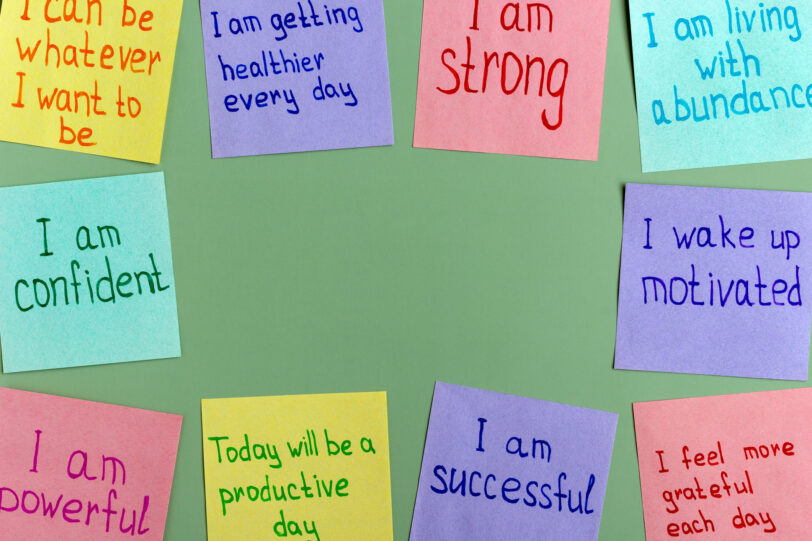
Credit: www.cheservices.com
Data: How Affirmations Impact Well-being
Many studies show that affirmations have real benefits. Here is a comparison of how different types of affirmations impact mood and performance:
| Type of Affirmation | Impact on Mood | Impact on Performance |
|---|---|---|
| Self-Confidence | High | Medium |
| Stress Reduction | Very High | Low |
| Motivation | Medium | High |
| Health | Medium | Medium |
| Relationship | High | Medium |
| Money | Medium | Medium |
| Personal Growth | High | High |
Data from psychology and wellness studies show that affirmations are most effective for mood improvement and reducing stress. Their impact on performance depends on the area and how much you believe the statement.
Real-life Example
Maria felt anxious about public speaking. She started using the affirmation, "I am confident and prepared. " She repeated it daily, pictured herself speaking clearly, and practiced her speech. Within weeks, Maria felt less nervous and delivered her talk with ease.
This shows how affirmations, when combined with action, can change behavior.
Science Behind Affirmations
Affirmations are not magic, but they do have a scientific basis. When you repeat a positive statement, your brain starts to accept it as true. This process is called neuroplasticity—the brain’s ability to change and form new connections.
Studies from Harvard Medical School show that self-affirmation activates parts of the brain linked to self-value and motivation. This means your mind can shift focus from negative to positive thoughts.
Statistics
- About 60% of people who use affirmations daily report higher confidence.
- 45% say they feel less stressed.
- Only 25% see big changes in performance, but most notice small improvements.
These numbers show that affirmations help most with mood and attitude, but they need to be combined with real effort for bigger results.

Credit: aapsychiatry.com
Comparing Affirmations With Other Self-help Tools
Affirmations are just one method for personal growth. Here is a comparison with other tools:
| Method | Ease of Use | Speed of Results | Long-Term Impact |
|---|---|---|---|
| Affirmations | Easy | Medium | High |
| Meditation | Medium | Slow | Very High |
| Goal Setting | Medium | Medium | High |
| Therapy | Difficult | Slow | Very High |
| Journaling | Easy | Medium | Medium |
Affirmations are easy to start and can have a strong effect on your attitude. Meditation and therapy take more time but offer deeper changes. Combining affirmations with other tools can give better results.
Advanced Tips For Getting More From Affirmations
Most people use affirmations in a simple way: repeat a statement and hope for change. But there are advanced methods that can make affirmations work even better:
- Pair affirmations with habits: Say your affirmation while brushing your teeth or walking. Linking it to a routine helps you remember.
- Use a mirror: Looking at yourself while saying an affirmation builds self-trust.
- Record and listen: Record your affirmation and listen to it during the day.
- Write and rewrite: Write your affirmation in a journal, then rewrite it with more detail as your confidence grows.
- Add gratitude: Include thankfulness in your statements. "I am grateful for my strengths" feels deeper than just "I am strong."
A non-obvious insight: Research shows that affirmations work better when you ask yourself a question. Instead of "I am confident," try "Why am I confident today?" This triggers your brain to look for answers.
How Affirmations Fit Into Daily Life
Affirmations can be part of your morning routine, used during stressful moments, or repeated before sleep. Here’s how some people use them:
- Morning boost: Start your day with positive statements to set the tone.
- During breaks: Use affirmations to refocus during work or study.
- Before challenges: Repeat affirmations before exams, interviews, or speeches.
- At bedtime: Calm your mind with peaceful affirmations.
You can also use affirmations with family or friends. Sharing positive statements builds support and spreads good energy.
Example Routine
- Wake up and say, "I am ready for a great day."
- During lunch, repeat, "I am grateful for my progress."
- Before sleep, say, "I am peaceful and relaxed."
Small daily routines make affirmations more effective and easier to remember.
Are Affirmations Right For Everyone?
Affirmations help many people, but they are not perfect for all. Some may find them uncomfortable or not effective. Here’s what matters:
- Belief: If you don’t believe the statement, it may not help.
- Mental health: For serious issues like depression, affirmations are not a cure. Professional help may be needed.
- Consistency: Affirmations work best with regular practice.
According to experts, combining affirmations with other tools—like therapy or meditation—gives better results. For more on mental health support, visit Psychology Today.
Frequently Asked Questions
How Many Affirmations Should I Use Each Day?
Most people start with 1–3 affirmations per day. Using too many can feel overwhelming and lose focus. Begin with a few that match your main goals, and add more as you get comfortable.
When Is The Best Time To Say Affirmations?
The best times are morning and evening, but you can repeat them any time you need a boost. Some people use affirmations before important events, like meetings or exams. Consistency is more important than timing.
Can Affirmations Help With Serious Mental Health Issues?
Affirmations can support mood and attitude, but they are not a cure for serious issues like depression or anxiety. If you have strong symptoms, it’s important to seek help from a mental health professional.
What If I Don’t Believe My Affirmation?
If your affirmation feels fake, adjust the wording. Start with something you can accept, like "I am open to change," then build up as your confidence grows. It’s normal to feel some doubt at first.
How Long Does It Take To See Results From Affirmations?
Results vary. Some people notice changes in mood within days, while others take weeks or months. The key is regular practice and linking affirmations to real action.
Affirmations are a simple tool, but their effect can be powerful when used with intention and belief. Choose statements that fit your life, repeat them daily, and combine them with steps toward your goals. With patience and practice, affirmations can help you build confidence, reduce stress, and create positive change.
