

What are Some Good Affirmations: Boost Your Mindset Today
What Are Some Good Affirmations
Many people want to feel happier, more confident, and less stressed. But sometimes, negative thoughts and worries take over. Affirmations can help. These are simple, positive statements that you repeat to yourself. They help you focus your mind, build self-esteem, and change your outlook. Good affirmations are easy to remember, short, and meaningful.
You might wonder if affirmations really work. Several studies show that using positive self-talk can reduce anxiety, improve motivation, and even help with performance at work or school. One research review from the National Institutes of Health found that self-affirmation can lower stress and make people more open to change.
But not all affirmations are equal. Some are more effective than others, and how you use them matters. In this article, we’ll explore what makes a good affirmation, share examples for different situations, and explain how to use them to improve your life.
What Makes A Good Affirmation
A good affirmation is more than just a positive sentence. It’s a tool for mental growth. If you want your affirmations to work, they should meet certain guidelines:
- Present tense: Use “I am,” “I have,” or “I can” instead of “I will” or “I want.”
- Personal: The affirmation must feel relevant to you.
- Positive language: Avoid negatives (“I am not anxious”). Focus on what you want (“I am calm”).
- Simple and specific: Short sentences are easier to remember and repeat.
- Believable: If you don’t believe it, it won’t help. Start with statements you can accept.
Many beginners miss two important points. First, affirmations work best when you say them with emotion, not just mechanically. Second, customizing affirmations to your own needs makes them more powerful. For example, “I am confident when speaking” is better than “I am confident,” if you struggle with public speaking.
Another thing people overlook is the power of consistency. Saying an affirmation once or twice may not bring a big change. Like exercise, the effect builds over time. Also, adding detail can help. For example, instead of “I am successful,” try “I am successful at solving challenges at work.
” This makes the affirmation more real in your mind.
Examples Of Good Affirmations For Everyday Life
Affirmations can target different areas of life. Here are some examples for daily use:
- I am worthy of love and respect.
- I trust myself to make good decisions.
- I am strong and resilient.
- I choose to be happy today.
- I am grateful for what I have.
- I am learning and growing every day.
- I forgive myself for past mistakes.
These are simple, but powerful. Repeating them each morning can help set a positive tone for your day.
You can use affirmations even during small, everyday activities. For example, when you feel nervous about trying something new, say, “I am open to new experiences. ” Before a meeting, “I am prepared and focused. ” If you start your day with “I am grateful for what I have,” you may notice more positive things throughout the day.
Another insight: use affirmations as gentle reminders. If you catch yourself thinking negatively, pause and say an affirmation instead. Over time, this helps retrain your thinking.
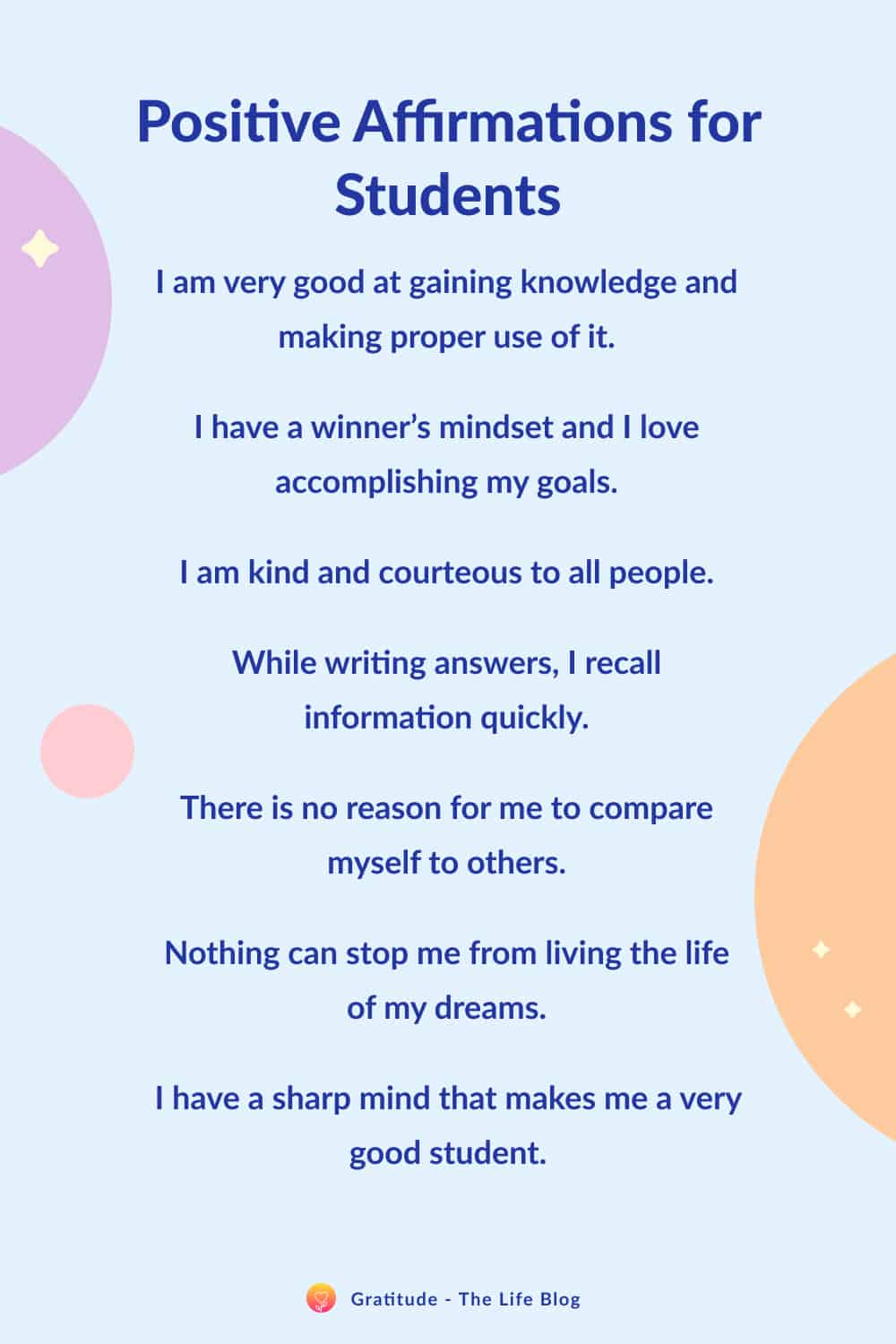
Credit: blog.gratefulness.me
Affirmations For Self-esteem And Confidence
Low self-esteem holds many people back. Positive affirmations can rebuild confidence. Here are some good options:
- I am enough just as I am.
- I believe in myself and my abilities.
- I deserve success and happiness.
- I am proud of what I have achieved.
- I accept myself unconditionally.
If you want to compare the impact of different confidence affirmations, consider the table below:
| Affirmation | Main Benefit | Ease of Belief |
|---|---|---|
| I am confident in my skills. | Builds self-trust | Moderate |
| I deserve respect. | Improves self-worth | Easy |
| I am proud of myself. | Boosts self-esteem | Easy |
| I accept who I am. | Reduces self-judgment | Moderate |
Beginners often overlook the importance of repeating affirmations during moments of doubt. Doing so can quickly shift your mood.
Also, try combining your affirmation with a simple action. Stand tall, look in the mirror, and say, “I am proud of myself. ” This physical posture makes the words feel more real. Over time, you may notice you start to believe your affirmations more deeply and act with greater confidence.
Affirmations For Stress And Anxiety
Stress is common, but you can manage it with affirmations. Here are some examples:
- I am calm and peaceful.
- I breathe deeply and feel relaxed.
- I release my worries.
- I am safe and protected.
- I can handle whatever comes my way.
Some affirmations work better in specific situations. For example, before a test or interview, you might use “I am prepared and confident. ” After a stressful event, “I am letting go of tension. ”
A comparison of effectiveness:
| Affirmation | Best Situation | Level of Comfort |
|---|---|---|
| I am calm and peaceful. | During daily stress | High |
| I release my worries. | After stressful event | Moderate |
| I am safe and protected. | When feeling anxious | Easy |
| I can handle whatever comes my way. | Facing challenges | Moderate |
One insight that many miss: pairing affirmations with deep breathing makes them much more effective.
Here’s a practical way to use affirmations for stress—when you feel overwhelmed, pause for a moment. Take three slow, deep breaths and repeat your chosen affirmation with each breath. For example, inhale and say silently, “I am calm,” exhale and repeat.
This links your mind and body, making the calming effect stronger.
It’s also helpful to write your affirmation on a card or your phone. When you notice stress rising, read it slowly. Over time, this habit can turn into a healthy way to manage anxiety.

Credit: thechiclife.com
Affirmations For Success And Motivation
To reach goals, you need motivation. Affirmations can help you stay focused and push through obstacles. Examples include:
- I am focused on my goals.
- I am moving forward with purpose.
- I can achieve anything I set my mind to.
- I am determined and persistent.
- I welcome new opportunities.
Many people only use these when they feel motivated. But repeating them during setbacks is often more helpful.
When you face a setback, your mind may fill with doubts. That’s a perfect time to repeat, “I am determined and persistent. ” It reminds you that challenges are part of growth.
A non-obvious tip: tie your affirmation to a small action. For example, say “I am moving forward with purpose” as you begin your work or study session. This creates a mental link between your words and action, making it easier to stay motivated.
Also, try writing your affirmation on a sticky note and placing it where you see it often—your computer, bathroom mirror, or phone background. These visual reminders can keep you focused throughout the day.
Affirmations For Health And Well-being
Physical and mental health can improve with positive self-talk. Some good health affirmations are:
- I respect and care for my body.
- I am healthy, strong, and energetic.
- I make healthy choices every day.
- I listen to my body’s needs.
- I am healing and improving.
These statements help you build habits and stay positive about your health journey.
For example, before eating, you can say, “I make healthy choices every day. ” Before exercise, “I am strong and energetic. ” These reminders can make healthy habits feel easier and more natural.
One thing beginners often miss: affirmations for health are most powerful when linked to daily actions. For example, repeat your affirmation as you drink water or go for a walk. This makes the message stronger because your actions match your words.
Also, health affirmations can support mental wellness. If you struggle with negative thoughts about your body, use, “I respect and care for my body,” to gently shift your mindset toward kindness.
Affirmations For Relationships And Love
Healthy relationships require trust, kindness, and understanding. Here are some affirmations for relationships:
- I am open to giving and receiving love.
- I communicate honestly and kindly.
- I attract positive, supportive people.
- I am patient and understanding.
- I am a loving partner/friend/parent.
Many people forget to use relationship affirmations after conflicts. They are most useful when you feel hurt or misunderstood.
Try saying, “I am patient and understanding,” before responding in a difficult conversation. Or, after an argument, repeat, “I am open to giving and receiving love,” to help you heal and reconnect.
Another tip: use affirmations to strengthen gratitude in relationships. For example, “I am grateful for the support I receive.” This can improve your attitude toward others and build stronger connections.
You can also write a relationship affirmation and share it with someone you care about. This not only supports your own mindset but spreads positivity.
Affirmations For Work And Career
Work can be stressful and competitive. Good affirmations for career success include:
- I am capable and skilled at my job.
- I am valued by my team.
- I am creative and resourceful.
- I am open to learning new things.
- I am successful in my work.
You can use these before meetings, interviews, or when facing a challenge at work.
A useful comparison of career affirmations:
| Affirmation | Intended Effect | When to Use |
|---|---|---|
| I am capable and skilled. | Boosts confidence | Before a task |
| I am valued by my team. | Improves morale | After feedback |
| I am open to learning. | Encourages growth | Facing new challenges |
You might also add, “I am creative and resourceful,” before brainstorming sessions. This sets the mind for open thinking.
One insight often missed: affirmations at work can help you manage both success and failure. When things go well, use, “I am grateful for my achievements.” After a setback, repeat, “I learn and grow from challenges.” This keeps your mindset positive and resilient, no matter what happens.
How To Use Affirmations Effectively
Simply reading affirmations is not enough. The way you use them matters. Here are some practical steps:
- Pick affirmations that feel true or possible for you.
- Repeat them daily, ideally in the morning and evening.
- Say them out loud for stronger impact.
- Write them down in a journal.
- Visualize yourself living the affirmation.
- Pair them with deep breathing or relaxation.
- Adjust them as your needs change.
A common mistake is using too many affirmations at once. Start with three or four that are most important to you.
For deeper effect, try linking your affirmation to a daily habit. For example, repeat your affirmation while brushing your teeth or during your commute. Over time, this builds a strong mental association.
Another helpful approach is to use technology. Set a reminder on your phone to pause and say your affirmation. Or use a digital note app to review your affirmations during the day.
Finally, notice and celebrate small changes. If you feel a little more confident or calm, acknowledge it. This reinforces your progress and encourages you to keep going.
Scientific Evidence For Affirmations
You may wonder if affirmations are just wishful thinking. There is real science behind them. Research shows that self-affirmation can:
- Reduce stress responses
- Improve problem-solving under pressure
- Boost self-control and motivation
A review published by the National Institutes of Health found that self-affirmation helps people accept feedback and make positive changes. Brain scans show that affirmations activate parts of the brain linked to reward and positive emotion.
But there are limits. Affirmations work best when they are believable and relevant. Saying “I am rich” will not help if you don’t believe it. Instead, try “I am improving my finances. ”
For more information, see this resource from NIH.
Another key finding from research: the more you connect emotionally with your affirmation, the stronger the impact. Don’t just repeat words—feel them as you say them. This is what helps to change patterns in the brain.
Common Mistakes With Affirmations
Many people struggle with affirmations because they make mistakes such as:
- Using statements that feel fake or impossible (“I am perfect”)
- Focusing only on negatives (“I am not stressed” instead of “I am calm”)
- Forgetting to repeat affirmations regularly
- Not connecting emotionally with the words
- Changing affirmations too often
One insight: If an affirmation feels uncomfortable, it may be a sign you need it most. With practice, it becomes easier to accept.
Also, some people stop using affirmations when they don’t see instant results. Remember, it often takes time for new thoughts to feel natural. Like learning a new language, practice makes it easier.
If you’re unsure your affirmation is right, ask yourself, “Does this feel possible for me? ” If not, adjust the words to something you believe, even a little bit. For example, “I am learning to feel confident” can be a good start.
Creating Your Own Affirmations
Ready to make your own? Here’s how:
- Identify an area you want to improve (confidence, health, relationships, etc.)
- Think about what you want to feel or achieve.
- Write a short, positive statement in present tense.
- Make it personal and believable.
For example, if you want more confidence speaking English, try: “I am becoming more comfortable speaking English each day.”
Here are some tips:
- Avoid negatives. Focus on what you want, not what you don’t want.
- Keep it short. One sentence is enough.
- Use words that matter to you.
Another tip: test your affirmation by saying it out loud. If it feels strange, adjust the words until you find one that feels right. Over time, as you grow, you can update your affirmations to match new goals.
If you need inspiration, look at affirmations from others, but always change them to fit your own situation. The more personal your affirmation, the more powerful it will be.
Using Affirmations With Other Practices
Affirmations work well with other self-help tools:
- Meditation: Repeat affirmations during meditation for calm and focus.
- Visualization: Imagine yourself living the affirmation.
- Gratitude journaling: Combine affirmations with gratitude for stronger effect.
Pairing these practices can multiply the benefits.
For example, start your day with a short meditation, repeat your affirmation, and then write down something you are grateful for. This takes only a few minutes but can set a positive direction for your day.
Another idea: combine visualization and affirmations before a challenge, like a big meeting or test. Close your eyes, repeat your affirmation, and picture yourself succeeding. This prepares both your mind and body for positive action.
How Long Does It Take To See Results?
Results vary. Some people notice a change in days. Others need weeks or months. Key factors:
- How often you repeat your affirmations
- How strongly you believe the words
- How relevant the statements are to your goals
If you use affirmations daily and connect emotionally, you’ll see faster results.
Progress is not always obvious at first. You might notice small changes, like feeling less nervous or handling a situation more calmly. Over time, these small changes add up.
If you don’t see results, don’t give up. Adjust your affirmations or try saying them with more feeling. Sometimes, it helps to pause and notice what thoughts or feelings are blocking your progress. You can then choose affirmations that address those blocks directly.
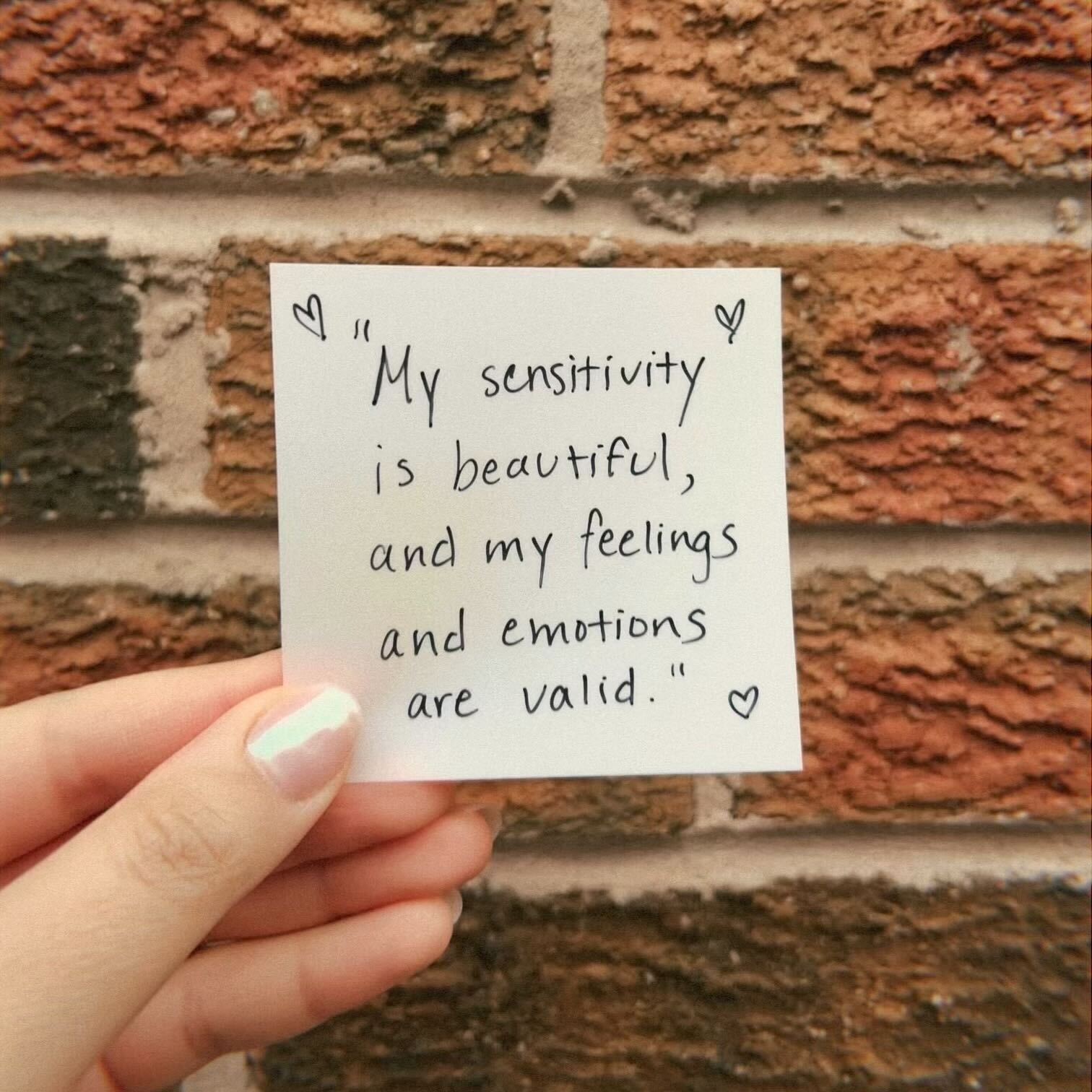
Credit: www.thegoodtrade.com
Real-life Examples Of Affirmations In Action
Many people have used affirmations to overcome challenges. Here are some real stories:
- A student facing exams started repeating “I am prepared and confident.” She felt less anxious and scored higher.
- A man struggling with self-esteem used “I am worthy of success.” Over several weeks, he became more assertive at work.
- A woman recovering from illness said “I am healing and strong” each morning. She felt more hopeful and energetic.
These examples show that affirmations are not magic, but they can help shift your mindset.
Another example: An employee who felt nervous about speaking up in meetings used, “I am clear and confident when I speak.” Over time, he found it easier to share his ideas.
People facing big life changes, like moving to a new country, often use affirmations such as, “I am adaptable and open to new experiences. ” This helps them adjust with less stress.
How To Tell If Your Affirmations Are Working
You’ll notice changes in:
- Mood: Feeling happier, calmer, or more confident
- Behavior: Taking positive actions, making better choices
- Thoughts: Fewer negative or self-critical thoughts
If you don’t see changes, adjust your affirmations or repeat them more often.
You might also notice that challenges feel less overwhelming or you recover from setbacks faster. Another sign is when your negative thoughts are replaced more quickly by positive ones.
Ask yourself these questions:
- Do I feel a little better after repeating my affirmation?
- Am I making choices that match my affirmation?
- Do I catch myself thinking more positively?
Even small changes mean your affirmations are working.
Comparing Affirmations With Other Self-help Methods
Let’s compare affirmations with other popular self-help tools:
| Method | Main Benefit | Time Needed | Best Use |
|---|---|---|---|
| Affirmations | Shift mindset | 1-5 min/day | Anytime |
| Meditation | Reduce stress | 10-30 min/day | Calming |
| Visualization | Boost motivation | 5-10 min/day | Goal-setting |
| Gratitude journaling | Increase happiness | 5-10 min/day | Building positivity |
Affirmations are quick and easy. They work well with other methods for best results.
You don’t have to choose just one method. Try combining two or three, like repeating affirmations after meditation or writing a gratitude note with an affirmation each night. This layered approach can help you grow faster and feel better.
Frequently Asked Questions
What Is The Best Way To Use Affirmations?
The best way is to repeat affirmations daily, preferably in the morning and evening. Say them out loud, write them down, and visualize them. Make sure the statements feel true or possible for you. Pairing affirmations with deep breathing or meditation helps deepen their impact.
Can Affirmations Help With Anxiety?
Yes, affirmations can help reduce anxiety. Choose statements like “I am calm and relaxed” or “I can handle challenges. ” Repeat them during stressful moments and combine with deep breathing. If anxiety is severe, affirmations are a helpful tool, but not a replacement for professional help.
How Long Should I Use An Affirmation?
Use an affirmation until you start to feel its effect or until your goal is reached. Some people notice changes in a few days, others in weeks. If an affirmation stops feeling helpful, update it to match your current needs.
Consistency is more important than duration.
Can I Write My Own Affirmations?
Absolutely. Personalized affirmations are often the most effective. Identify what you want to improve, write a positive statement in present tense, and make it believable. For example, “I am improving my English skills every day. ” Use words that matter to you.
Do Affirmations Really Work?
Many studies show that affirmations can improve mood, self-esteem, and performance. They are not magic, but they help shift your mindset and build positive habits. For best results, use affirmations regularly and combine them with other self-help tools like meditation or gratitude journaling.
Good affirmations are simple, positive, and personal. When used with intention, they can help you feel happier, stronger, and more confident. Start today with a few statements that matter to you, and notice how your thoughts and actions begin to change.
