

Positive Affirmation for Health Anxiety: Calm Your Mind Instantly
Positive Affirmation For Health Anxiety
Health anxiety can feel like a storm inside your mind. You worry about your body, fear illness, and sometimes struggle to trust your own thoughts. These worries can make daily life harder, and they often keep people stuck in a cycle of checking, Googling, or looking for reassurance. But there is a gentle yet powerful tool that can help: positive affirmation. Using positive statements, you can calm your mind, build confidence, and break the grip of health anxiety. This article explains how positive affirmations work, how to create and use them, and why they are a smart choice for anyone struggling with health-related worries.
Understanding Health Anxiety
Health anxiety is sometimes called hypochondria or illness anxiety disorder. It means you have repeated worries about your health, often focusing on normal body sensations or mild symptoms. Even after seeing a doctor, you may still feel anxious or doubt the advice. Health anxiety can affect anyone, and it is not a sign of weakness.
Common signs include:
- Constantly checking your body for symptoms
- Searching for illnesses online
- Asking friends or doctors for reassurance
- Avoiding places or activities out of fear
Studies show that health anxiety affects about 4%–6% of adults in the general population. It can lead to stress, depression, and problems at work or home.
Why Does Health Anxiety Happen?
Several factors can cause health anxiety:
- Past illness: If you had a serious disease before, you may worry about it coming back.
- Family history: If someone close to you was sick, you may fear the same.
- Personality: People who are sensitive or detail-oriented often notice small changes in their body.
- Media and internet: Reading about diseases online can make worries worse.
The Impact On Life
Health anxiety can make you feel tired, distracted, and overwhelmed. Some people have trouble sleeping, lose interest in hobbies, or feel isolated. Medical costs can also rise because of frequent doctor visits or tests.
But health anxiety is treatable. Many people find relief with therapy, lifestyle changes, and positive self-talk.
What Are Positive Affirmations?
Positive affirmation means repeating encouraging phrases to yourself. These phrases are short, clear, and focused on what you want to believe or feel.
For example:
- “I am healthy and safe.”
- “My body is strong and resilient.”
- “I trust my doctor’s advice.”
Affirmations are used in sports, business, and mental health. They are not magic words, but they help train your mind to focus on positive ideas instead of fear or worry.
How Affirmations Work
Your brain listens to what you say and think. If you repeat negative thoughts (“I might be sick”), your mind tends to believe them. Affirmations help you create a new, positive pattern. Over time, your confidence grows, and anxiety shrinks.
Science supports this idea. Research shows that affirmations can:
- Reduce stress
- Increase self-esteem
- Lower anxiety
In a study published in the journal “Psychology & Health,” people who used affirmations felt less stressed and more hopeful.
Why Use Affirmations For Health Anxiety?
Health anxiety creates a loop of worry and doubt. Affirmations help break this loop. They do not promise instant results, but they offer steady progress.
Here’s why affirmations are helpful:
- Shift focus: Affirmations redirect your attention from fear to trust.
- Build self-control: Saying positive phrases helps you feel more in charge of your thoughts.
- Reduce checking behavior: When you feel confident, you check your body less.
- Support therapy: Affirmations work well with other treatments, like counseling or mindfulness.
Some people worry that affirmations are unrealistic. But they are not about ignoring real symptoms or avoiding doctors. They are about balancing your thoughts so you can make healthier choices.
Creating Effective Affirmations
Not all affirmations work equally well. To create powerful affirmations for health anxiety, follow these steps:
1. Make It Personal
Use words that feel true for you. “I am safe” might feel better than “I am perfectly healthy. ”
2. Keep It Positive
Focus on what you want, not what you don’t want. Instead of “I don’t want to worry,” try “I feel calm and relaxed. ”
3. Use Present Tense
Say your affirmation as if it is happening now: “I trust my body,” not “I will trust my body someday.”
4. Keep It Short
Simple phrases are easier to remember and repeat.
5. Be Realistic
Choose affirmations that you can believe. If “I am healthy” feels too strong, try “I am learning to trust my body. ”
Example Affirmations For Health Anxiety
- “I am safe in this moment.”
- “My body knows how to heal.”
- “I trust my doctor’s advice.”
- “I am learning to accept uncertainty.”
- “I choose to focus on positive thoughts.”
- “My mind is calm and clear.”
- “I allow myself to relax.”
- “I am gentle with myself.”
- “I am stronger than my fears.”
- “I am grateful for my health.”
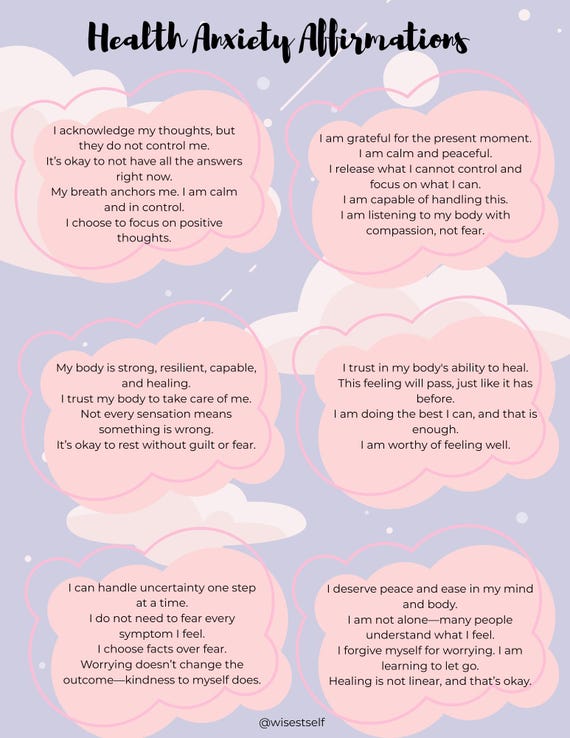
Credit: www.etsy.com
How To Use Affirmations In Daily Life
Repeating affirmations is simple, but using them well takes practice. Here are some tips for making affirmations part of your routine:
Morning Ritual
Start your day with 3–5 affirmations. Say them out loud, write them in a notebook, or repeat them quietly. This helps set a positive tone.
During Stressful Moments
When you feel anxiety rising, pause and say your affirmation. This can be at work, home, or in public.
Before Sleep
End your day with calming affirmations. This helps reduce worry and improves sleep quality.
Using Technology
You can use apps or phone reminders to prompt you to say your affirmations. Some people record their voice and listen during the day.
Combining With Breathing
Pair your affirmation with slow, deep breaths. This makes the positive statement more effective.
Sample Daily Routine
- Wake up and read your list of affirmations.
- Say each one three times while breathing deeply.
- During the day, use an affirmation when you notice anxiety.
- Write your favorite affirmation in a journal before bed.
Common Mistakes And How To Avoid Them
Many beginners struggle with affirmations at first. Here are some mistakes and solutions:
Saying What You Don’t Believe
If your affirmation feels false, your mind will resist it. Start small: “I am learning to trust my body” instead of “I am perfectly healthy.”
Using Negative Words
Avoid phrases like “I am not sick.” Focus on positive ideas: “I am feeling well.”
Forgetting To Practice
Affirmations work best with regular use. Set reminders or tie them to daily habits (like brushing your teeth).
Expecting Quick Results
Change takes time. Be patient and notice small improvements.
Ignoring Real Symptoms
Affirmations are not a replacement for medical care. If you have new or serious symptoms, always seek advice from a doctor.

Credit: nunziadreams.com
How Affirmations Support Healing
Affirmations are not only mental exercises. They influence your body and emotions. When you repeat positive phrases, your stress hormones drop, and your immune system works better.
The Mind-body Connection
Your thoughts affect your physical health. Stress can cause headaches, stomach problems, or muscle pain. Positive affirmations reduce stress and help you feel better.
The Role Of Self-talk
People with health anxiety often have harsh self-talk (“I can’t handle this,” “Something must be wrong”). Affirmations replace these thoughts with gentle, encouraging messages.
The Power Of Repetition
Repeating affirmations creates new pathways in your brain. Over time, positive thinking becomes automatic.
Example: Using Affirmations During A Doctor Visit
Imagine you are anxious before seeing your doctor. Try saying:
- “I trust my doctor’s skill.”
- “I am open to learning new information.”
- “I am proud of myself for taking care of my health.”
This lowers your anxiety and helps you communicate more clearly.
Data And Statistics: Affirmations Vs. Other Methods
How do affirmations compare to other anxiety tools? Here is a comparison table showing different methods and their benefits for health anxiety:
| Method | Main Benefit | Ease of Use | Extra Support Needed |
|---|---|---|---|
| Affirmations | Builds positive self-talk | Simple | No |
| Cognitive-Behavioral Therapy (CBT) | Changes thinking patterns | Moderate | Yes |
| Mindfulness Meditation | Reduces stress | Easy | No |
| Medication | Lowers anxiety symptoms | Easy | Yes |
Affirmations are unique because they are quick to learn, cost nothing, and can be used anytime.
Real-life Examples Of Affirmations In Action
Many people with health anxiety have found affirmations useful. Here are two real-life stories:
Example 1: Sarah’s Journey
Sarah struggled with health anxiety for years. She worried about her heart, even after tests showed nothing was wrong. Her therapist suggested affirmations. Sarah started saying, “I am safe and healthy,” every morning. After a month, she noticed fewer worries and more trust in her body.
Example 2: Miguel’s Experience
Miguel feared cancer after seeing a spot on his skin. He checked it daily and searched online for answers. Affirmations like “I trust my doctor’s opinion” helped him break the cycle of checking. Miguel also wrote his affirmation in a notebook, which made it feel real.
What Sarah And Miguel Learned
Both learned that affirmations work best with practice and patience. They also found it helpful to combine affirmations with deep breathing and support from friends.
Advanced Affirmation Techniques
If basic affirmations feel easy, you can try advanced methods:
Visualization
Imagine yourself healthy and relaxed while saying your affirmation. This makes the message stronger.
Writing Letters
Write a letter to yourself, including your favorite affirmations. Read it when you feel anxious.
Group Practice
Join a support group or online forum. Share affirmations and encourage others.
Using Music
Turn your affirmation into a song or chant. This adds emotion and helps memory.
Measuring Progress: How To Track Your Success
Tracking your progress helps you see real changes. Here are some ways to measure your success:
Keep A Journal
Write your affirmation each day. Note your feelings and any changes in anxiety.
Rate Your Anxiety
Use a scale from 1 to 10. Before starting affirmations, rate your anxiety. After a week, rate again.
Share With A Friend
Tell someone you trust about your affirmations. Ask them to notice changes in your mood or behavior.
Example Progress Table
| Week | Anxiety Level (1-10) | Positive Changes |
|---|---|---|
| 1 | 8 | Started using affirmations |
| 2 | 6 | Less body checking |
| 3 | 4 | Better sleep |
| 4 | 3 | Increased confidence |
Most people notice progress in a few weeks. If your anxiety does not improve, consider talking to a therapist.
Tips For Long-term Success
Affirmations are most powerful when used regularly. Here are some tips for lasting results:
Change Your Affirmations
Update your phrases as your confidence grows. Start with “I am learning,” then move to “I am confident. ”
Involve Family Or Friends
Ask someone close to remind you of your affirmation. This adds support.
Combine With Other Techniques
Use affirmations with mindfulness, exercise, or therapy for best results.
Celebrate Small Wins
Notice every improvement, no matter how small. This keeps you motivated.
Avoid Comparing Yourself
Everyone’s progress is different. Focus on your own journey.

Credit: www.amazon.com.be
The Science Behind Positive Affirmations
Affirmations are more than just words. Neuroscientists explain that repeating positive statements activates parts of your brain linked to self-esteem and motivation.
How The Brain Changes
When you use affirmations, your brain forms new connections. This is called neuroplasticity. Over time, negative thinking patterns weaken, and positive ones grow stronger.
Evidence From Research
A study in “Social Cognitive and Affective Neuroscience” found that affirmations increase activity in the brain’s reward centers. This leads to greater confidence and less anxiety.
Why Affirmations Feel Difficult At First
If you have strong health anxiety, positive statements may feel strange or uncomfortable. This is normal. Your brain needs time to adjust. The more you practice, the easier it becomes.
Comparing Affirmations With Medical Treatments
Affirmations do not replace medical care. They are a mental tool, not a cure for physical illness. Here is a table comparing affirmations with common medical treatments for health anxiety:
| Approach | Purpose | Cost | Risks |
|---|---|---|---|
| Affirmations | Reduce mental stress | None | Minimal |
| Medication | Lower anxiety | Moderate | Side effects |
| Therapy | Change thinking patterns | Varies | None |
| Medical Tests | Check physical health | High | Over-testing |
Affirmations are safe, low-cost, and easy to use. For severe health anxiety, it is best to combine them with therapy or medical care.
Finding Reliable Affirmation Resources
There are many resources for learning about affirmations:
- Guided audio tracks
- Books and articles
- Mobile apps
- Support groups
Look for advice from mental health professionals. Avoid sources that promise instant cures or ignore the need for medical help.
For more scientific information, you can visit Psychology Today.
Frequently Asked Questions
What Is The Best Affirmation For Health Anxiety?
The best affirmation depends on your needs. Try “I am safe in this moment,” “I trust my body,” or “I am learning to accept uncertainty. ” Choose a phrase that feels honest and calming.
How Often Should I Use Affirmations?
Daily practice is recommended. Repeat your affirmations in the morning, during stressful moments, and before sleep. Regular use helps your mind absorb the positive message.
Can Affirmations Cure Health Anxiety?
Affirmations do not cure health anxiety, but they help reduce symptoms and improve confidence. For best results, combine affirmations with therapy, mindfulness, or medical advice.
What If My Anxiety Gets Worse When I Use Affirmations?
Some people feel more anxious at first. This is normal. Start with gentle, believable phrases. If anxiety continues, talk to a mental health professional.
Are Affirmations Safe For Everyone?
Yes, affirmations are safe for most people. They are a mental exercise, not a medical treatment. If you have serious symptoms, always check with your doctor.
Positive affirmations give you a way to take charge of your thoughts, build trust in your body, and reduce health anxiety. They are simple, flexible, and backed by science. With practice and patience, you can use affirmations to create a calmer, healthier mind.
Remember, real change takes time—but every positive thought is a step forward.
