

How to Use Affirmations in Motivational Interviewing for Success
How To Use Affirmations In Motivational Interviewing
Motivational Interviewing (MI) is a powerful communication technique that helps people find the motivation to make positive changes in their lives. One essential tool in MI is the use of affirmations. These are not just compliments or empty praise—they are purposeful statements that recognize a person's strengths, efforts, or values. When used correctly, affirmations can build trust, boost confidence, and encourage clients to move forward.
Many people misunderstand affirmations, thinking they are just about making someone feel good. In truth, affirmations in MI are much deeper. They show genuine respect for the client’s abilities and experiences. This article will guide you through the practical use of affirmations in motivational interviewing, showing you why they matter, how to create them, and how to use them effectively.
You will also discover common mistakes, advanced tips, and answers to questions many beginners have. This knowledge can help you support others in making real, lasting change.
The Role Of Affirmations In Motivational Interviewing
Affirmations serve as positive feedback in conversations, but in MI, their purpose is more strategic. They highlight a person’s internal resources and strengths. When someone feels seen and respected, they are more likely to believe in their own ability to change.
For example, when working with a client who struggles with quitting smoking, you might say, “You showed a lot of strength by coming here today. ” This simple statement acknowledges effort, not just the result. It helps the client see themselves as capable, which is key to creating motivation.
Affirmations can also:
- Reduce resistance to change
- Create a safe space for honest discussion
- Encourage new ways of thinking about challenges
- Reinforce progress, even if small
Many beginners overlook that affirmations are not about fixing a person’s problems, but about reflecting their potential back to them. This difference is subtle but important.
What Makes A Good Affirmation?
Not every positive statement is an affirmation. For an affirmation to be effective in MI, it must be:
- Genuine: It should reflect something true and observable.
- Specific: Vague praise is less powerful than pointing out a clear strength or action.
- Strength-based: Focus on abilities, values, or efforts, not just outcomes.
- Non-judgmental: Avoid statements that could sound like you are evaluating or comparing.
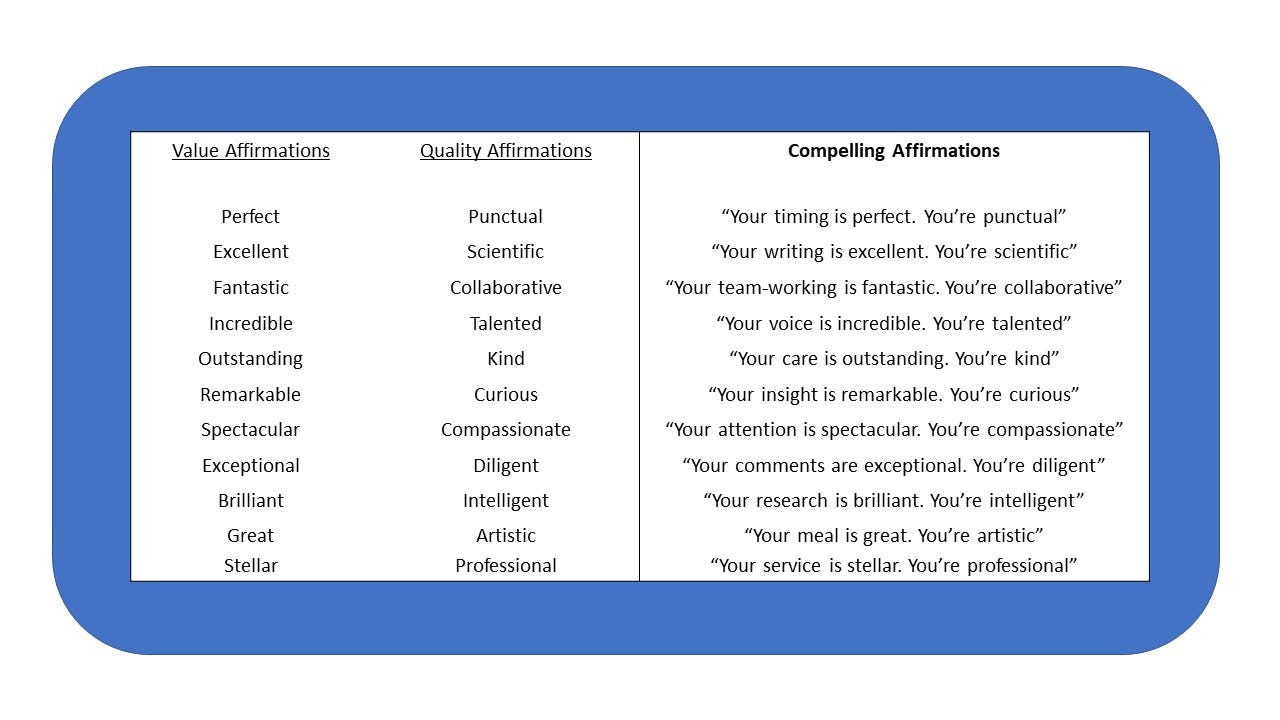
Here’s a comparison of weak versus strong affirmations:
| Weak Affirmation | Strong Affirmation |
|---|---|
| "Good job!" | "You were honest about your struggles today." |
| "That’s great!" | "You made a real effort to plan your meals this week." |
| "I’m proud of you." | "It takes courage to talk about these feelings." |
Notice how strong affirmations point to a specific action or quality. They help clients recognize what is working for them.
Why Are Affirmations Important In Mi?
Affirmations do more than just build rapport. They are a tool for change. Here’s how they impact the motivational interviewing process:
1. Enhance Self-efficacy
People are more likely to change when they believe they can. Affirmations remind clients of their abilities, even during setbacks.
2. Support Autonomy
MI respects the client’s right to choose their path. Affirmations reinforce that the client is in control and has strengths to guide their choices.
3. Reduce Defensiveness
When clients feel valued, they are less likely to resist suggestions or feedback.
4. Encourage Exploration
Affirmations open doors to deeper discussion. When clients hear their strengths, they often share more or think about their situation differently.
Many practitioners miss that affirmations are also an intervention—they actively support change, not just the relationship.
How To Craft Effective Affirmations
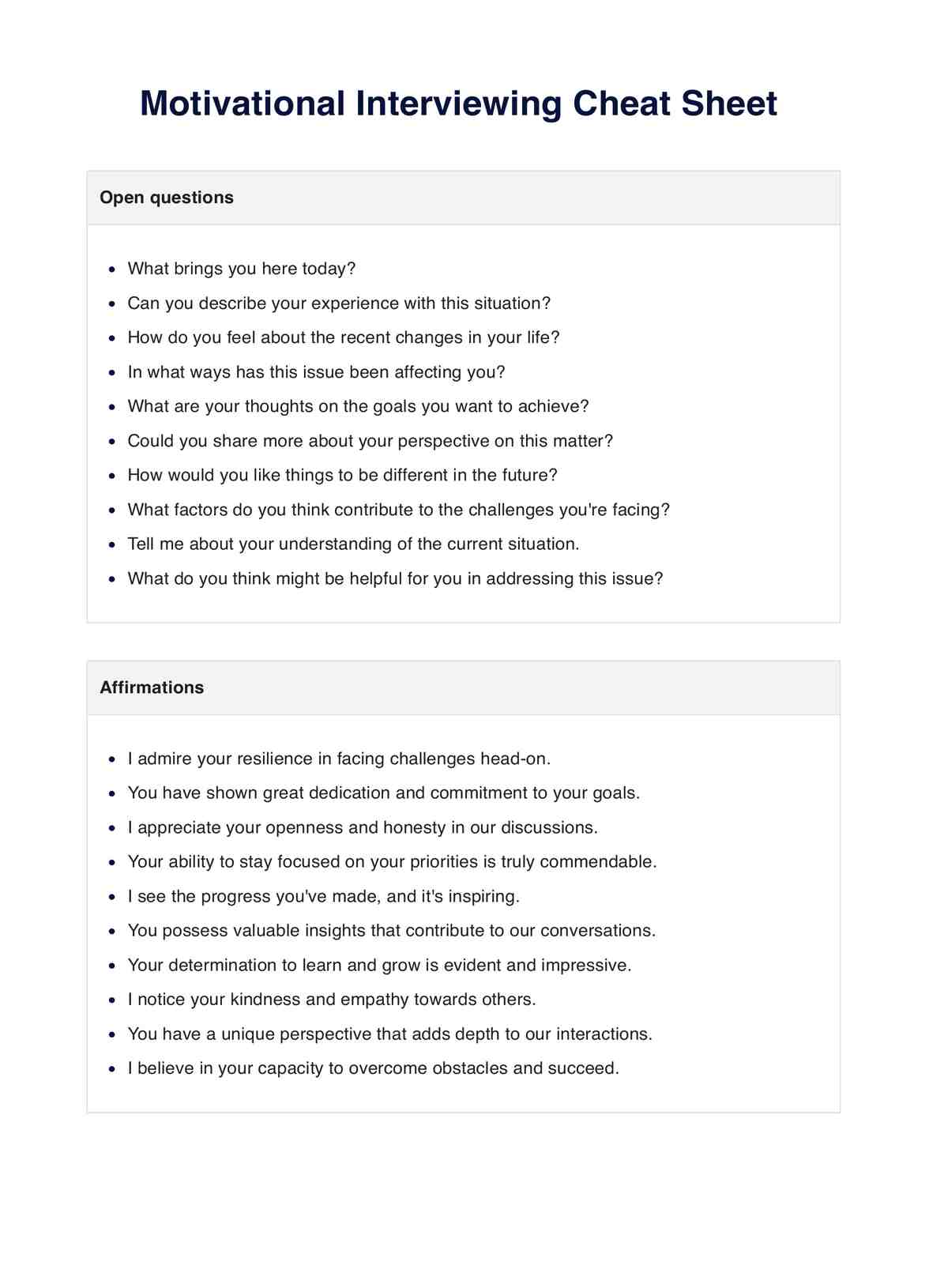
Creating good affirmations takes practice. Here’s a step-by-step approach:
1. Listen For Strengths
Pay close attention to what the client says and does. Look for:
- Efforts, even small ones (“I tried to skip dessert last night.”)
- Values or beliefs (“Family is important to me.”)
- Past successes (“I stopped drinking soda before.”)
- Positive intentions (“I want to be healthier.”)
2. Reflect Back What You Observe
Affirmations work best when they are based on something real. Instead of inventing praise, reflect what you notice. For example:
- “You are determined to take care of your family.”
- “You managed to walk three times this week, even though you were busy.”
3. Use Clear, Simple Language
Keep your words direct and easy to understand. Avoid jargon or complicated sentences.
4. Make It About The Client
Focus the affirmation on the client’s qualities, not your opinion. Instead of “I’m impressed,” try “You showed a lot of patience. ”
5. Be Brief But Meaningful
A good affirmation does not need to be long. One or two sentences are usually enough.
Here’s a quick framework:
“you [describe The Action/quality], And That Shows [strength/value].”
Example: “You kept trying even after setbacks, and that shows real perseverance.”
Credit: www.carepatron.com
Examples Of Affirmations In Motivational Interviewing
Seeing real examples can make it easier to understand how affirmations fit into MI. Here are some scenarios:
Example 1: Substance Use
Client: “I messed up again. I drank last night after a week of being sober.”
Practitioner: “You stayed sober for a whole week. That took a lot of effort.”
Example 2: Weight Management
Client: “i Didn’t Exercise As Much As I Wanted.”
Practitioner: “You still found time to move, even when it was hard.”
Example 3: Parenting
Client: “I lost my temper with my son but I apologized afterward.”
Practitioner: “It’s not easy to apologize, but you did. That shows responsibility.”
Example 4: Career Change
Client: “i’m Scared To Apply For New Jobs.”
Practitioner: “It takes courage to think about change. You’re willing to face your fears.”
These examples show affirmations do not ignore the problem—they highlight strengths within the struggle.
When And How Often To Use Affirmations
There is no fixed rule about how many affirmations to use in a session. Quality is more important than quantity. Affirmations should feel natural, not forced.
Use affirmations:
- At the start to build trust
- After a client shares something difficult
- When highlighting effort, not just success
- To encourage during setbacks
Avoid giving an affirmation every time the client speaks. Too many can seem insincere. A well-placed affirmation is more powerful than repeating the same phrase.
One insight many beginners miss is that silence can also be supportive. You do not need to fill every pause with an affirmation. Sometimes, listening is enough.
Common Mistakes With Affirmations
Even experienced practitioners sometimes use affirmations incorrectly. Here are mistakes to avoid:
1. Using Generic Praise
“Good job” or “That’s great” does not show you are paying attention. Be specific.
2. Focusing On Outcomes Only
Affirm effort, not just results. Change is a process.
3. Sounding Patronizing
Avoid talking down to clients or making them feel like children.
4. Affirming What Is Not True
False affirmations harm trust. Only affirm what you genuinely observe.
5. Overusing Affirmations
Too many affirmations can sound fake. Use them thoughtfully.
6. Making It About Yourself
Avoid statements like “I’m so proud of you. ” The focus should stay on the client.
A good practice is to check your affirmation: “Does this help the client see their own strength?” If not, revise it.
The Science Behind Affirmations In Mi
Research supports the use of affirmations in MI. Studies show that affirmations can:
- Increase a person’s belief in their ability to change
- Lower resistance in challenging conversations
- Improve the overall success of motivational interviewing
One study found that sessions with more genuine affirmations led to better outcomes, such as reduced substance use and improved mental health. The key is that affirmations must be authentic and linked to real behavior or values.
Brain science also supports this. When people hear affirmations, their brains are more open to new ideas and less defensive. This makes it easier to explore change.
If you want to read more about the science, you can visit the Motivational Interviewing Wikipedia page.
Integrating Affirmations With Other Mi Skills
Motivational Interviewing uses several core skills, often remembered by the acronym OARS:
- Open-ended questions
- Affirmations
- Reflective listening
- Summaries
Affirmations fit naturally with these skills. For example, after an open-ended question (“What helped you stay on track this week? ”), you can use an affirmation based on the answer.
Here’s how they can work together:
| MI Skill | Example |
|---|---|
| Open-ended question | "What made you decide to come today?" |
| Affirmation | "You took a big step by seeking support." |
| Reflective listening | "You’re feeling both hopeful and nervous." |
| Summary | "So, you want to cut down on drinking because you care about your health and your family." |
By combining affirmations with these skills, you create a conversation that is supportive, respectful, and focused on change.
Advanced Tips For Using Affirmations
Once you are comfortable with basic affirmations, here are advanced strategies:
1. Affirm Values, Not Just Actions
Look for what matters most to the client. For example, “You care deeply about your family, and that shows in your choices. ”
2. Use Affirmations To Guide The Conversation
If a client is stuck, affirm a small step: “You’re thinking about what might help. That’s a good start.”
3. Affirm Silent Strengths
Some strengths are not spoken but seen. Noticing these can be powerful: “You kept coming back, even when it was tough.”
4. Use Affirmations To Reframe Negativity
If a client is hard on themselves, find the strength in the struggle. “You’re frustrated, but you still haven’t given up. ”
5. Invite Self-affirmation
Ask clients what strengths they notice in themselves. This deepens their self-awareness.
Many practitioners forget that affirmations can be about values, intentions, or even small shifts in thinking—not just big changes.
Cultural Sensitivity With Affirmations
Affirmations are not one-size-fits-all. People from different backgrounds may respond differently to positive feedback.
Tips for cultural sensitivity:
- Learn about the client’s values and what is meaningful to them.
- Avoid affirmations that could sound insincere or out of place.
- Be aware of non-verbal cues. If a client seems uncomfortable, adjust your approach.
In some cultures, direct praise may feel awkward. In these cases, focus on affirming quietly or through actions, not just words.
Practice Exercises For Building Affirmation Skills
Improving your affirmation skills takes practice. Here are some exercises you can try:
1. Affirmation Journal
After each session, write down two strengths you noticed in the client, even if you did not say them aloud.
2. Affirmation Rewrites
Take common praise statements (“Good job”) and rewrite them as specific, strength-based affirmations.
3. Role Play
Practice with a partner. One person acts as the client, sharing a challenge. The other listens for opportunities to affirm.
4. Video Review
Record a practice session and count the number of affirmations. Were they specific? Did they fit the conversation?
5. Self-affirmation
Practice affirming your own strengths. This helps you recognize them in others.
These exercises build confidence and help you avoid common mistakes.
How To Handle Difficult Situations With Affirmations
Sometimes, clients are negative or resistant. Affirmations can still be useful:
- If a client is angry: “You care enough about this to feel strongly.”
- If a client is hopeless: “You’re still here, looking for answers. That takes courage.”
- If a client rejects affirmations: Respect their response. You can affirm their honesty about not liking praise.
It is important to stay genuine. Forced affirmations can make things worse. Look for even small steps or values to affirm.
Comparing Affirmations To Other Mi Techniques
To see where affirmations fit within motivational interviewing, compare them to other tools:
| Technique | Purpose | When to Use | Common Mistake |
|---|---|---|---|
| Affirmations | Recognize strengths and efforts | When client shows effort or values | Being too general or insincere |
| Reflective listening | Show understanding of feelings | When client shares emotions or thoughts | Repeating without adding meaning |
| Summaries | Gather main points | To transition or end topics | Missing key details or values |
| Open-ended questions | Encourage client to talk | To explore more deeply | Asking closed or leading questions |
Understanding these differences helps you use affirmations at the right moment.
Real-world Case Study: Affirmations In Action
Let’s look at how affirmations work in a real MI session.
Case: A client wants to reduce alcohol use but feels guilty about past relapses.
Session Excerpt:
Client: “I keep letting my family down. I don’t think I can change.”
Practitioner: “You care a lot about your family. That’s clear. And you’re here, even though it’s hard. That shows real commitment.”
Result:
The client feels understood, not judged. They become more open about their fears. Over time, affirmations help the client build hope and try new strategies.
Insight:
Many beginners think affirmations are only for “good” progress. In fact, they are most powerful when clients are discouraged.
Measuring The Impact Of Affirmations
How do you know if your affirmations are working? Look for these signs:
- Clients open up more
- Resistance or defensiveness goes down
- Clients start to affirm their own strengths
- Sessions feel more collaborative
You can also ask for feedback: “What did you find helpful in our conversation?” Over time, you may notice clients using affirmations in their self-talk.
Credit: socialwelfare.berkeley.edu
Frequently Asked Questions
What Is The Difference Between An Affirmation And A Compliment In Mi?
A compliment is general praise, like “You’re great!” An affirmation in MI is specific and linked to the client’s strengths, values, or efforts. For example, “You kept trying even when it was hard.” Affirmations focus on what the client did or values, not just making them feel good.
How Many Affirmations Should I Use In A Session?
There is no exact number. Use affirmations when you notice genuine strengths or effort. One or two well-placed affirmations are better than many generic ones. The goal is quality, not quantity.
Can Affirmations Sound Fake Or Forced?
Yes, if they are not genuine or do not fit the situation. Avoid giving affirmations just to fill silence or because you feel you “should. ” Only affirm what you truly observe. Sincerity is key.
Are Affirmations Always Verbal?
No. Affirmations can also be non-verbal, such as a nod, smile, or supportive gesture. Sometimes, simply showing respect or remembering important details from previous sessions is a form of affirmation.
What If A Client Rejects Or Dislikes Affirmations?
Some clients may feel uncomfortable with praise. If this happens, do not insist. You can affirm their honesty about not liking affirmations. Adjust your approach—focus more on reflective listening or use subtle, indirect affirmations.
Motivational interviewing is about supporting clients in a way that fits them best. Affirmations are one of the most effective tools for building hope and confidence. With practice, you can learn to use affirmations that truly make a difference.
Using affirmations in motivational interviewing is both an art and a science. When done well, they help clients see their own potential, making change feel possible. This skill is worth mastering, whether you are new to MI or have years of experience.
Credit: medium.com
