

What Does an Affirmation Mean? Unlocking Its True Power
What Does An Affirmation Mean
People often hear the word affirmation in self-help books, coaching sessions, and even on social media. But what does an affirmation really mean? Why do so many experts talk about affirmations, and do they actually help? Let’s take a close look at the true meaning of affirmations, how they work, and why people use them every day. You will discover their purpose, the science behind them, and practical ways to use affirmations in your own life.
Understanding The Meaning Of Affirmation
An affirmation is a positive statement that a person repeats to themselves, often with the goal of changing a belief or attitude. The word comes from the Latin ‘affirmare’, which means “to make steady, strengthen.” In simple language, when you say or think an affirmation, you are telling yourself something good or powerful about yourself or your life.
People use affirmations to focus their minds on positive ideas. For example, someone might say, “I am confident,” or “I am becoming healthier every day. ” The aim is to help the mind accept these ideas as true, even if the person does not fully believe them yet.
Over time, repeating affirmations can help change negative thoughts into positive ones.
The Core Purpose Of Affirmations
Affirmations are not just random positive words. They serve a clear purpose:
- Encourage positive thinking – Affirmations help shift your focus from what is wrong to what is possible.
- Shape beliefs and attitudes – By repeating affirmations, people begin to form new beliefs about themselves.
- Motivate action – Positive statements can inspire you to take steps toward your goals.
- Reduce negative self-talk – Affirmations can replace harmful thoughts with supportive ones.
- Support mental health – Many therapists use affirmations to help clients manage anxiety, stress, or low self-esteem.
The real power of an affirmation comes from the way it influences your thoughts and feelings every day.
Examples Of Common Affirmations
To understand what an affirmation means, it helps to see real examples. Here are some popular affirmations people use:
- I am worthy of love and respect.
- Every day, I grow stronger and more confident.
- I am calm, peaceful, and in control.
- Success comes naturally to me.
- I accept myself just as I am.
- I am grateful for all the good in my life.
Notice that these statements are positive and often written in the present tense. They focus on what you want to believe, not what you want to avoid.
How Affirmations Work In The Mind
Affirmations are more than just words. They can actually shape the way you think. Scientists have studied how the brain reacts to positive statements. Here’s what happens:
When you repeat an affirmation, your brain starts to build new connections. This process is called neuroplasticity. The more you repeat a positive idea, the more your brain accepts it as true. Over time, this can help you feel more confident, hopeful, or motivated.
But affirmations do not work instantly. You need to repeat them regularly, sometimes for weeks or months, before you see real changes. Also, the most effective affirmations are the ones you believe are possible. For example, if you say “I am a millionaire” but do not believe it, your mind may reject the idea.
It is better to use statements that feel true or at least possible, like “I am learning how to manage my money well. ”

Credit: r1learning.com
The Science Behind Affirmations
Research shows that affirmations can have a real effect on the mind and body. Psychologists have studied how self-affirmation works. Here are some key findings:
- Reduced stress: People who use affirmations can handle stressful events better. They recover faster from setbacks and feel less anxious.
- Improved problem-solving: After using affirmations, people tend to solve problems more creatively.
- Better performance: Studies show that students and athletes can improve their results by using positive self-talk.
One famous study found that people who practiced affirmations before a test had lower stress hormones in their bodies. This means that affirmations can help your body feel calmer, not just your mind.
Types Of Affirmations
Not all affirmations are the same. People use different types of affirmations for different goals. Here are the main types:
1. Self-affirmations
These focus on your qualities or strengths. Example: “I am capable and resourceful.”
2. Goal-oriented Affirmations
These help you focus on what you want to achieve. Example: “I am making progress toward my goals every day.”
3. Health Affirmations
These support your body and mind. Example: “My body is getting healthier and stronger.”
4. Relationship Affirmations
These improve your connections with others. Example: “I communicate with kindness and understanding.”
5. Financial Affirmations
These relate to money and success. Example: “I am open to new opportunities for wealth.”
Choosing the right type of affirmation depends on what you want to change or improve in your life.
How To Create Effective Affirmations
Anyone can write an affirmation, but not all affirmations are effective. Here are steps to make yours strong and powerful:
- Be specific: Instead of “I am successful,” try “I am confident when I give presentations.”
- Use the present tense: Say “I am improving” rather than “I will improve.”
- Keep it positive: Focus on what you want, not what you want to avoid. Say “I am calm” instead of “I am not stressed.”
- Make it believable: Choose words you can accept as true. If you do not believe your affirmation, adjust it to feel more real.
- Repeat regularly: The more you say it, the more it can help.
Here is a simple formula: “I am [quality or action]” or “I [action] every day.” For example, “I am learning something new every day.”
When And How To Use Affirmations
Many people ask, “When should I use affirmations? ” The truth is, you can use them anytime. Some people say their affirmations in the morning to start the day with a positive mindset. Others repeat them before a big meeting, during exercise, or at night before sleep.
You can say affirmations out loud, write them down, or even listen to recordings. Some people use sticky notes on their mirror or phone reminders to keep affirmations in mind.
For best results, choose a regular time each day and repeat your affirmations with focus. This helps your mind remember the positive ideas.
Examples Of Affirmation Routines
To make affirmations a habit, many people follow a daily routine. Here are three examples:
Morning Affirmation Routine
- Wake up and sit quietly for two minutes.
- Repeat three positive affirmations out loud.
- Visualize your day going well as you say your affirmations.
Work Or Study Routine
- Before starting a task, close your eyes for one minute.
- Repeat your top affirmation three times.
- Begin your work with a positive attitude.
Night Affirmation Routine
- Before sleeping, write down your affirmation in a notebook.
- Say your affirmation softly to yourself.
- Picture your goals as already happening.
These routines help you stay focused and positive throughout the day.
The Power Of Repetition
One reason affirmations work is because of repetition. The more you repeat a positive idea, the deeper it goes into your mind. This is similar to learning a new language or practicing a sport. Your brain needs to hear the same message many times before it becomes a habit.
Some people give up on affirmations too soon. They expect instant results, but real change takes time. Experts suggest repeating your affirmations for at least a few weeks. Over time, you may notice small shifts in your mood, confidence, or actions.
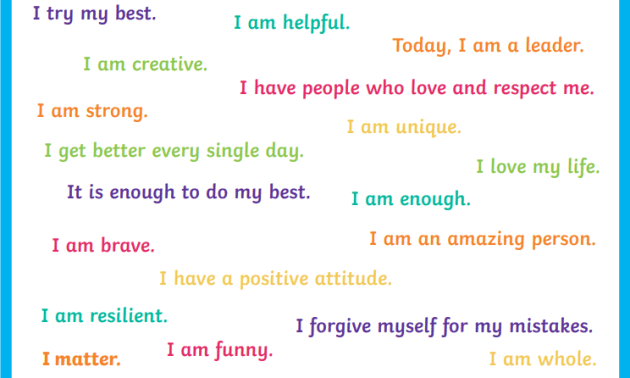
Credit: www.twinkl.com
Real-life Examples: How Affirmations Change Lives
Many people have shared stories of how affirmations helped them. Here are two examples:
Example 1: Overcoming Stage Fright
Maria used to feel nervous before speaking in public. She started saying, “I am calm and confident on stage. ” At first, it felt strange. But after a month of repeating this affirmation every morning, Maria noticed she felt less fear.
She now gives talks without panic.
Example 2: Building Self-worth
Arun struggled with low self-esteem. He wrote down, “I am worthy of respect and kindness,” and repeated it before bed. After some weeks, Arun began to treat himself better and set healthier boundaries with others. His friends noticed a positive change in his attitude.
These stories show that affirmations can help people change their thoughts and actions in real life.
Common Mistakes When Using Affirmations
Not everyone sees results with affirmations. Here are some common mistakes to avoid:
- Being too vague: If your affirmation is unclear, your mind will not accept it. Be specific.
- Using negative words: Avoid words like “not” or “never.” Focus on positive actions.
- Ignoring your feelings: If you say an affirmation but feel upset or doubtful, take time to process your emotions first.
- Expecting quick results: Affirmations work slowly. Be patient and consistent.
- Lack of belief: If you do not believe your affirmation, try a smaller step. For example, “I am learning to be confident” instead of “I am always confident.”
Myths And Misunderstandings About Affirmations
There are many myths about affirmations. Let’s clear up some common misunderstandings:
- Myth 1: Affirmations work like magic. Truth: Affirmations help change your mindset, but you still need to take action.
- Myth 2: You must always feel happy when saying affirmations. Truth: It’s normal to have mixed feelings. The goal is to guide your mind toward positive thoughts.
- Myth 3: Affirmations are only for “positive thinkers.” Truth: Anyone can use affirmations, even people who feel negative sometimes.
Understanding these points helps you use affirmations in a realistic and helpful way.
Affirmations In Different Cultures And Traditions
The idea of affirming positive truths about oneself is not new. Cultures around the world have used similar practices for centuries.
- In some forms of meditation, people repeat mantras—short, positive phrases.
- Many religious traditions use prayer or positive statements to encourage faith and hope.
- In psychology, cognitive behavioral therapy teaches people to challenge negative thoughts and replace them with supportive ones.
While the words may be different, the main idea is the same: repeating positive statements helps shape the way you think and act.
Affirmations Vs. Other Self-help Tools
People often confuse affirmations with other tools like goals, visualizations, or mantras. Here’s a simple comparison:
| Tool | Main Focus | How It’s Used |
|---|---|---|
| Affirmation | Positive belief or quality | Repeat a positive statement about yourself |
| Goal | Specific outcome | Write down what you want to achieve |
| Visualization | Mental image of success | Imagine yourself reaching a goal |
| Mantra | Short phrase for focus | Repeat during meditation or prayer |
Affirmations are about what you believe right now or are working to believe. Goals are about the future. Visualizations use mental images, while affirmations use words.
Do Affirmations Work For Everyone?
Most people can benefit from affirmations, but results can vary. Some people feel a quick boost in mood, while others need more time. If you have deep negative beliefs, affirmations may not be enough on their own. In these cases, talking to a counselor or therapist can help.
Also, affirmations are most powerful when combined with action. For example, if you want to be healthier, say “I make healthy choices every day”—but also eat well and exercise.
Data And Research On Affirmations
Scientists have studied how affirmations affect the brain and behavior. Here are some interesting findings:
| Study Topic | Result | Impact |
|---|---|---|
| Stress Management | Lower stress hormone levels after affirmations | People felt calmer during challenges |
| Academic Performance | Improved grades for students using affirmations | More focus and confidence in school |
| Physical Health | Faster recovery from illness or injury | Positive mindset supported healing |
These studies show that affirmations are not just “feel-good” ideas. They can create real changes in how people think and act.
How To Measure Progress With Affirmations
Some people wonder, “How do I know if affirmations are working?” Here are signs of progress:
- You notice more positive self-talk during the day.
- You feel less anxious before challenges.
- You take more positive actions toward your goals.
- Friends or family notice changes in your attitude.
- You recover faster from setbacks.
It can help to keep a journal of your thoughts and feelings. Write down your affirmation each day and note any changes you observe. This makes progress easier to see over time.

Credit: 7esl.com
Tips For Getting The Most From Affirmations
To get real value from affirmations, try these tips:
- Personalize your affirmations: Use your own words. The statement should feel true for you.
- Say them with emotion: The more feeling you put in, the stronger the impact.
- Combine with action: Use affirmations alongside real steps toward your goals.
- Practice gratitude: Add a gratitude statement to your routine. Example: “I am grateful for my health and energy.”
- Be patient: Change takes time. Stick with your affirmations even if you do not see instant results.
Most beginners miss the importance of emotion and belief. If your affirmation feels flat, try changing the words or saying them with more feeling.
Affirmations For Children And Teens
Affirmations are not just for adults. Children and teenagers can also benefit from positive statements. For example, a child who feels nervous about school might use “I am brave and ready to learn. ” Teens facing peer pressure can try “I make choices that are right for me.
”
Parents and teachers can encourage children to create their own affirmations and use them daily. This helps build confidence and resilience from a young age.
Digital Tools And Resources For Affirmations
Modern technology offers many ways to practice affirmations:
- Mobile apps: There are apps that send daily affirmations to your phone.
- Videos and audio: Some people prefer listening to affirmations.
- Online groups: Community support can help you stay motivated.
- Printable cards: You can download and print affirmation cards for your home or office.
If you want to learn more, the Wikipedia page on affirmations offers a detailed overview.
Table: Comparing Affirmation Practices
Here’s a look at different ways people use affirmations and their unique benefits:
| Practice | Method | Main Benefit |
|---|---|---|
| Speaking | Say aloud each morning | Boosts confidence and focus |
| Writing | Journal your affirmation daily | Deepens belief and commitment |
| Listening | Play recorded affirmations | Helps with relaxation and mindset |
| Visualization | Picture your affirmation as real | Strengthens the emotional effect |
Try different methods to see what works best for you.
Non-obvious Insights About Affirmations
Most beginners do not realize:
- The mind can resist affirmations at first. When you start, your brain may argue with the new idea. This is normal. Over time, the resistance usually fades.
- Linking affirmations to daily habits makes them stronger. For example, say your affirmation while brushing your teeth. This connects the positive message to an automatic action, making it stick faster.
When To Seek Extra Help
If you try affirmations for several months but still feel stuck, it may help to talk to a counselor, coach, or therapist. Sometimes, deeper issues need extra support. Affirmations are a powerful tool, but they are not a cure-all.
Frequently Asked Questions
What Is The Main Purpose Of An Affirmation?
An affirmation is a positive statement you repeat to shape your thoughts and beliefs. The main purpose is to help you focus on what is good or possible, instead of what is negative or limiting. Affirmations support confidence, motivation, and emotional well-being.
How Often Should I Repeat Affirmations For Best Results?
It is best to repeat your affirmations daily, ideally in the morning and before sleep. Consistency is key. Some people repeat them several times a day, especially during moments of stress or doubt. The more you practice, the more natural it becomes.
Can Affirmations Help With Anxiety Or Stress?
Yes, affirmations can help reduce anxiety and stress. By focusing your mind on positive statements, you can calm negative thoughts and feel more in control. Many therapists recommend affirmations as part of stress management routines.
Do I Need To Believe My Affirmation For It To Work?
Belief helps, but it is not required at the start. Sometimes, people do not fully believe their affirmation at first. With regular repetition and real-life action, belief often grows over time. If an affirmation feels too hard to believe, make it softer or more believable.
Are Affirmations The Same As Positive Thinking?
Affirmations are a tool for positive thinking, but they are not the same thing. Positive thinking is a general attitude, while affirmations are specific statements you repeat. Affirmations help train your mind to think more positively, step by step.
Affirmations are simple yet powerful tools for shaping your mindset and supporting your goals. They are more than just positive words—they are a way to guide your thoughts, reduce stress, and build a better self-image. Whether you are new to affirmations or looking to deepen your practice, using clear, positive statements every day can make a real difference in your life.
Remember, change takes time, but with patience and practice, affirmations can help you move toward a happier and more confident self.
