

Which Tricep Exercises Target All Heads for Maximum Growth
Which Tricep Exercises Target All Heads
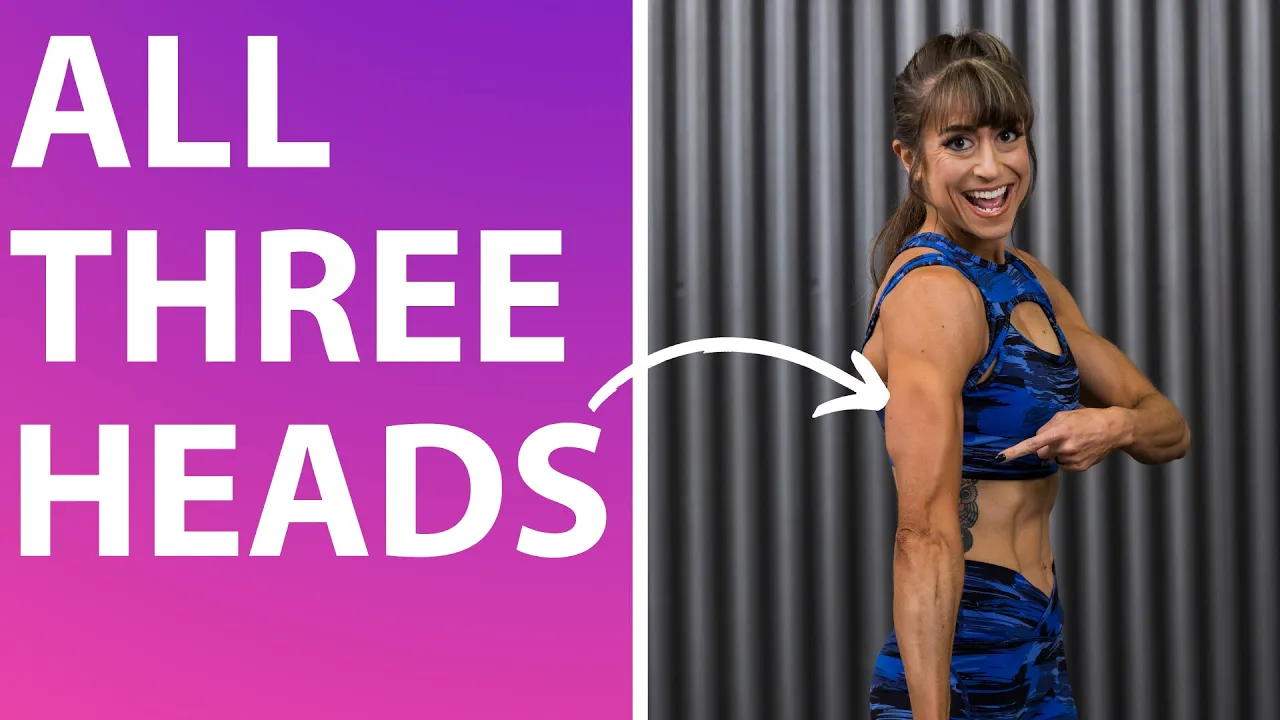
Building strong, defined triceps is about more than just appearance. Well-developed triceps help with pushing movements, support shoulder health, and improve overall upper body strength. If you want your triceps to look full and function well, you need to target all three heads: the long head, lateral head, and medial head. Many people focus on one or two, missing out on complete development. This guide explains which tricep exercises target all heads, how to perform them, and how to build a balanced, effective workout.
Understanding Tricep Anatomy
The triceps brachii is made up of three distinct parts:
- The long head runs down the back of the arm and is the largest portion. It starts on the shoulder blade and helps with both elbow extension and shoulder movement.
- The lateral head sits on the outside of the arm. When people see “horseshoe” triceps, that’s often the lateral head.
- The medial head is found underneath the other two. It’s key for elbow stability and control during any extension.
All heads work together to extend the elbow, but each is activated differently based on arm position and exercise. To get the best results, you should choose exercises that stimulate all three.
Why Full Tricep Activation Matters
If you only work one or two heads, your arms will look and feel incomplete. Full tricep activation means:
- More muscle growth
- Better strength for pushing movements (like bench press or push-ups)
- Lower injury risk
- Improved arm shape and definition
Many beginners miss the importance of elbow angle and shoulder position. These two factors decide which tricep head does most of the work. For example, overhead movements target the long head, while movements with arms at your sides hit the lateral and medial heads harder.
How To Know If An Exercise Hits All Three Heads
For an exercise to target all tricep heads, it must:
- Allow for full elbow extension
- Involve different arm positions (overhead, at the sides, and close to the body)
- Use a range of motion that stretches and contracts the triceps fully
Compound lifts can help, but isolation exercises are often needed for complete development. The best routines mix both.
Key Tricep Exercises That Target All Heads
Not all tricep exercises are equal. Some hit one head more than others. The following exercises are proven to hit all three heads effectively when performed with good form and the right technique.
Close-grip Bench Press
The close-grip bench press is a classic compound exercise. By narrowing your grip on the bar, you shift more of the workload from the chest to the triceps.
How it works:
- Lying on a flat bench, grip the barbell with hands about shoulder-width apart.
- Lower the bar slowly to your chest, keeping elbows close to your sides.
- Press back up, focusing on squeezing the triceps.
Why it works for all heads:
This exercise uses a natural pushing movement, which means all three heads must work together to extend the elbows. The long head is activated more than in a standard bench press because the elbows stay tucked.
Practical tip:
Don’t go too narrow. If your hands are too close, you risk wrist pain and lose power.
Diamond Push-ups
Diamond push-ups are a bodyweight favorite. They require no equipment and can be made harder by elevating your feet or adding weight.
How to perform:
- Get into a push-up position.
- Place your hands under your chest, forming a diamond shape with your thumbs and index fingers.
- Lower your chest to your hands and press back up.
Full tricep activation:
The hand position forces the elbows to stay near your sides, which targets all three tricep heads, especially the medial and lateral.
Beginner insight:
Focus on keeping your body straight and elbows tucked. If regular diamond push-ups are too hard, start on your knees.
Tricep Dips
Tricep dips can be done on parallel bars, a bench, or even sturdy furniture at home.
Execution:
- Place your hands on a bench or dip bars, arms straight.
- Lower your body by bending elbows, keeping them close to your body.
- Push back up until arms are straight.
All-heads stimulation:
Because your shoulders extend behind your body, you get extra long head activation. The press-up phase lights up the lateral and medial heads.
Common mistake:
People flare elbows out too wide, shifting work to the chest and risking shoulder discomfort. Keep elbows close to your sides for best results.
Overhead Tricep Extension
Overhead tricep extensions, using a dumbbell or cable, are a must-have if you want to build the long head (and still hit the others).
How to do it:
- Stand or sit with a dumbbell or cable in both hands.
- Extend arms overhead, keeping elbows close to your ears.
- Lower the weight behind your head, then straighten arms overhead.
Targeting all three heads:
Stretching the triceps overhead gives the long head a deep stretch. The pressing motion also activates lateral and medial heads.
Practical example:
Try this move with a single heavy dumbbell using both hands, or one arm at a time for better focus.
Cable Tricep Pushdown
Cable pushdowns are a gym staple because they provide constant tension and are easy to adjust for all levels.
How to perform:
- Stand facing a cable machine with a straight bar or rope attachment.
- Grip the bar with palms facing down.
- Pull the bar down, keeping elbows at your sides, and extend arms fully.
All-heads effect:
The cable’s constant tension works all three heads, especially if you control the negative (upward) phase. Using a rope allows for a stronger contraction at the bottom.
Extra tip:
Flare the rope ends out at the bottom for more lateral head activation.
Skull Crushers (lying Tricep Extensions)
Skull crushers are often done with an EZ bar, but dumbbells or cables work too.
Step-by-step:
- Lie on a bench with the weight above your chest.
- Lower the bar towards your forehead, bending only at the elbows.
- Extend arms back up, squeezing triceps.
Why it works:
This move stretches the long head and fully contracts all heads at the top of the movement.
Beginner insight:
Start light—skull crushers can strain elbows if you use too much weight or poor form.
Tricep Kickbacks
Kickbacks isolate the triceps, with a strong focus on the lateral head but good activation of all three heads when done with strict form.
How to perform:
- Hold a dumbbell in one hand, bend at the waist, and keep your back flat.
- Start with your elbow bent at 90 degrees, upper arm parallel to your body.
- Extend your arm back, fully straightening your elbow.
All-heads benefit:
Full extension and focus at the top of the move stimulate all three heads, as long as you don’t swing your arm.
Practical tip:
Pause for one second at the top to increase muscle tension.
Comparing Tricep Exercises For All-head Activation
To help you choose, here is a comparison of the main exercises and the heads they target most:
| Exercise | Long Head | Lateral Head | Medial Head | Equipment Needed |
|---|---|---|---|---|
| Close-Grip Bench Press | High | High | Medium | Barbell/Bench |
| Diamond Push-Up | Medium | High | High | Bodyweight |
| Tricep Dips | High | Medium | High | Bench/Bars |
| Overhead Extension | Very High | Medium | Medium | Dumbbell/Cable |
| Cable Pushdown | Medium | High | High | Cable Machine |
| Skull Crusher | High | Medium | Medium | Barbell/Dumbbells |
| Kickback | Medium | High | Medium | Dumbbell |

Credit: www.youtube.com
Creating A Balanced Tricep Workout
To hit all three heads, combine exercises that use different arm positions and movement patterns. A balanced session could look like this:
- Compound movement: Close-grip bench press or tricep dips (3 sets of 8-12 reps)
- Overhead movement: Overhead tricep extension (3 sets of 10-15 reps)
- Pushdown or isolation: Cable pushdowns or kickbacks (3 sets of 12-15 reps)
This mix covers all heads. Adjust volume and intensity based on your level.
Advanced Techniques For Tricep Growth
If you’ve been training a while, you may need to use advanced methods to keep growing.
Supersets
Pair two tricep moves back-to-back without rest. For example, do skull crushers followed by close-grip push-ups. This increases intensity and muscle fatigue.
Drop Sets
After reaching failure with a heavy weight, immediately reduce the load and keep going. For instance, after cable pushdowns, drop the weight and continue for extra reps.
Pause Reps
Pause for 1–2 seconds at the hardest part of the move (usually full extension). This increases time under tension and muscle activation.
Credit: redefiningstrength.com
Common Mistakes That Limit Tricep Development
Even great exercises won’t work if you make these errors:
- Using too much weight and swinging the arms. Control is more important than heavy loads.
- Not locking out your elbows at the top of the movement. Full extension is key for activation.
- Flaring elbows out too wide, which shifts focus to the chest and shoulders.
- Ignoring the overhead position—this is needed for the long head.
- Skipping warm-ups. Cold muscles are more likely to get injured.
Practical Examples For Different Fitness Levels
Beginners
Start with bodyweight exercises like diamond push-ups and bench dips. Focus on form and control. Two workouts per week are enough.
Intermediate
Add free weights and cables. Use close-grip bench press, overhead dumbbell extensions, and cable pushdowns.
Advanced
Use all movement patterns in one session. Try advanced techniques like supersets and drop sets.
How Volume And Frequency Affect Tricep Growth
Muscle growth depends on the total amount of work (volume) and how often you train (frequency).
- Aim for 9–15 sets per week for triceps, divided over 2–3 sessions.
- Allow at least 48 hours between sessions for recovery.
- Increase volume slowly to avoid elbow pain.
Beginners often do too much too soon. Start lower and increase only when you can recover well.
Equipment Choices: Free Weights Vs. Cables Vs. Bodyweight
Not all equipment is created equal. Here’s how options compare for tricep training:
| Equipment | Benefits | Drawbacks | Best For |
|---|---|---|---|
| Free Weights (Dumbbells, Barbells) | Natural movement, builds stabilizers | More risk of poor form | Intermediate/Advanced |
| Cables | Constant tension, easy to adjust | Requires gym access | All levels |
| Bodyweight | No equipment needed, easy to progress | Can be hard to overload | Beginners |
How To Progress And Avoid Plateaus
Muscles adapt quickly. To keep making gains:
- Increase weight or reps gradually.
- Change grip or arm position every few weeks.
- Try new exercises (e.g., switch from barbell to dumbbell versions).
- Track your progress. Write down weights, reps, and how each set feels.
A less obvious insight: If you feel joint pain, especially in the elbows, it’s not always a sign to stop tricep work. Sometimes, adjusting your grip or range of motion can fix the problem.
Stretching And Mobility For Tricep Health
Flexibility and mobility are often ignored in tricep training. Tight triceps can limit your range of motion and lead to elbow pain.
- Stretch after every session. A simple overhead tricep stretch works well.
- Use a foam roller for the back of your arms and shoulders.
- Warm up with light resistance bands before heavy lifting.
Nutrition Tips For Tricep Growth
Even the best exercises won’t build muscle if your nutrition is lacking.
- Eat enough protein (about 0.7–1 gram per pound of body weight).
- Stay hydrated—dehydration can reduce muscle performance.
- Include healthy fats and carbs for energy.
If your gains have stalled, check your food intake before changing your workout.
How Genetics Affect Tricep Shape
Some people notice their triceps develop a “horseshoe” quickly, while others do not. Genetics play a role in muscle shape and how visible each head is. You can’t change your muscle insertions, but you can maximize growth by targeting all heads equally.
Recovery: Letting Your Triceps Grow
Muscle growth happens during rest, not in the gym. Overtraining can lead to elbow pain and stalled progress.
- Get 7–9 hours of sleep per night.
- Take at least one full rest day per week.
- Use ice or anti-inflammatory cream if you have soreness.
Real-world Example: A Sample 3-day Tricep Plan
Here is a sample tricep-focused plan that covers all heads, spread across three days. This can be added to your main workout or used during arm specialization phases.
| Day | Exercise | Sets | Reps | Focus |
|---|---|---|---|---|
| 1 | Close-Grip Bench Press | 4 | 8–10 | Compound, all heads |
| 1 | Overhead Tricep Extension | 3 | 10–12 | Long head |
| 2 | Diamond Push-Ups | 4 | Max | Bodyweight, all heads |
| 2 | Tricep Dips | 3 | 12–15 | Compound, long/medial head |
| 3 | Cable Pushdowns | 4 | 12–15 | Lateral/medial head |
| 3 | Skull Crushers | 3 | 10–12 | Long/lateral head |
Rest 60–90 seconds between sets. Adjust weights and reps based on your level. If you feel elbow pain, drop the weight and focus on form.

Credit: www.youtube.com
Frequently Asked Questions
What Is The Best Exercise For Hitting All Three Tricep Heads?
There isn’t a single “best” exercise, but close-grip bench press and tricep dips are very effective because they involve all three heads in a natural pushing motion. For complete development, combine different movements, including overhead extensions and pushdowns.
How Can I Tell If My Triceps Are Being Fully Activated?
You’ll feel a strong squeeze and burn in the back of your arm, especially near your elbow. If you only feel it near your shoulder or chest, adjust your form. Using a variety of exercises and arm positions ensures all heads are activated.
Is It Possible To Build Big Triceps Without Weights?
Yes. Bodyweight moves like diamond push-ups and bench dips can build strong triceps, especially for beginners. As you get stronger, you’ll need to add resistance or harder variations to keep growing.
How Often Should I Train Triceps For The Best Results?
Aim for 2–3 times per week, with at least 48 hours between sessions. Total weekly sets should be in the 9–15 range for most people.
Are Cable Exercises Better Than Free Weights For Triceps?
Both are effective. Cables provide constant tension and are good for isolation moves. Free weights build stabilizer muscles and strength. The best routine uses both for variety and complete development.
Well-developed triceps don’t just look impressive—they help you push, press, and perform better in all sports and daily life. By choosing tricep exercises that target all heads, focusing on good form, and using a mix of equipment and advanced methods, you can maximize your muscle growth. Remember, progress takes time, but with consistent, smart training, you’ll see—and feel—the results. For more information on muscle anatomy and exercise science, visit Wikipedia.
