

Tricep Workout And Tips for Building Stronger Arms Fast
Tricep Workout and Training Guide: Build Stronger Arms with Smarter Methods
Strong, well-shaped arms are not just for bodybuilders. Whether you want better sports performance, more confidence in a t-shirt, or simply improved strength for daily life, your triceps play a crucial role. Many people focus on biceps, but the triceps make up about two-thirds of your upper arm mass. Training them properly gives your arms a fuller, more balanced look and helps with pushing movements, from bench presses to everyday tasks.
If you feel your arms are not growing, or your strength is stuck, the answer may be in your tricep workout. This guide will show you the best tricep exercises, smart workout plans, common mistakes, and expert tips. You will also learn how to avoid injuries and get the most out of every session, whether you train at home or in a gym.
Understanding The Triceps: Why They Matter
The triceps brachii is a three-part muscle on the back of your upper arm. The three heads—long, lateral, and medial—work together to extend your elbow. But they also do more: the long head helps move your shoulder joint, and all heads stabilize your arm when you push or press.
Ignoring triceps in your workout can lead to:
- Weak pressing power in bench press or push-ups
- Smaller-looking arms, even if your biceps are strong
- Higher risk of elbow pain or injury due to muscle imbalance
A balanced tricep workout not only makes your arms look better but also keeps them healthy and strong for all kinds of movement.
Key Benefits Of Strong Triceps
Many people chase big arms or a lean look, but strong triceps offer real-life benefits too:
- Better Push Strength: From push-ups to overhead presses, stronger triceps mean heavier lifts and safer joints.
- Improved Sports Performance: In basketball, boxing, swimming, or tennis, strong triceps help you pass, throw, punch, or swim with more power.
- Joint Health: Balanced triceps take pressure off your elbows and shoulders, helping prevent overuse injuries.
- Faster Upper Body Gains: Since triceps are involved in most chest and shoulder exercises, stronger triceps mean better results in other muscle groups.
Anatomy Of The Triceps: How Each Head Works
To train your triceps well, you need to know about its three heads:
- Long Head: Runs along the back of the arm and attaches to the shoulder blade. It’s the largest head, most visible in side and back arm poses.
- Lateral Head: Sits on the outer side of the arm, giving the “horseshoe” shape when flexed.
- Medial Head: Lies underneath the other two heads, but it’s important for overall thickness and elbow stability.
Different exercises work each head more or less. For full growth, use a mix of movements that hit all three.
Best Tricep Exercises For Mass And Definition
Choosing the right exercises is key. Here are the most effective moves, with notes on which tricep head they target:
| Exercise | Main Head Targeted | Equipment | Difficulty |
|---|---|---|---|
| Close-Grip Bench Press | All (focus on long & medial) | Barbell | Intermediate |
| Tricep Dips | Long & lateral | Bodyweight | Intermediate |
| Skull Crushers | Long head | EZ Bar/Dumbbells | Intermediate |
| Overhead Tricep Extension | Long head | Dumbbell/Cable | Beginner |
| Tricep Pushdown | Lateral head | Cable | Beginner |
| Diamond Push-Up | All heads | Bodyweight | Beginner |
| Kickbacks | Lateral head | Dumbbell | Beginner |
Key Exercise Details
Close-Grip Bench Press: Place hands about shoulder-width on the bar. Lower to your chest, keeping elbows close. This move allows heavy weight, so it’s great for building mass.
Tricep Dips: Use parallel bars or a bench. Keep your body upright to hit the triceps more. Leaning forward shifts work to the chest.
Skull Crushers: Lie on a bench, hold the bar with arms straight up, and bend elbows to lower the weight near your forehead. Keep upper arms still.
Overhead Tricep Extension: Stand or sit, hold a dumbbell overhead with both hands, and lower it behind your head. This stretches the long head for better growth.
Tricep Pushdown: Stand at a cable machine with a bar or rope. Push down, keeping elbows by your sides.
Diamond Push-Ups: Place hands close together under your chest, making a diamond shape with thumbs and index fingers. Keep elbows close.
Kickbacks: Bend forward, upper arm parallel to the floor, and straighten your arm behind you with a dumbbell.

Credit: www.reddit.com
Complete Tricep Workout Plans
A good tricep workout should hit all three heads, use both heavy and light weights, and fit your experience level. Here are sample routines for different needs.
Beginner Tricep Workout
- Overhead Dumbbell Extension: 3 sets x 10-12 reps
- Tricep Pushdown: 3 sets x 12-15 reps
- Diamond Push-Up: 2 sets x as many reps as possible
Rest 60-90 seconds between sets.
Intermediate Tricep Workout
- Close-Grip Bench Press: 4 sets x 8-10 reps
- Skull Crushers: 3 sets x 10-12 reps
- Tricep Dips: 3 sets x 8-12 reps
- Kickbacks: 2 sets x 12-15 reps
Rest 60-120 seconds between sets.
Advanced Tricep Workout
- Weighted Dips: 4 sets x 6-8 reps
- Close-Grip Bench Press: 3 sets x 8 reps
- Overhead Cable Extension: 3 sets x 10-12 reps
- Rope Pushdown: 3 sets x 12-15 reps
- One-Arm Dumbbell Kickback: 2 sets x 12 reps
Rest 90 seconds between sets. Use drop sets on the last exercise for extra burn.
Home Tricep Workout (no Equipment)
- Diamond Push-Ups: 4 sets x as many reps as possible
- Close-Grip Push-Ups: 3 sets x as many reps as possible
- Bench/Chair Dips: 3 sets x as many reps as possible
Keep rest periods short (45-60 seconds) for more intensity.
How Often Should You Train Triceps?
Most people see best results training triceps 2 times per week. This gives enough stimulus for growth, with time to recover. If you do full-body workouts, include 1-2 tricep exercises per session. For split routines (like push/pull/legs), hit triceps on your push day.
Signs you might be overtraining:
- Elbow pain or joint aches
- Weak performance or fewer reps each week
- Constant soreness
If you notice these, reduce your volume or take more rest. Remember, muscles grow while you rest, not just when you train.
Common Tricep Training Mistakes
Even with the right exercises, poor form or planning can slow your progress. Watch out for these mistakes:
- Using Too Much Weight: Heavy weights with bad form can hurt your elbows. Focus on control and full range of motion.
- Short Range of Motion: Only moving halfway misses muscle fibers. Lower weights fully and extend your arms completely.
- Elbows Flaring Out: This shifts work to shoulders or chest. Keep elbows close to your body during most tricep exercises.
- Skipping Overhead Movements: Only doing pushdowns or dips neglects the long head. Always include at least one overhead extension.
- Training Triceps After Heavy Chest/Shoulder Work: Your triceps may be tired, leading to weak form and less growth. Try training them fresh sometimes.
- Ignoring Recovery: Not giving enough rest between sessions can stall gains or cause injury.
How To Grow Triceps Faster: Tips That Work
If you want your triceps to grow and get stronger, try these strategies:
- Progressive Overload: Gradually increase the weight or number of reps every week. Small jumps (like 2.5-5 lbs) add up over time.
- Mix Rep Ranges: Heavy sets (6-8 reps) build strength; higher reps (12-15) add size and endurance. Use both in your routine.
- Slow Eccentrics: Lower the weight slowly (3-4 seconds) during each rep. This increases time under tension for better growth.
- Pause Reps: Hold the bottom position for a second. This removes “bounce” and forces your muscles to work harder.
- Mind-Muscle Connection: Focus on squeezing your triceps during each rep. This improves muscle activation and results.
A common insight: Many beginners miss the importance of elbow health. If you feel pain, change your grip, use lighter weights, or try different exercises. Long-term tricep gains depend on healthy joints.
Tricep Training: Free Weights Vs. Machines Vs. Bodyweight
Each type of equipment offers unique benefits. Here’s a quick comparison:
| Type | Pros | Cons | Best For |
|---|---|---|---|
| Free Weights (dumbbells/barbells) | More muscle activation; builds stabilizers | Requires more balance and control | Size and strength |
| Machines (cables, pushdowns) | Stable, easy to isolate triceps | Less stabilizer work | Isolation, beginners, injury recovery |
| Bodyweight (push-ups, dips) | No equipment needed; great for endurance | Hard to add resistance | Home workouts, endurance |
For best results, use a mix. Start your workout with a compound free weight exercise, then finish with machine or bodyweight moves for more reps and a pump.
How To Warm Up And Avoid Injury
Many people jump straight into heavy tricep work. This is risky and can cause tendon pain or injury, especially around the elbows. Take 5-10 minutes to warm up:
- Arm Circles: Loosen the shoulders.
- Light Push-Ups: Get blood into the triceps.
- Band Pushdowns: Use a resistance band for 15-20 reps.
- Gentle Stretching: Focus on your triceps and shoulders.
Always start with lighter weight for your first set, then slowly increase. If you feel any sharp pain, stop and check your form. A strong warm-up protects your joints and helps you lift more.
Triceps For Women: Myths And Real Advice
Some women worry that training triceps will make arms look “bulky.” In reality, women have much lower muscle-building hormones than men. Tricep training will make arms firmer, more toned, and defined, not bulky.
Women should use the same exercises as men. Focus on good form, moderate weights, and higher reps (10-15). If you want leaner arms, combine tricep training with full-body workouts and healthy eating.
Tricep Training For Different Goals
For Size And Mass
- Focus on compound lifts (close-grip bench, dips)
- Use heavier weights (6-10 reps)
- Eat slightly more calories and protein to support muscle growth
For Definition And Tone
- Use higher reps (12-20)
- Include supersets (two exercises back-to-back)
- Add cardio and watch your diet to reduce body fat
For Strength
- Prioritize low reps (4-6) with heavy weights, but keep perfect form
- Rest 2-3 minutes between sets
- Include triceps on your main push day, after bench press or overhead press
Nutrition For Tricep Growth
Building muscle is not just about the workout. You need the right fuel:
- Protein: Aim for 0.7–1 gram per pound of body weight per day. Good sources: chicken, fish, beans, eggs, Greek yogurt.
- Carbohydrates: Needed for energy. Include whole grains, fruits, and vegetables.
- Healthy Fats: Important for hormone health. Use olive oil, nuts, avocados.
- Water: Muscles need hydration to grow and recover.
After your workout, eat a meal with protein and carbs within 1-2 hours. This helps repair muscle and start the growth process.
Tracking Progress: How To Know If Your Triceps Are Growing
It’s easy to lose motivation if you don’t see instant results. Here’s how to check your progress:
- Strength Gains: Are you lifting heavier or doing more reps each week?
- Measurement: Use a tape to measure your upper arm every 2-4 weeks.
- Photos: Take regular pictures. Visual changes are clearer than you think.
- Muscle “Pump”: A good pump after your workout means you’re activating the muscle well.
Don’t rely only on the scale—muscle is denser than fat and changes may be slow. Trust the process.
Sample 4-week Tricep Growth Program
Here is a simple monthly plan to challenge your triceps. Do this routine twice per week, with at least 2 days between sessions:
Week 1-2:
- Close-Grip Bench Press: 3 sets x 10 reps
- Overhead Dumbbell Extension: 3 sets x 12 reps
- Tricep Pushdown: 3 sets x 15 reps
Week 3-4:
- Dips (add weight if possible): 4 sets x 8 reps
- Skull Crushers: 3 sets x 10 reps
- Rope Pushdown: 3 sets x 12 reps
Increase weight or reps slightly each week. After four weeks, switch exercises or rep ranges to keep growing.
Triceps And Elbow Health: What You Need To Know
Elbow pain is a common complaint with tricep training. This often comes from:
- Lifting too heavy with bad form
- Not warming up
- Doing too many sets
- Using only extension exercises (skull crushers, pushdowns) and skipping compound moves
To protect your elbows:
- Use a mix of exercises
- Warm up well
- Avoid locking out your elbows at the top of each rep
- Change grip or handle if you feel discomfort
If pain continues, take a break from direct tricep work and see a professional.
Tricep Training Myths Debunked
Myth 1: Heavy weights are always better.
Truth: Good form and full range are more important. Mix heavy and light sets.
Myth 2: You can “shape” your triceps with special exercises.
Truth: Genetics decide your muscle shape. You can only build size and definition.
Myth 3: You must train triceps every day for big arms.
Truth: Muscles need rest to grow. Overtraining slows progress and risks injury.
Myth 4: Women should use only light weights.
Truth: Women benefit from the same training as men.
Myth 5: Tricep dips are dangerous for everyone.
Truth: Dips are safe if you use good form and healthy shoulders. If you feel pain, try other exercises.
Advanced Tricep Techniques
If you’re not a beginner, try these advanced methods for more growth:
- Supersets: Do two tricep exercises back-to-back, like pushdowns then overhead extensions, for more intensity.
- Drop Sets: Do a set to failure, then lower the weight and continue for more reps.
- Rest-Pause: Do as many reps as you can, rest 10-15 seconds, then do more reps with the same weight.
- Partial Reps: After failure, do half-range reps to fully exhaust the muscle.
Use these sparingly—no more than once per week for each muscle.
How Triceps Help With Everyday Activities
Strong triceps are not just for looks. They help with:
- Pushing doors or carts
- Getting up from a chair
- Carrying bags or children
- Sports like tennis, basketball, or swimming
Training triceps can make daily life easier and protect you from injuries.
Real-world Example: Progress Story
Maria, a 32-year-old office worker, wanted firmer arms. She did biceps curls but saw little change. After adding tricep pushdowns, close-grip push-ups, and overhead extensions twice per week, her arms became more toned and strong. She also noticed better posture and less shoulder pain.
Key lesson: Triceps are often the missing piece for a complete arm transformation.
Comparing Triceps To Biceps: Which Is More Important?
Many people focus only on biceps, but for true arm size, triceps are more important. Here’s how they compare:
| Muscle | Percent of Upper Arm Size | Main Function | Best Exercises |
|---|---|---|---|
| Triceps | ~66% | Elbow extension, pushing | Dips, extensions, pushdowns |
| Biceps | ~33% | Elbow flexion, pulling | Curls, chin-ups |
To get bigger, stronger arms, focus on both—but don’t skip triceps.
When To Change Your Tricep Routine
If you stop seeing progress or feel bored, it’s time to change things up. Signs you need a new routine:
- No strength or size gains in 4-6 weeks
- Workouts feel too easy or too hard
- Joint pain or discomfort
Change your exercises, rep ranges, or order. Try new equipment or advanced techniques for a fresh challenge.

Credit: centr.com
How To Combine Tricep Training With Other Muscle Groups
Triceps are used in most chest and shoulder exercises. To avoid overtraining:
- Don’t train triceps hard the day after heavy chest or shoulders
- In full-body routines, limit direct tricep work to 1-2 exercises
- On push days, work chest/shoulders first, then triceps
- On arm days, start with triceps, then biceps for balance
This keeps your arms strong and prevents fatigue or injury.
Frequently Asked Questions
What Is The Best Exercise For Triceps Growth?
The close-grip bench press is often considered the best for size and strength, as it allows you to use heavy weight and works all three heads. For maximum results, combine it with overhead extensions and pushdowns to target every part of the triceps.
How Long Does It Take To See Results From Tricep Workouts?
Most people notice changes in 4-8 weeks with consistent training, good nutrition, and proper recovery. Beginners may see results faster due to “newbie gains.” Progress depends on your starting point, workout intensity, and diet.
Can I Train Triceps And Biceps On The Same Day?
Yes, many people do “arm day” and train both. Just avoid doing too many sets or using poor form. If your arms are very sore the next day, reduce the volume or split them into different days.
Are Tricep Exercises Safe For People With Elbow Pain?
Tricep exercises can be safe if you use light weights, good form, and avoid locking out your elbows. If pain continues, switch to cable or band exercises, or see a physical therapist. Avoid skull crushers and heavy dips if you have elbow issues.
What’s The Difference Between Tricep Pushdowns And Overhead Extensions?
Tricep pushdowns mainly work the lateral head and are easier on the elbows. Overhead extensions stretch the long head and give a deeper burn. For full development, use both in your routine.
Building stronger triceps is not just about lifting weights—it’s about smart, balanced training, proper nutrition, and listening to your body. With the right approach, you can unlock real arm growth, better strength, and more confidence in everything you do. If you want to dive deeper into muscle anatomy and exercise science, check out this comprehensive guide from Wikipedia. Your journey to stronger arms starts now—keep pushing, stay patient, and your results will come.
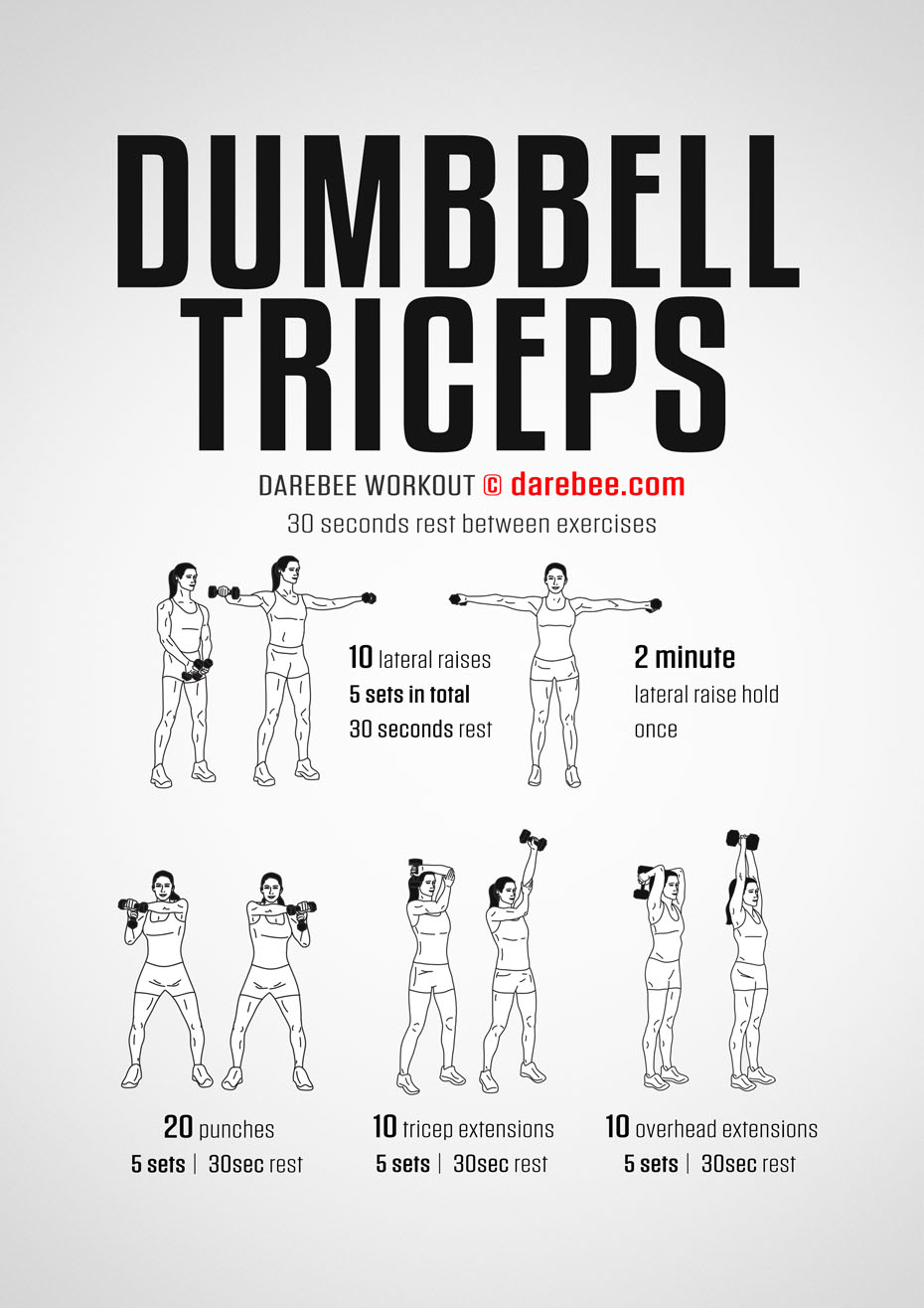
Credit: darebee.com
