

Leg/Glute Workout at Home: Sculpt Stronger Legs Fast
Leg/glute Workout At Home
Building strong legs and glutes at home is not only possible—it’s incredibly effective when you know the right moves and strategies. Many people believe you need heavy gym equipment to get real results. The truth is, your own body weight, everyday items, and a focused plan can create serious change. This article will guide you through everything you need to know to sculpt and strengthen your lower body at home, whether you’re a complete beginner or looking to push past plateaus.
If you want toned, powerful legs or a firmer, rounder backside, you’re in the right place. You’ll discover exercises, routines, and tips that fit your lifestyle, with clear instructions and practical advice. You’ll also see how to avoid common mistakes and maximize your results, even in a small space.
Why Focus On Legs And Glutes?
Your legs and glutes are not just for looks. They’re the foundation of your body, responsible for movement, stability, and power. Strong lower body muscles help you run, jump, climb stairs, and carry heavy objects. They protect your knees and back from injury and support better posture.
The glutes—especially the gluteus maximus, medius, and minimus—are the largest muscles in the human body. They play a major role in balance, athletic performance, and even how fast you walk. Neglecting these muscles can lead to pain, poor performance, and muscle imbalance.
A well-designed home leg/glute workout can:
- Increase overall strength and stamina
- Improve your athletic performance
- Boost metabolism and help with fat loss
- Enhance balance and stability
- Improve the shape and tone of your legs and backside
Home Workout Advantages
Why train at home instead of the gym? For many, home workouts offer unique benefits:
- Convenience: No commute or waiting for equipment.
- Flexibility: Work out anytime—morning, lunch, or night.
- Cost-effective: Save money on gym fees and travel.
- Privacy: Exercise in your own space, at your own pace.
- Consistency: Fewer excuses, easier to stay on track.
Many people overlook how effective home training can be. With the right exercises and consistency, you can build muscle, increase strength, and see visible changes—often faster than you think.

Credit: nilds.gov.ng
Understanding Leg And Glute Anatomy
Before jumping into exercises, it’s helpful to understand the muscles you’re targeting. This knowledge helps you train smarter, not just harder.
Main Leg And Glute Muscles
- Quadriceps: Front thigh muscles; extend the knee.
- Hamstrings: Back of the thigh; bend the knee and extend the hip.
- Gluteus Maximus: Main buttock muscle; hip extension and power.
- Gluteus Medius/Minimus: Sides of the hips; stabilize and abduct the leg.
- Adductors: Inner thigh; bring legs together.
- Calves: Lower leg; lift the heel (important for balance).
Understanding these will help you choose the best moves and avoid muscle imbalance. For example, many people overwork their quads and neglect their hamstrings or glutes, leading to knee pain.
Essential Leg And Glute Exercises (no Equipment Needed)
Let’s focus on bodyweight exercises first. You need nothing but your own body and some floor space. These moves are effective for beginners and can be made harder for advanced users.
- Squats
- Targets: Quads, glutes, hamstrings, core
- Tip: Keep your chest up, weight in your heels, and push your knees out.
- Variation: Try narrow squats for inner thighs, sumo squats for glutes.
- Lunges
- Targets: Quads, glutes, hamstrings, balance
- Tip: Step forward or backward, lower until your back knee nearly touches the floor, and keep your front knee above your ankle.
- Variation: Reverse lunges are easier on the knees.
- Glute Bridges
- Targets: Glutes, hamstrings, lower back
- Tip: Lie on your back, feet flat, push hips up while squeezing your glutes. Pause at the top.
- Step-Ups
- Targets: Quads, glutes, calves
- Tip: Use a sturdy chair or stairs; step up and drive through the heel.
- Bulgarian Split Squats
- Targets: Glutes, quads, core
- Tip: Place one foot behind you on a chair or sofa. Lower down with control.
- Single-Leg Deadlifts
- Targets: Hamstrings, glutes, core stability
- Tip: Balance on one foot, hinge at the hips, reach forward, and keep your back flat.
- Side-Lying Leg Raises
- Targets: Gluteus medius/minimus (side butt), hip stability
- Tip: Lie on your side, lift your top leg up, keep toes pointing forward.
- Calf Raises
- Targets: Calves, foot/ankle strength
- Tip: Stand tall, push onto your tiptoes, lower with control.
- Wall Sit
- Targets: Quads, glutes, mental toughness
- Tip: Slide your back down a wall, knees at 90 degrees, hold as long as possible.
- Donkey Kicks
- Targets: Glute maximus, core
- Tip: On hands and knees, kick one heel upward while squeezing your glutes.
These ten exercises cover all major lower body muscles. Mix and match them to keep your workouts fresh and challenging.

Credit: amkglobalgroup.com
Adding Resistance: Making Home Workouts Harder
Bodyweight training can get you far, but adding resistance helps you keep progressing. You don’t need fancy gym equipment—simple household items work well.
Diy Resistance Ideas
- Backpack: Fill with books or water bottles; wear during squats or lunges.
- Laundry Detergent Bottles: Use as weights for deadlifts or step-ups.
- Water Jugs: Hold in each hand for added load.
- Resistance Bands: Affordable and portable; add to squats, bridges, side steps.
How To Progress
As you get stronger, increase the difficulty by:
- Adding weight
- Doing more reps or sets
- Slowing down the tempo (e.g., 3 seconds down, 1 second up)
- Pausing at the hardest part (e.g., hold at the bottom of a squat)
- Trying single-leg variations
Tracking your progress is key. Keep a notebook or use a phone app to record reps, sets, and weight. Aim to improve a little each week.
Sample Home Leg/glute Workout Routines
Below are two routines: one for beginners, one for advanced. These are full-body routines but focus on the lower body.
Beginner Routine
- Squats: 3 sets x 12 reps
- Glute Bridges: 3 x 15 reps
- Reverse Lunges: 3 x 10 reps each leg
- Side-Lying Leg Raises: 2 x 15 reps each side
- Calf Raises: 3 x 20 reps
Rest 60 seconds between sets. Perform this routine 2-3 times per week.
Advanced Routine
- Bulgarian Split Squats: 4 x 10 reps each leg (add weight if possible)
- Single-Leg Deadlifts: 3 x 12 reps each leg
- Step-Ups (with load): 3 x 15 reps each leg
- Donkey Kicks: 3 x 20 reps each leg
- Wall Sit: 3 rounds, hold as long as possible
Rest 45-60 seconds between sets. Do this 2-4 times per week. Add weight or resistance bands as you improve.
Weekly Planning
A good rule: train legs/glutes 2-3 times a week, with at least one rest day between sessions. This gives muscles time to recover and grow.
Key Tips For Success
1. Focus On Form
Good technique matters more than heavy weights. Poor form leads to injury and less muscle growth. Watch yourself in a mirror or record your form to check alignment.
2. Mind-muscle Connection
Think about the muscle you’re working. Squeeze your glutes at the top of a bridge. Feel your quads and hamstrings as you squat. This increases results.
3. Warm Up Before You Start
Never skip your warm-up. This preps your joints and muscles and helps prevent injury.
- Try 5 minutes of brisk walking, marching in place, or jumping jacks.
- Add dynamic stretches: Leg swings, hip circles, ankle rotations.
4. Cool Down And Stretch
Spend 5–10 minutes after each workout stretching your legs and glutes. This helps flexibility, reduces soreness, and speeds up recovery.
5. Rest And Recovery
Muscles grow when you rest, not just when you train. Aim for 7–9 hours of sleep and avoid training the same muscles hard two days in a row.
6. Nutrition Matters
For muscle growth and recovery, eat enough protein (chicken, eggs, beans, tofu, fish), complex carbs (brown rice, oats, whole grains), and healthy fats (nuts, olive oil, avocado). Drink plenty of water.
7. Progress, Not Perfection
Don’t expect instant results. Focus on small improvements each week. Celebrate new milestones, whether it’s an extra rep, heavier backpack, or better balance.
Common Mistakes And How To Fix Them
Many home exercisers make the same errors, slowing their progress or risking injury. Here’s how to avoid them:
1. Poor Squat Depth
Stopping too high in a squat works your quads but misses glute activation. Lower until your thighs are at least parallel to the floor—unless you have knee pain.
2. Not Using Enough Resistance
If you can do 25 reps easily, it’s time to add weight or try harder variations. Your muscles need challenge to grow.
3. Neglecting Hamstrings And Glutes
Too many focus only on squats and lunges. Add bridges, hip thrusts, and single-leg deadlifts for full development.
4. Rushing Through Reps
Fast, sloppy reps reduce tension on muscles. Slow down, control each movement, and pause at the hardest point.
5. Skipping Warm-ups
Cold muscles are stiff and more likely to get injured. Take 5 minutes to warm up every time.
6. Not Tracking Progress
Without a plan, you’ll repeat the same workout for months with little change. Write down your routine, reps, and any added weight.
7. Doing Only One Type Of Exercise
Variety helps you avoid boredom and trains all muscle fibers. Change your routine every 4–6 weeks.
Comparison: Bodyweight Vs. Weighted Home Leg/glute Workouts
Here’s a clear look at the benefits and drawbacks of each method:
| Aspect | Bodyweight Only | Weighted (Household Items/Bands) |
|---|---|---|
| Cost | Free | Low (if using home items) |
| Progression | Limited after a point | Easier to increase load |
| Injury Risk | Lower | Moderate (if form is poor) |
| Muscle Growth | Slows after initial gains | Continues with added resistance |
| Convenience | Very high | High |
Most people start with bodyweight and add resistance as they get stronger for best results.
Best Household Items For Home Workouts
You don’t need gym gear to build muscle. Everyday objects can do the trick.
| Household Item | Exercise Example | Benefit |
|---|---|---|
| Backpack (loaded) | Weighted squats, lunges | Easy to adjust weight |
| Chair/Stool | Step-ups, Bulgarian split squats | Stable surface for single-leg work |
| Water jugs | Deadlifts, calf raises | Good grip, easy to fill |
| Books | Weighted hip thrusts, squats | Stack for desired load |
| Laundry detergent bottles | Single-leg deadlifts, step-ups | Handles for easy holding |
Tip: Make sure any item you use is secure and won’t break during the exercise.
Home Workout Myths Debunked
Many people give up on home workouts because they believe common myths. Here’s the truth:
Myth 1: “you Can’t Build Muscle At Home.”
Fact: You can build serious muscle with bodyweight and household items, especially if you focus on progressive overload and good nutrition.
Myth 2: “you Need To Train Every Day.”
Fact: Muscles grow with rest. Two or three intense sessions per week are enough if you’re consistent.
Myth 3: “high Reps Are All You Need For Tone.”
Fact: High reps help endurance, but muscle growth needs challenge. Add resistance or harder variations, even at home.
Myth 4: “home Workouts Are Boring.”
Fact: With variety, progression, and creativity, home routines can be fun and motivating.
Myth 5: “only Squats Matter For Glutes.”
Fact: Many exercises target the glutes. Hip thrusts, bridges, lunges, and single-leg work are just as effective—sometimes more.
Optimizing Your Space And Schedule
You don’t need a large area or special room to get a great workout. Here’s how to make the most of your home environment:
- Clear a 6x6 foot space—enough for most moves.
- Use a yoga mat for comfort.
- Store your “equipment” in a basket for easy access.
- Schedule your workout at a consistent time to build a habit.
- If distractions are a problem, set a timer or use headphones with motivating music.
A little planning goes a long way. Many people find morning workouts help them stay consistent, but the best time is when you’ll actually do it.
Glute Activation: The Secret To Faster Results
One reason many people struggle to build glutes is poor muscle activation. If your glutes “sleep” during exercises, your quads or back take over. This is common for people who sit a lot during the day.
How To Activate Your Glutes
Before your main workout, do a short activation circuit:
- Glute bridges: 2 x 15 reps
- Donkey kicks: 2 x 15 reps each leg
- Clamshells: 2 x 15 reps each side (lie on your side, knees bent, open your top knee)
Squeeze hard at the top of each rep. You should feel your glutes “burning. ” This wakes them up and makes your main workout more effective.
How To Track Your Progress At Home
Measuring results keeps you motivated. Here are some ways to track:
- Photos: Take weekly photos in the same spot and lighting.
- Measurements: Use a tape to measure thighs, hips, and calves every 2–4 weeks.
- Strength: Write down reps, sets, and resistance for each workout.
- Endurance: Time your wall sit or count how many squats you can do in 1 minute.
Progress isn’t always visible in the mirror at first, but data shows you’re improving.
Adapting For Different Goals
For Muscle Growth (hypertrophy)
- Use moderate to heavy resistance (backpack, water jugs, bands).
- 3–4 sets of 8–15 reps per exercise.
- Slow, controlled movements.
- Focus on single-leg and hip thrust/bridge variations.
For Fat Loss And Tone
- Combine strength moves with short cardio bursts (jump squats, mountain climbers).
- Shorter rest between sets.
- Higher reps (15–20), but still use resistance if possible.
For Strength
- Use the heaviest safe load you can handle for 5–8 reps.
- More rest (90–120 seconds) between sets.
- Focus on squats, split squats, and step-ups with weight.
Injury Prevention And Mobility
Home exercisers sometimes forget about joint health. Mobility and stretching keep you moving well and reduce pain.
- Include hip flexor stretches, hamstring stretches, and ankle mobility drills.
- Use a foam roller or tennis ball to massage tight muscles.
- If you feel pain (not just muscle fatigue), stop and check your form.
Example Leg/glute Workout (intermediate Level)
Try this balanced routine twice a week:
- Warm-up: 5 minutes (jumping jacks, bodyweight squats, hip circles)
- Bulgarian Split Squats: 3 x 12 reps each leg
- Single-Leg Glute Bridges: 3 x 12 reps each leg
- Step-Ups (weighted): 3 x 15 reps each leg
- Side-Lying Leg Raises: 2 x 20 reps each side
- Calf Raises (on a step): 3 x 20 reps
- Cool-down: Stretch hamstrings, quads, glutes (hold each 30 seconds)
Rest 60 seconds between sets.
When To Increase Intensity
A simple test: If you can do 15+ reps with perfect form, it’s time to add weight, do a harder variation, or slow down the tempo.
For example, progress from regular squats to:
- Squats with a loaded backpack
- Bulgarian split squats
- One-leg squats (pistol squats, advanced)
- Adding a pause at the bottom
Always prioritize control and safety over speed.
Importance Of Consistency
Results come from regular effort, not one “perfect” workout. Even 20–30 minutes, two or three times a week, adds up over months. Set reminders, find a workout buddy (even online), or reward yourself for sticking with your plan.
Example: 4-week Home Leg/glute Growth Plan
Here’s a sample plan you can follow to see progress:
Week 1–2 (beginner/intermediate)
- Day 1: Squats, Glute Bridges, Reverse Lunges, Calf Raises
- Day 2: Rest or upper body/core
- Day 3: Step-Ups, Side-Lying Leg Raises, Wall Sit, Donkey Kicks
- Day 4: Rest or active recovery (walking, yoga)
- Day 5: Repeat Day 1
- Weekend: Rest
Week 3–4 (advanced Progression)
- Day 1: Bulgarian Split Squats, Single-Leg Deadlifts, Weighted Squats, Calf Raises
- Day 2: Rest or core/cardio
- Day 3: Step-Ups (weighted), Hip Thrusts (use couch), Side-Lying Leg Raises, Donkey Kicks
- Day 4: Rest or active recovery
- Day 5: Repeat Day 1
- Weekend: Rest
Increase weight or reps each week if possible.
Real-life Example: Home Transformation
Anna, a busy professional, trained at home with only a yoga mat, a backpack, and a chair. In 3 months, she increased her squat reps from 10 to 30, improved her balance, and lost 2 inches from her hips. Her secret?
Consistency, tracking, and using household items for resistance.
Many others see similar success—even without a gym.
Advanced Glute-focused Moves (for Experienced Home Exercisers)
Once you’ve mastered the basics, try these to keep progressing:
- Frog Pumps: Lie on back, soles of feet together, push hips up.
- Single-Leg Hip Thrusts: Shoulders on couch, drive one heel up.
- Curtsy Lunges: Step one leg behind and across, bend both knees.
- Monster Walks (with bands): Step side-to-side with resistance band around knees.
- Elevated Glute Bridge: Feet on a chair or sofa, lift hips higher.
These moves hit your glutes from different angles for full development.
How To Stay Motivated At Home
Staying motivated without a gym can be tough. Here are practical ideas:
- Set clear goals (“I want to do 20 split squats,” or “I’ll train 3x a week”)
- Track your progress (photos, notes, measurements)
- Celebrate small wins (new PRs, better form)
- Join online fitness groups or challenges
- Change your playlist or workout location for variety
Remember, motivation comes and goes—build habits so you keep going even on low-energy days.
When To Seek Professional Help
If you have chronic pain, injuries, or want a personalized plan, consider a session with a certified trainer—many offer virtual coaching. A pro can check your form, adjust your routine, and keep you safe.
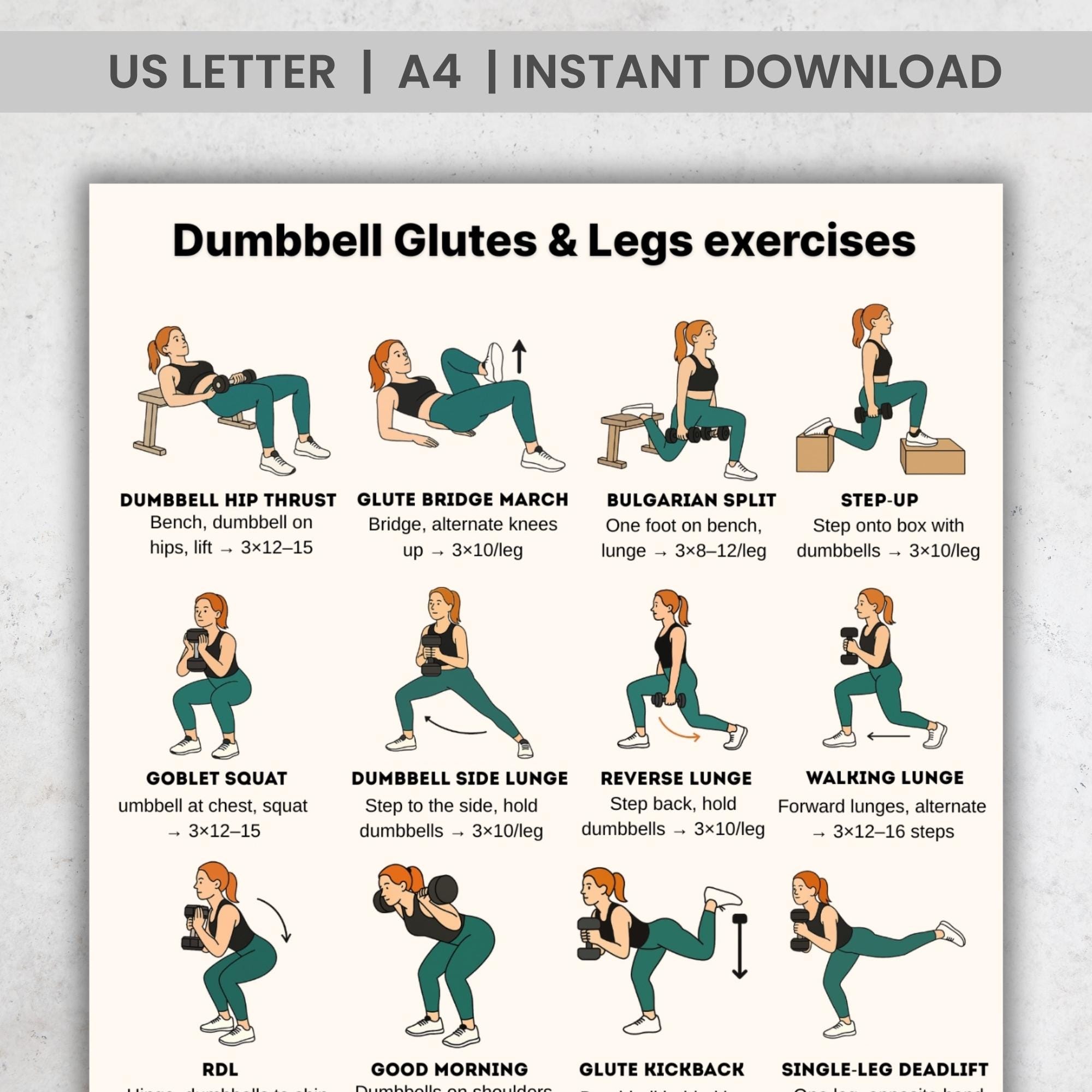
Credit: www.etsy.com
Additional Resources
For more info on exercise form and routines, check the American Council on Exercise exercise library. It offers detailed videos and explanations for many home-friendly moves.
Frequently Asked Questions
How Often Should I Train Legs And Glutes At Home?
Most people see great results with 2–3 sessions per week. Allow at least one rest day between hard workouts for muscle recovery and growth.
Do I Need Any Special Equipment To Get Results?
No. Bodyweight exercises work well, especially for beginners. As you progress, using items like a loaded backpack or resistance bands helps increase difficulty and speed up results.
How Long Will It Take To See Changes In My Legs And Glutes?
You may feel stronger within 2–3 weeks. Visible changes—like more muscle tone or less fat—usually appear after 6–8 weeks, depending on your routine, diet, and consistency.
What If I Have Knee Pain During Squats Or Lunges?
Try reverse lunges (step back instead of forward), focus on glute bridges, and check your form. Don’t let your knees go far beyond your toes. If pain continues, consult a healthcare provider.
Can I Combine Leg/glute Workouts With Cardio?
Yes. Combining strength and cardio can improve both muscle growth and fat loss. You can alternate days or add short cardio bursts (like jumping jacks or high knees) between strength sets.
Building strong, powerful legs and glutes at home is absolutely possible. With the right exercises, progression, and consistency, you’ll not only see changes in the mirror but feel the benefits every day—walking, running, and moving with confidence. Start where you are, use what you have, and enjoy the journey to a stronger, healthier you.
