

Isolate Glute Workout: Sculpt Stronger, Rounder Glutes Fast
Isolate Glute Workout: Build Stronger, Rounder Glutes With Targeted Training
Looking for a way to improve your glutes without growing your thighs? Many people want toned, lifted glutes but feel frustrated when squats and lunges mostly work their legs. The glute muscles—gluteus maximus, gluteus medius, and gluteus minimus—are important for power, posture, and a balanced body shape. Isolating these muscles helps you focus on building a round, firm backside without overdeveloping your quads or hamstrings. This article will guide you through everything you need to know about isolate glute workouts, including the science, effective exercises, mistakes to avoid, and how to build your own routine for real results.
Understanding The Glute Muscles
The glutes are not just one muscle. They are a group of three muscles with different roles:
- Gluteus Maximus: The largest muscle, responsible for hip extension, outward rotation, and giving your glutes their shape.
- Gluteus Medius: Located on the side of your hip, it helps with hip abduction (moving your leg to the side) and stabilizing your pelvis.
- Gluteus Minimus: The smallest glute muscle, working with the medius to help stabilize and move your hip.
When you perform an isolate glute workout, the goal is to activate these muscles as much as possible, while keeping your thighs and lower back involvement to a minimum.
Why Focus On Isolating The Glutes?
You may wonder why not just do regular leg workouts. Here are some reasons why glute isolation is worth the effort:
- Better Muscle Activation: Compound moves like squats often activate quads and hamstrings more than glutes, especially for people with certain body types.
- Shape and Lift: Isolating glutes helps build that rounded, lifted look many want.
- Reduce Lower Back Pain: Strong glutes can improve posture and reduce stress on your lower back.
- Sports Performance: Strong glutes boost your power in running, jumping, and even daily movements.
- Injury Prevention: Balanced glutes protect your knees and hips.
The Science Of Muscle Isolation
Muscle isolation means focusing your effort on one muscle group at a time. For the glutes, this requires:
- Controlled movement
- Slow repetitions
- Proper mind-muscle connection
A study from the Journal of Strength and Conditioning Research found that exercises like hip thrusts and glute bridges activate the glutes much more than squats or deadlifts. This is because these moves put your hips in the best position for glute contraction.
Common Myths About Glute Isolation
Many people believe these myths before starting an isolate glute workout:
- Myth 1: Squats alone build perfect glutes. In reality, squats mostly hit the quads and only work the glutes fully when you go deep and use heavy weights.
- Myth 2: High reps with no weight shape glutes. You need enough resistance to challenge the muscle and cause growth.
- Myth 3: You can't isolate the glutes without machines. Bodyweight and band exercises can isolate the glutes very effectively.
Understanding these myths helps you avoid wasting time and effort.
Key Principles Of An Effective Isolate Glute Workout
Let’s break down what makes a glute isolation routine successful:
- Exercise Selection: Pick moves that target the glutes directly and minimize leg involvement.
- Proper Form: Focus on slow, controlled reps with a full squeeze at the top.
- Mind-Muscle Connection: Think about squeezing your glutes with each rep.
- Progressive Overload: Gradually increase resistance (bands, weights) or reps over time.
- Frequency: Train glutes 2-3 times per week for best results.
Top Isolate Glute Exercises
Not all glute exercises are created equal. Here are some of the most effective isolation moves, with tips for maximizing activation:
1. Glute Bridge
Lie on your back with knees bent, feet flat on the floor hip-width apart. Push through your heels to lift your hips toward the ceiling, squeezing your glutes at the top. Pause, then lower with control.
- Tip: Place a resistance band above your knees for extra tension.
- Common Mistake: Arching your back—keep your ribs down and core tight.
2. Hip Thrust
Sit on the floor with your upper back against a bench. Roll a barbell or place a weight across your hips. With feet flat, push through your heels to lift your hips until your body forms a straight line from shoulders to knees.
Squeeze your glutes, then lower back down.
- Tip: Pause and hold at the top for 2-3 seconds.
- Common Mistake: Pushing with your lower back or using momentum.
3. Donkey Kick
On all fours, keep your core tight and kick one leg up and back, driving your heel toward the ceiling. Lower back down without letting your knee touch the ground.
- Tip: Focus on the glute, not swinging the leg.
- Variation: Add ankle weights or bands for more resistance.
4. Fire Hydrant
Start on hands and knees. Keeping your knee bent, lift one leg out to the side (like a dog at a fire hydrant), then lower back down.
- Tip: Keep your hips square—don't twist your body.
- Variation: Use a resistance band around your thighs.
5. Cable Kickback
Attach an ankle strap to a low pulley. Stand facing the machine, hinge at the hips, and kick your leg back and up, squeezing your glute. Return slowly.
- Tip: Use light weight and focus on form.
- Common Mistake: Overarching your back.
6. Side-lying Hip Abduction
Lie on your side, legs straight. Lift your top leg up and back at a slight angle, then lower with control.
- Tip: Toes slightly down, heel up to target glute medius.
- Variation: Add a band or ankle weight.
7. Glute Focused Step-up
Use a low box or bench. Step up with one foot, driving through the heel and squeezing your glute at the top. Lower back down slowly.
- Tip: Lean forward slightly to target glutes more.
- Common Mistake: Pushing off with the lower leg.
8. Single-leg Glute Bridge
Similar to glute bridge, but with one leg extended straight. Push through the heel of your grounded foot and lift your hips.
- Tip: Keep hips level, don't twist.
- Variation: Place your foot on an elevated surface for more range.
9. Frog Pump
Lie on your back, bring feet together and knees out (butterfly position). Push through the edges of your feet to lift your hips and squeeze your glutes.
- Tip: Higher reps (20-30) work well for this exercise.
10. Banded Monster Walk
Stand with a resistance band around your thighs or ankles. Step sideways in a squat position, keeping tension on the band.
- Tip: Small steps, constant tension.
- Common Mistake: Letting knees cave in.
How To Structure Your Isolate Glute Workout
Building your own glute isolation routine can feel confusing. Here’s a simple structure that works for most people:
| Exercise | Sets | Reps | Rest (seconds) |
|---|---|---|---|
| Glute Bridge | 3 | 15-20 | 45-60 |
| Hip Thrust | 3 | 10-15 | 60-90 |
| Donkey Kick | 3 | 15 each | 30-45 |
| Fire Hydrant | 3 | 15 each | 30-45 |
| Frog Pump | 3 | 20-25 | 30-45 |
- Begin with a warm-up: Glute activation drills (like clamshells and banded side walks) for 5-10 minutes.
- Pick 4-6 exercises per session: Include a mix of hip thrust/bridge, abduction (side) moves, and kickbacks.
- Rest 1-2 days between sessions to allow for muscle recovery and growth.
- Change up your routine every 4-6 weeks to keep results coming.
How To Progress And See Results
To keep building your glutes, you need to progress over time:
- Increase resistance: Use heavier bands, add ankle weights, or use dumbbells/barbells.
- Add reps/sets: Slowly increase the number of reps or sets as you get stronger.
- Slow down: Make reps slower to increase time under tension.
- Mind-muscle connection: Keep focusing on squeezing glutes during each rep.
Tracking your workouts in a notebook or app helps you see progress and stay motivated.
Home Vs. Gym: Where To Train?
You don’t need a gym membership to get great results. Here’s a quick comparison:
| Home | Gym |
|---|---|
| Bodyweight, bands, small weights | Machines, cables, heavy weights |
| Convenient, no commute | More exercise variety |
| Lower cost | Access to trainers |
Many people start at home and add equipment as they get stronger. A set of resistance bands and a small step or bench is enough for most glute isolation routines.
Equipment For Isolate Glute Workouts
You don’t need fancy machines, but a few simple tools can help:
- Resistance bands: Great for abduction, kickbacks, and bridges.
- Ankle weights: Add intensity to donkey kicks and side-lying lifts.
- Dumbbells or kettlebells: Add weight to hip thrusts, step-ups, or bridges.
- Bench or sturdy chair: For hip thrusts, step-ups, and elevated bridges.
- Barbell (optional): For heavier hip thrusts.
If you train at a gym, try the glute drive machine or cable machine for more options.
Sample 4-week Isolate Glute Workout Plan
To help you get started, here’s a simple 4-week routine. Do it 2-3 times per week, with at least one rest day between sessions.
Week 1-2
- Warm-up: 5 minutes of banded side walks and glute bridges
- Glute Bridge: 3 sets of 15 reps
- Donkey Kick: 3 sets of 15 reps per leg
- Fire Hydrant: 3 sets of 15 reps per leg
- Frog Pump: 3 sets of 20 reps
Week 3-4
- Warm-up: 5 minutes of clamshells and banded monster walks
- Hip Thrust: 3 sets of 12 reps (add weight if possible)
- Single-Leg Glute Bridge: 3 sets of 12 reps per leg
- Banded Monster Walk: 3 sets of 20 steps
- Side-Lying Hip Abduction: 3 sets of 15 reps per leg
Cool down with gentle stretching for hips and glutes after each session.
Tips To Maximize Glute Isolation
- Drive through your heels: This shifts the work to your glutes instead of your quads.
- Tilt your pelvis slightly: Tuck your tailbone under to help your glutes contract harder.
- Go slow: Faster reps use momentum and reduce muscle activation.
- Squeeze at the top: Hold the contraction for 1-2 seconds for better results.
- Film your form: Watching yourself helps fix mistakes and ensures you’re working the right muscles.
Common Mistakes And How To Fix Them
1. Using Too Much Weight
Too much weight can shift the work to your lower back or legs. Start lighter and focus on form before going heavier.
2. Not Feeling The Glutes
If you mostly feel your thighs or hamstrings, adjust your form. Try moving your feet further from your body (for bridges/thrusts) or using bands to activate the side glutes more.
3. Poor Range Of Motion
Half reps won’t fully activate the glutes. Lower all the way down and squeeze all the way up.
4. Ignoring The Mind-muscle Connection
If you don’t focus on the muscle you’re working, you won’t get the best results. Slow down and think about the glutes with each rep.
5. Not Warming Up
A good warm-up activates the glutes and helps you get more from each exercise. Skipping it can reduce your results and increase injury risk.
Nutrition For Glute Growth
Training alone won’t build glutes if your nutrition doesn’t support muscle growth. Here’s what matters most:
- Protein intake: Aim for at least 0.7-1 gram of protein per pound of bodyweight daily to help your muscles repair and grow.
- Balanced meals: Include healthy carbs and fats for energy and recovery.
- Stay hydrated: Muscles need water to function and grow.
- Consistent eating: Skipping meals slows progress.
A sample meal for glute growth could be grilled chicken, sweet potato, and avocado salad.
Recovery: The Secret To Glute Growth
Muscles grow when you rest, not just when you train. Here’s how to recover smarter:
- Sleep 7-9 hours a night: Poor sleep slows muscle growth.
- Rest days: Take at least one full rest day between glute workouts.
- Stretch and foam roll: Keeps your glutes flexible and reduces soreness.
- Listen to your body: Soreness is normal, but sharp pain means rest.
How Long To See Results?
Most people see some change in glute shape and strength in 4-8 weeks, with bigger changes after 3-6 months of consistent training and nutrition. Genetics do play a role in glute shape, but nearly everyone can improve with the right approach.
Training For Different Goals
For Size And Shape
- Use heavier weights or bands
- Focus on hip thrusts, bridges, and abductions
- Lower reps (8-15) and more sets (4-5)
For Tone And Endurance
- Use lighter resistance, higher reps (15-25)
- Add short rest periods for a burn
- More focus on bodyweight and band work
For Athletes
- Include explosive moves like jump squats or single-leg box jumps
- Mix isolation with compound moves for power
Real-life Examples
Many people have transformed their glutes using isolation workouts:
- Jessica struggled with flat glutes despite years of squats. After switching to hip thrusts, bridges, and focused band work, she saw her glutes lift and round out in three months.
- David had back pain from running. He added glute bridges and monster walks twice a week. After six weeks, his pain dropped and his running improved.
What sets these people apart is focus on form, progression, and consistency—not just doing random glute exercises.
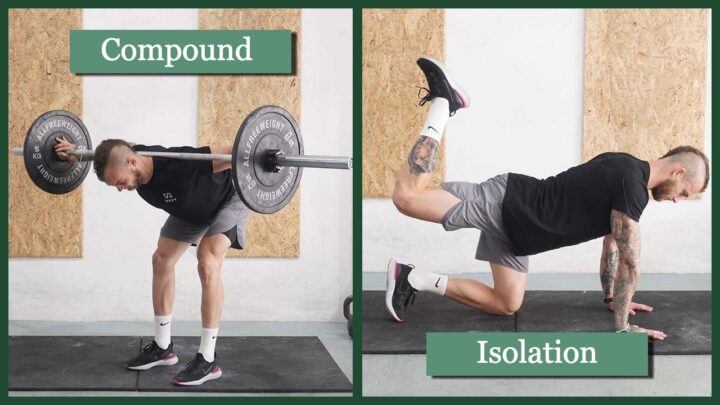
Credit: www.hevyapp.com
Glute Isolation: At A Glance
Here’s a quick comparison of the most popular glute isolation exercises:
| Exercise | Main Glute Area | Equipment Needed | Difficulty |
|---|---|---|---|
| Hip Thrust | Maximus | Bench, weight (optional) | Medium |
| Glute Bridge | Maximus | Bodyweight | Easy |
| Donkey Kick | Maximus, medius | Bodyweight/band | Easy |
| Fire Hydrant | Medius, minimus | Bodyweight/band | Easy |
| Side-Lying Hip Abduction | Medius | Bodyweight/band | Easy |
| Banded Monster Walk | Medius | Band | Medium |
Non-obvious Insights For Better Results
Activate Before You Train
Many beginners don’t realize the importance of glute activation drills before the main workout. These simple warm-up moves (like clamshells or banded walks) “wake up” your glutes, making your main exercises much more effective.
Watch Your Pelvic Position
A small posterior pelvic tilt (tucking your tailbone under) during bridges or thrusts increases glute activation. Many people arch their back, which shifts effort away from the glutes. Practicing this tilt can make a big difference.

Credit: fitbod.me
When To Add Compound Exercises
While isolation is key, after 2-3 months of consistent work, you can add compound moves to keep challenging your glutes:
- Romanian deadlift: Targets glutes and hamstrings together.
- Bulgarian split squat: Puts more focus on the glute if you lean forward.
- Step-up with a forward lean: Isolates glutes more than a regular step-up.
Always keep 70-80% of your session isolation-focused for best glute growth.
How To Avoid Plateaus
If your glutes stop growing, try these:
- Change your exercises every 4-6 weeks.
- Increase resistance or use slower reps.
- Try unilateral (one-sided) moves to fix muscle imbalances.
- Track your food to ensure enough protein and calories.
Motivation And Consistency
Glute growth takes time. Take photos and measurements every 4 weeks to see progress. Celebrate small wins, like stronger lifts or better muscle tone. If you miss a workout, don’t give up—consistency is what matters most.
Frequently Asked Questions
How Many Times Per Week Should I Do An Isolate Glute Workout?
2-3 sessions per week is ideal for most people. This gives your muscles time to recover and grow between workouts. More is not always better—quality and consistency matter most.
Do Glute Isolation Workouts Make My Thighs Bigger?
Not if you focus on true isolation exercises. Moves like hip thrusts, bridges, and abductions work your glutes with minimal quad or hamstring activation, so your thighs should not grow much.
Can I Do These Workouts At Home Without Equipment?
Yes! Many glute isolation exercises can be done with bodyweight or resistance bands. Hip thrusts, glute bridges, donkey kicks, and fire hydrants are all effective at home.
How Long Before I See Results From Isolate Glute Workouts?
Most people notice changes in muscle tone and shape after 4-8 weeks of consistent training and proper nutrition. Bigger changes happen after 3-6 months. Genetics also play a role.
Where Can I Learn More About Glute Anatomy And Exercise Science?
You can find in-depth information on glute anatomy and training from trusted sources like the Gluteus Maximus Wikipedia page.
Focusing on isolate glute workouts will help you build stronger, rounder glutes and improve your overall athleticism. Stay consistent, focus on form, and enjoy the process—you’ll see results with time and effort.

Credit: www.youtube.com
