

How to Workout Tricep With Dumbbells: Build Strong Arms Fast
Working out your triceps with dumbbells can bring dramatic changes to your arms, boosting both strength and definition. Many people focus on biceps, but the triceps make up nearly two-thirds of your upper arm. When your triceps are strong, your arms look fuller and you can push harder in other exercises. Whether you are new to fitness or looking for smarter ways to train, this guide will help you master dumbbell tricep workouts. You’ll find clear steps, practical tips, and some uncommon advice that most beginners miss. With the right approach, you can build strong, well-shaped triceps at home or in any gym.
Understanding The Triceps Muscle
The triceps brachii muscle sits at the back of your upper arm. It has three heads: long head, lateral head, and medial head. Each head helps to extend your elbow, and the long head also supports shoulder movement. When you use dumbbells, you can target each head by changing your arm position and grip.
Many people do not realize that to grow the whole tricep, you need to work all three heads. Some exercises focus on one part more than others, so mixing your routine is important. Also, strong triceps help with pushing movements like bench presses, push-ups, and even daily activities.
Why Dumbbells Are Effective For Triceps
Dumbbells are versatile and easy to control. They allow for a natural range of motion, helping you reduce joint stress compared to barbells or machines. Dumbbells also require your smaller muscles to work harder for balance, which can improve stability and prevent injury.
Another benefit is that you can use dumbbells anywhere. You do not need a fancy gym. Even with just one pair, you can create an effective routine.
Essential Dumbbell Tricep Exercises
To build strong triceps, focus on exercises that hit all three heads. Here are the most effective dumbbell moves for triceps. Each exercise is explained with steps, tips, and common mistakes.
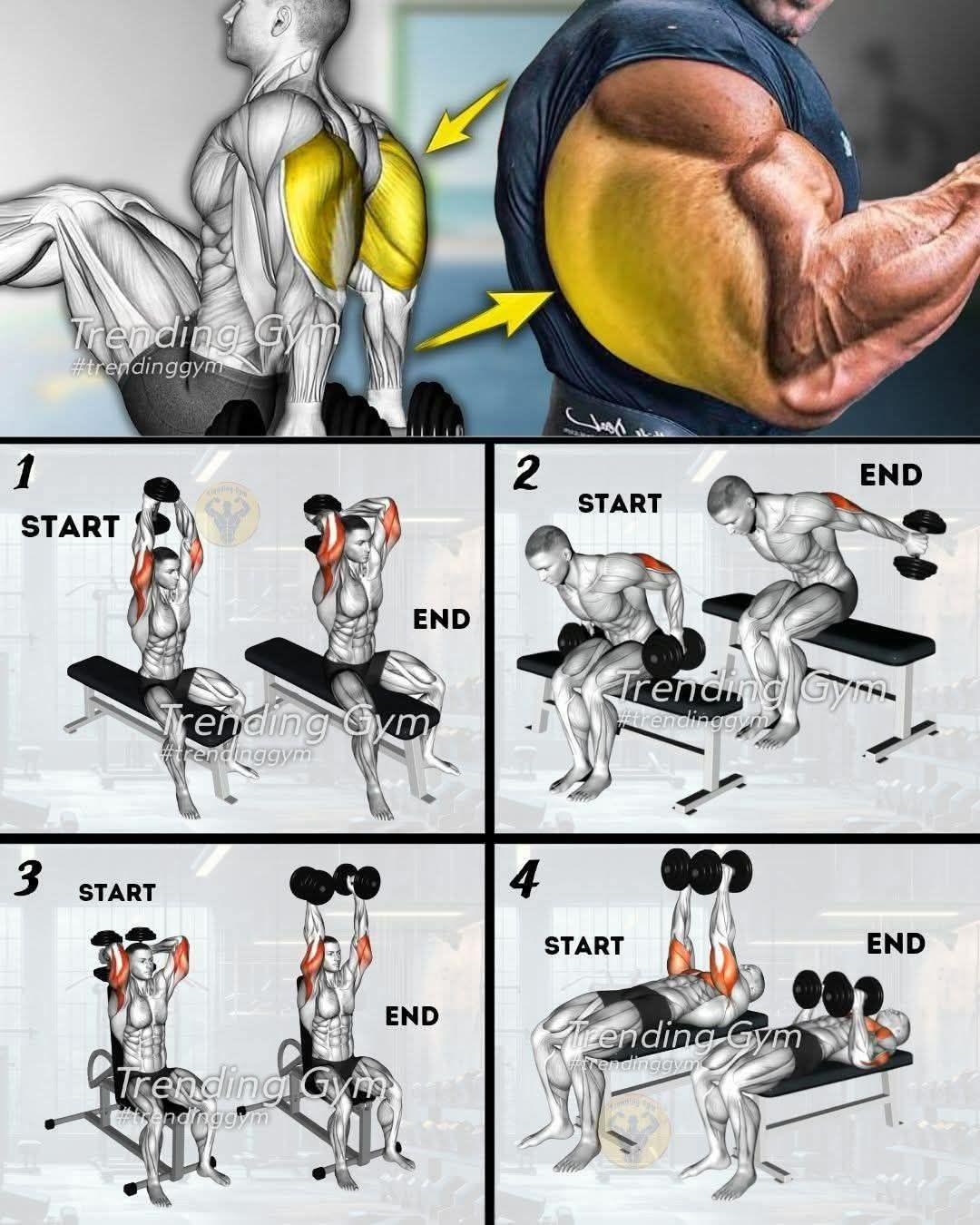
1. Dumbbell Tricep Kickback
This classic exercise targets the lateral head and also works the long head.
How to do it:
- Hold a dumbbell in your right hand.
- Bend forward at the hips, keeping your back flat.
- Your upper arm should be parallel to the floor, elbow bent.
- Extend your forearm straight back, keeping your upper arm still.
- Squeeze the triceps at the top, then return slowly.
- Repeat for the left arm.
Tips:
- Do not swing the dumbbell. Keep your arm steady.
- Start with light weight for correct form.
- Avoid arching your back.
Common mistake: Many beginners let their upper arm drop. Keep it parallel to the floor for best results.
2. Overhead Dumbbell Tricep Extension
This exercise is excellent for the long head. You can do it seated or standing.
How to do it:
- Hold one dumbbell with both hands, arms extended overhead.
- Lower the dumbbell behind your head, keeping elbows close.
- Extend your arms back to the top.
Tips:
- Do not let your elbows flare out.
- Move slowly to avoid hitting your head.
- Keep your core tight.
Common mistake: Using too much weight leads to poor form. Start lighter and increase as you get stronger.
3. Dumbbell Skullcrusher
This move focuses on the medial head and gives good stretch to the triceps.
How to do it:
- Lie on a bench or floor, holding two dumbbells.
- Extend arms straight up.
- Lower dumbbells toward your forehead, elbows bending.
- Press back up.
Tips:
- Keep elbows steady, do not let them move outward.
- Control the weight at all times.
- Use a spotter if using heavy weights.
Common mistake: Moving elbows too much. Keep them pointed forward.
4. Dumbbell Close-grip Press
This exercise uses both chest and triceps, but the narrow grip puts more load on the triceps.
How to do it:
- Lie on a bench, holding dumbbells together above your chest.
- Lower the dumbbells, keeping elbows close.
- Press up, focusing on triceps.
Tips:
- Keep dumbbells touching or very close.
- Focus on the push, not the chest.
Common mistake: Using wide grip reduces tricep work.
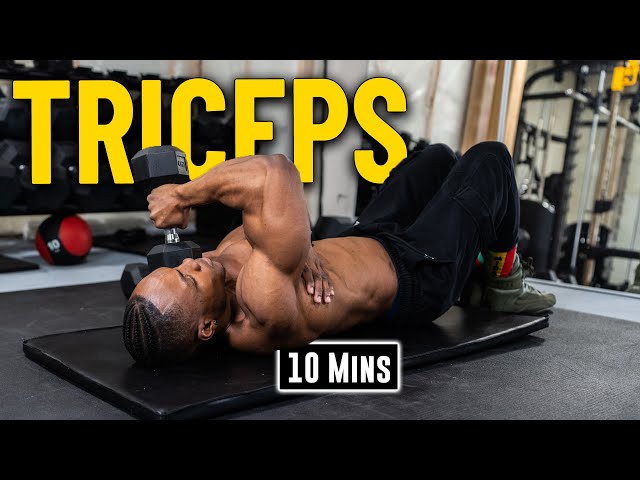
5. Dumbbell Floor Press
Similar to the close-grip press, but done on the floor. It is safer for beginners.
How to do it:
- Lie on the floor, holding dumbbells above your chest.
- Lower the weights until arms touch the floor, then press up.
Tips:
- Keep elbows close.
- Do not bounce weights off the floor.
Common mistake: Letting elbows flare out. Keep them tight.
6. Dumbbell Tate Press
This unique exercise targets all three heads and improves elbow stability.
How to do it:
- Lie on a bench, holding dumbbells with palms facing your feet.
- Lower dumbbells toward your chest, elbows wide.
- Press dumbbells back up, keeping elbows slightly bent.
Tips:
- Use moderate weight.
- Keep wrists straight.
Common mistake: Dropping elbows too low, which strains shoulders.
7. One-arm Overhead Extension
Great for isolating each tricep head.
How to do it:
- Hold a dumbbell in one hand, arm overhead.
- Lower the weight behind your head.
- Extend back up.
Tips:
- Move slowly.
- Keep elbow close to your head.
Common mistake: Moving elbow outward. Keep it straight.
8. Dumbbell Reverse Grip Press
This exercise uses a palms-up grip, changing how your triceps are activated.
How to do it:
- Lie on a bench, holding dumbbells with palms facing your chin.
- Press up, keeping elbows close.
Tips:
- Use lighter weights.
- Focus on control.
Common mistake: Using too heavy weights, which can hurt wrists.
Credit: www.youtube.com
How To Structure Your Dumbbell Tricep Workout
Choosing the right exercises is important, but how you organize your workout matters even more. Here’s how to build a smart routine.
Sample Tricep Workout Routine
- Dumbbell Tricep Kickback: 3 sets x 12 reps
- Overhead Dumbbell Extension: 3 sets x 10 reps
- Dumbbell Skullcrusher: 3 sets x 8 reps
- Dumbbell Close-Grip Press: 3 sets x 12 reps
Rest 60–90 seconds between sets. Start with two exercises if you are new. Mix and match different moves each week to keep your muscles growing.
Sets, Reps, And Weight Selection
- Beginners: Use lighter weights (5–15 lbs). Focus on form.
- Intermediate: Use medium weights (15–25 lbs). Add more reps.
- Advanced: Use heavier weights (25 lbs+). Lower reps for strength.
Aim for 8–15 reps per set for muscle growth. For strength, use 6–8 reps. Never sacrifice form for heavier weights.
Rest And Recovery
Triceps need time to recover. Train them 2–3 times per week, with at least 48 hours between sessions. Overtraining can slow growth and cause injury.
Warm-up And Cool-down
Always warm up your arms and shoulders before working out. Try arm circles, light cardio, or push-ups. After your workout, stretch your triceps to reduce soreness.
Dumbbell Tricep Exercise Comparison
Here’s a comparison of popular dumbbell tricep exercises based on difficulty, target area, and safety.
| Exercise | Difficulty | Target Head | Safety |
|---|---|---|---|
| Kickback | Easy | Lateral | High |
| Overhead Extension | Medium | Long | Medium |
| Skullcrusher | Medium | Medial | Medium |
| Close-Grip Press | Medium | All | High |
| Tate Press | Hard | All | Medium |

Credit: repfitness.com
Common Tricep Training Mistakes
Even experienced lifters make mistakes. Here are the most common errors and how to avoid them:
- Using too much weight: Form always matters more than heavy weights.
- Skipping warm-up: Cold muscles are easier to injure.
- Flaring elbows: This reduces tricep activation and can strain shoulders.
- Short range of motion: Not fully extending or bending elbows limits growth.
- Neglecting all three heads: Only doing one type of exercise leaves some tricep parts under-trained.
- Overtraining: Muscles need rest to grow. Train triceps 2–3 times per week.
- Poor grip: Wrong grip can cause wrist pain.
How Dumbbell Tricep Workouts Compare To Other Equipment
You might wonder whether dumbbells are as good as machines or barbells for triceps. Here’s a direct comparison.
| Equipment | Range of Motion | Stability Needed | Muscle Activation |
|---|---|---|---|
| Dumbbells | Wide | High | High |
| Barbell | Medium | Low | Medium |
| Machine | Limited | Very Low | Low |
Dumbbells require more balance, so smaller muscles work harder. This can help build better arm stability, but you must use proper form. Barbells are easier for heavier lifts but can cause joint stress. Machines are good for beginners but do not build as much stability.
How To Progress Your Dumbbell Tricep Workouts
Progress is not just about lifting heavier weights. Here are smart ways to improve:
- Increase reps or sets: Add one or two reps each week.
- Add weight: Move up in small steps (2–5 lbs).
- Change exercise order: Start with different moves to shock your muscles.
- Slow down: Try slower reps for more muscle tension.
- Use drop sets: Do a set with heavy weight, then immediately do another with lighter weight.
Tracking Your Progress
Keep a workout journal. Write down:
- Exercise name
- Sets and reps
- Weight used
- How you felt
This helps you see improvements and adjust your routine.
Tips For Better Tricep Results
Maximize your gains by following these practical tips:
- Focus on mind-muscle connection: Think about your triceps working with each rep.
- Use full range of motion: Stretch and squeeze the muscle.
- Mix up your routine: Change exercises every 4–6 weeks.
- Eat enough protein: Muscles need protein to grow. Aim for 0.7–1 gram per pound of body weight.
- Stay hydrated: Water helps muscles recover faster.
- Get enough sleep: Rest is where muscles rebuild.
Two Uncommon Insights
- Training triceps after chest: Your triceps are already warmed up after chest exercises, so you can push them harder.
- Using fat grip handles: Adding thick grips to dumbbells can activate more muscle and improve grip strength.
Dumbbell Tricep Workout For Home
You do not need a gym to build strong triceps. Here’s a simple routine with just a pair of dumbbells:
- One-Arm Overhead Extension: 3 sets x 12 reps each arm
- Dumbbell Kickback: 3 sets x 12 reps each arm
- Dumbbell Floor Press: 3 sets x 10 reps
Rest 60 seconds between sets. Increase weight every few weeks.
Safety Tips And Injury Prevention
Safety should always come first. Here’s how to protect your joints and muscles:
- Warm up thoroughly: Start with 5–10 minutes of light cardio and arm stretches.
- Use proper form: Watch videos or ask a trainer if unsure.
- Listen to your body: If you feel sharp pain, stop immediately.
- Check your equipment: Make sure dumbbells are secure and not damaged.
- Avoid locking elbows: Keep a slight bend at the top of each rep.
Dumbbell Selection Guide For Triceps
Choosing the right dumbbells makes a big difference. Here’s a quick guide:
| Dumbbell Type | Pros | Cons | Best Use |
|---|---|---|---|
| Fixed-weight | Easy to use, durable | Need many pairs for variety | Home, gyms |
| Adjustable | Space-saving, flexible | Can be bulky, less stable | Home, limited space |
| Hex dumbbells | Do not roll, strong grip | Can be rough on hands | All tricep moves |
If you are just starting, buy adjustable dumbbells so you can increase weight as you get stronger.
How To Avoid Plateaus
Plateaus are when your progress stops. To keep growing:
- Change exercises every month.
- Try different rep ranges (8–12, 15–20).
- Add new moves like Tate press or reverse grip press.
- Focus on nutrition and recovery.
Sometimes, resting for a week helps you break through a plateau.
Nutrition For Tricep Muscle Growth
Muscle growth depends on more than workouts. You need the right food.
- Protein: Chicken, fish, eggs, tofu, beans.
- Carbs: Rice, potatoes, fruit, whole grains.
- Healthy fats: Avocado, nuts, olive oil.
Aim to eat every 3–4 hours. Drink at least 8 cups of water daily.
Supplements
Some people use whey protein or creatine. These can help, but are not needed. Focus on food first. For more details, see WebMD.
Real-life Examples: Tricep Transformation Stories
Let’s look at two examples of how dumbbell tricep workouts can change your arms.
Example 1: Maria
Maria started with 5 lb dumbbells. She did kickbacks and overhead extensions three times a week. After two months, her arms looked more toned, and she could lift 10 lbs. She said her push-ups became easier, and she felt more confident.
Example 2: Ahmed
Ahmed was new to exercise. He used adjustable dumbbells and focused on skullcrushers and close-grip presses. He kept a workout journal and increased reps each week. After three months, he noticed more strength and less arm fat.
Credit: www.fondation-enovos.lu
Frequently Asked Questions
What Is The Best Dumbbell Exercise For Triceps?
The overhead dumbbell extension is a favorite because it targets the long head, which is often under-trained. Kickbacks and close-grip presses are also highly effective.
How Often Should I Train Triceps With Dumbbells?
Aim for 2–3 sessions per week. Leave at least 48 hours between workouts to let your muscles recover and grow.
Can I Build Big Triceps With Only Dumbbells?
Yes! Dumbbells can work all three tricep heads. You just need to use a mix of exercises, increase weight over time, and eat enough protein.
What Weight Should I Start With For Tricep Workouts?
Beginners should start with 5–10 lbs per dumbbell. Focus on perfect form first. Increase weight as you get stronger and more confident.
Why Do My Elbows Hurt During Tricep Exercises?
Elbow pain can come from poor form, using too much weight, or not warming up. Keep your elbows close to your body, do not lock them, and start each workout with a warm-up.
Your triceps are a key part of strong, well-shaped arms. With the right dumbbell exercises, smart routines, and healthy habits, you can build impressive triceps in any setting. Remember, progress takes time—stay patient, track your workouts, and enjoy the results.
