

Glute Workout Routine: Sculpt Stronger, Rounder Glutes Fast
A strong, shapely glute isn’t just about looks. The glutes are the largest muscles in your body. They help you walk, run, jump, and stay upright. Building them can improve your posture, athletic performance, and reduce back pain. Many people want a better backside, but few know how to train it right. Whether you’re a beginner or someone who wants to level up, a smart glute workout routine can change everything. In this guide, you'll learn simple, effective exercises, how to structure your routine, and tips to get results without wasting time. You'll also see common mistakes and how to avoid them, plus how glute training fits into overall fitness. If you’re ready for real progress, keep reading.
Why Glute Training Matters
Your gluteal muscles are made up of three main parts: gluteus maximus, gluteus medius, and gluteus minimus. These muscles help stabilize your hips, support your lower back, and make everyday movements easier.
Benefits of strong glutes:
- Better posture: Your glutes keep your pelvis in line, which prevents slouching.
- Athletic performance: Strong glutes power running, jumping, and quick movements.
- Reduced injury risk: Weak glutes can lead to knee, hip, or lower back pain.
- Everyday strength: Simple activities like climbing stairs, carrying groceries, or standing up from a chair use your glutes.
Many people focus on the front of their legs (like quads) and forget the back. This can lead to muscle imbalance, making you more likely to get hurt. Building your glutes can help balance your body and make your workouts safer and more effective.
Anatomy Of The Glutes
Understanding the glute muscles helps you target them better in your workouts.
| Muscle | Main Function | Common Exercise |
|---|---|---|
| Gluteus Maximus | Hip extension, outward rotation | Hip thrust, squats |
| Gluteus Medius | Hip abduction, stabilization | Side-lying leg raise, lateral band walk |
| Gluteus Minimus | Hip abduction, inward rotation | Clamshell, single-leg squat |
Each muscle plays a role in your movement and stability. Focusing on all three ensures a stronger, more balanced lower body.
Key Principles For Glute Growth
Before you jump into exercises, it’s important to know what really helps glute muscles grow.
- Progressive overload: To build muscle, you must gradually increase the weight or resistance over time.
- Muscle activation: Some exercises activate your glutes better than others. Picking the right ones is crucial.
- Training frequency: Training glutes 2–3 times per week gives better results than once per week.
- Variation: Your glutes respond well to different movements and angles. Mix up your routine for best results.
- Recovery: Muscles need time to grow. Rest and proper nutrition are just as important as workouts.
A common mistake is doing too many repetitions with light weights. Instead, focus on challenging your muscles and allowing enough rest.
Essential Glute Exercises
Let’s look at the most effective exercises for glute development. These target different parts of the glute muscles and can be done with or without equipment.
1. Hip Thrust
- How to do it: Sit on the ground with your upper back against a bench. Roll a barbell (or use bodyweight) over your hips. Press your feet into the ground, lift your hips until your body forms a straight line. Lower back down.
- Tip: Squeeze your glutes at the top for maximum activation.
- Why it works: Hip thrusts are proven to activate the gluteus maximus more than most other exercises.
2. Squats
- How to do it: Stand with feet shoulder-width apart. Lower your hips back and down, keeping your chest up. Press back to standing.
- Tip: Go low, but stop before your knees or back feel uncomfortable.
- Why it works: Squats target glutes, quads, and hamstrings. They build overall leg strength.
3. Romanian Deadlift
- How to do it: Stand holding a barbell or dumbbells. Keeping your knees slightly bent, hinge at the hips and lower the weight down. Return to standing.
- Tip: Keep your back straight and feel the stretch in your hamstrings and glutes.
- Why it works: This exercise targets the gluteus maximus and hamstrings, helping with hip extension.
4. Lateral Band Walk
- How to do it: Place a resistance band around your legs, just above your knees. Step sideways for 10–20 steps, keeping tension in the band.
- Tip: Stay low and keep your steps controlled.
- Why it works: This exercise targets the gluteus medius, which helps stabilize your hips.
5. Step-up
- How to do it: Stand in front of a bench or box. Step up with one foot, push through your heel, and bring your other foot up. Step back down.
- Tip: Use a height that challenges you but feels safe.
- Why it works: Step-ups build strength and balance in your glutes and legs.
6. Glute Bridge
- How to do it: Lie on your back with knees bent. Push through your heels and lift your hips up. Lower down slowly.
- Tip: Add weight on your hips for extra challenge.
- Why it works: Bridges activate your glutes and can be done anywhere.
7. Clamshell
- How to do it: Lie on your side with knees bent. Keep your feet together and open your top knee. Lower back down.
- Tip: Use a resistance band for more intensity.
- Why it works: Clamshells target gluteus medius and minimus, key for hip stability.
8. Single-leg Deadlift
- How to do it: Stand on one leg, hinge forward at the hip, and lower a weight toward the floor. Return to standing.
- Tip: Keep your back straight and move slowly.
- Why it works: This move challenges balance and targets all glute muscles.
9. Bulgarian Split Squat
- How to do it: Stand a few feet from a bench, place one foot behind you on the bench. Lower your hips down, keeping your front knee over your foot. Push back up.
- Tip: Keep your chest up and go slow.
- Why it works: This exercise is great for glute and leg strength, plus balance.
10. Fire Hydrant
- How to do it: On hands and knees, lift one knee out to the side, keeping it bent. Lower back down.
- Tip: Use a resistance band for extra challenge.
- Why it works: Fire hydrants target the side glutes, helping with hip stability.
Sample Glute Workout Routine
Here’s a practical weekly routine for building strong glutes. This plan is for all levels—adjust weights and reps as needed.
Day 1: Glute Strength
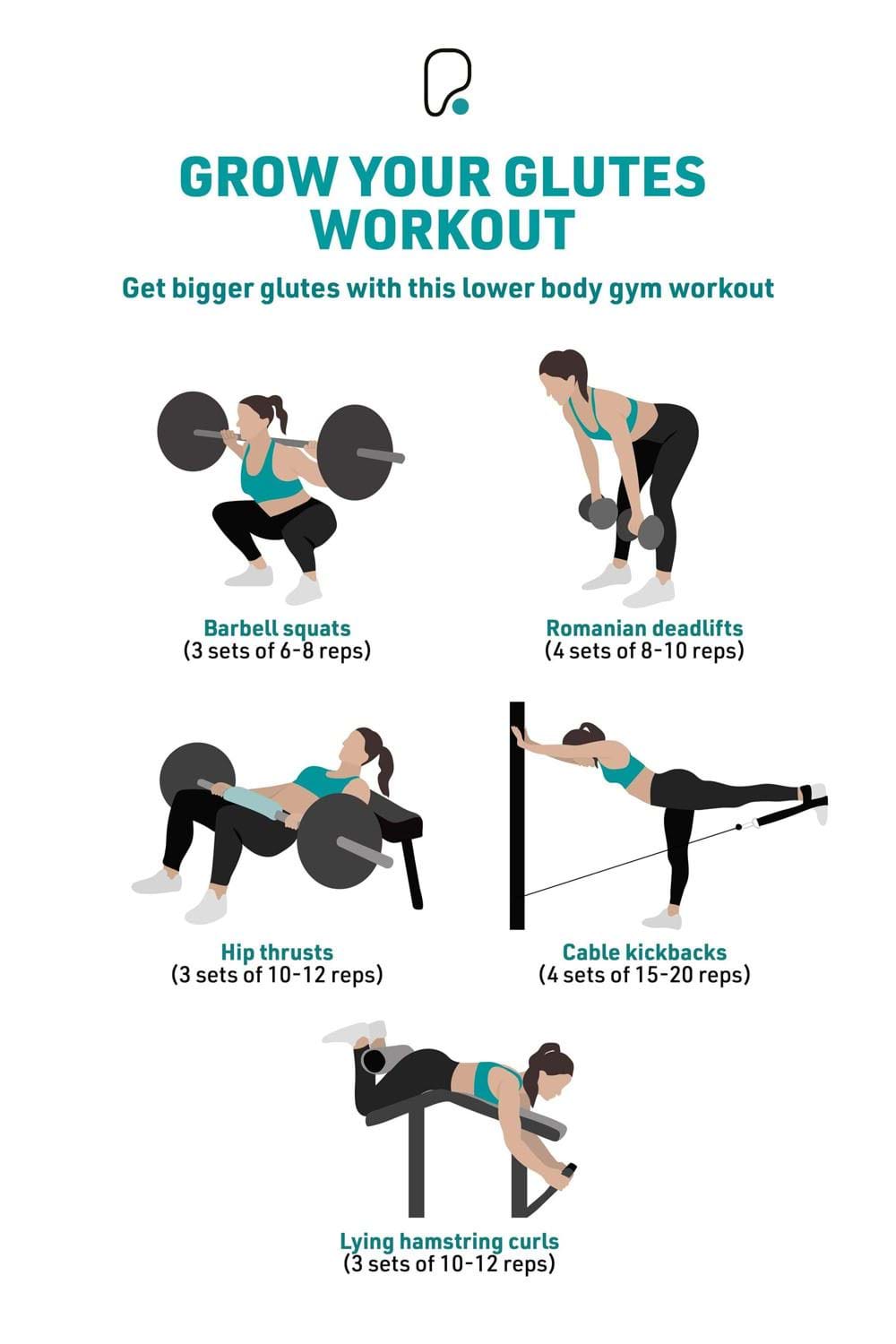
- Hip Thrust: 4 sets x 8–10 reps
- Romanian Deadlift: 4 sets x 10–12 reps
- Bulgarian Split Squat: 3 sets x 10 reps each leg
- Clamshell: 3 sets x 15 reps each side
Day 2: Glute Activation & Balance
- Glute Bridge: 4 sets x 12–15 reps
- Step-Up: 3 sets x 12 reps each leg
- Lateral Band Walk: 3 sets x 20 steps
- Fire Hydrant: 3 sets x 15 reps each side
Day 3: Full Lower Body
- Squat: 4 sets x 8–10 reps
- Single-Leg Deadlift: 3 sets x 10 reps each leg
- Hip Thrust: 3 sets x 10 reps
- Clamshell: 2 sets x 20 reps
Rest days: Take at least one full rest day between workout days.
Warm-up: Start each session with 5–10 minutes of light cardio and dynamic stretching.
Cool-down: End with 5 minutes of stretching for your hips, hamstrings, and lower back.
Choosing Equipment For Glute Workouts
You can train glutes with bodyweight, but adding equipment helps you progress faster. Here’s a comparison of common equipment for glute workouts.
| Equipment | Benefits | Best For | Limitations |
|---|---|---|---|
| Resistance Bands | Cheap, portable, increases activation | Activation, beginner workouts | Limited strength gains |
| Dumbbells | Versatile, easy to use | Strength, home workouts | May not be heavy enough for advanced |
| Barbells | High weight, best for heavy lifts | Advanced strength, hip thrusts, squats | Needs gym or setup |
| Bench/Box | Allows hip thrusts, step-ups | Variety, glute isolation | Space needed, not portable |
Start with what you have. Even bodyweight exercises can build glutes, but try to add resistance as you get stronger.
Glute Training For Different Goals
Glute workouts can be tailored for various goals. Here’s how you can adjust your routine.
For Muscle Growth
- Use heavier weights
- Do 6–12 reps per set
- Train 2–3 times per week
For Athletic Performance
- Include explosive moves (like jump squats)
- Train glutes with compound movements (squats, deadlifts)
- Focus on balance and stability
For Fat Loss
- Combine glute exercises with cardio
- Use circuits (one exercise after another with little rest)
- Keep rest periods short to boost calorie burn
For Injury Prevention
- Emphasize glute medius and minimus
- Include balance moves (single-leg exercises)
- Use lighter weights, focus on form
No matter your goal, always prioritize proper technique. This prevents injury and ensures you actually target the glute muscles.
Common Mistakes In Glute Workouts
Even experienced gym-goers make errors that limit their glute gains. Here are mistakes to avoid:
- Using only squats: Squats are great, but hip thrusts and bridges activate glutes more.
- Neglecting hip abduction: Side glute muscles (medius and minimus) need lateral movements.
- Not increasing weight: Muscles grow when challenged. Add weight or resistance regularly.
- Poor form: Rushing reps or letting knees cave in reduces effectiveness.
- Skipping warm-up: Cold muscles don’t activate well and risk injury.
- Too much cardio: Excess cardio can limit muscle growth. Balance is key.
- Ignoring rest: Glutes need recovery. Train them 2–3 times per week, not daily.
A non-obvious tip: Many people focus on squatting deeper, but hip thrusts with proper form are more effective for glute growth. Another insight: If you feel exercises mostly in your thighs, you may need to adjust your foot position or slow down your movements.

Credit: www.etsy.com
Glute Activation: Why It Matters
You may have heard about “glute activation. ” This is about waking up your glute muscles before heavy lifting. Sometimes, sitting too much makes your glutes “sleepy” or inactive.
How to activate your glutes:
- Use light resistance bands for 1–2 sets of lateral band walks, clamshells, or glute bridges before your main workout.
- Focus on the mind-muscle connection. Think about squeezing your glutes during each rep.
Activation helps you get the most from your workout and prevents other muscles from taking over. This is especially important if you feel squats in your quads but not your glutes.
Nutrition For Glute Growth
Training hard is only part of the story. Proper nutrition supports muscle growth and recovery.
Key nutrition tips:
- Protein: Aim for 0.7–1 gram per pound of bodyweight daily.
- Healthy fats: Include sources like avocados, nuts, and olive oil.
- Carbohydrates: Provide energy for intense workouts. Choose whole grains, fruits, and vegetables.
- Hydration: Drink plenty of water for muscle function and recovery.
Muscle growth requires extra calories. If you’re trying to build glutes, eat a bit more than your maintenance calories. If you want to lose fat, keep your calorie deficit moderate so you don’t lose muscle.
A non-obvious insight: Magnesium helps with muscle recovery and can be found in foods like spinach and nuts.

Credit: www.afvt.org
Tracking Progress
Seeing results takes time. Tracking helps you stay motivated and make adjustments.
How To Track Glute Progress:
- Take photos every 2–4 weeks.
- Measure your hips and thighs with a tape.
- Record your strength (weights lifted, reps completed).
Physical changes may be slow, but strength improvements often happen faster. Look for progress in how much weight you can lift or how many reps you can do.
Glute Training For Men Vs. Women
Both men and women benefit from glute training, but their goals and methods sometimes differ.
| Aspect | Men | Women |
|---|---|---|
| Common Goals | Strength, athletic performance | Shape, muscle tone |
| Approach | Heavier weights, lower reps | Moderate weights, higher reps |
| Hormonal Impact | More testosterone, easier muscle growth | More estrogen, easier fat storage |
| Exercise Focus | Compound lifts | Compound + isolation moves |
Men may see faster strength gains, but both can shape and build glutes with consistent training. Women often focus more on shape and tone, but the same exercises work for everyone.
Cardio And Glute Training
Many worry that cardio will limit glute growth. The truth is, cardio can help, but it’s about balance.
Good cardio for glutes:
- Incline treadmill walking
- Stair climbing
- Hill sprints
- Elliptical with resistance
Avoid long, high-intensity cardio every day if your main goal is muscle growth. A mix of strength training and moderate cardio works best.
Glute Training For Different Ages
Glute workouts are not just for young athletes. Older adults benefit too—strong glutes reduce fall risk and support joint health.
Tips for older adults:
- Start with bodyweight exercises
- Focus on balance moves like step-ups and single-leg bridges
- Increase resistance slowly
- Warm up well to prevent injury
Everyone can improve their glute strength, regardless of age or fitness level.
Glute Workout Routine At Home Vs. Gym
You don’t need a gym to build strong glutes. Both home and gym routines can be effective.
Home workout tips:
- Use resistance bands and dumbbells
- Try bodyweight moves like glute bridges, step-ups, and clamshells
- Increase reps or resistance as you get stronger
Gym workout tips:
- Use barbells for hip thrusts and squats
- Try machines like the leg press or cable kickbacks
- Add more weight for faster progress
If you don’t have equipment, focus on slow, controlled reps and squeeze your glutes with every movement.
The Role Of Genetics In Glute Development
Genetics play a part in muscle shape and how quickly you see changes. Some people naturally have a rounder or fuller glute shape. However, anyone can improve their glute strength and appearance.
Key points:
- Muscle growth is possible for everyone, but the rate may vary
- Focus on progress, not perfection
- Consistency matters more than genetics
If you don’t see fast changes, don’t get discouraged. Over time, your effort will pay off.
Credit: www.puregym.com
Glute Training For Sports
Many athletes use glute workouts to boost their performance. Sports like soccer, sprinting, and basketball rely heavily on glutes for speed and power.
Sports-specific tips:
- Include explosive moves (box jumps, sprints)
- Train glutes with both strength and agility exercises
- Use single-leg moves to improve balance
Athletes often combine glute work with full-body routines to maximize performance.
Stretching And Mobility For Glutes
Flexibility and mobility are important for glute health. Tight hips or hamstrings can limit your progress.
Best stretches for glutes:
- Pigeon pose
- Seated figure-four stretch
- Standing quad stretch
Stretch after workouts to help recovery and prevent injury. Mobility exercises like hip circles and lunges prepare your body for intense training.
Glute Training And Back Pain
Weak or inactive glutes are a leading cause of lower back pain. Strengthening them can provide relief and prevent future problems.
Tips for back pain:
- Focus on glute bridges and hip thrusts
- Avoid heavy squats if you have pain
- Stretch your hips and lower back regularly
If pain continues, see a health professional. Strong glutes can help stabilize your spine and reduce discomfort.
Motivation And Mindset For Glute Training
Results take time. Staying motivated is key.
How to stay motivated:
- Set small, achievable goals
- Celebrate strength gains, not just appearance
- Train with friends or join a group
- Track progress with photos and measurements
Remember, consistency beats perfection. Missing a workout is normal—just get back on track.
Frequently Asked Questions
How Often Should I Train Glutes?
Training glutes 2–3 times per week is ideal. This gives your muscles enough time to recover and grow. Too frequent training can lead to fatigue or injury.
What’s The Best Exercise For Glute Growth?
The hip thrust is one of the best for glute development. It activates the gluteus maximus more than most other exercises. Combine it with squats and deadlifts for full growth.
Can I Train Glutes Without Equipment?
Yes! Bodyweight exercises like glute bridges, step-ups, and clamshells are effective. Using resistance bands can make them harder. As you get stronger, add weight if you can.
Why Don’t I Feel Glute Exercises In My Glutes?
You may need to activate your glutes before your workout. Try band walks or clamshells as a warm-up. Focus on squeezing your glutes during each rep. Adjust your foot position if you feel the exercise in your thighs.
How Long Does It Take To See Results?
Most people see strength gains in 4–6 weeks. Visible changes may take 8–12 weeks, depending on consistency and nutrition. Progress can be slow, but keep tracking your results.
Building strong glutes improves your health, performance, and confidence. With the right routine, equipment, and mindset, you can make real progress. For extra tips and exercise ideas, check out Verywell Fit. Stay consistent and keep challenging yourself—your glutes will thank you.
