

Glute Workout Plan: Build Stronger, Rounder Glutes Fast
Glute Workout Plan
Building strong, shapely glutes is more than just a fitness trend. The glute muscles play a key role in daily movement, athletic performance, and injury prevention. Many people want better glutes for aesthetics, but the benefits go much deeper. This guide will help you design a glute workout plan that fits your goals, whether you want more strength, muscle tone, or functional power.
You’ll discover the best exercises, how to structure your training, and practical tips for progress. Beginners often miss important details about technique, workout frequency, and muscle activation. By the end, you’ll know how to create a complete routine and avoid common mistakes.
Even if you’re new to fitness or English, you’ll find clear explanations and easy steps.
Understanding The Glute Muscles
The glutes are a group of three muscles:
- Gluteus maximus: The largest muscle. Gives shape and power.
- Gluteus medius: Helps with hip stability and movement.
- Gluteus minimus: Supports the medius and controls rotation.
These muscles work together for walking, running, jumping, and lifting. Weak glutes can cause back pain, poor posture, and lower body injuries. Strengthening them improves performance in sports, daily life, and helps prevent future problems.
Benefits Of Glute Training
Training your glutes offers many advantages:
- Better posture: Strong glutes support the hips and spine.
- Reduced injury risk: Active glutes protect knees and back.
- More strength and power: Useful for athletes and everyday activities.
- Improved balance: The glutes stabilize your body when standing or moving.
- Enhanced appearance: Well-developed glutes look great and boost confidence.
A strong glute workout plan also helps burn calories and maintain a healthy weight, since these muscles are large and require energy.
How Glute Muscles Grow
Muscle growth, or hypertrophy, happens when you challenge your muscles with resistance. This can be from weights, bodyweight, or resistance bands. For glutes, you need:
- Progressive overload: Increase weight, reps, or difficulty over time.
- Proper activation: Make sure the glutes are doing most of the work, not your thighs or lower back.
- Good nutrition: Enough protein and calories to support muscle repair.
Some people don’t see progress because they use poor form or don’t add challenge. Learning how to activate your glutes is key.
Top Glute Exercises
Different exercises target each glute muscle. Using a mix helps you build balanced strength and shape.
1. Hip Thrust
This is often called the best glute-building exercise.
- Sit on the ground with your upper back against a bench.
- Roll a barbell over your hips (or use bodyweight).
- Feet flat, knees bent.
- Drive your hips upward, squeezing glutes at the top.
- Lower slowly.
Tips: Keep your chin tucked, and do not over-arch your back.
2. Squats
Classic squats work the glutes, thighs, and core.
- Stand with feet shoulder-width apart.
- Lower your body, keeping chest up and knees out.
- Push through heels to stand up.
Variations: Goblet squats, sumo squats, and split squats.
3. Lunges
Lunges train single-leg strength and balance.
- Step forward, bend both knees.
- Keep front knee over ankle.
- Push back to starting position.
Variations: Walking lunges, reverse lunges, Bulgarian split squats.
4. Deadlifts
Deadlifts build glute and hamstring power.
- Stand with feet hip-width apart.
- Hold a barbell or dumbbells.
- Bend hips back, keeping back flat.
- Stand up, squeezing glutes.
Variations: Romanian deadlift, single-leg deadlift.
5. Glute Bridge
Similar to hip thrust, but easier for beginners.
- Lie on your back, knees bent, feet flat.
- Lift hips, squeeze glutes, lower slowly.
Tips: Use a mini band for extra resistance.
6. Step-ups
Step-ups improve glute activation and coordination.
- Step onto a bench or box with one leg.
- Press through heel, stand up.
- Lower with control.
Tips: Alternate legs, keep chest up.
7. Kickbacks
Kickbacks isolate the glutes.
- Start on hands and knees.
- Kick one leg back and up, squeeze glute.
- Lower and repeat.
Variations: Use ankle weights or resistance bands.
8. Clamshells
Clamshells target glute medius and minimus.
- Lie on your side, knees bent.
- Open top knee, keeping feet together.
- Lower slowly.
Tips: Use a resistance band for more challenge.
How To Structure Your Glute Workout Plan
A good plan mixes compound movements (like squats and deadlifts) with isolation exercises (like kickbacks and clamshells). Here’s how to build your routine:
Frequency
- Beginner: 2 sessions per week.
- Intermediate/Advanced: 3–4 sessions per week.
You need rest between workouts for recovery. Overtraining can stall progress.
Sets And Reps
For muscle growth:
- 3–4 sets per exercise.
- 8–15 reps per set.
For strength:
- 4–5 sets per exercise.
- 4–8 reps per set.
Mix both rep ranges for best results.
Example Weekly Plan
| Day | Workout Focus | Main Exercises |
|---|---|---|
| Monday | Heavy Compound | Hip Thrust, Squat, Deadlift |
| Wednesday | Single-Leg + Isolation | Lunge, Step-Up, Kickback |
| Friday | Volume + Activation | Glute Bridge, Clamshell, Sumo Squat |
This plan gives balance and lets muscles recover. You can adjust exercises and days based on your schedule.
Warm-up And Activation
Before any glute workout, warming up is important. It increases blood flow and prepares muscles.
- 5–10 minutes cardio (walking, cycling)
- Dynamic stretches (leg swings, hip circles)
- Activation drills (mini band walks, glute bridges)
Activation drills help turn on the glute muscles. Many people skip this step and don’t feel their glutes working. Spending a few minutes here improves results.

Credit: www.etsy.com
Glute Workout Progression
Progression means your workouts get more challenging over time. Without it, your muscles stop growing.
Ways to progress:
- Increase weight: Add more resistance.
- Add reps or sets: Do extra work each week.
- Change exercise difficulty: Try harder variations.
- Reduce rest time: Keep intensity high.
For example, if you start with bodyweight squats, move to goblet squats with a dumbbell, then barbell squats. Small changes keep muscles growing.
Choosing The Right Equipment
You don’t need a gym membership for a great glute workout. Both home and gym setups work.
Gym Equipment
- Barbells: For hip thrusts, squats, deadlifts.
- Dumbbells: For lunges, step-ups, bridges.
- Cable machines: For kickbacks, abduction.
- Smith machine: Safer squats and hip thrusts.
Home Equipment
- Resistance bands: Cheap, versatile, good for activation.
- Mini bands: Great for clamshells, bridges, lateral walks.
- Bench or chair: For hip thrusts and step-ups.
- Kettlebells: For goblet squats, swings.
| Equipment | Exercises | Benefits |
|---|---|---|
| Barbell | Hip Thrust, Squat, Deadlift | Heavy resistance, fast muscle growth |
| Resistance Band | Kickback, Clamshell, Glute Bridge | Easy to use, good for activation |
| Bench | Step-Up, Hip Thrust | Supports single-leg work, improves stability |
Glute Activation: The Key To Results
Many people do glute exercises but don’t feel their glutes working. This is often due to weak mind-muscle connection or poor technique.
Activation tips:
- Slow down each rep. Focus on the squeeze.
- Keep your hips and knees in proper alignment.
- Use a mini band for extra resistance and feedback.
- Practice with light weights to learn the movement.
A non-obvious insight: If you feel your thighs or lower back more than your glutes, adjust your form. Sometimes a small change in foot position or range of motion makes a big difference.
Common Glute Training Mistakes
Avoid these errors for better progress:
- Poor form: Rushing reps or using bad posture leads to injury and less glute work.
- Not enough intensity: Using too light weights won’t challenge the muscles.
- Skipping activation: If the glutes aren’t “turned on,” other muscles take over.
- Neglecting single-leg exercises: Training each leg separately builds balance and stability.
- No progression: Doing the same routine every week stalls results.
Many beginners focus only on squats, but hip thrusts and bridges target the glutes better. Mixing exercises gives superior growth.
Nutrition For Glute Growth
Muscle needs fuel to grow. Eating enough protein and calories helps repair and build glute muscles.
Protein: Aim for 0.7–1.0 grams per pound of body weight daily. Good sources include:
- Chicken, beef, fish
- Eggs
- Greek yogurt
- Plant-based options (beans, lentils, tofu)
Carbohydrates: Provide energy for workouts. Include rice, potatoes, fruit, oats.
Healthy fats: Support hormone balance. Use olive oil, nuts, avocado.
Hydration is also key. Drink water before, during, and after workouts.
A non-obvious tip: Add a protein-rich meal or shake within 1 hour after your workout for faster recovery.
Tracking Your Progress
Measuring your results keeps you motivated and helps you adjust your plan.
Ways to track:
- Take photos every 2–4 weeks. Look for shape and tone changes.
- Record your weights, sets, reps in a notebook or app.
- Measure hip and thigh size with a tape measure.
- Test your strength: Can you lift heavier or do more reps?
Sometimes, progress is slow. If you see no changes after 8–12 weeks, adjust your plan or increase intensity.
| Tracking Method | Frequency | What to Watch |
|---|---|---|
| Photos | Every 2–4 weeks | Glute shape, definition |
| Strength Log | Each workout | Weight lifted, reps |
| Measurements | Monthly | Hip, thigh size |
Advanced Glute Training Techniques
After you build a foundation, try advanced methods to keep challenging your glutes.
Drop Sets
Finish a set, reduce the weight, and do more reps without rest. This increases muscle fatigue and growth.
Supersets
Pair two exercises back-to-back, like hip thrusts and clamshells. This saves time and boosts intensity.
Pause Reps
Hold the top position (squeeze) for 2–3 seconds before lowering. This forces your glutes to work harder.
Pyramid Sets
Start with light weights and high reps, then increase weight and lower reps each set. It works both endurance and strength.
These methods are best for intermediate and advanced trainees. Beginners should focus on form and basic progressions first.
Sample Glute Workout Plan (intermediate Level)
Here’s a complete routine you can use or modify. Do it 3 times per week, with at least 1 day rest between sessions.
Warm-Up (10 minutes):
- 5 minutes brisk walking or cycling
- Dynamic stretches (leg swings, hip circles)
- Mini band lateral walks (20 steps each direction)
Main Workout:
- Hip Thrust – 4 sets x 12 reps
- Bulgarian Split Squat – 3 sets x 10 reps per leg
- Romanian Deadlift – 3 sets x 12 reps
- Step-Up – 3 sets x 10 reps per leg
- Glute Bridge (with band) – 3 sets x 15 reps
- Clamshells – 2 sets x 20 reps per side
Cool Down (5 minutes):
- Static stretching (hamstrings, quads, glutes)
- Deep breathing
Tips: Increase weights every 2 weeks if possible. Focus on good form and full range of motion.

Credit: www.designboxed.com
Glute Training For Different Goals
Your plan changes based on what you want:
For Muscle Growth
- Use heavier weights and moderate reps (8–12).
- Focus on compound movements (hip thrust, squat).
- Eat more calories and protein.
For Tone And Shape
- Higher reps (12–20), mix in band and bodyweight exercises.
- Add cardio for fat loss.
- Keep rest periods short.
For Athletic Performance
- Explosive exercises (jump squats, power hip thrust).
- Add sprinting or agility drills.
- Balance single-leg work with bilateral movements.
A non-obvious insight: Athletic glutes are not always the biggest, but they are strong, fast, and stable.
Glute Workouts At Home
If you can’t go to a gym, don’t worry. You can train glutes with minimal equipment.
Home routine example:
- Bodyweight hip thrust: 4 sets x 15 reps
- Bulgarian split squat (use a chair): 3 sets x 12 reps per leg
- Resistance band glute bridge: 3 sets x 20 reps
- Step-ups (stairs): 3 sets x 12 reps per leg
- Clamshells with mini band: 2 sets x 20 reps per side
Use slow, controlled reps. Add household items (like backpacks) for extra resistance.
Glute Activation For Desk Workers
Many people spend hours sitting. This makes glutes weak and inactive. Here’s how to fix it:
- Stand up every hour and do 10–15 bodyweight squats.
- Use a mini band for lateral walks during breaks.
- Squeeze your glutes when standing, walking, or climbing stairs.
A practical tip: Set a phone reminder to move every hour. Small movements keep glutes active throughout the day.
How To Avoid Plateaus
Plateaus happen when progress stalls. To break through:
- Change your routine every 6–8 weeks.
- Try new exercises or equipment.
- Increase intensity (weight, reps, advanced techniques).
- Check your nutrition and recovery.
A non-obvious insight: Sometimes, adding more rest days improves results. Muscles grow during recovery, not just workouts.
Glute Workout Plan For Men Vs Women
While both men and women benefit from glute training, there are slight differences:
- Women tend to focus more on shape and tone.
- Men often aim for strength and power.
Both groups should use compound and isolation exercises. Women may prefer higher reps and volume, while men may use heavier weights. Genetics and hormones affect results, but the best exercises are similar.
Safety And Injury Prevention
Glute workouts are safe when done correctly. Follow these tips:
- Warm up before every session.
- Use proper form, especially with heavy weights.
- Start with lighter resistance and progress slowly.
- Listen to your body. Stop if you feel pain (not muscle soreness).
- Stretch after workouts to maintain flexibility.
If you have injuries or pain, consult a fitness professional or physical therapist.
Glute Training For Older Adults
Strong glutes help older adults stay active and prevent falls. Start with easy exercises:
- Glute bridges
- Step-ups (low height)
- Chair squats
Use support if needed. Focus on slow, safe movements. Resistance bands are ideal for beginners and seniors.
Glute Training And Cardio
Cardio helps burn fat, but it doesn’t build glute muscle. Combine strength workouts with cardio for best results.
- Walking or hiking
- Stair climbing
- Cycling
A practical tip: After your glute session, add 15–30 minutes of cardio. This supports heart health and helps with fat loss.
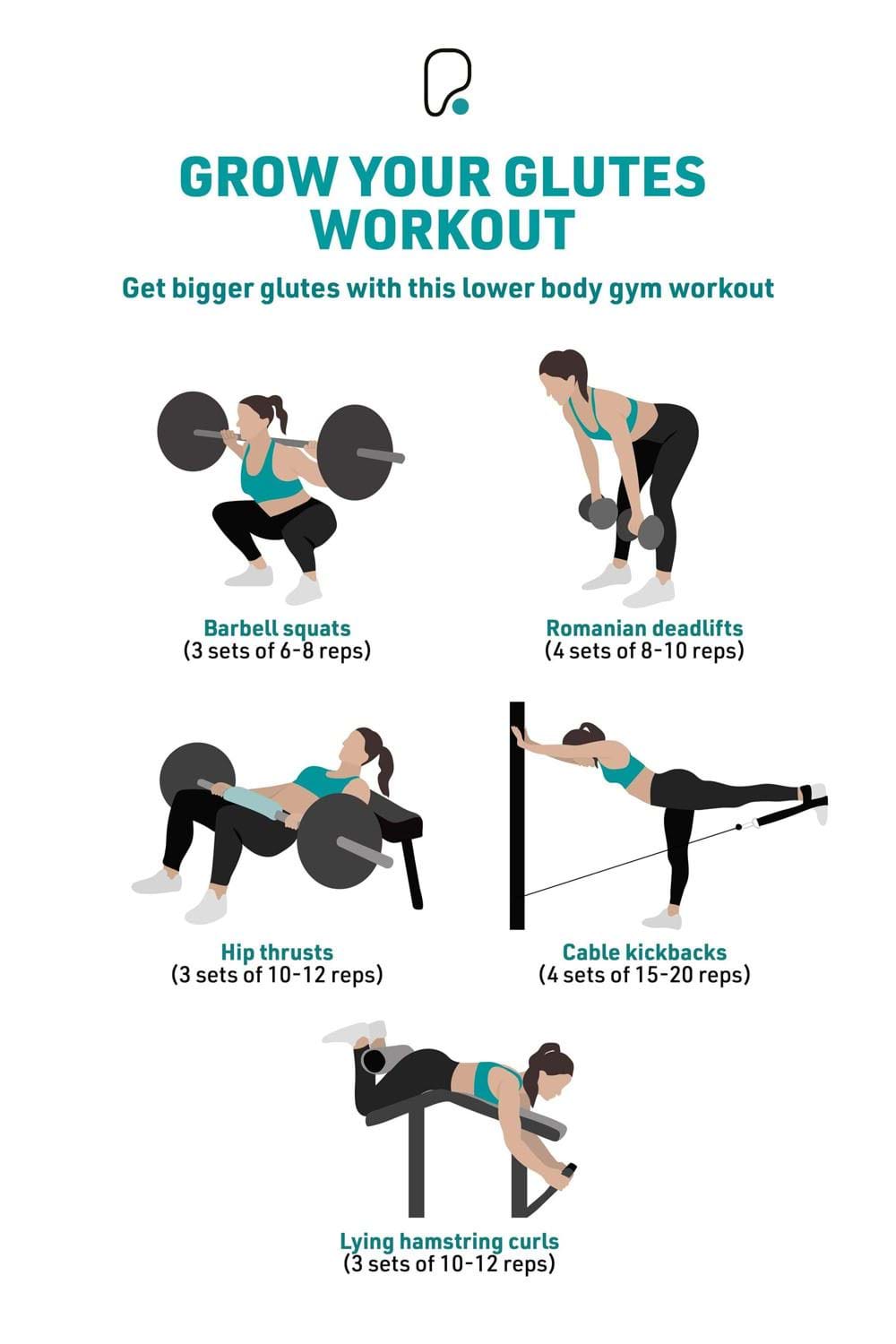
Credit: www.puregym.com
Glute Training And Flexibility
Flexibility matters for safe, effective workouts. Tight hips or hamstrings limit your range of motion.
Stretching tips:
- After workouts, hold stretches for 20–30 seconds.
- Try pigeon pose, seated hamstring stretch, and quad stretch.
- Foam rolling helps release tight spots.
Flexible glutes and hips reduce injury risk and improve performance.
Glute Workout Plan For Beginners
If you’re new, start simple. Focus on learning technique and building a routine.
Beginner plan:
- Glute bridge – 3 sets x 15 reps
- Bodyweight squat – 3 sets x 12 reps
- Step-up – 2 sets x 10 reps per leg
- Clamshell – 2 sets x 15 reps per side
Repeat 2 times per week. Increase difficulty slowly.
A non-obvious tip: Use a mirror or film yourself to check form. Small adjustments make a big difference.
Motivation And Staying Consistent
Results take time. Stay motivated by:
- Setting clear goals (strength, shape, health).
- Tracking progress regularly.
- Joining a fitness group or online community.
- Rewarding yourself for milestones.
Remember, consistency beats perfection. Missing a workout is not a failure—just get back to your routine.
For more science-backed fitness advice, visit Healthline.
Frequently Asked Questions
What Is The Best Exercise For Glute Growth?
Hip thrusts are widely considered the top exercise for building glute size and strength. They target the gluteus maximus directly and allow you to use heavy weight safely. Combine hip thrusts with squats and lunges for complete development.
How Often Should I Train My Glutes?
Most people see good results with 2–4 sessions per week. Beginners can start with 2 sessions, while advanced trainees may do 3–4. Always allow at least 48 hours between hard workouts for recovery.
Do I Need Weights To Build Glutes?
No, you can use bodyweight and resistance bands for effective glute workouts. However, adding weights helps speed up muscle growth. If you train at home, use household items or invest in bands and dumbbells.
Why Don’t I Feel My Glutes During Workouts?
This is often due to poor activation or form. Try slower reps, use mini bands, and focus on squeezing your glutes. Warm up with activation drills before your main workout.
Can I Train Glutes If I Have Knee Or Back Pain?
Yes, but be careful. Start with glute bridges, clamshells, and step-ups. Avoid deep squats and heavy deadlifts until pain improves. Always use proper form and consult a professional if pain persists.
Building strong, well-shaped glutes takes smart training, patience, and consistency. A complete glute workout plan can change how you move, feel, and look. Mix compound and isolation exercises, track your progress, and never skip warm-up or activation. Whether you train at home or in the gym, you can achieve your goals with the right strategy.
Stay motivated, and enjoy the journey to stronger glutes.
