

Glute Workout for Runners: Boost Speed and Prevent Injury
Glute Workout For Runners
Running is a simple sport, but many runners overlook one key muscle group: the glutes. Strong glutes are not just for sprinters or gym-goers. They help runners run faster, prevent injuries, and improve overall performance. If you are a runner, paying attention to your glute training can make a huge difference. Many beginners think running alone will strengthen their legs and glutes, but the reality is different. Without targeted exercises, your glutes may stay weak, leading to slower progress and more injuries.
This guide will show why glute workouts matter for runners, how to activate and strengthen your glutes, and which exercises work best. You’ll get practical routines, tips, and mistakes to avoid. Whether you run for fun or compete, improving your glute strength will support better form and reduce fatigue.
Let’s explore how to build stronger glutes for running success.
Why Glute Strength Matters For Runners
Many runners focus only on their legs, but the glutes are the largest and most powerful muscles in the body. They play a central role in running. If your glutes are weak, your body relies too much on other muscles, leading to poor form and injuries.
Running Mechanics And Glute Function
The glute muscles include the gluteus maximus, gluteus medius, and gluteus minimus. These muscles stabilize your hips, support your stride, and help you push off with power. Every step you take, your glutes keep your pelvis stable and your legs moving efficiently.
When glutes are strong:
- Your stride becomes more powerful.
- Your hips stay stable.
- You can run longer without pain.
Weak glutes, on the other hand, make your body compensate. This often stresses the knees, hamstrings, and lower back. In fact, studies show that weak glutes are linked to common injuries like runner’s knee, IT band syndrome, and even lower back pain.
Injury Prevention
Runners face a high risk of overuse injuries. Many of these come from poor muscle balance. If your glutes are weak, other muscles must work harder, increasing the chance of strains and joint problems. Strong glutes help absorb shock, protect your joints, and keep your running form correct.
A research study found that runners with strong glutes had 37% fewer injuries compared to those with weaker glutes. This is because the glutes act as stabilizers, controlling leg movement and reducing stress on the knees and ankles.
Performance Benefits
Glute strength is not just about avoiding injury. It can boost your running speed and endurance. Strong glutes help you push harder with each step, allowing you to run faster and longer. Elite runners often have powerful glutes, helping them maintain form even when tired.
Improved glute activation leads to:
- Higher running speed
- Better sprinting ability
- Greater endurance
- Faster recovery
Many beginners miss this connection. They focus on mileage but ignore strength training. Adding glute workouts can help you break through plateaus and reach your goals.
Common Signs Of Weak Glutes In Runners
It’s easy to assume your glutes are strong because you run regularly. But running alone does not always activate the glutes fully. Here are some signs your glutes may be weaker than you think:
- Knee pain: Especially around the front or side of the knee during or after runs.
- Lower back discomfort: Feeling tight or sore after long runs.
- Hip instability: Your hips drop or wobble when running, especially when tired.
- Reduced speed: Difficulty increasing pace, even with more training.
- Hamstring tightness: Hamstrings feel overworked or strained.
- Poor balance: Trouble staying stable during single-leg exercises.
- Foot overpronation: Feet roll inward, causing ankle or shin pain.
Many runners ignore these signs, believing they are part of normal training fatigue. But these issues often signal weak glutes. If you notice any of these, it’s time to add targeted glute workouts.
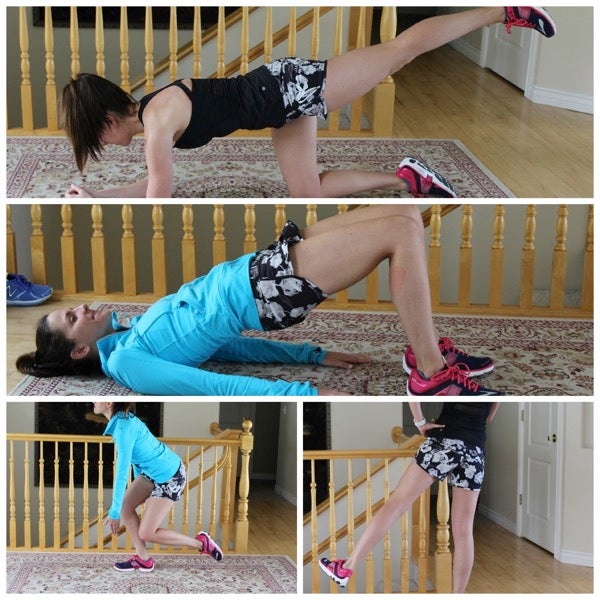
Credit: www.womensrunning.com
How Glute Activation Works
Before you can strengthen your glutes, you must activate them. Many runners have “sleepy” glutes—muscles that don’t fully engage during running. This happens because sitting for long periods or poor form can switch off the glutes.
Understanding Glute Activation
Glute activation means turning on the muscles and making sure they do their job. If your glutes are inactive, other muscles take over. This reduces power and stability.
Here’s a simple example: When you run, your gluteus maximus should push your leg backward. If it’s not firing, your hamstrings and lower back must work harder, leading to fatigue and injury.
How To Test Glute Activation
You can test glute activation with a basic exercise:
- Lie on your back with knees bent.
- Place one hand on your glute and the other on your hamstring.
- Perform a bridge by lifting your hips.
- If you feel the glute working more than the hamstring, your glutes are activating.
If the hamstring is doing most of the work, your glutes need targeted activation exercises.
Pre-run Activation Drills
Doing simple activation drills before running can help wake up your glutes. Examples include:
- Glute bridges
- Monster walks with resistance bands
- Clamshells
- Single-leg glute taps
These drills are quick and easy. Spend 5-10 minutes before your run to ensure your glutes are ready.
Key Glute Muscles And Their Role In Running
The glutes are not one muscle—they’re a group. Each has a unique role in running.
| Glute Muscle | Function in Running | Common Weakness Signs |
|---|---|---|
| Gluteus Maximus | Pushes leg backward, provides power | Reduced sprint speed, lower back pain |
| Gluteus Medius | Stabilizes hips, prevents side movement | Hip drop, knee pain |
| Gluteus Minimus | Assists hip stability, supports balance | Poor balance, ankle instability |
Knowing these muscles helps you target your workouts. Many runners focus only on the gluteus maximus, but the medius and minimus are just as important for stability and injury prevention.
The Best Glute Exercises For Runners
A good glute workout for runners should activate all three glute muscles. Here are the most effective exercises:
1. Glute Bridge
- How to do it: Lie on your back, knees bent, feet flat. Push through your heels and lift your hips until your body forms a straight line. Squeeze your glutes at the top, then lower.
- Tip: Don’t use your lower back or hamstrings to lift. Focus on squeezing the glutes.
2. Single-leg Glute Bridge
- How to do it: Same as a glute bridge, but lift one leg off the ground. Push through the other heel.
- Benefit: Adds balance and targets each glute separately.
3. Bulgarian Split Squat
- How to do it: Stand with one foot behind you on a bench or chair. Lower your body until your front thigh is parallel to the floor. Push through your front heel to rise.
- Tip: Keep your chest up and knee in line with your toes.
4. Clamshell
- How to do it: Lie on your side, knees bent. Keep feet together and lift your top knee, opening your legs like a clamshell. Lower and repeat.
- Benefit: Targets the gluteus medius for hip stability.
5. Monster Walks
- How to do it: Place a resistance band around your thighs. Step sideways, keeping tension in the band and knees bent.
- Tip: Keep your chest up and hips steady.
6. Step-ups
- How to do it: Step onto a bench or sturdy box with one leg. Push through your heel and lift your body. Lower and repeat.
- Benefit: Mimics running movement, builds single-leg strength.
7. Hip Thrust
- How to do it: Sit on the ground with upper back against a bench. Roll a barbell or weight onto your hips. Push through your heels to lift your hips, squeezing glutes.
- Tip: Don’t over-arch your back.
8. Lateral Band Walk
- How to do it: Place a resistance band around your ankles. Step sideways, keeping tension in the band.
- Benefit: Targets gluteus medius and minimus.
9. Single-leg Deadlift
- How to do it: Stand on one leg, hold a weight in the opposite hand. Bend at the hips and lower the weight while lifting your other leg behind you. Return to standing.
- Tip: Keep your back flat and balance steady.
10. Reverse Lunge
- How to do it: Step backward into a lunge, lowering your knee to the ground. Push through your front heel to return.
- Benefit: Builds glute and leg strength, improves stability.
11. Fire Hydrant
- How to do it: On hands and knees, lift one knee out to the side, keeping hip bent. Lower and repeat.
- Tip: Don’t rotate your hips; isolate the movement.
These exercises activate different glute muscles and improve running strength. Adding resistance bands or weights can make them more challenging.
Sample Glute Workout Routine For Runners
Building stronger glutes doesn’t require hours in the gym. Here’s a sample routine you can do 2-3 times per week. It fits into most runners’ schedules and targets all glute muscles.
Warm-up (5-10 Minutes)
- Light jog or brisk walk
- Dynamic stretches (leg swings, hip circles)
- Glute activation drills (glute bridges, monster walks)
Main Workout
- Glute Bridge: 3 sets of 15 reps
- Bulgarian Split Squat: 3 sets of 10 reps each leg
- Clamshell: 3 sets of 15 reps each side
- Monster Walks: 2 sets of 20 steps
- Single-Leg Deadlift: 3 sets of 10 reps each leg
- Step-Ups: 3 sets of 12 reps each leg
Cool Down (5 Minutes)
- Gentle stretching (hamstrings, quads, glutes)
- Foam rolling
This routine is simple but effective. It can be done at home with minimal equipment. If you have time, add hip thrusts or fire hydrants for extra challenge.

Credit: www.runnersworld.com
How Glute Workouts Improve Running Performance
Glute workouts offer real benefits to runners. Here’s how:
Faster Sprinting
Strong glutes provide more power for each stride. This helps runners accelerate and maintain higher speeds. Elite sprinters often have well-developed glutes, giving them an edge.
Better Endurance
When your glutes are strong, your legs don’t tire as quickly. Glutes help absorb shock and stabilize your hips, so you use less energy to maintain form. This means you can run longer distances with less fatigue.
Improved Running Economy
Running economy means how efficiently you use energy. Strong glutes reduce wasted motion and keep your body aligned. Studies show runners with better glute strength use less oxygen at the same pace.
Injury Resistance
Glute workouts strengthen the muscles around your hips and knees. This protects joints and prevents overuse injuries. You recover faster and spend less time sidelined by pain.
Real-world Example
A marathon runner added glute workouts twice per week. After six weeks, she noticed her pace improved by 8% and her knee pain disappeared. She also felt less tired during long runs.
Comparing Glute Workout Styles For Runners
Different runners have different needs. Some prefer bodyweight exercises, others use resistance bands or weights. Let’s compare the main workout styles.
| Workout Style | Equipment Needed | Benefits | Best For |
|---|---|---|---|
| Bodyweight | None | Easy to start, good for beginners | New runners, home workouts |
| Resistance Band | Bands | Extra challenge, targets hip stability | Intermediate runners, injury prevention |
| Weighted | Dumbbells, barbells | Maximum strength, muscle growth | Advanced runners, gym users |
Beginners should start with bodyweight exercises. As you get stronger, add bands or weights. Mixing styles helps target all glute muscles.
Mistakes Runners Make With Glute Training
Many runners make errors when adding glute workouts. Here’s what to avoid:
- Skipping Activation: Jumping into heavy exercises without warming up leads to poor form and injury.
- Using Poor Technique: Not focusing on glute engagement lets other muscles take over.
- Ignoring Balance: Training only one side can cause muscle imbalances.
- Neglecting Hip Stability: Only working the gluteus maximus and ignoring medius/minimus.
- Overdoing Volume: Doing too many reps without rest leads to fatigue, not progress.
- Not Progressing: Sticking to the same routine without adding resistance or new exercises.
One non-obvious insight: If you feel your quadriceps or hamstrings burning more than your glutes, your form needs adjustment. Another common mistake is rushing through exercises—slow, controlled movements activate the glutes better.
Glute Training For Different Types Of Runners
Not all runners have the same needs. Here’s how glute workouts fit different running styles:
Long-distance Runners
Endurance runners need stable hips and strong gluteus medius. Focus on exercises like clamshells, monster walks, and single-leg deadlifts. These help prevent fatigue and keep your stride efficient.
Sprinters
Sprinters require explosive power from the gluteus maximus. Hip thrusts, step-ups, and Bulgarian split squats build speed and strength.
Trail Runners
Trail runners need balance and agility. Lateral band walks, fire hydrants, and single-leg exercises improve stability on uneven terrain.
Recreational Runners
If you run for fun or fitness, a balanced routine with all three glute muscles is best. Mix bridges, lunges, and band walks for overall strength.
How Often Should Runners Train Glutes?
Glute workouts should fit into your running schedule. Here are some guidelines:
- Beginner runners: 2 times per week
- Intermediate runners: 2-3 times per week
- Advanced runners: Up to 3 times per week with varied intensity
Avoid doing glute workouts right before a hard run, as your muscles may be tired. Instead, train on easy run days or after runs. It’s important to allow recovery for muscle growth.
How To Progress Your Glute Training
Progress is key in strength training. Here’s how to advance your glute workouts:
- Increase resistance: Use bands or weights as you get stronger.
- Add reps or sets: Gradually do more repetitions or sets.
- Try harder variations: Move from double-leg to single-leg exercises.
- Slow down tempo: Control the movement for better activation.
- Include new exercises: Change your routine every 4-6 weeks.
Tracking your progress helps. Note improvements in running pace, stability, or reduced pain. If you stall, try a new exercise or increase resistance.

Credit: www.youtube.com
Practical Tips For Effective Glute Training
Here are some tips to get the most from your glute workouts:
- Focus on mind-muscle connection: Think about squeezing your glutes during each rep.
- Use mirrors: Check your form, especially with single-leg moves.
- Start small: Begin with simple exercises, add complexity as you improve.
- Rest and recover: Allow 48 hours between glute sessions.
- Stay consistent: Regular workouts bring the best results.
Don’t forget to stretch and foam roll after workouts. This prevents tightness and helps muscles recover.
Glute Workout Tracking: How To Measure Progress
Measuring progress keeps you motivated. Here are ways to track your glute strength:
| Tracking Method | What to Measure | How Often |
|---|---|---|
| Strength Tests | Reps, weight lifted in hip thrusts or squats | Monthly |
| Running Performance | Pace, distance, fatigue level | Weekly |
| Pain/Discomfort | Knee, hip, or back pain frequency | After runs |
| Balance Tests | Single-leg stability, hop distance | Monthly |
A simple insight: Many runners notice performance gains before visible muscle growth. Improved running form or less pain is often the first sign your glutes are getting stronger.
Nutrition And Recovery For Glute Growth
Strength training breaks down muscle fibers. Recovery and nutrition help them rebuild stronger.
- Protein: Helps repair and build muscle. Aim for 0.8-1.0 grams per pound of body weight.
- Carbohydrates: Fuels workouts and recovery.
- Healthy fats: Support hormone balance and joint health.
- Hydration: Keeps muscles functioning well.
Sleep is crucial. Aim for at least 7-8 hours per night. Stretching and foam rolling also help muscles recover.
Glute Workouts And Cross-training
Adding cross-training can support glute strength. Activities like cycling, swimming, and strength classes build muscle without stressing your joints.
Cross-training benefits:
- Reduces risk of overuse injuries
- Improves overall fitness
- Keeps workouts interesting
Mix running days with cross-training for balanced results.
Who Needs Glute Workouts Most?
Certain runners benefit more from glute training:
- Those with recurring injuries
- Older runners (glutes weaken with age)
- Beginners lacking strength
- Runners returning from time off
- Anyone seeking faster improvement
If you fit one of these categories, prioritize glute workouts. They bring faster progress and fewer setbacks.
Frequently Asked Questions
How Long Does It Take To See Results From Glute Workouts?
Most runners notice improvements in running form and reduced pain within 4-6 weeks. Visible muscle growth may take longer. Consistency is key—stick with the routine and track your progress.
Can I Do Glute Workouts Every Day?
It’s best to allow at least 48 hours between glute sessions. Muscles need time to recover and grow. Doing glute workouts daily can lead to fatigue and slow progress.
Do Glute Workouts Help With Knee Pain?
Yes, strengthening the glutes improves hip and knee stability. Many runners see knee pain decrease after adding glute exercises, especially those targeting the gluteus medius.
Should I Use Resistance Bands Or Weights?
Both are effective. Beginners can start with bodyweight and bands. As you get stronger, add weights for more challenge. Mixing both styles brings the best results.
Where Can I Find More Information About Glute Training?
For more detailed guidance, visit the Runner’s World site. They offer expert advice and workout examples for runners.
---
Strong glutes are the foundation for better running. They help you run faster, longer, and with fewer injuries. Adding glute workouts to your routine doesn’t require hours of effort, but it does need consistency and proper technique. Whether you’re a beginner or an experienced runner, focusing on glute strength will pay off in your performance and health.
Start today, track your progress, and enjoy the benefits of powerful glutes on every run.
