

Glute Ham Workout: Build Stronger Legs and Glutes Fast
Glute Ham Workout: Building Stronger Glutes And Hamstrings
A strong lower body is the foundation for athletic performance, functional movement, and a healthy lifestyle. When you focus on your glutes and hamstrings, you unlock benefits like better posture, more power for sports, and protection against injuries. Many people overlook these muscles or train them incorrectly, missing out on their full strength potential. Whether you’re an athlete, fitness enthusiast, or someone starting your journey, a glute ham workout can transform your body and movement.
In this guide, you’ll discover effective exercises, practical training tips, and common mistakes to avoid. You’ll also learn how to adapt the workout for your goals and experience level. By the end, you’ll have a clear roadmap to stronger, more defined glutes and hamstrings.
Why Glutes And Hamstrings Matter
Your gluteal muscles (gluteus maximus, medius, and minimus) and hamstrings (biceps femoris, semitendinosus, semimembranosus) are the main drivers of hip extension and knee flexion. They play a vital role in walking, running, jumping, and lifting. Weak or unbalanced glutes and hamstrings can cause:
- Poor posture
- Lower back pain
- Knee injuries
- Limited athletic ability
Strong glutes and hamstrings help you:
- Generate explosive power
- Stabilize your pelvis and spine
- Maintain healthy joints
- Improve body shape and tone
Many people focus on quadriceps (front thigh muscles) and forget the importance of training the back of the legs. This imbalance can lead to injuries and movement issues.
Key Principles For Effective Glute Ham Training
Before jumping into exercises, it’s important to understand how to train these muscles effectively. Here are some principles to get the best results:
- Hip Extension Focus: Many glute and hamstring exercises involve extending the hip. Movements like deadlifts, hip thrusts, and glute bridges are great examples.
- Range of Motion: Use a full range of motion to activate the muscles properly. Partial reps can limit growth and strength.
- Progressive Overload: Gradually increase resistance, reps, or sets. This forces your muscles to adapt and grow stronger.
- Mind-Muscle Connection: Focus on feeling your glutes and hamstrings working during each rep.
- Balanced Training: Work both glutes and hamstrings, not just one. This keeps your body strong and reduces injury risk.
- Recovery: Allow your muscles time to rest and recover. Overtraining can cause fatigue and slow progress.
Essential Glute Ham Exercises
Let’s explore the most effective exercises for glutes and hamstrings. These movements target the muscles from different angles and help build strength, power, and shape.
1. Glute Ham Raise
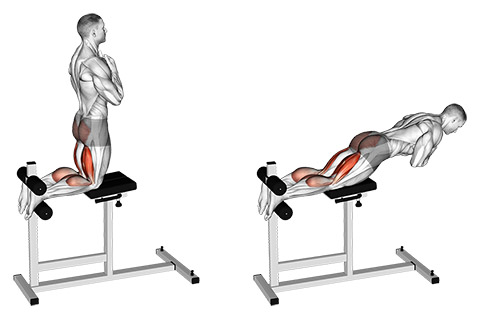
The glute ham raise is a unique exercise that targets both the glutes and hamstrings. It requires a glute-ham developer (GHD) machine, commonly found in gyms.
How To Perform
- Adjust the GHD machine so your knees rest just behind the pad.
- Secure your feet under the foot plate.
- Start upright, then lower your body forward, keeping your back straight.
- Use your hamstrings and glutes to pull yourself back to the start.
Benefits
- Builds powerful hamstrings and glutes
- Improves posterior chain strength
- Enhances athletic performance
Common Mistake
- Letting your hips sag or using momentum instead of muscle contraction.
2. Barbell Hip Thrust
The hip thrust is one of the best glute exercises. It uses a barbell and a bench.
How To Perform
- Sit on the floor with your upper back against a bench.
- Roll a barbell over your hips.
- Drive your hips up, squeezing your glutes at the top.
- Lower slowly and repeat.
Benefits
- Targets glute max for growth and strength
- Minimal stress on lower back
- Can be loaded heavy
Common Mistake
- Not locking out hips fully at the top.
3. Romanian Deadlift
The Romanian deadlift (RDL) works both glutes and hamstrings. You can use a barbell or dumbbells.
How To Perform
- Stand with feet hip-width apart, holding a barbell.
- Keep knees slightly bent.
- Hinge at hips, lowering the bar while keeping your back flat.
- Go as low as flexibility allows, then return to start.
Benefits
- Builds hamstring and glute strength
- Improves hip hinge movement
- Good for mobility
Common Mistake
- Rounding your back or bending knees too much.
4. Bulgarian Split Squat
This single-leg squat variation hits glutes, hamstrings, and quads.
How To Perform
- Stand a few feet from a bench.
- Place one foot behind you on the bench.
- Lower your body, keeping the front knee over your ankle.
- Push up through the front heel.
Benefits
- Improves balance and stability
- Builds single-leg strength
- Targets glutes and hamstrings
Common Mistake
- Letting front knee drift forward over toes.
5. Glute Bridge
A simple but effective movement for glute activation.
How To Perform
- Lie on your back with knees bent and feet flat.
- Push through heels, lifting hips.
- Squeeze glutes at the top, lower and repeat.
Benefits
- Easy for beginners
- Activates glutes without equipment
- Good warm-up exercise
Common Mistake
- Arching lower back instead of using glutes.
6. Hamstring Curl (machine Or Stability Ball)
Directly targets hamstrings with flexion.
How To Perform
- Use a hamstring curl machine or lie on a mat with feet on a stability ball.
- Curl heels toward glutes, keeping hips up.
- Return slowly.
Benefits
- Isolates hamstrings
- Builds muscle endurance
Common Mistake
- Using momentum or dropping hips.
7. Step-up
A functional movement for glutes and hamstrings.
How To Perform
- Stand facing a bench or step.
- Step up with one foot, drive through the heel.
- Bring the other foot up, then step down.
Benefits
- Builds leg strength
- Improves balance
- Can use dumbbells for added resistance
Common Mistake
- Using toes instead of heels to step up.
8. Single-leg Deadlift
Targets glutes and hamstrings with balance challenge.
How To Perform
- Stand on one leg, holding a dumbbell.
- Hinge at hips, lowering weight while keeping back flat.
- Return to upright, repeat.
Benefits
- Improves stability and coordination
- Activates glutes and hamstrings
Common Mistake
- Rotating hips or rounding back.
9. Sled Push
A dynamic exercise for lower body power.
How To Perform
- Load a sled with weights.
- Push forward with legs, keeping back flat.
Benefits
- Builds explosive strength
- Works glutes and hamstrings
Common Mistake
- Letting knees collapse inward.
10. Kettlebell Swing
A powerful hip-driven movement.
How To Perform
- Stand with feet wide, hold kettlebell.
- Swing it between legs, then drive hips forward.
- Let momentum swing kettlebell to chest height.
Benefits
- Great for glute and hamstring power
- Improves cardiovascular fitness
Common Mistake
- Lifting with arms instead of hips.
Sample Glute Ham Workout Routine
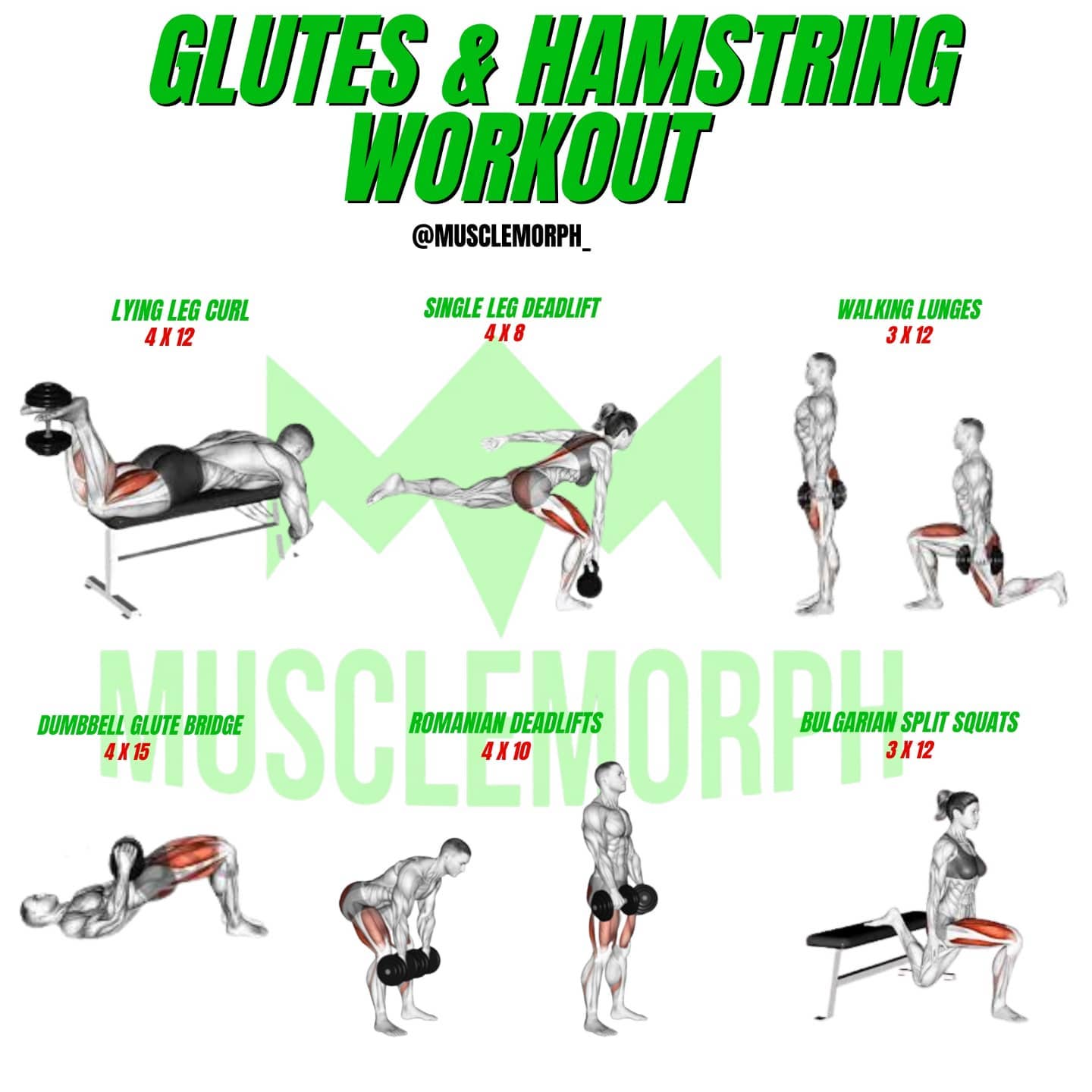
Here’s a sample routine you can follow, designed for balanced strength and muscle growth. Adjust weights and reps to your level.
| Exercise | Sets | Reps | Rest |
|---|---|---|---|
| Glute Ham Raise | 3 | 8-12 | 90 seconds |
| Barbell Hip Thrust | 4 | 10-15 | 90 seconds |
| Romanian Deadlift | 3 | 8-12 | 90 seconds |
| Bulgarian Split Squat | 3 | 10-12 (each leg) | 60 seconds |
| Hamstring Curl | 3 | 12-15 | 60 seconds |
- Perform this workout 1-2 times per week.
- Warm up with glute bridges and dynamic stretches.
- Cool down with gentle stretching.

Credit: us.humankinetics.com
Glute Ham Training For Different Goals
Your workout will change based on what you want to achieve. Let’s look at how to adapt your routine.
Building Muscle
- Use moderate to heavy weights.
- Aim for 8-12 reps per set.
- Focus on slow, controlled movements.
- Increase weight regularly.
Improving Athletic Performance
- Add explosive movements like sled push and kettlebell swings.
- Use lower reps (6-8) with higher weight.
- Include single-leg exercises for balance.
Injury Prevention
- Prioritize form and range of motion.
- Use lighter weights and higher reps (15-20).
- Include stability exercises like single-leg deadlift.
Fat Loss And Toning
- Add circuit-style workouts with minimal rest.
- Include cardio movements (step-ups, kettlebell swings).
- Mix high reps (15+) for endurance.
Common Mistakes In Glute Ham Training
Even experienced lifters make errors that slow progress or cause injury. Here are frequent mistakes and how to fix them:
- Neglecting Glute Activation: Many people use their lower back or quads instead of glutes. Always focus on squeezing glutes during hip thrusts and bridges.
- Partial Reps: Not using full range of motion limits muscle activation. Go all the way down and up in each rep.
- Poor Form: Rounding your back, letting knees collapse, or swinging weights can cause injuries.
- Skipping Warm-Up: Start every workout with glute bridges, leg swings, and bodyweight lunges.
- Doing Only One Exercise: Mix different movements to target muscles from various angles.
- Ignoring Recovery: Muscles grow when you rest. Allow 48 hours between heavy glute ham workouts.
- Too Much Volume: Doing too many sets can lead to overtraining. Quality beats quantity.
Glute Ham Workout For Beginners
If you’re new, start with simple movements and build up gradually.
Beginner-friendly Exercises
- Glute bridge
- Step-up
- Hamstring curl (machine)
- Bodyweight Bulgarian split squat
Beginner Routine Example
| Exercise | Sets | Reps | Rest |
|---|---|---|---|
| Glute Bridge | 3 | 15 | 60 seconds |
| Step-Up | 2 | 12 (each leg) | 60 seconds |
| Hamstring Curl | 2 | 12 | 60 seconds |
| Bodyweight Bulgarian Split Squat | 2 | 10 (each leg) | 60 seconds |
- Start with 1-2 workouts per week.
- Focus on form, not weight.
- Add more exercises and resistance as you progress.
Intermediate And Advanced Glute Ham Training
Once you have mastered basic movements, increase difficulty with heavier weights, advanced variations, and more volume.
Intermediate Tips
- Add barbell hip thrusts and Romanian deadlifts.
- Use single-leg exercises for more challenge.
- Increase sets and reps gradually.
Advanced Strategies
- Use glute ham raise on GHD machine.
- Add explosive moves (sled push, kettlebell swing).
- Try drop sets or supersets for intensity.
Sample Advanced Routine
| Exercise | Sets | Reps | Rest |
|---|---|---|---|
| Glute Ham Raise | 4 | 8-10 | 90 seconds |
| Barbell Hip Thrust | 5 | 8-12 | 90 seconds |
| Romanian Deadlift | 4 | 8-10 | 90 seconds |
| Kettlebell Swing | 3 | 15-20 | 60 seconds |
| Sled Push | 3 | 30 meters | 90 seconds |
- Always prioritize good form and full range of motion.
- Advanced lifters can train glutes and hamstrings 2-3 times per week.
Credit: twkf.gov.tr
Glute Ham Workout At Home
You don’t need a gym to train glutes and hamstrings. Many exercises can be done with minimal equipment.
Home-friendly Exercises
- Bodyweight glute bridge
- Single-leg hip thrust (using a chair)
- Step-ups (using stairs)
- Hamstring curls (with a towel or stability ball)
- Single-leg Romanian deadlift (with backpack or water bottle)
Tips For Effective Home Training
- Use household items as weights (backpack, water jugs).
- Slow down the tempo for more muscle activation.
- Increase reps if resistance is low.
Example Home Routine
- Glute bridge: 3 sets x 20 reps
- Single-leg hip thrust: 3 sets x 12 reps each leg
- Step-up: 3 sets x 15 reps each leg
- Hamstring curl (towel): 3 sets x 15 reps
- Single-leg Romanian deadlift: 3 sets x 12 reps each leg
How Often Should You Train Glutes And Hamstrings?
Training frequency depends on your goals, experience, and recovery ability. Here are some practical guidelines:
- Beginners: 1-2 times per week
- Intermediate: 2 times per week
- Advanced: 2-3 times per week
Allow at least 48 hours between sessions. Overtraining can lead to fatigue and injuries. If you feel sore or tired, take an extra rest day.
Nutrition For Glute Ham Growth And Recovery
Training alone is not enough for muscle growth and recovery. Nutrition plays a big role.
Key Points
- Protein: Aim for 1.2–1.6 grams per kilogram of body weight daily.
- Carbohydrates: Fuel your workouts and help recovery.
- Healthy Fats: Support hormones and joint health.
- Hydration: Drink enough water for muscle function.
Pre- And Post-workout Meals
- Pre-workout: Eat carbs and protein 1–2 hours before (banana and yogurt, oatmeal and eggs).
- Post-workout: Eat protein and carbs within 2 hours (chicken and rice, smoothie with protein powder).
Supplements
- Whey protein: Helps muscle repair.
- Creatine: Supports strength and power.
- BCAAs: May reduce muscle soreness.
Always consult a health professional before starting supplements.
Glute Ham Training For Women
Women often worry about “bulking up” from lower body training. In reality, glute ham workouts help create a toned, curvy shape and support healthy joints.
Benefits For Women
- Builds functional strength
- Improves hip stability
- Reduces injury risk in sports and daily life
- Shapes glutes and thighs
Women can use the same exercises and routines as men. Adjust weights and reps to your comfort and goals.
Glute Ham Training For Athletes
Athletes need powerful glutes and hamstrings for sprinting, jumping, and changing direction. Many sports injuries are linked to weak posterior chain muscles.
Sport-specific Benefits
- Faster sprint times
- Higher jumps
- Stronger tackles and throws
- Better endurance
Athletes should include hip thrusts, glute ham raises, and explosive movements like sled push in their training.
How To Track Progress
Tracking progress is key for motivation and results. Here’s how:
- Record weights, reps, and sets for each workout.
- Take photos every month to see muscle changes.
- Measure hip and thigh circumference.
- Note performance improvements (speed, jump height, stability).
Progress is not always visible in a few weeks. Stay consistent and patient.
Two Insights Beginners Often Miss
- Glute Activation Is Not Automatic: Many people think squats and lunges will build glutes, but often other muscles take over. Simple glute activation exercises before your main workout (like clamshells or band walks) can make a big difference.
- Hamstrings Need Direct Work: While deadlifts and hip thrusts train hamstrings, direct isolation (like curls and glute ham raises) helps balance leg strength and prevent injuries.
Practical Tips For Better Results
- Use resistance bands for extra glute activation.
- Try slow negatives (eccentric phase) for better muscle growth.
- Change exercises every few weeks to avoid plateaus.
- Pair glute ham workouts with core training for stability.
- Always cool down with stretching to reduce soreness.
Comparison: Glute Ham Raise Vs. Barbell Hip Thrust
Understanding the differences helps you choose the right exercises.
| Exercise | Main Target | Equipment Needed | Difficulty | Benefits |
|---|---|---|---|---|
| Glute Ham Raise | Hamstrings & Glutes | GHD Machine | Advanced | Posterior chain strength, injury prevention |
| Barbell Hip Thrust | Glute Max | Barbell & Bench | Intermediate | Glute growth, hip power, easy to load heavy |
Comparison: Romanian Deadlift Vs. Single-leg Deadlift
Both exercises are hip hinge movements, but have different benefits.
| Exercise | Main Muscles | Balance Required | Best For |
|---|---|---|---|
| Romanian Deadlift | Hamstrings, Glutes | Low | Strength, muscle growth |
| Single-Leg Deadlift | Hamstrings, Glutes | High | Balance, stability, coordination |
Credit: www.fondation-enovos.lu
Frequently Asked Questions
What Is A Glute Ham Workout?
A glute ham workout is a training routine focused on strengthening and building the glutes (butt muscles) and hamstrings (back thigh muscles). It includes exercises like glute ham raises, hip thrusts, and Romanian deadlifts.
How Often Should I Do Glute Ham Workouts?
Most people should train glutes and hamstrings 1–3 times per week, depending on their experience and recovery. Beginners start with 1–2 sessions, while advanced lifters can do 2–3.
Can I Do Glute Ham Workouts At Home?
Yes, you can use bodyweight exercises like glute bridges, step-ups, and single-leg deadlifts. Household items can add resistance. No gym is required.
Will Glute Ham Workouts Make My Legs Bulky?
Glute ham training builds muscle, but “bulky” results depend on genetics, diet, and overall training. Most people see more shape, tone, and strength rather than excessive bulk.
Are Glute Ham Raises Safe?
Glute ham raises are safe when done with proper form and controlled movement. Beginners should start with easier variations and build strength gradually. If unsure, ask a trainer for guidance.
Building strong glutes and hamstrings is not just about aesthetics—it’s about movement, power, and health. The right glute ham workout will improve how you feel, move, and perform. Stay consistent, focus on quality, and enjoy the benefits for life. For more information on muscle anatomy and training principles, visit Wikipedia.
