

Dumbbell Glute Workout: Sculpt Stronger, Rounder Glutes Fast
Dumbbell Glute Workout: Build Strong, Shapely Glutes At Home
The glutes are more than just a muscle for sitting. They power your walk, support your back, and help you move in daily life. Many people want strong glutes for both health and appearance. But not everyone has access to a gym or fancy equipment. The good news? You can build your glutes with dumbbells—even at home. Dumbbell workouts are simple, flexible, and effective. They help shape your lower body, boost your strength, and improve balance.
This guide gives you everything you need for a complete dumbbell glute workout. You’ll learn which exercises work best, how to perform them safely, and how to create a routine that fits your goals. Whether you’re a beginner or looking for new ideas, you’ll find clear steps, practical advice, and real tips to help you get results.
Why Target The Glutes?
The gluteal muscles (gluteus maximus, medius, and minimus) are the largest muscles in your body. They do much more than just help you stand up or sit down.
- Gluteus maximus: Controls hip extension, helps you stand, run, and climb stairs.
- Gluteus medius: Stabilizes your pelvis, important for walking and balance.
- Gluteus minimus: Assists medius, helps rotate your hip.
Strong glutes are key for:
- Better posture: They support your lower back and keep your pelvis aligned.
- Injury prevention: Weak glutes can lead to knee, hip, or back pain.
- Sports performance: Powerful glutes help with running, jumping, and lifting.
- Aesthetics: Well-trained glutes give your body a balanced, firm shape.
Many people ignore glute training or focus only on squats. But the glutes need targeted movement to grow and strengthen. Dumbbells allow you to add resistance and challenge these muscles in many ways.
Dumbbells: The Perfect Tool For Glute Training
You don’t need fancy machines to train your glutes. Dumbbells are easy to use, affordable, and versatile. Here’s why they work so well:
- Portable: Use them at home, outdoors, or in small spaces.
- Flexible resistance: Choose different weights for different exercises.
- Unilateral training: Train one leg at a time for better balance.
- Progressive overload: Easily increase weight as you get stronger.
- Grip and core activation: Holding dumbbells engages your hands and core.
Unlike bodyweight alone, dumbbells let you push your glutes harder and see faster results. They also help correct muscle imbalances and improve stability.
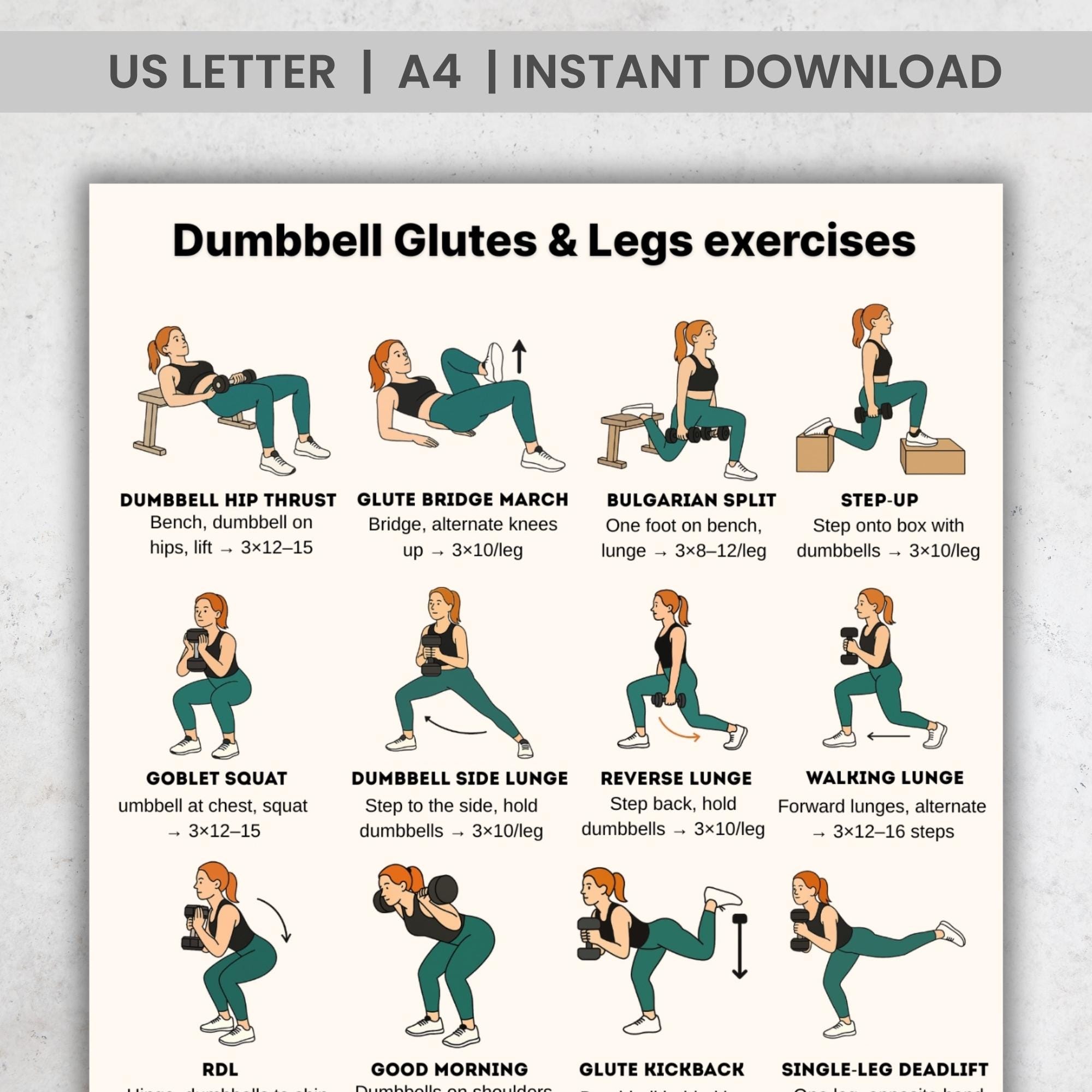
Credit: www.etsy.com
Key Dumbbell Glute Exercises
Let’s look at the most effective dumbbell exercises for glutes. Each targets the muscles in a unique way, so mixing them gives the best results.
1. Dumbbell Hip Thrust
This exercise is a top choice for building glute size and strength.
- Sit on the floor with your upper back against a bench or sofa.
- Roll a dumbbell onto your hips and hold it steady.
- Bend your knees and place feet flat, shoulder-width apart.
- Push your hips up, squeezing your glutes at the top.
- Lower slowly and repeat.
Tips:
- Start with a lighter weight to learn the movement.
- Pause at the top for extra muscle activation.
- Keep your chin tucked and core tight.
2. Dumbbell Bulgarian Split Squat
This single-leg exercise fires up the glutes, quads, and hamstrings.
- Stand a few feet in front of a bench or chair.
- Hold dumbbells at your sides.
- Place one foot behind you on the bench.
- Lower your body, bending your front knee, until your thigh is parallel to the floor.
- Push through your front heel to stand up.
Tips:
- Keep your chest up and don’t let your knee go past your toes.
- Focus on pushing through your heel to target the glutes.
3. Dumbbell Romanian Deadlift
This move stretches and strengthens the glutes and hamstrings.
- Stand with feet hip-width apart, holding dumbbells in front.
- Keep knees slightly bent.
- Hinge at the hips, lowering dumbbells while keeping your back straight.
- Go as low as you can without rounding your back.
- Return to standing, squeezing your glutes.
Tips:
- Don’t use heavy weight until you master form.
- Move slowly for maximum control.
4. Dumbbell Step-up
Step-ups build glute power and balance.
- Hold dumbbells at your sides.
- Stand in front of a sturdy bench or box.
- Step up with one foot, pressing through your heel.
- Bring your other foot up, then step back down.
Tips:
- Keep your core tight and chest up.
- Alternate legs for balanced training.
5. Dumbbell Goblet Squat
This squat variation focuses on the glutes and thighs.
- Hold a dumbbell close to your chest with both hands.
- Stand with feet shoulder-width apart.
- Squat down, keeping your chest up and knees out.
- Push through your heels to stand up.
Tips:
- Go as low as comfortable.
- Keep the dumbbell close to your body.
6. Dumbbell Curtsy Lunge
This exercise targets the glute medius and minimus.
- Hold dumbbells at your sides.
- Step one leg diagonally behind the other, bending both knees.
- Stand up and repeat on the other side.
Tips:
- Don’t rush; focus on slow, controlled movement.
- Feel the side glute muscles working.
7. Dumbbell Glute Bridge
A simple but powerful glute activator.
- Lie on your back with knees bent and feet flat.
- Place a dumbbell on your hips.
- Lift your hips, squeezing glutes at the top.
- Lower and repeat.
Tips:
- Pause at the top for a stronger contraction.
- Don’t arch your back.
8. Dumbbell Kickback
This exercise isolates each glute for focused growth.
- Kneel on all fours, holding a dumbbell behind one knee.
- Kick your leg back and up, keeping the dumbbell steady.
- Lower and repeat.
Tips:
- Keep your core tight to avoid swinging.
- Use a light dumbbell to start.
9. Dumbbell Sumo Squat
Targets inner thighs and glutes.
- Stand with feet wider than shoulders, toes pointing out.
- Hold a dumbbell between your legs.
- Squat down, keeping your chest up.
- Stand up, pressing through heels.
Tips:
- Go slow and deep for full range.
- Don’t let knees cave in.
10. Dumbbell Side-lying Abduction
Works the glute medius for hip stability.
- Lie on your side, holding a dumbbell on your upper thigh.
- Raise your top leg, keeping it straight.
- Lower and repeat.
Tips:
- Pause at the top for extra burn.
- Keep hips stacked for good form.
Glute Activation: Warming Up For Success
Before starting your dumbbell glute workout, activate your muscles. This helps you train harder and avoid injury.
- Bodyweight glute bridges: 15–20 reps
- Donkey kicks: 15 reps each leg
- Clamshells: 15 reps each side
Spend 5–10 minutes warming up. Activation boosts blood flow and wakes up the glutes. Many beginners skip this, but it makes a big difference.
Sample Dumbbell Glute Workout Routine
Here’s a practical routine you can follow. Adjust sets and reps to your fitness level.
| Exercise | Sets | Reps | Rest |
|---|---|---|---|
| Dumbbell Hip Thrust | 4 | 10–12 | 60 sec |
| Dumbbell Bulgarian Split Squat | 3 | 8–10 each leg | 60 sec |
| Dumbbell Romanian Deadlift | 3 | 10–12 | 60 sec |
| Dumbbell Glute Bridge | 3 | 12–15 | 45 sec |
| Dumbbell Curtsy Lunge | 2 | 10 each side | 45 sec |
Perform this routine 2–3 times per week. If you’re a beginner, start with fewer sets. Rest between exercises for recovery.
How To Choose The Right Dumbbell Weight
Picking the right weight is key for progress. Too light and you won’t grow; too heavy and you risk injury.
- For beginners: Start with 5–15 lbs dumbbells. Focus on form.
- For intermediate: Move up to 15–30 lbs as you get stronger.
- For advanced: Use 30+ lbs if you can do all reps with good form.
Always test your weight before starting. You should feel challenged by the last 2–3 reps but still have control.
Here’s a quick comparison of recommended weights for different fitness levels:
| Fitness Level | Recommended Weight | Exercise Example |
|---|---|---|
| Beginner | 5–15 lbs | Glute Bridge |
| Intermediate | 15–30 lbs | Bulgarian Split Squat |
| Advanced | 30+ lbs | Hip Thrust |
Glute Workout Progression: How To Get Better Results
Your muscles grow when you push them harder over time. This is called progressive overload. Here’s how to make your glute workout more effective:
- Increase weight: Move up to heavier dumbbells when the current weight feels easy.
- Add reps/sets: Do more repetitions or add an extra set.
- Use slow tempo: Lower weights slowly and pause at the hardest part.
- Try new exercises: Mix up your routine to challenge the glutes in different ways.
Most beginners forget to track progress. Keep a simple log of your weights and reps. This helps you stay motivated and see results.
Common Mistakes With Dumbbell Glute Workouts
Even with good exercises, mistakes can limit your results or cause injury. Watch out for these:
- Poor form: Rounding your back or letting knees cave in can hurt your joints.
- Skipping warm-up: Cold muscles are more likely to get injured.
- Using too much weight: Heavy dumbbells with bad form don’t build muscle—they risk injury.
- Not focusing on glutes: Don’t let your quads or lower back take over the movement.
- No progression: Doing the same workout forever stalls growth.
One insight beginners miss: Glute exercises need mind-muscle connection. Focus on squeezing your glutes during each rep. This activates the right muscles and improves results.
Glute Training Tips For Faster Progress
To get the most from your dumbbell glute workout, follow these tips:
- Train consistently: Aim for 2–3 glute workouts per week.
- Eat enough protein: Muscles need protein to grow. Try to get 1–1.2 grams per kilogram of bodyweight daily.
- Rest and recover: Muscles grow when you rest. Allow at least 48 hours between hard glute sessions.
- Stretch after workouts: Stretching keeps your muscles flexible and helps prevent soreness.
- Use full range of motion: Don’t cut reps short. Go as low and high as you can safely.
Many people ignore recovery. But rest and nutrition are just as important as your workout.
Glute Workout Variations For Different Goals
Not everyone wants the same results. Here’s how to adjust your dumbbell glute workout for your goals.
For Strength
- Use heavier dumbbells and fewer reps (6–8 per set).
- Rest longer between sets (90–120 seconds).
- Focus on hip thrusts, Romanian deadlifts, and Bulgarian split squats.
For Muscle Growth
- Use moderate weight and higher reps (10–15 per set).
- Rest 60 seconds between sets.
- Include a mix of hip thrusts, glute bridges, lunges, and step-ups.
For Tone And Endurance
- Use lighter dumbbells and high reps (15–20 per set).
- Rest 30–45 seconds.
- Add exercises like curtsy lunges, side-lying abductions, and kickbacks.
For Beginners
- Start with bodyweight, then add dumbbells as you get stronger.
- Focus on form and glute activation.
- Use simple movements like glute bridges and goblet squats.
Dumbbell Glute Workout For Home Vs Gym
Training at home and at the gym both work, but there are some differences.
| Location | Advantages | Challenges |
|---|---|---|
| Home | Convenient, private, flexible schedule | Limited weight, space, fewer benches |
| Gym | More equipment, heavier weights, expert help | Travel time, crowded, less privacy |
No matter where you train, focus on good form and challenging your glutes. If you don’t have a bench for hip thrusts, use a sofa or sturdy chair.
How Dumbbell Glute Workouts Compare To Other Methods
Some people wonder if dumbbells are as good as machines or barbells. Here’s a quick look:
- Dumbbells: Great for home use, easy to adjust, train each leg separately, improve balance.
- Barbells: Allow heavier weights, good for advanced lifters, need more space and equipment.
- Machines: Target specific muscles, easy to use, but less flexible for home workouts.
Dumbbells are the best choice for most people who want convenience and flexibility.
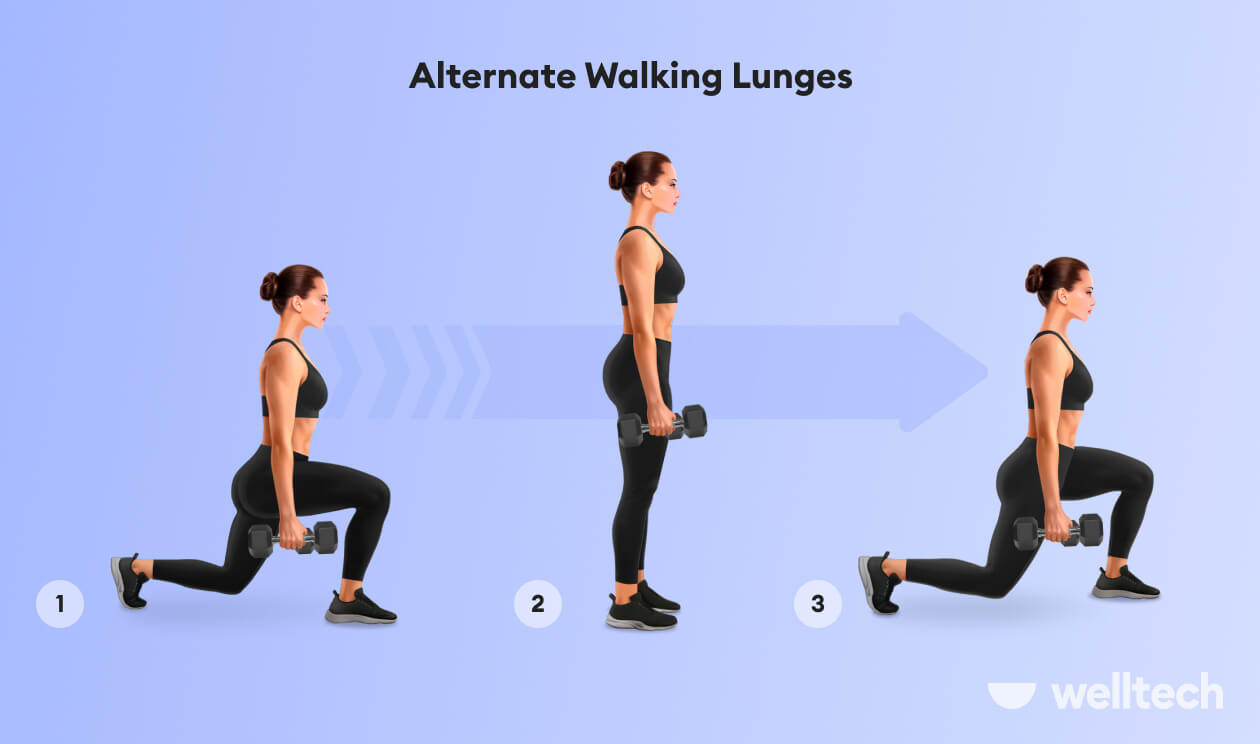
Credit: welltech.com
Safety Tips For Dumbbell Glute Training
Safety is important, especially when lifting weights. Follow these rules:
- Warm up: Always activate your glutes before starting.
- Check your equipment: Make sure dumbbells and benches are stable.
- Lift with good form: Don’t rush; focus on control.
- Breathe properly: Exhale as you lift, inhale as you lower.
- Stop if you feel pain: Sharp pain is a warning sign. Rest and check your form.
One overlooked tip: Use mirrors or record your workout to check your form. This helps spot mistakes you might not notice.
Tracking Your Glute Progress
Measuring progress keeps you motivated and shows what’s working. Here’s how:
- Take photos: Compare every 4–6 weeks.
- Measure your hips: Use a tape to track changes.
- Log weights and reps: Write down what you do each workout.
- Notice strength improvements: Can you lift heavier or do more reps?
Many people focus only on looks. But strength and performance are just as important.
Glute Workout And Nutrition
Training alone isn’t enough. Your muscles need fuel to grow.
- Protein: Essential for muscle repair. Chicken, fish, eggs, beans, and tofu are good sources.
- Carbohydrates: Give you energy for your workouts. Rice, potatoes, oats, and fruit work well.
- Healthy fats: Support hormone health. Try avocados, nuts, and olive oil.
- Hydration: Drink enough water, especially after exercise.
A common mistake: Not eating enough after workouts. Try to eat a balanced meal within 1–2 hours for best results.
Real-life Example: Glute Transformation With Dumbbells
Maria, a busy office worker, wanted to shape her glutes but couldn’t go to a gym. She started a dumbbell glute workout at home, using 10–20 lbs dumbbells and following a routine similar to the one above. After 3 months, she noticed:
- Stronger, firmer glutes
- Better posture and less back pain
- Improved confidence and energy
Maria’s secret? Consistency, tracking her progress, and focusing on mind-muscle connection.
Frequently Asked Questions
How Often Should I Do A Dumbbell Glute Workout?
Most experts suggest training your glutes 2–3 times per week. This gives your muscles enough time to recover and grow. Avoid working them every day, as rest is important for progress.
Can Dumbbells Alone Grow My Glutes?
Yes, dumbbells are enough to build and shape your glutes. The key is using challenging weights, good form, and progressive overload. Bodyweight is good for beginners, but dumbbells help you get faster results.
What’s The Best Dumbbell Glute Exercise?
There’s no single “best” exercise. But hip thrusts and Bulgarian split squats are among the most effective for glute growth. Mixing different exercises gives the best overall results.
I Don’t Have Heavy Dumbbells. Can I Still See Results?
You can still build your glutes with lighter weights if you focus on higher reps, slow tempo, and squeezing your glutes. Try to add weight over time. Using resistance bands with dumbbells can also help.
How Long Does It Take To See Glute Gains?
Most people notice changes in 4–8 weeks with consistent training and good nutrition. Visible gains depend on your starting point, genetics, and effort. Track your progress and stay patient.
Final Thoughts
A dumbbell glute workout is a powerful way to build stronger, shapelier glutes—no gym needed. With the right exercises, good form, and steady progress, you can improve your health, strength, and confidence. Remember to warm up, track your results, and fuel your body with good food.
Whether you’re a beginner or experienced, dumbbells give you the flexibility and challenge you need for lasting glute gains.
If you want more information on glute anatomy and training, visit Wikipedia for a detailed overview.
Stay consistent, listen to your body, and enjoy the journey. Your best glutes are waiting!

Credit: www.bibliotecaoscura.com
