

Can You Work Out Triceps Two Days in a Row? Expert Guide
Can You Work Out Triceps Two Days In A Row
Building strong, defined triceps is a goal for many people who work out. The triceps make up about two-thirds of your upper arm, so they play a big role in how your arms look and perform. But if you are serious about training, you may have wondered: Can you work out triceps two days in a row? This is a common question, especially for those who want fast progress or are following a busy schedule.
This topic is more complex than it seems. Muscles need to be challenged, but they also need time to rest and grow. Pushing too hard or not allowing enough recovery can lead to poor results—or even injury. At the same time, some training programs suggest working the same muscle groups on back-to-back days, while others warn against it.
In this article, you will learn:
- How triceps recover after exercise
- The science behind muscle growth and overtraining
- When it may be okay to train triceps on consecutive days
- Dangers and common mistakes
- How to plan your workouts for best results
- What advanced lifters do differently
- Answers to the most frequent questions about triceps training
By the end, you will have a clear, practical answer to whether you should hit your triceps two days in a row—and how to do it safely if you choose to.
Understanding Triceps Anatomy And Function
The triceps brachii is a three-headed muscle on the back of your upper arm. Its main job is to extend the elbow, helping you push, press, or straighten your arm. The three heads are:
- Long head: Runs along the back of the arm
- Lateral head: The outer part, often most visible
- Medial head: Deeper, under the other two
Triceps work during many upper body movements, not just in exercises like pushdowns or extensions. They are highly active during bench presses, shoulder presses, push-ups, and even dips. This means you often train triceps more than you think.
Because of their function, the triceps can recover fairly quickly compared to larger muscles like the legs or back. But they are still muscles—subject to the same rules about fatigue, damage, and the need for rest.
How Muscles Recover And Grow
When you train a muscle, you create small tears in the muscle fibers. This is called muscle damage. Your body then repairs this damage, making the muscle stronger and sometimes bigger. This process is called muscle protein synthesis.
The key steps are:
- Stress: Exercise stresses the muscle, causing micro-tears.
- Repair: The body sends nutrients and signals to repair the muscle.
- Adaptation: The muscle adapts, getting stronger or bigger.
Most muscle recovery happens in the 24–72 hours after a workout. The exact time depends on many things:
- How hard you trained (intensity)
- How many sets and reps you did (volume)
- Your fitness level
- Your age and nutrition
- Sleep quality
If you train the same muscle too soon, you may not allow enough time for this repair process. That can slow your progress and even lead to injury.
:max_bytes(150000):strip_icc()/GettyImages-922708878-bfcbf3cf67234c27ac293835a0a9683d.jpg)
Credit: www.shape.com
The Science: Can You Work Out Triceps Two Days In A Row?
The short answer: Yes, you can—but it depends.
Research shows that muscles need time to recover after hard training. Most guidelines suggest 48 hours between hard sessions for the same muscle group. This allows for repair and growth. However, not all workouts are the same. The answer depends on several factors:
1. Training Intensity And Volume
If you do a heavy, high-volume triceps workout (many sets, high weight, lots of reps), your muscles will need more time to recover. If you do a light session, or just a few sets, recovery is faster.
2. Your Fitness Level
Beginners usually need more recovery time. Their muscles are not used to the stress, so damage and soreness last longer. Advanced lifters can sometimes handle more frequent sessions, because their bodies adapt quickly.
3. Exercise Selection
Some exercises are harder on the triceps than others. For example, skull crushers or close-grip bench presses are more intense than triceps kickbacks. Compound movements also stress the triceps differently than isolation exercises.
4. Nutrition, Sleep, And Recovery
If you eat well, sleep enough, and manage stress, your body repairs itself faster. Poor recovery habits slow down muscle growth and increase injury risk.
5. Your Overall Program
If you train triceps with chest or shoulders, you may already be working them on back-to-back days without planning it. This is common in split routines.
Real-world Example
Suppose you do chest on Monday (which also hits triceps) and arms on Tuesday. That’s two days in a row of triceps work. Some people handle this fine; others struggle with soreness or fatigue.
Comparing Triceps Recovery Vs. Other Muscles
Not all muscles recover at the same rate. Here’s a simple comparison, based on research and common gym experience:
| Muscle Group | Average Recovery Time | Notes |
|---|---|---|
| Triceps | 24–48 hours | Often used with chest/shoulder work |
| Biceps | 24–48 hours | Smaller muscle, quick recovery |
| Quadriceps | 48–72 hours | Larger muscle, more damage from squats |
| Back | 48–72 hours | Many muscles, heavy loads |
| Calves | 24–48 hours | Used daily in walking |
Triceps usually recover faster than legs or back, but you still need to listen to your body.
When Is It Ok To Work Out Triceps Two Days In A Row?
There are situations where training triceps on consecutive days is possible or even useful. Here’s when it might make sense:
1. Light Or Recovery Workouts
If your first session was very light, or you only did a few sets, you can train triceps again the next day. This is sometimes called an active recovery session.
2. Different Exercise Types
If you use different exercises, you might stress different parts of the triceps. For example:
- Day 1: Compound presses (bench press, dips)
- Day 2: Isolation work (triceps pushdowns, overhead extensions)
This can allow for some recovery while still training the muscle group.
3. Special Programs
Some advanced routines use high-frequency training, hitting the same muscle multiple days in a row. This is usually done with lower volume per session, to avoid overtraining.
4. Time Constraints
If you have a busy schedule and can only train on certain days, it may be better to work triceps two days in a row than to miss a session completely. Just reduce the volume and intensity.
5. Advanced Lifters
Experienced lifters may be able to handle more frequent triceps training, due to greater adaptation and better recovery habits.
When You Should Not Train Triceps Two Days In A Row
There are also times when working triceps on back-to-back days is a bad idea:
1. After A Hard, High-volume Session
If your triceps are very sore, stiff, or weak after a tough workout, give them more time to recover.
2. If You’re A Beginner
New lifters often need extra recovery, as their muscles are not adapted to frequent training.
3. If You’re Not Sleeping Or Eating Well
Poor recovery habits make back-to-back training risky. Rest and nutrition are key for muscle growth.
4. If You Have Joint Or Tendon Pain
Triceps training puts stress on the elbow. Training too often can cause tendinitis or joint pain, especially with poor technique.
5. If Your Progress Has Stalled
Constant fatigue, loss of strength, or lack of growth can be signs you need more rest.
Risks And Downsides Of Training Triceps Two Days In A Row
Working triceps on consecutive days is not always risky, but there are some dangers to consider.
1. Overtraining And Fatigue
Muscles that do not fully recover become weaker, not stronger. Overtraining leads to fatigue, poor performance, and sometimes injury.
2. Injury Risk
The triceps cross the elbow joint, and too much stress can cause tendinitis or even muscle strains. This is more likely if you use heavy weights or poor form.
3. Reduced Strength And Growth
If you train too often without recovery, your muscles may actually get smaller and weaker—a process called catabolism.
4. Poor Performance In Other Workouts
Tired triceps can hurt your performance in chest or shoulder workouts. You may not be able to bench press or overhead press as much weight if your triceps are still recovering.
5. Mental Burnout
Training hard every day can lead to burnout. Enjoying your workouts is important for long-term success.
How To Tell If Your Triceps Are Recovered
You can’t always “feel” if a muscle is ready to train again. But there are some simple ways to check:
- Soreness: If your triceps are still sore, wait another day.
- Strength: If you can’t lift your normal weight, your muscles may not be fully recovered.
- Flexibility: Tightness or pain when stretching the arm can mean more recovery is needed.
- Fatigue: General tiredness or lack of motivation can be a sign of overtraining.
One non-obvious insight: muscle soreness is not always a sign of recovery or growth. Sometimes, muscles can be sore but still ready to work; other times, lack of soreness does not mean full recovery. Use soreness as one clue, not the only sign.

Credit: powerliftingtechnique.com
Strategies To Recover Faster
If you want to work triceps more often, focus on recovery. Here are proven ways to speed up the process:
1. Nutrition
Eat enough protein (at least 0.7–1 gram per pound of body weight), plus healthy carbs and fats. Protein helps repair muscle fibers.
2. Sleep
Aim for 7–9 hours of quality sleep per night. Growth hormone and muscle repair happen mostly during sleep.
3. Hydration
Muscles recover faster when you are well-hydrated. Drink water throughout the day, not just during workouts.
4. Active Recovery
Light cardio, stretching, or gentle movement helps bring blood flow to the muscles, speeding recovery.
5. Massage Or Foam Rolling
These techniques can reduce soreness and improve flexibility.
6. Avoid Excess Stress
Chronic stress raises cortisol, a hormone that slows muscle repair.
Sample Training Approaches: Should You Try Back-to-back Triceps Workouts?
Let’s compare different ways to train triceps and see how back-to-back workouts fit in.
| Training Split | Triceps Frequency | Typical Recovery | Who Is It For? |
|---|---|---|---|
| Full-Body | 2–3 times/week | 48 hours between sessions | Beginners, busy people |
| Upper/Lower | 2 times/week | 72 hours between sessions | Intermediate lifters |
| Push/Pull/Legs | 2 times/week | 48–72 hours between sessions | Intermediate/advanced |
| Body Part Split | 1 time/week | 7 days between sessions | Advanced, bodybuilding focus |
| High-Frequency | 4–6 times/week | 24 hours between sessions | Advanced only, lower volume per session |
Most people see best results with 2–3 triceps sessions per week, with at least one rest day in between.
Practical Tips For Safe And Effective Triceps Training
1. Listen To Your Body
Everyone is different. Some people recover quickly, others slowly. Adjust your training based on how you feel and perform.
2. Vary Your Workouts
Mix compound and isolation exercises. Change the order, reps, and sets to avoid overuse injuries.
3. Focus On Form
Proper technique protects your joints and helps you target the triceps, not just move weight.
4. Warm Up
Always warm up your elbows and shoulders before training triceps. Light cardio and arm circles help prevent injury.
5. Use Proper Progression
Increase weight, reps, or sets slowly. Don’t jump into heavy weights on back-to-back days.
6. Recovery First
If you choose to train triceps two days in a row, keep at least one session lighter or shorter. Don’t go heavy both days.
7. Avoid Common Mistakes
Many people make these errors:
- Training only the “showy” lateral head
- Using only one exercise
- Ignoring pain or soreness
- Relying on poor nutrition or little sleep
A non-obvious tip: grip width can affect how much you use the triceps. Close-grip presses hit the triceps more, while wider grips shift work to the chest and shoulders.
Common Scenarios: Should You Train Triceps Two Days In A Row?
Let’s look at some real situations and what you should do.
Scenario 1: Missed A Workout
If you missed your triceps day and want to catch up, it’s usually fine to train two days in a row, as long as you keep one session short and light.
Scenario 2: Training For A Sport
Some sports require strong triceps (like boxing or swimming). In off-season, you can sometimes add extra triceps sessions for short periods, but not all year.
Scenario 3: Advanced Lifters With High Frequency
Bodybuilders or advanced lifters might do short, daily triceps sessions for 2–3 weeks (a “specialization phase”), then return to normal frequency.
Scenario 4: Sore Or Weak Triceps
If you are still sore, weak, or have pain, skip the second workout and focus on recovery.
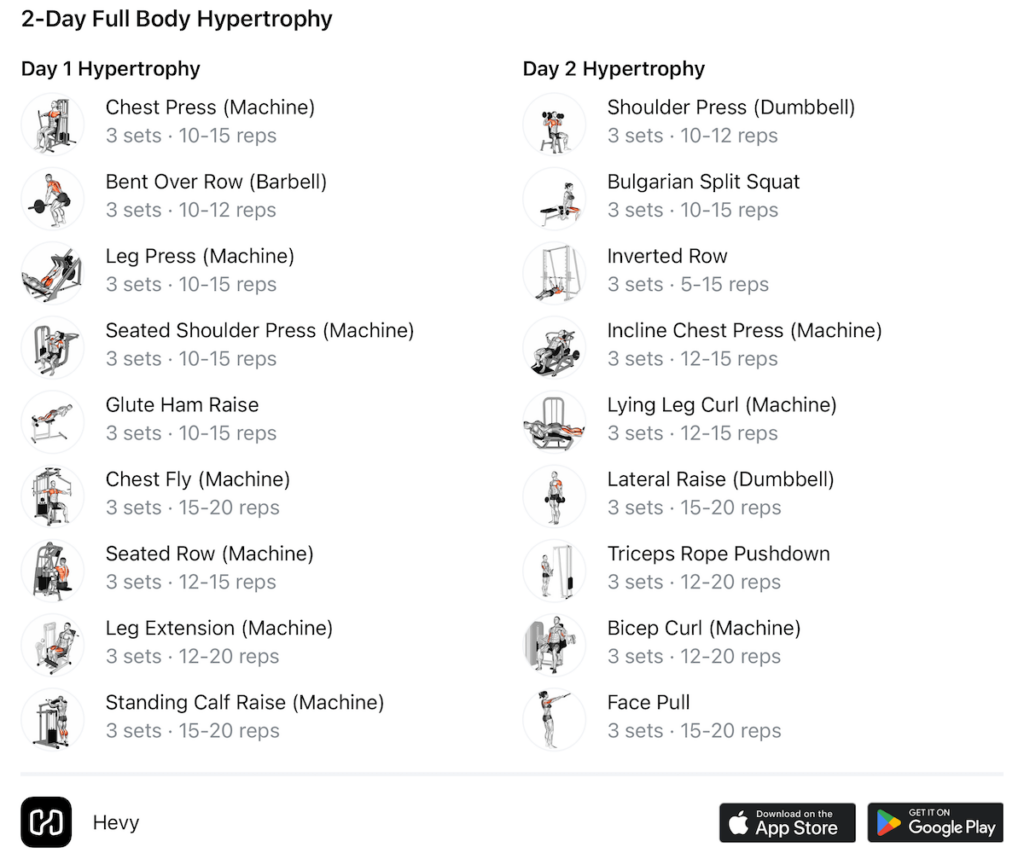
Scenario 5: Back-to-back Push Days
If your program has chest one day and shoulders the next, try to arrange rest or leg days in between to give triceps a break.
Credit: www.hevyapp.com
Example Back-to-back Triceps Workouts
If you decide to train triceps two days in a row, here’s a safe example:
Day 1: Heavy Compound Focus
- Close-grip bench press: 3 sets of 6–8 reps
- Dips: 2 sets of 8–10 reps
- Overhead triceps extension: 2 sets of 10–12 reps
Day 2: Light Isolation Focus
- Triceps pushdowns: 3 sets of 12–15 reps
- Cable kickbacks: 2 sets of 15 reps
- Light bench dips: 2 sets to near failure
Keep the second day lighter in weight and avoid pushing to failure.
What Do Experts Say?
Most fitness experts and organizations recommend at least 48 hours between hard triceps sessions. However, some advanced trainers use high-frequency training for short periods. Studies show this can work—but only with careful control of volume and intensity.
The American College of Sports Medicine suggests 2–3 sessions per muscle group per week for best growth, with at least one day of rest in between.
If you want to read more on muscle recovery, see this Wikipedia entry on muscle recovery.
How To Adjust Your Program If You Must Train Triceps On Consecutive Days
If your schedule forces you to train triceps two days in a row, here’s how to do it safely:
- Reduce Volume: Don’t do as many sets or exercises on both days.
- Lower the Intensity: Use lighter weights, especially on the second day.
- Alternate Exercise Type: Do compound lifts one day, isolation the next.
- Increase Recovery: Focus on sleep, nutrition, and hydration.
- Watch for Warning Signs: If you get weaker, sorer, or more tired, take a rest day.
Sample Weekly Workout Plan
Here’s a weekly plan that allows for two triceps sessions, but not on back-to-back days:
| Day | Workout |
|---|---|
| Monday | Chest + Triceps |
| Tuesday | Back + Biceps |
| Wednesday | Rest or Cardio |
| Thursday | Shoulders + Triceps |
| Friday | Legs |
| Saturday | Rest or Cardio |
| Sunday | Full Body (optional) |
This plan gives at least one full day between hard triceps sessions.
Frequently Asked Questions
How Often Should I Train Triceps For Best Results?
Most people see best results with 2–3 triceps sessions per week, with at least one day of rest in between. Beginners may only need 1–2 sessions, while advanced lifters can handle more, if they adjust volume and intensity.
Can I Train Triceps Every Day If I Do Low Weight And High Reps?
Training triceps daily with low weight and high reps is possible, but it’s not the best for growth or strength. The muscle still needs rest to repair and adapt. Over time, you may risk overuse injuries.
Is It Bad To Train Triceps Two Days In A Row If I’m Not Sore?
Lack of soreness does not mean your muscles are fully recovered. You can train again if you feel strong and fresh, but it’s wise to keep the second session lighter or shorter.
Will My Triceps Stop Growing If I Train Them Too Often?
If you train triceps too often without recovery, they may stop growing or even get weaker. This is called overtraining. Balance hard sessions with rest for the best progress.
What Are Signs I’m Training Triceps Too Much?
Warning signs include constant soreness, joint pain, loss of strength, poor sleep, and low motivation. If you notice these, take a break or reduce your training frequency.
---
Getting great triceps is about smart training, not just more training. You can work out triceps two days in a row in some cases, especially if you manage intensity and recovery. But for most people, allowing a day or two between hard sessions works best.
Always listen to your body, adjust as you progress, and focus on form, nutrition, and rest. This approach will help you build stronger, healthier triceps for the long term.
