

Best Tricep Workout for Lateral Head: Sculpt Strong Arms Fast
Best Tricep Workout For Lateral Head
Building strong, defined triceps is a key goal for many who train for bigger arms. But not all triceps workouts are created equal. If you want that “horseshoe” look from the side, you need to focus on the lateral head of the triceps. This part of the muscle sits on the outer side of your upper arm and gives your arms that wide, powerful shape. Many people do not realize how important the lateral head is for arm size and appearance. It’s often neglected because standard triceps exercises do not always target it directly.
Some lifters spend years doing pushdowns and skullcrushers, but see little change in arm width. Others don’t feel their triceps working deeply and miss out on true muscle growth. This article is your complete guide to the best tricep workout for the lateral head.
You’ll learn the science behind the muscle, find practical exercises, and get a full routine that really works. By the end, you’ll know exactly how to train for bigger, more defined arms—with results you can see.
Understanding The Lateral Head Of The Triceps
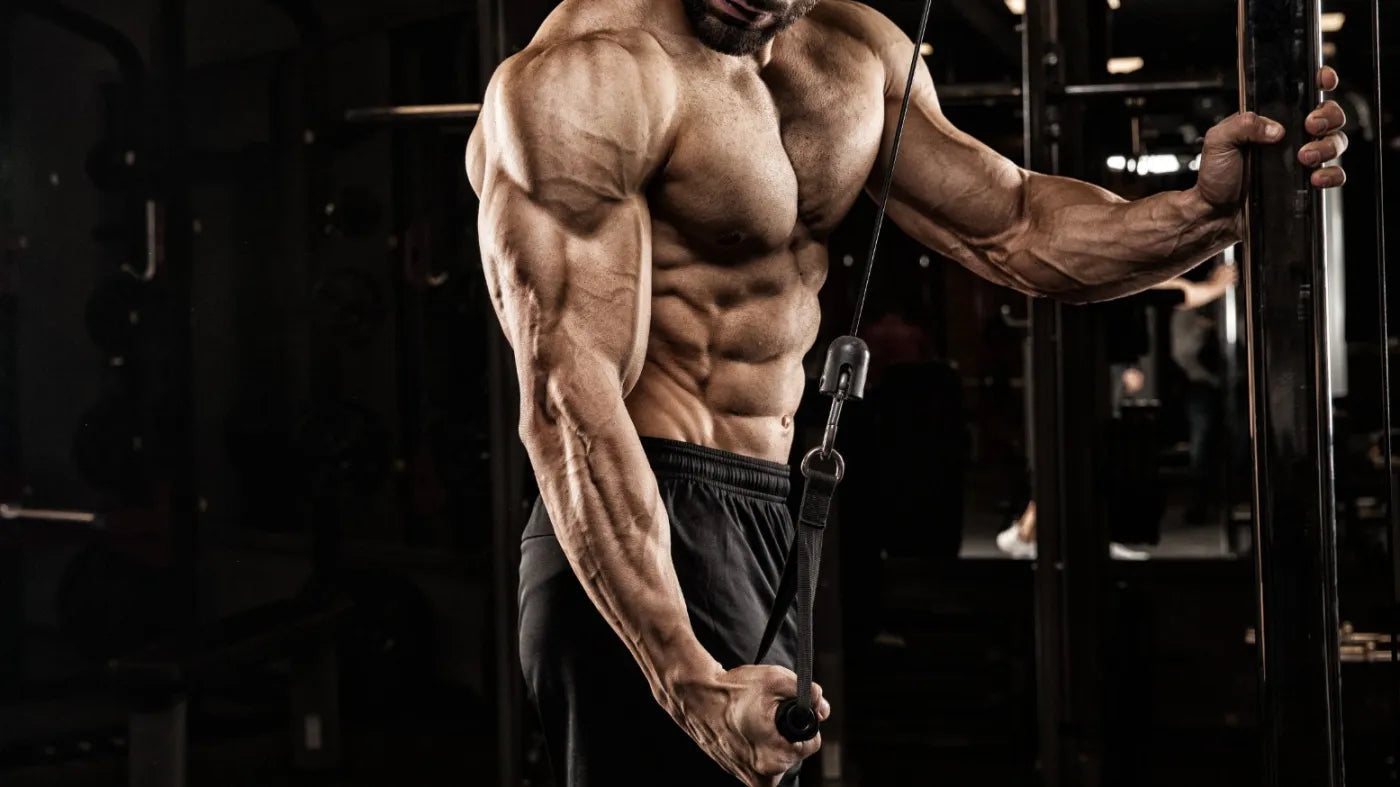
The triceps brachii has three parts: lateral head, long head, and medial head. The lateral head sits on the outer side of the upper arm and is the main muscle you see from a side view. Its job is to straighten the arm (elbow extension) and help with pushing movements. When well developed, the lateral head gives a rounded, “capped” look to the upper arm.
Many people do not realize that hand position, elbow angle, and grip can change which part of the triceps gets the most work. For the lateral head, exercises with a pronated grip (palms down), elbows close to the body, and arms at the sides are most effective. Standard overhead or close-grip bench moves hit the long head more. It’s these small adjustments that make a big difference in results.
Research shows that the lateral head has a high percentage of fast-twitch muscle fibers. These fibers respond best to heavy weights and explosive effort. That’s why compound presses and cable pushdowns often work well for this area. However, many lifters do not feel the lateral head “fire” during classic exercises. Often, this is due to poor form or not using the right grip. Focusing on the right movement path and locking your elbow position can greatly improve results.
Why Target The Lateral Head?
Some people wonder why it matters to focus on the lateral head. After all, aren’t all triceps exercises the same? The answer is no. The lateral head is the part that gives your arm that wide, full look from the side. If you want arms that fill out your T-shirt or stand out in photos, this is the muscle to grow.
Here are three key reasons to target the lateral head:
- Arm shape: Most of your arm’s width comes from the triceps, not the biceps. The lateral head adds a sharp, visible “sweep” to your upper arm.
- Strength in pressing: Strong lateral triceps help with bench press, dips, and any push movements by adding more power and stability.
- Balanced development: Focusing only on long head exercises can lead to muscle imbalances or even joint pain over time.
Another fact many miss: neglecting the lateral head can make your arms look “flat” even if you build muscle elsewhere. To get that rounded, 3D effect, you need to work all parts of the triceps, with extra attention on the lateral head.
Credit: ca.ironbullstrength.com
Key Principles For Building The Lateral Head
Before jumping into the exercises, it’s important to know the key principles for growing the lateral head. Without these, you can do all the right moves but still not see the results you want.
1. Use The Right Grip And Angle
A pronated grip (palms facing down) and keeping the elbows near your sides focus the work on the lateral head. For example, reverse-grip pushdowns (palms up) hit more of the medial head. Small changes in hand position can shift the load to other parts of the triceps.
2. Train With Moderate To Heavy Weights
Because the lateral head is rich in fast-twitch fibers, it grows best with heavy weight and lower reps. Aim for 6–12 reps per set, using enough weight that the last few reps are challenging but with good form.
3. Lock Your Elbows
Letting your elbows flare out or move during the set reduces tension on the lateral head. Keep your elbows fixed and tucked by your sides, especially during pushdowns or cable work.
4. Use Full Range Of Motion
Lower the weight all the way down and extend your arms fully at the top. Partial reps cheat your triceps out of growth and keep the lateral head underworked.
5. Don’t Rush The Negative
The eccentric phase (lowering the weight) is where much of the muscle damage and growth happens. Control the weight down for 2–3 seconds, then press up explosively.
6. Mind-muscle Connection
Focus on squeezing the lateral head during every rep. Visualize the outer part of your triceps doing the work. This helps activate more fibers and leads to better results.
Best Exercises For The Lateral Head
Not all triceps exercises target the lateral head equally. Below are the most effective movements, with tips for getting the most out of each one.
1. Cable Triceps Pushdown (straight Bar)
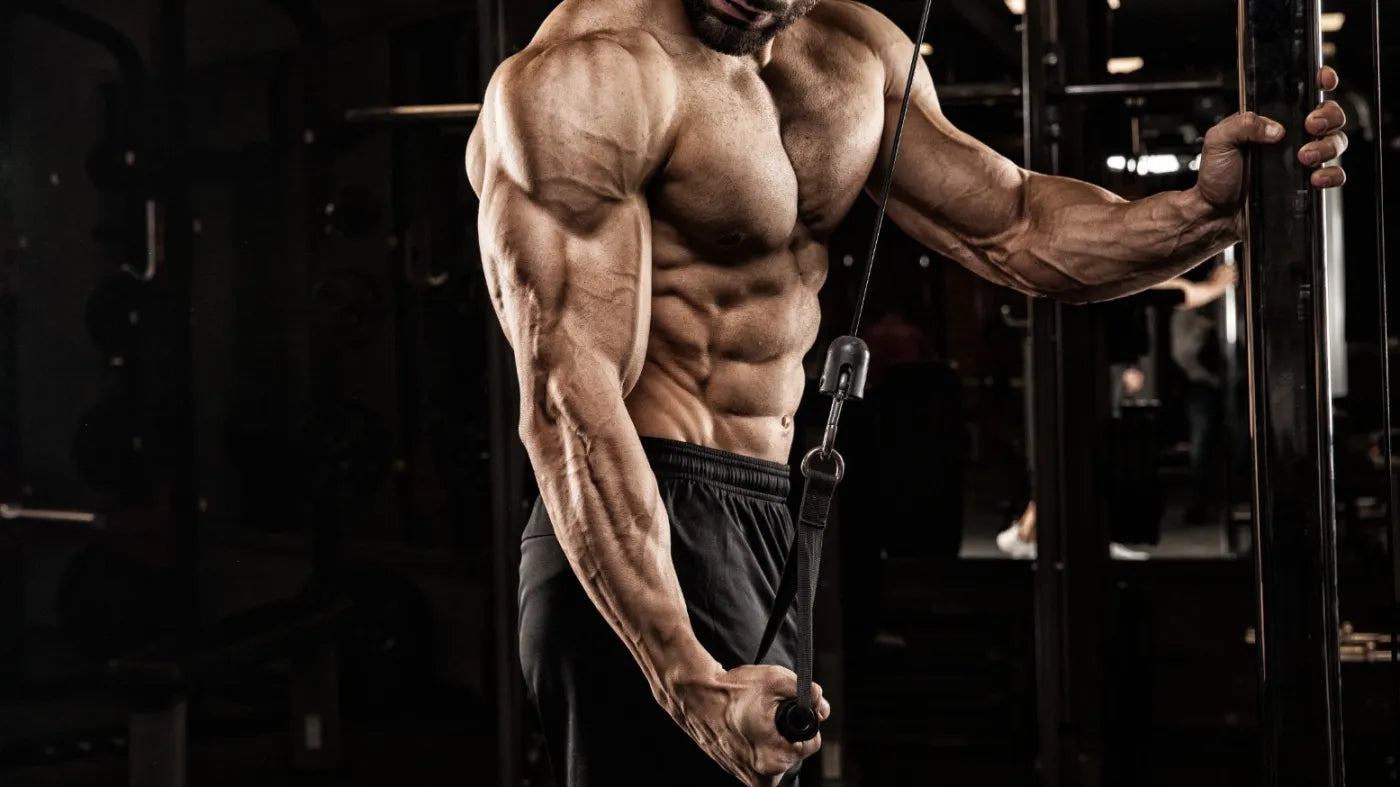
This is the classic lateral head builder. Set the cable at shoulder height, use a straight bar, and keep your elbows close to your sides. Push down, fully straightening your arms, and squeeze the outer triceps at the bottom.
Tips:
- Stand upright, not leaning forward.
- Use a moderate weight for good control.
- Avoid swinging or letting your elbows drift.
2. Rope Pushdown
Similar to the straight bar, but using a rope lets you “split” your hands at the bottom, creating even more tension on the lateral head. This is great for finishing a workout or getting a deep burn.
Tips:
- At the bottom, pull the rope ends apart and hold for a second.
- Keep your wrists neutral (not bending).
- Go for higher reps (10–15) to finish the muscle.
3. Close-grip Bench Press
This compound move builds overall triceps size and strength but is especially good for the lateral head if your elbows are tucked and your grip is just inside shoulder width.
Tips:
- Don’t use a grip too narrow; it can hurt your wrists.
- Lower the bar to the lower chest, not the neck.
- Press up powerfully, locking your elbows at the top.
4. Triceps Dips (bench Or Parallel Bars)
Dips are a top choice for the lateral head, especially with a narrow grip and torso upright. Leaning forward shifts the work to the chest, so stay straight.
Tips:
- Keep elbows close to your body.
- Lower yourself slowly, then press up hard.
- For more challenge, add weight with a belt.
5. Diamond Push-ups
This bodyweight move is great for home or as a “burnout” at the end of your session. Place your hands close together under your chest, forming a diamond shape with your fingers.
Tips:
- Lower your chest all the way to your hands.
- Keep elbows tight to your sides.
- Go for high reps to finish the triceps.
6. Overhead Cable Extension (with Rope)
While this move also works the long head, using a rope and focusing on splitting your hands at the top targets the lateral head well. It keeps constant tension and allows for a deep stretch.
Tips:
- Use a moderate weight for good control.
- Lean slightly forward to protect your back.
- Don’t let your elbows flare out.
7. Reverse-grip Pushdown (variation)
Though this mainly hits the medial head, using a *neutral* or *slightly overhand grip* and tucking your elbows can involve the lateral head. Try it with lighter weight for a pump.
Tips:
- Go slow and focus on the squeeze.
- Keep wrists straight.
- Use as a “finisher” after heavier moves.
Below is a quick comparison of how each exercise targets the triceps heads:
| Exercise | Lateral Head Focus | Long Head Involvement | Medial Head Involvement |
|---|---|---|---|
| Cable Pushdown | High | Medium | Medium |
| Rope Pushdown | High | Medium | Medium |
| Close-Grip Bench Press | Medium | High | Medium |
| Dips | High | High | Medium |
| Diamond Push-Ups | High | Medium | Medium |
| Overhead Cable Extension | Medium | High | Medium |
| Reverse-Grip Pushdown | Low-Medium | Low | High |
Complete Lateral Head Triceps Workout
Here is a full workout designed to maximize lateral head growth. Do this routine once or twice a week, allowing at least two days of rest between sessions.
Warm-up (5–10 Minutes)
- Arm circles: 2 sets of 20 reps each direction
- Light push-ups: 2 sets of 10–15 reps
- Band pull-aparts: 2 sets of 15 reps
Main Workout
1. Close-grip Bench Press: 4 Sets X 6–8 Reps
Go heavy but keep good form. Rest 90 seconds between sets.
- Cable Triceps Pushdown (Straight Bar): 4 sets x 8–12 reps
Focus on full range and strong squeeze. Rest 60 seconds.
3. Rope Pushdown: 3 Sets X 12–15 Reps
Use lighter weight, split the rope at the bottom. Rest 45 seconds.
- Bench Dips (Weighted if possible): 3 sets x 10–12 reps
Keep body upright, elbows in. Rest 60 seconds.
5. Overhead Cable Extension (rope): 3 Sets X 10–12 Reps
Stretch at the bottom, split at the top. Rest 45 seconds.
6. Diamond Push-ups (burnout): 2 Sets To Failure
Do as many as possible with perfect form.
Cool Down
- Triceps stretch: 2 sets x 20 seconds per arm
- Light band pushdowns: 1 set x 20 reps (flushes blood into the muscle)
Sample Weekly Split
| Day | Workout Focus |
|---|---|
| Monday | Lateral Head Triceps + Chest |
| Wednesday | Back + Biceps |
| Friday | Lateral Head Triceps + Shoulders |
| Sunday | Legs + Core |
This split allows enough recovery for your triceps to grow without overtraining. You can adjust the days to fit your schedule.
Common Mistakes When Training The Lateral Head
Many people miss out on lateral head growth because of simple, avoidable mistakes. Here are the most common errors and how to fix them:
- Using Too Much Weight: If you can’t control the weight, your elbows flare out and your shoulders take over. Use a weight you can move with perfect form.
- Partial Range of Motion: Not locking out your arms at the bottom of pushdowns or presses means the lateral head is not fully activated.
- Letting Elbows Move: Keep them pinned to your sides to maintain tension on the target muscle.
- Neglecting Compound Movements: Only doing isolation moves will not build maximum size or strength. Mix compounds like bench press and dips with isolation work.
- Not Varying Grips and Angles: Always using the same bar or grip can lead to plateaus. Switch between rope, bar, and dumbbell versions to hit the muscle from all sides.
A less obvious mistake: not eating enough protein or getting enough rest. Muscle only grows with proper nutrition and recovery.

Credit: www.youtube.com
Advanced Techniques For More Growth
Once you master the basics, you can use advanced strategies to keep the lateral head growing.
Drop Sets
At the end of a set, reduce the weight by 20–30% and continue until you reach failure. This keeps the muscle under tension and increases growth.
Rest-pause Sets
Do a set to failure, rest 10–15 seconds, then do as many more reps as possible. Repeat for 2–3 mini-sets. This increases training volume and hits stubborn muscle fibers.
Slow Negatives
Lower the weight for 4–5 seconds on each rep. This increases muscle damage and can boost growth, especially if you’ve stalled with normal sets.
Pre-exhaust
Do an isolation exercise (like rope pushdowns) before a compound move (like dips). This “pre-fatigues” the lateral head, forcing it to work harder during heavy lifts.
Important: Only use these advanced methods if you’ve built a solid base. Doing too much too soon can lead to injury.
Programming Tips And Recovery
To build the lateral head, you must not only train hard but also train smart. Here are key tips for getting the best results:
- Frequency: Train triceps directly 2 times per week, with at least 48 hours between sessions.
- Volume: Most people grow best with 12–16 sets per week for triceps. More is not always better—focus on quality.
- Progressive Overload: Add weight, reps, or sets over time. If you always lift the same, your muscles won’t grow.
- Nutrition: Eat 0.7–1 gram of protein per pound of body weight daily to support muscle repair.
- Rest: Sleep 7–9 hours per night. Growth happens outside the gym.
- Hydration: Stay hydrated to support joint health and muscle function.
A common insight missed by beginners: training biceps and triceps on the same day can reduce your strength on the second muscle group. If possible, separate them to get the best results for both.
Sample Progression Plan
Progress doesn’t happen overnight. Here’s how you might plan your training for steady lateral head gains:
| Week | Main Focus | Adjustments |
|---|---|---|
| 1–4 | Learn Form & Mind-Muscle Connection | Moderate weight, perfect form |
| 5–8 | Increase Weight, Add Sets | Try heavier weights, add one set per exercise |
| 9–12 | Use Advanced Techniques | Add drop sets, slow negatives, or rest-pause |
| 13+ | Deload & Reassess | Reduce volume for a week, check progress |
Real-world Examples And Success Stories
Many bodybuilders and fitness models owe their arm shape to focused lateral head work. For example, famous lifters often use high-volume pushdowns, dips, and close-grip presses to build the outer sweep of the arm.
One case: a lifter whose arms did not grow despite years of training saw big changes after switching from overhead extensions to cable pushdowns and dips with strict elbow position. Within months, his arms appeared fuller and shirts fit tighter. This is not just theory—targeted lateral head work brings real, visible results.
Another insight: some people naturally have a harder time “feeling” their lateral head. These lifters often benefit from using lighter weights and higher reps to build a mind-muscle connection before moving to heavier loads.
Credit: ironbullstrength.com
Frequently Asked Questions
How Can I Tell If I’m Hitting The Lateral Head?
The lateral head sits on the outer side of your upper arm. When you flex your triceps in the mirror, the round, outer part should feel hard and pumped after your workout. If you only feel soreness on the back of your arm, you may be hitting the long head more. Use exercises like cable pushdowns and dips, keeping your elbows close to your sides for best results.
Is Heavy Weight Or High Reps Better For Lateral Head Growth?
Both methods work, but the lateral head responds best to moderate to heavy weight (6–12 reps per set) with perfect form. Too light and you won’t challenge the fast-twitch fibers; too heavy and form breaks down. Mix in some higher-rep “burnout” sets at the end for full development.
Can I Train Triceps More Than Twice A Week?
It’s possible, but most people make better gains with 2 focused sessions per week. Training more can lead to sore elbows or overuse injuries. If you recover well, you can add a third light session, but always listen to your body and rest if needed.
Do I Need Special Equipment To Hit The Lateral Head?
No. You can build the lateral head with bodyweight exercises (diamond push-ups, dips) and basic gym equipment (cables, dumbbells, barbell). Machines help with isolation, but are not required. Focus on form and muscle activation, not just the tools.
Why Do My Triceps Hurt Near The Elbow After Training?
Pain near the elbow could be triceps tendonitis from using too much weight, poor form, or not warming up. Always start with lighter sets, keep your elbows tucked, and avoid locking out too hard. If pain persists, rest and see a professional. Never train through sharp pain.
If you want more scientific background, check out this detailed overview of the triceps brachii muscle.
Building the lateral head of the triceps is not just about doing more sets—it’s about quality, focus, and using the right exercises and form. With these methods, your arms will look fuller, stronger, and more impressive than ever. Take the time to train smart, and you’ll see the difference in every shirt you wear.
