

Best Home Glute Workout: Build Stronger Glutes Fast
Best Home Glute Workout
Glutes are more than just a muscle group for looks. Strong glutes help you move better, stand taller, and support your lower back. Many people think you need a gym to build them, but that’s not true. With the right home workout, you can get powerful, toned glutes using just your bodyweight or simple equipment. This guide gives you everything you need: key exercises, workout plans, practical tips, and clear explanations—so you can shape your glutes at home, no matter your fitness level.
Why Training Glutes Matters
Your glutes are the largest muscle group in your body. They help you walk, run, climb, and lift things. Weak glutes can cause poor posture, back pain, and even knee injuries. If you sit a lot for work or school, your glutes may get weaker over time.
Building strong glutes has many benefits:
- Better balance and stability
- Less risk of back pain
- Improved athletic performance
- Stronger legs and hips
Many beginners focus only on squats, but glutes need more variety. You should target them from different angles and with different movements.
Key Glute Muscles Explained
Your glutes are made up of three main muscles:
- Gluteus maximus – This is the largest part. It gives your butt its shape and helps you stand, walk, and jump.
- Gluteus medius – This muscle sits on the side. It helps keep your hips stable and moves your legs sideways.
- Gluteus minimus – This is the smallest, deep inside your hip. It helps with hip movement and stability.
If you only train one movement, you miss out on full glute development. A good home workout will hit all three muscles.
Home Glute Workout Essentials
You don’t need fancy equipment to train glutes. Most exercises use your body weight. If you have resistance bands or dumbbells, you can make workouts harder. Here’s what helps:
- Bodyweight: Perfect for beginners and easy to adjust
- Resistance bands: Cheap, portable, and great for adding challenge
- Dumbbells: Useful for extra resistance, but optional
- Mat: Makes floor exercises more comfortable
If you use bands, pick a medium resistance. Too light, and you won’t feel much; too heavy, and your form might suffer.
Best Home Glute Exercises
A strong glute workout uses several movements. Here are the most effective exercises you can do at home:
1. Glute Bridge
Lie on your back, knees bent, feet flat. Push through your heels and lift your hips up, squeeze your glutes at the top, then lower down.
- Targets: Gluteus maximus
- Tip: Don’t arch your back. Focus on squeezing your glutes, not your lower back.
2. Single-leg Glute Bridge
Do the glute bridge, but with one leg raised. This makes your glutes work harder.
- Targets: Gluteus maximus, medius
- Tip: Keep hips level. Don’t let one side drop.
3. Bulgarian Split Squat
Stand with one foot behind you on a chair or bench. Lower your body until your front thigh is parallel to the floor, then rise.
- Targets: Glutes, quads
- Tip: Lean forward slightly to hit glutes more. Don’t let your knee go past your toes.
4. Squat
Stand with feet shoulder-width. Lower your hips back and down, keeping your chest up, then push up.
- Targets: Glutes, quads, hamstrings
- Tip: Go as low as you can with good form.
5. Step-up
Step onto a sturdy chair or bench with one foot, push through your heel to stand up, then step down.
- Targets: Gluteus maximus, medius
- Tip: Use a height that’s safe and challenging.
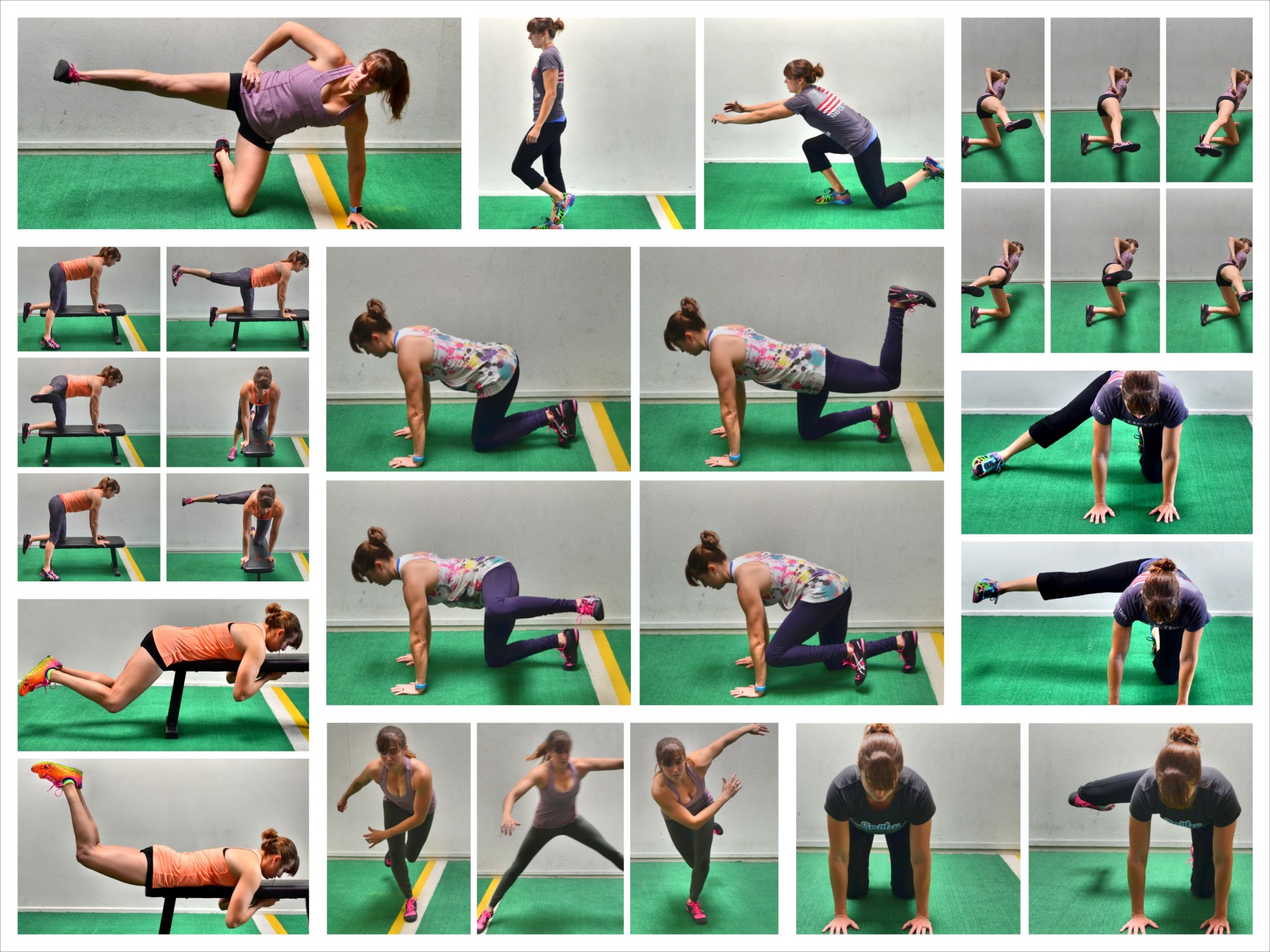
6. Donkey Kick
On all fours, kick one leg up and back, keeping your knee bent. Lower and repeat.
- Targets: Gluteus maximus
- Tip: Don’t swing your leg. Use slow, controlled movement.
7. Fire Hydrant
On all fours, lift one knee out to the side, keeping your knee bent. Lower and repeat.
- Targets: Gluteus medius, minimus
- Tip: Keep your hips steady. Don’t rotate your body.
8. Clamshell
Lie on your side, knees bent. Open your top knee without moving your hips, then close.
- Targets: Gluteus medius, minimus
- Tip: Add a band above your knees for more challenge.
9. Hip Thrust (using Couch Or Chair)
Sit with your upper back on a couch or chair, feet flat. Push hips up, squeeze glutes, then lower.
- Targets: Gluteus maximus
- Tip: Pause at the top for more activation.
10. Lateral Band Walk
Place a resistance band above your knees. Squat slightly and step sideways.
- Targets: Gluteus medius
- Tip: Keep tension on the band at all times.
11. Reverse Lunge
Step one foot back, lower your body, then return to standing.
- Targets: Glutes, quads
- Tip: Push through your front heel.
12. Frog Pump
Lie on your back, soles of feet together, knees out. Lift your hips up, squeeze glutes, then lower.
- Targets: Gluteus maximus
- Tip: Do high reps to feel the burn.
13. Curtsy Lunge
Step one leg behind and across, lower your body, then return.
- Targets: Gluteus medius, maximus
- Tip: Go slow for balance.
14. Wall Sit With Band
Sit against a wall, knees bent. Place band above knees, push knees out.
- Targets: Gluteus medius, maximus
- Tip: Hold for 30–60 seconds.
15. Standing Kickback
Stand, hold onto a wall. Kick one leg back, squeeze glute, then lower.
- Targets: Gluteus maximus
- Tip: Don’t arch your back.
16. Side-lying Leg Raise
Lie on your side, lift your top leg up, lower slowly.
- Targets: Gluteus medius
- Tip: Add a band for more challenge.
17. Sumo Squat
Stand with feet wide, toes out. Lower your hips, then rise.
- Targets: Glutes, inner thighs
- Tip: Go as low as comfortable.
18. Deadlift (with Dumbbells)
Hold dumbbells, stand with feet hip-width. Bend hips and knees, lower weights, then stand up.
- Targets: Glutes, hamstrings
- Tip: Keep your back straight.
19. Elevated Glute Bridge
Place your feet on a chair or bench, lift hips up, squeeze glutes.
- Targets: Gluteus maximus
- Tip: Feet higher makes it harder.
20. Monster Walk
Band above knees, squat slightly, walk forward and back.
- Targets: Gluteus medius
- Tip: Stay low for more tension.
Credit: grownstrong.com
Home Glute Workout Plans
Not sure how to put exercises together? Here are sample workouts for different levels.
Beginner Glute Workout
Do this 2–3 times per week:
- Glute bridge – 3 sets x 15 reps
- Squat – 3 sets x 12 reps
- Donkey kick – 3 sets x 12 reps each leg
- Clamshell – 3 sets x 15 reps each side
Rest 60 seconds between sets.
Intermediate Glute Workout
Do this 2–3 times per week:
- Bulgarian split squat – 3 sets x 10 reps each leg
- Hip thrust – 3 sets x 15 reps
- Fire hydrant – 3 sets x 15 reps each side
- Lateral band walk – 3 sets x 20 steps
Rest 45–60 seconds between sets.
Advanced Glute Workout
Do this 3 times per week:
- Single-leg glute bridge – 4 sets x 12 reps each leg
- Sumo squat – 4 sets x 15 reps
- Step-up – 4 sets x 10 reps each leg
- Frog pump – 4 sets x 20 reps
Rest 30–45 seconds between sets.
Glute Activation Circuit
Do before your main workout or as a quick routine:
- Monster walk – 1 set x 20 steps
- Fire hydrant – 1 set x 15 reps each side
- Clamshell – 1 set x 15 reps each side
No rest between exercises.
How To Progress Your Home Glute Workout
Progress is key for building muscle. If you do the same workout every time, your glutes stop growing. Here’s how to make your home workout harder:
- Add reps: Increase the number of repetitions each week.
- Add sets: Do more sets as you get stronger.
- Use bands or weights: Add resistance when exercises feel easy.
- Slow down: Pause at the top of each movement for 2–3 seconds.
- Try harder variations: Move from two-leg to one-leg exercises.
For example, if you can do 15 glute bridges easily, try single-leg glute bridges or add a band.
Glute Workout Mistakes To Avoid
Many beginners make mistakes that stop progress or cause injury. Here are common pitfalls:
- Using bad form: Rushing through movements or arching your back can hurt your results and your body.
- Neglecting warm-up: Your glutes work better when warm. Spend 5–10 minutes warming up.
- Skipping glute activation: If your glutes don’t “wake up,” other muscles take over. Do activation moves like fire hydrants first.
- Only doing squats: Glutes need more than squats. Add bridges, lunges, and band work.
- Not resting enough: Muscles need time to recover and grow. Don’t train glutes every day.
Warm-up And Activation Tips
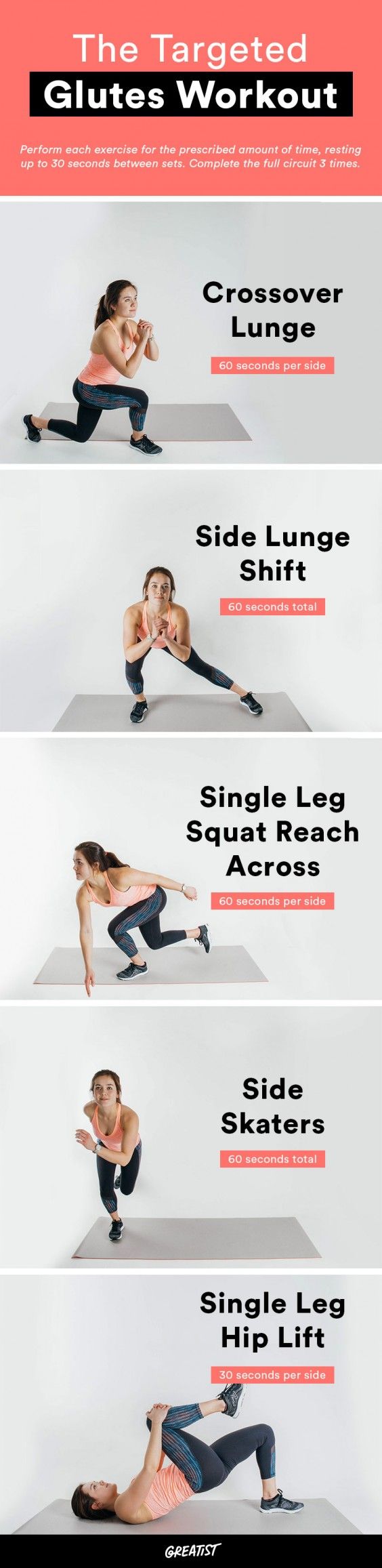
A good warm-up prepares your glutes for harder work. Here’s a quick routine:
- Jumping jacks – 1 minute
- Bodyweight squats – 15 reps
- Monster walk with band – 20 steps
- Fire hydrant – 10 reps each side
Warm-ups increase blood flow, loosen joints, and activate glutes so they work better.
Credit: www.fondation-enovos.lu
Sample Weekly Glute Schedule
If you want results, consistency matters. Here’s a sample schedule:
| Day | Workout |
|---|---|
| Monday | Beginner Glute Workout |
| Tuesday | Rest or light cardio |
| Wednesday | Glute Activation Circuit + Intermediate Workout |
| Thursday | Rest |
| Friday | Advanced Glute Workout |
| Saturday | Rest or light cardio |
| Sunday | Glute Activation Circuit |
Adjust this schedule to fit your own routine. Most people see progress with 2–4 glute sessions a week.
Comparing Equipment For Home Glute Workouts
You might wonder what equipment helps most. Here’s a quick comparison:
| Equipment | Benefits | Drawbacks |
|---|---|---|
| Bodyweight | Easy, no cost, safe for beginners | May get easy over time |
| Resistance bands | Portable, adds challenge, great for glute activation | Can break, limited resistance |
| Dumbbells | Builds strength, easy to progress | Needs storage, may be expensive |
| Chair/bench | Helps with hip thrusts, step-ups | Needs space, not always stable |
If you’re starting, bodyweight and bands are enough. As you get stronger, add dumbbells for more challenge.
Nutrition For Glute Growth
Exercise builds muscle, but nutrition is just as important. If you want bigger, stronger glutes, you need enough protein, carbs, and healthy fats.
- Protein: Needed for muscle repair. Aim for 0.7–1 gram per pound of bodyweight daily.
- Carbs: Gives energy for workouts. Pick whole grains, fruits, and vegetables.
- Healthy fats: Support hormone health. Eat nuts, avocados, olive oil.
Drink plenty of water. Muscles are mostly water, and dehydration slows progress.
Many beginners skip protein after workouts. A simple protein shake or a meal with lean meat, fish, or beans helps recovery.
How Long Does It Take To See Results?
Building glutes takes patience. Most people see changes in 6–12 weeks if they train 2–4 times per week and eat well. You may notice your glutes getting firmer, stronger, and more shapely. Some see faster progress, especially if they are new to training.
It’s normal for results to slow after the first few months. Progress comes from pushing yourself, using good form, and staying consistent.
Credit: redefiningstrength.com
Real-life Glute Workout Success Stories
Many people have transformed their glutes with home workouts. Let’s look at two real examples:
- Maria was a beginner. She started with glute bridges, squats, and fire hydrants three times a week. After two months, her jeans fit better, she felt stronger, and her back pain was gone.
- James used resistance bands and dumbbells at home. He followed an advanced workout plan and saw his glutes grow and his running speed improve.
The key was consistency. Both tracked their workouts and increased reps or resistance when exercises felt easier.
Glute Workouts For Different Goals
Not everyone wants the same results. Here’s how to adjust your workout:
- For strength: Do fewer reps (8–12), use bands or weights, and focus on one-leg moves.
- For muscle size: Do more reps (12–20), use slow, controlled movements, and pause at the top.
- For toning: Mix high reps, bodyweight, and short rest.
- For athletic performance: Use plyometric moves like jump squats or explosive step-ups.
Pick exercises and plans that fit your goal. Change your routine every 4–6 weeks to keep progress going.
Glute Activation Vs. Glute Strengthening
Activation means “waking up” your glutes so they work during main exercises. Strengthening builds muscle size and power.
- Activation moves: Fire hydrant, clamshell, monster walk
- Strengthening moves: Hip thrust, squat, Bulgarian split squat
Do activation first, then strengthening. Many people skip activation and their glutes don’t work well.
Data: Glute Exercise Effectiveness
Research shows some exercises are more effective than others. Here’s a summary:
| Exercise | Glute Activation (%) | Notes |
|---|---|---|
| Hip thrust | ~85 | Highest activation |
| Glute bridge | ~70 | Great for beginners |
| Squat | ~60 | Hits multiple muscles |
| Bulgarian split squat | ~75 | Good for single-leg work |
| Fire hydrant | ~65 | Perfect for activation |
Hip thrusts are best for glute activation, but bridges and split squats are also very effective.
Practical Tips For Better Results
Here are some insider tips many beginners miss:
- Mind-muscle connection: Think about squeezing your glutes during each rep. Don’t just move—focus on the muscles.
- Use mirrors: Check your form during exercises. This helps avoid mistakes.
- Track progress: Write down sets, reps, and resistance. Increase gradually.
- Mix up exercises: Change your workout every month to keep your glutes challenged.
- Recovery matters: Stretch after workouts. Use a foam roller to loosen tight muscles.
- Sleep well: Most muscle growth happens during sleep. Aim for 7–9 hours a night.
Many people forget to change their routine. Glutes respond best to variety and progression.
Who Should Avoid Glute Workouts
Glute exercises are safe for most people. But if you have hip, knee, or back injuries, talk to your doctor before starting. Pregnant women can do glute bridges, but avoid deep squats or heavy resistance.
If you feel pain (not muscle burn), stop and rest. Listen to your body.
Frequently Asked Questions
How Often Should I Train Glutes At Home?
Most people see results with 2–4 sessions per week. Beginners can start with two workouts. As you get stronger, add more sessions. Always rest at least one day between hard workouts.
What Equipment Do I Need For Home Glute Workouts?
You can train glutes using just your bodyweight. For extra challenge, use resistance bands, dumbbells, or a chair. Bands are the best first investment—they’re cheap and add variety.
Can I Build Glutes Without Weights?
Yes, you can! Bodyweight moves like glute bridges, squats, and lunges build strong glutes. Adding a band makes exercises harder. For bigger glutes, add resistance over time.
How Long Until I See Glute Results?
Most people notice changes in 6–12 weeks. You may feel your glutes getting firmer after a few weeks, but visible changes take longer. Consistency and proper nutrition are key.
What’s The Best Glute Exercise For Home?
The hip thrust gives the highest glute activation, but you need a couch or chair. Glute bridges, Bulgarian split squats, and lateral band walks are also very effective.
If you want more scientific details about glute exercises, check this research study.
Building strong glutes at home is possible for everyone. With the right plan, consistent effort, and smart progression, you’ll see results that improve your health, performance, and confidence. Start today—the best glute workout is the one you do.
