

10 Minute Glute Workout: Sculpt Stronger, Toned Glutes Fast
A strong, toned lower body does not need hours in the gym. You can build your glutes with just a 10 minute glute workout at home or anywhere. Many people believe glute training is only for athletes or fitness models, but that’s not true. Everyone benefits from stronger glutes. They help with posture, support your back, and make everyday movements easier. You don’t need fancy equipment. You don’t need a big space. This routine fits busy schedules and all fitness levels.
A quick glute workout can boost your energy, improve your balance, and even protect your knees and hips. It’s perfect for beginners who want to start exercising, and it’s also useful for advanced exercisers who want a focused burn. This guide gives you everything you need: clear instructions, tips, and practical advice. You will learn the best glute exercises, how to do them safely, and how to get results in just 10 minutes.
Why Focus On Glute Training?
Your glutes are the largest muscle group in your body. They include three muscles: gluteus maximus, gluteus medius, and gluteus minimus. These muscles do more than shape your body. They support your hips, protect your lower back, and help you walk, run, and jump.
Weak glutes can cause pain, poor posture, and less power in sports. Strong glutes reduce injury risk and improve how you move. Many people sit for hours every day. Sitting makes the glutes weaker. That’s why it’s important to train them often—even if you only have 10 minutes.
The Science Behind Quick Workouts
Short workouts can be very effective if you use the right exercises and keep the intensity up. Research shows that high-intensity interval training (HIIT) and short strength sessions can build muscle and burn fat efficiently. The key is to use compound moves that activate many muscles at once.
A 10 minute glute workout can:
- Increase muscle activation
- Improve blood flow
- Boost metabolism for hours
- Fit easily into your daily routine
You do not need to spend a long time to see progress. Consistency matters more than duration.
How To Get The Most Out Of Your 10 Minute Glute Workout
To maximize your results, follow these tips:
- Warm up for 1-2 minutes with light movements like jumping jacks or bodyweight squats. This prepares your muscles and joints.
- Focus on proper form. Quality is better than quantity.
- Use controlled movements. Do not rush.
- Adjust the number of repetitions based on your fitness level.
- If you want more challenge, add resistance bands or hold light weights.
Many beginners miss two important points: first, glute exercises work best when you squeeze your glutes at the top of each movement. Second, breathing matters. Exhale as you push, inhale as you return.
The 10 Minute Glute Workout: Exercise List
Each exercise is chosen to target different parts of your glutes. You will work the gluteus maximus, medius, and minimus. This gives you a balanced, strong lower body.
Try to perform each exercise for about 45 seconds, resting 15 seconds before the next one. If you finish before 10 minutes, repeat the routine.
Here are the 10 essential glute exercises:
- Bodyweight Squat
- Glute Bridge
- Reverse Lunge
- Donkey Kick
- Fire Hydrant
- Bulgarian Split Squat
- Single-Leg Glute Bridge
- Sumo Squat
- Step-Up
- Clamshell
Let’s look at each exercise, how to do it, and special tips to get the best results.
1. Bodyweight Squat
The bodyweight squat is a classic move that builds strength in your glutes, thighs, and hips. It is simple but powerful.
- Stand with feet shoulder-width apart.
- Keep your chest up and your back straight.
- Bend your knees and push your hips back, lowering your body as if sitting on a chair.
- Go as low as you comfortably can, keeping your heels on the floor.
- Press through your heels to stand back up.
Tips:
Keep your knees in line with your toes. Squeeze your glutes as you stand up. If you want more challenge, hold a dumbbell or use a resistance band.
Common Mistake:
Letting your knees collapse inward. Keep them aligned.
2. Glute Bridge
The glute bridge targets the gluteus maximus and helps with hip mobility.
- Lie on your back with knees bent and feet flat on the floor.
- Place your arms at your sides.
- Push through your heels, lift your hips up, and squeeze your glutes.
- Pause at the top, then lower back down.
Tips:
Do not arch your back too much. Focus on squeezing your glutes, not your lower back.
Practical Insight:
Many people push with their toes instead of their heels. Pushing through your heels activates your glutes more.
3. Reverse Lunge
The reverse lunge works your glutes, hamstrings, and quads. It is easier on the knees than a forward lunge.
- Stand tall, feet hip-width apart.
- Step one foot back and lower your body until both knees are bent at about 90 degrees.
- Press through your front heel to stand back up.
Tips:
Keep your chest upright. Do not let your front knee move past your toes.
Advanced Tip:
Hold a dumbbell for extra resistance.
4. Donkey Kick
The donkey kick isolates the gluteus maximus and helps with muscle endurance.
- Start on all fours (hands and knees).
- Keep your knee bent, lift one leg up toward the ceiling.
- Pause and squeeze your glute at the top.
- Lower back down.
Tips:
Do not arch your back. Move slowly to feel the muscle work.
Non-Obvious Insight:
Pause for two seconds at the top for extra activation.

Credit: www.nilds.gov.ng
5. Fire Hydrant
The fire hydrant targets the gluteus medius and minimus. It strengthens the hips and helps with stability.
- Begin on all fours.
- Keeping your knee bent, lift one leg out to the side.
- Pause, then lower back down.
Tips:
Do not rotate your hips. Keep your core tight.
Mistake to Avoid:
Swinging the leg instead of lifting slowly.
6. Bulgarian Split Squat
The Bulgarian split squat is a single-leg exercise that builds glute strength and balance.
- Stand with your back to a chair or bench.
- Place one foot on the bench behind you.
- Lower your body until your front thigh is parallel to the floor.
- Press through your front heel to return to standing.
Tips:
Keep your front knee in line with your toes. Do not let your back knee touch the floor.
Non-Obvious Insight:
A slight forward lean activates your glutes more.
7. Single-leg Glute Bridge
The single-leg glute bridge adds difficulty to the regular glute bridge.
- Lie on your back, knees bent.
- Lift one leg straight up.
- Push through the heel of your grounded leg, lifting your hips.
- Pause, then lower back down.
Tips:
Keep your hips level. Do not let your lifted leg drop.
Common Mistake:
Twisting your body. Stay straight.
8. Sumo Squat
The sumo squat targets the inner thighs and glutes.
- Stand with feet wider than shoulder-width, toes pointed out.
- Lower your body, keeping your chest up.
- Push through your heels to stand up.
Tips:
Go slow. Pause at the bottom for a deeper stretch.
Practical Insight:
Sumo squats activate different muscle fibers than regular squats.
9. Step-up
The step-up is great for glute strength and balance.
- Stand in front of a bench or sturdy chair.
- Place one foot on the bench.
- Press through your heel to lift your body up, bringing the other foot to the bench.
- Step back down.
Tips:
Keep your knee in line with your toes. Do not push off with your back foot.
Advanced Variation:
Hold dumbbells for more resistance.
10. Clamshell
The clamshell works the gluteus medius and helps with hip stability.
- Lie on your side, knees bent at 90 degrees.
- Keep your feet together, lift your top knee up.
- Pause, then lower back down.
Tips:
Do not roll your hips back. Keep your core tight.
Non-Obvious Insight:
Use a resistance band above your knees for extra challenge.
Sample 10 Minute Glute Workout Plan
Here’s a sample routine you can follow. Adjust repetitions based on your level.
| Exercise | Time (seconds) | Rest (seconds) |
|---|---|---|
| Bodyweight Squat | 45 | 15 |
| Glute Bridge | 45 | 15 |
| Reverse Lunge | 45 | 15 |
| Donkey Kick | 45 | 15 |
| Fire Hydrant | 45 | 15 |
| Bulgarian Split Squat | 45 | 15 |
| Single-Leg Glute Bridge | 45 | 15 |
| Sumo Squat | 45 | 15 |
| Step-Up | 45 | 15 |
| Clamshell | 45 | 15 |
Total Time: 10 minutes (including rest).
Comparison: Glute Activation By Exercise
Some exercises activate your glutes more than others. Here’s a comparison:
| Exercise | Glute Activation (%) | Difficulty |
|---|---|---|
| Bodyweight Squat | 60 | Easy |
| Glute Bridge | 75 | Easy |
| Reverse Lunge | 70 | Medium |
| Donkey Kick | 65 | Easy |
| Fire Hydrant | 60 | Easy |
| Bulgarian Split Squat | 80 | Hard |
| Single-Leg Glute Bridge | 85 | Medium |
| Sumo Squat | 75 | Medium |
| Step-Up | 70 | Medium |
| Clamshell | 60 | Easy |
Note: Activation varies by form and fitness level.
Choosing The Right Glute Exercise For Your Level
Picking the right exercise is important. Beginners should start with easy moves. Advanced users can add resistance or combine exercises.
| Level | Recommended Exercises | Tips |
|---|---|---|
| Beginner | Bodyweight Squat, Glute Bridge, Donkey Kick, Fire Hydrant, Clamshell | Focus on form, avoid resistance |
| Intermediate | Reverse Lunge, Sumo Squat, Step-Up, Single-Leg Glute Bridge | Add light resistance, increase reps |
| Advanced | Bulgarian Split Squat, Weighted Sumo Squat, Step-Up with Dumbbells | Add resistance bands, combine exercises |
Tip:
If an exercise feels too easy, increase the difficulty by slowing down, adding weight, or using a resistance band.
Benefits Of A 10 Minute Glute Workout
This routine fits busy lives. Here are some benefits:
- Time-efficient: You can finish quickly and still get results.
- Improved posture: Strong glutes help keep your back straight.
- Better athletic performance: Powerful glutes make running and jumping easier.
- Injury prevention: Strong glutes support your knees and hips.
- Fat burning: More muscle means more calories burned, even at rest.
Studies show that short, intense workouts increase muscle strength and endurance. They also improve mood and energy.
How Often Should You Do This Workout?
For best results, do this routine 2–4 times per week. Rest at least one day between workouts. You can combine it with other exercises like core or upper body training.
Non-Obvious Insight:
Glute muscles recover quickly. If you feel sore, take a break, but most people can train glutes often.
Mistakes To Avoid In Quick Glute Workouts
Many beginners make these mistakes:
- Skipping warm-up: Always prepare your muscles.
- Poor form: Quality is more important than speed.
- Not squeezing glutes: Activation comes from a strong squeeze at the top.
- Holding your breath: Breathe out as you push.
- Using only one type of exercise: Mix up your routine for best results.
- Doing too much too soon: Start slow, increase intensity over time.
Tips For Faster Progress
If you want results faster, try these:
- Use a resistance band for extra challenge.
- Slow down each rep—2 seconds up, 2 seconds down.
- Add a short cardio warm-up to boost blood flow.
- Track your progress: Write down reps and sets.
- Change exercises every few weeks to avoid a plateau.
Example:
If you start with bodyweight only, add a resistance band after two weeks.
Glute Workout For Different Goals
Your goal changes how you train:
- Toning and shaping: Focus on high repetitions and short rest.
- Building muscle: Use resistance and slow reps.
- Improving athletic performance: Add explosive moves like jumping squats.
Practical Advisor Tip:
For toning, do 15–20 reps per exercise. For strength, do 8–12 reps with extra weight.
How To Make Glute Workouts More Challenging
As you get stronger, you will need to increase the difficulty. Here are ways to do it:
- Add weight: Hold dumbbells or use a weighted vest.
- Increase reps: Do more repetitions.
- Use a resistance band: Place it above your knees.
- Try advanced variations: Single-leg moves or jumping squats.
Friendly Mentor Reminder:
Progress slowly. Increase intensity only when you feel comfortable.
Glute Workout For Busy People
If you are short on time, split your workout:
- Do 5 exercises in the morning, 5 in the evening.
- Use your lunch break to fit in 5 minutes.
- Combine glute exercises with daily activities (squats while brushing teeth).
Straight-to-the-Point Helper Advice:
Consistency matters more than duration. Even 5 minutes daily makes a difference.
Nutrition For Glute Growth
Exercise is only part of the equation. Nutrition matters too.
- Eat enough protein to build muscle.
- Include healthy fats for hormone balance.
- Drink water to stay hydrated.
- Get enough calories; under-eating slows progress.
Example:
Try eggs, chicken, beans, or Greek yogurt for protein.
Recovery After Glute Workouts
Recovery is important. Here’s how to help your muscles rebuild:
- Stretch after your workout.
- Use a foam roller for sore muscles.
- Rest and sleep well.
- Eat protein within two hours of exercising.
Experience-Based Guide Tip:
Do gentle stretches like the pigeon pose or standing quad stretch.
Tracking Your Progress
Track your workouts to stay motivated:
- Write down your exercises, reps, and sets.
- Take weekly photos to see changes.
- Notice improvements in daily activities (walking, climbing stairs).
Non-Obvious Insight:
Progress is not just about size. Improved balance and strength show real results.
Glute Training For Different Age Groups
Everyone can benefit from glute training, but age matters.
- Teens and young adults: Focus on form and avoid heavy weights.
- Middle-aged adults: Mix strength and mobility.
- Older adults: Do easy moves and increase balance exercises.
Practical Advisor Reminder:
Always listen to your body. Stop if you feel pain.
Glute Workout Variations Without Equipment
You do not need equipment for a great workout:
- Use bodyweight exercises.
- Try stairs for step-ups.
- Use a towel for sliding lunges.
Friendly Mentor Tip:
The best equipment is consistency. Your body is enough.
Glute Workout With Resistance Bands
Resistance bands are cheap, light, and easy to use. They add extra challenge:
- Place the band above your knees for squats, bridges, and clamshells.
- Increase activation and muscle growth.
Example:
A band increases glute bridge activation by up to 25%.
How Glute Strength Supports Daily Life
Strong glutes help with:
- Climbing stairs
- Lifting heavy objects
- Standing for long periods
- Reducing back pain
Experience-Based Guide Insight:
Many people notice less pain and better balance after just two weeks of training.
How Long Until You See Results?
Most people see changes in 4–6 weeks if they train consistently. Results depend on diet, sleep, and genetics.
Straight-to-the-Point Helper Advice:
Do not compare yourself to others. Focus on your own progress.
Safety Tips For Glute Workouts
Stay safe:
- Warm up every time.
- Use proper form.
- Stop if you feel pain.
- Increase difficulty slowly.
Practical Advisor Reminder:
Ask a trainer if you are unsure about your form.
Glute Workout For Weight Loss
Glute exercises burn calories and build muscle. More muscle means higher metabolism. Combine glute training with cardio for best fat loss.
Example:
Add jumping jacks or mountain climbers between exercises.
Combining Glute Training With Other Workouts
You can mix glute exercises with:
- Core workouts (planks, crunches)
- Upper body routines (push-ups, rows)
- Cardio (running, cycling)
Friendly Mentor Tip:
A balanced routine prevents injury and keeps things interesting.
Motivation To Keep Going
Staying motivated is key. Set small goals, track progress, and celebrate wins.
- Set a goal to do 10 minutes daily for one month.
- Join a workout group or challenge.
- Reward yourself for sticking to your plan.
Non-Obvious Insight:
Motivation grows as you see and feel results.

Credit: confessionsofamotherrunner.com
Resources For More Information
For more tips and research on glute training, visit Healthline.
Frequently Asked Questions
What If I Only Have 5 Minutes?
You can still see benefits. Pick 5 exercises and do each for 45 seconds. Focus on form and intensity.
How Do I Avoid Knee Pain During Glute Workouts?
Keep your knees in line with your toes. Use proper form. If pain continues, try low-impact exercises like glute bridge or clamshell.
Can I Do Glute Workouts Every Day?
It’s possible, but rest is important. Glutes recover quickly, but give them at least one day off per week.
Do I Need Equipment For A Glute Workout?
No. Bodyweight exercises are effective. Resistance bands or dumbbells add extra challenge, but are optional.
What’s The Best Exercise For Glute Growth?
Single-leg glute bridge and Bulgarian split squat are top choices. They activate the glutes deeply and build strength fast.
Every person can benefit from a strong glute routine. In just 10 minutes, you can build strength, improve balance, and shape your lower body. Whether you are a beginner or advanced, these exercises fit your needs. Start today and see the difference in your daily life. Remember: consistency is key, and progress comes from steady effort. Your glutes will thank you.
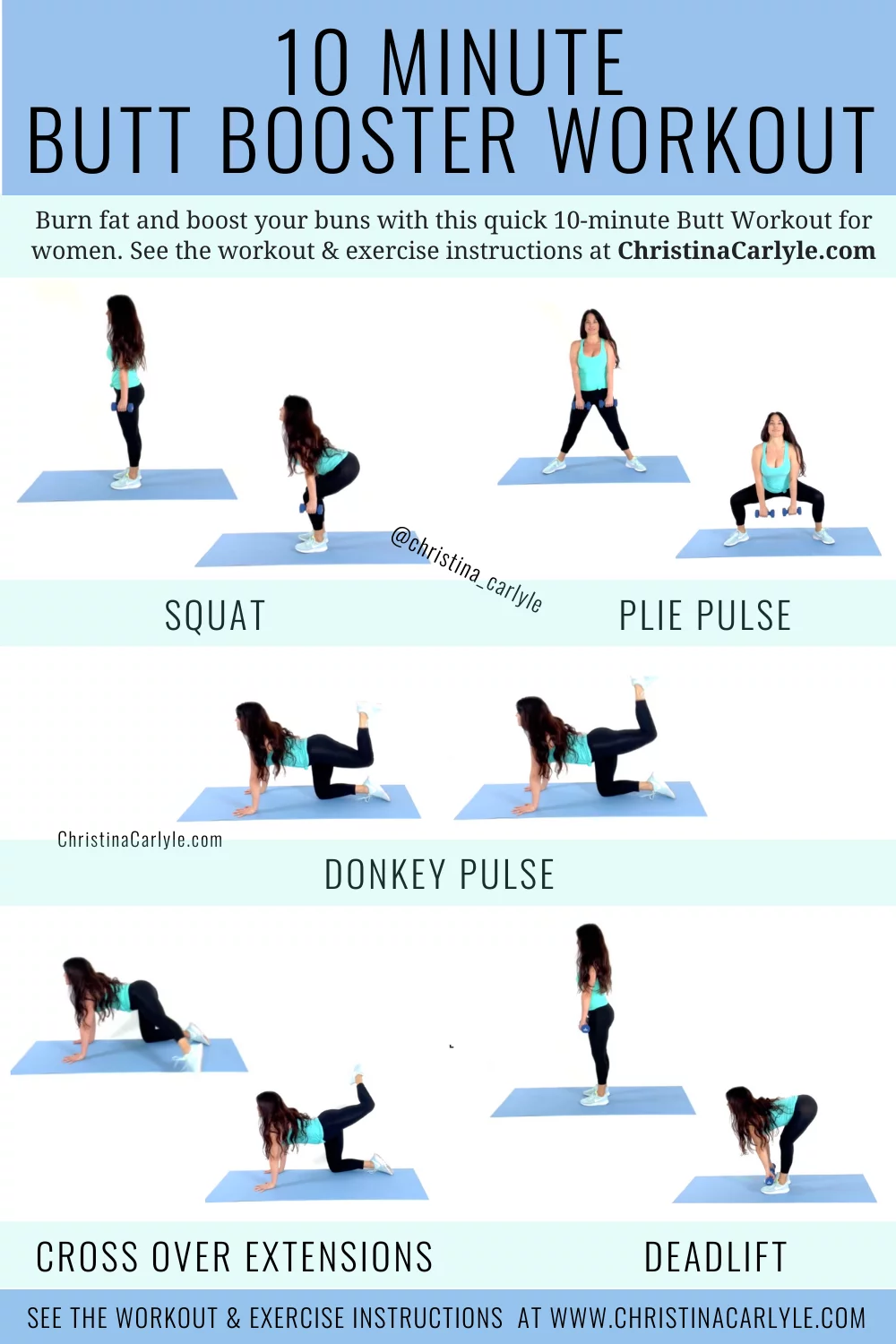
Credit: www.christinacarlyle.com
