

Why are Jeans Business Casual? A Modern Workplace Style Guide
Why Are Jeans Business Casual
Business casual is a dress code that can confuse even experienced professionals. For many years, people thought of jeans as too relaxed for any office setting. But times have changed. Now, many workplaces accept jeans as part of a business casual outfit.
So, why are jeans business casual? The answer is not simple, but it is important for anyone who wants to look polished and fit in at work without feeling overdressed.
The idea of business casual is to look professional, but not too formal. This means no suits or ties, but also not coming to work in sportswear or clothes you would wear at home. Jeans have become more accepted because they can look neat, stylish, and appropriate when worn the right way.
Understanding how jeans fit into business casual can help you choose the right clothes for your job and feel confident every day.
The Evolution Of Business Casual
Business casual did not always include jeans. In the past, most offices required suits, dress pants, and formal shoes. The changes began with tech companies and creative industries, where leaders wanted employees to feel comfortable and creative. Over time, other industries started to relax their dress codes too.
As the work environment changed, the line between formal and casual became less clear. People started mixing dress shirts with more relaxed pants, and sneakers with blazers. Jeans slowly entered the business casual wardrobe, especially as companies focused more on results than appearances.
Today, you might see jeans in almost any office, from startups to law firms, depending on the culture.
Key Moments In The Shift
- Creative industries led the way by allowing jeans and sneakers.
- Tech giants pushed the trend toward comfort and practicality.
- The rise of remote work made casual dress more normal.
- Social media helped spread new fashion ideas quickly.
A key insight is that company culture shapes the dress code. In some offices, jeans are the standard, while in others, they are only allowed on Fridays or for special events.
Why Jeans Have Become Acceptable
The main reason jeans are now business casual is their versatility. Unlike sweatpants or shorts, jeans can be dressed up or down. Modern jeans come in many colors and fits, which makes them easy to match with business shirts, blouses, and even blazers.
Practical Reasons
- Comfort: Jeans are easy to wear for long hours.
- Durability: They last longer than many types of pants.
- Style: With the right fit and color, jeans can look sharp.
- Availability: Almost everyone owns jeans, making them an easy choice.
Cultural Acceptance
As more people grew up wearing jeans, they became a normal part of adult life. Companies realized that strict dress codes do not always lead to better work. In fact, some studies show that employees feel happier and more productive when they can wear clothes they like.
The Influence Of Leaders
Well-known CEOs and leaders started wearing jeans at public events. This showed that you can be successful and professional without a suit. When leaders model relaxed but neat clothing, it sends a message that jeans are okay for work.
How To Wear Jeans As Business Casual
Wearing jeans as business casual is not about picking any pair from your closet. There are important rules to follow if you want to look professional and not too relaxed.
Choosing The Right Jeans
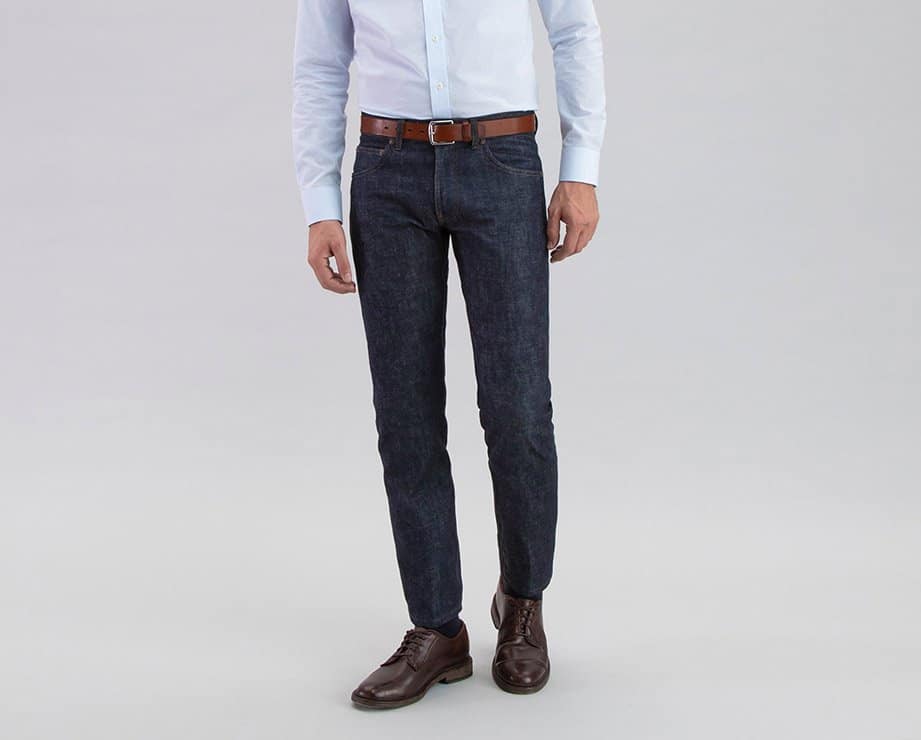
- Color: Dark wash jeans are best. Avoid light blue, faded, or ripped styles.
- Fit: Go for a straight, slim, or tailored fit. Baggy or skinny jeans are less professional.
- Condition: Jeans should be clean, with no holes, fraying, or heavy distressing.
- Length: The hem should not drag on the ground or bunch up too much at the ankle.
What To Pair With Jeans
- Shirts: Button-down shirts, polos, or smart blouses work well.
- Blazers or Cardigans: These add a professional touch.
- Shoes: Choose loafers, oxfords, ankle boots, or nice flats. Avoid sneakers unless your office allows them.
- Accessories: Keep it simple. A belt and a watch can finish the look.
Here’s a comparison of good and poor choices for business casual jeans:
| Good Choices | Poor Choices |
|---|---|
| Dark wash, no distressing | Light wash, holes, rips |
| Straight or slim fit | Baggy or overly tight jeans |
| Clean, well-pressed | Wrinkled, dirty, faded |
| Paired with dress shirt | Paired with graphic t-shirt |
Gender-neutral Tips
Anyone can wear jeans as business casual. The key is in the details. For example, pairing jeans with a crisp shirt and nice shoes works for all genders. Avoid trends that look too casual, like ripped knees or flashy designs.
Benefits Of Jeans In The Workplace
Jeans offer several real benefits for both employees and employers. These go beyond simple comfort and touch on workplace culture and productivity.
Employee Satisfaction
Employees often report feeling more relaxed and confident when they can wear jeans. This can lead to better teamwork and open communication. When people are comfortable, they are more willing to share ideas and work together.
Cost-effectiveness
Jeans are usually less expensive than dress pants. They also last longer, reducing the need for frequent replacement. For companies, allowing jeans can remove the pressure on employees to buy expensive clothes just to fit in.
Attracting Talent
Many younger workers look for a workplace where they can express themselves. Allowing jeans can make a company seem modern and open-minded. This can help attract and keep talented people.
Supporting Diversity
Jeans are worn around the world, making them a global item of clothing. Including jeans in the dress code can help people from different backgrounds feel welcome.
When Jeans Are Not Business Casual
Even though jeans are widely accepted, there are times and places where they are not appropriate. Knowing these situations is important to avoid making a bad impression.
Formal Events Or Meetings
If you are meeting with clients, attending a big presentation, or going to a formal event, it’s best to avoid jeans. Business suits or dress pants are safer choices.
Company Rules
Some companies still have strict dress codes. Always check your employee handbook or ask your manager before wearing jeans. Even in relaxed offices, there may be “no jeans” days.
Condition And Style
Old, ripped, or very casual jeans never count as business casual. You should also avoid jeans with bold patterns, lots of buttons, or decorations.
Industry Differences
Some industries, like finance or law, are more conservative. In these fields, jeans may not be accepted at all or only on special days. Creative and tech industries are usually more flexible.
A quick guide to when jeans are usually acceptable:
| Industry | Jeans Acceptable? |
|---|---|
| Tech / Startups | Often Yes |
| Finance | Rarely |
| Creative / Media | Often Yes |
| Healthcare | Usually No |
| Legal | Rarely |
| Retail / Customer Service | Sometimes |
The Psychology Of Business Casual Jeans
There is more to the story than just rules. The way we dress affects how we feel and how others see us. Wearing jeans can have a positive impact on workplace culture and personal confidence.
Comfort And Productivity
Research shows that comfortable clothing can improve focus and reduce stress. When employees do not have to worry about uncomfortable pants or shoes, they can pay more attention to their work. This is especially true in creative or fast-paced jobs.
Professional Image
The right pair of jeans can look sharp and help you feel at your best. This is important in jobs where you meet clients or work in teams. Looking good without feeling stiff can help you make a strong impression.
Equality And Approachability
When everyone can wear jeans, the workplace feels more equal. Employees are less likely to judge each other based on expensive clothes. Leaders who wear jeans can seem more approachable, which can help build trust.

Credit: hespokestyle.com
Common Mistakes When Wearing Jeans To Work
Even though jeans are widely accepted, people still make mistakes that can hurt their professional image. Here are some of the most common errors and how to avoid them.
- Wearing Distressed Jeans: Holes, rips, or heavy fading always look too casual.
- Choosing the Wrong Fit: Baggy or overly tight jeans are not professional.
- Ignoring Cleanliness: Dirty or wrinkled jeans make you look careless.
- Pairing With Casual Tops: T-shirts with graphics or hoodies do not balance out jeans.
- Wearing Athletic Shoes: Unless your company allows it, sneakers can ruin the business casual look.
A good rule of thumb: If you would wear the jeans to a party or on a weekend trip, they might not be right for work.
The Best Types Of Jeans For Business Casual
Not all jeans are created equal when it comes to business casual. Let’s break down the styles that work best in a professional setting.
Dark Wash Jeans
These are the safest choice. The deep color looks polished and is easy to dress up. They can be paired with almost any shirt or jacket.
Straight-leg Or Slim-fit Jeans
These styles fit close to the body without being too tight. They give a tidy, modern look and work for most body types.
Black Jeans
Black jeans can look almost like dress pants, especially if they have a simple design. They work well in offices with stricter dress codes.
High-rise Or Mid-rise Jeans
These fits are more flattering and professional than low-rise jeans. They help shirts stay tucked in and avoid a messy look.
Here’s a quick comparison of jeans styles and their suitability:
| Jean Style | Business Casual Friendly? |
|---|---|
| Dark wash straight-leg | Yes |
| Black slim-fit | Yes |
| Light wash | No |
| Distressed / Ripped | No |
| Bootcut or Flared | Sometimes |
| Skinny jeans | Rarely |
| Baggy / Loose | No |
Credit: toddshelton.com
How To Ask Your Boss If Jeans Are Allowed
If you are not sure about the dress code, it is always better to ask. Here are some steps you can follow to make the conversation easy and positive:
- Check the Employee Handbook: Many companies have written rules about dress codes.
- Observe Coworkers: Notice what your manager and team wear.
- Ask Directly: You can say, “I noticed some people wear jeans. Is it okay for me to do the same?”
- Suggest a Trial: If your boss is unsure, suggest a test period like “casual Fridays.”
If you want more guidance, you can also check resources like Society for Human Resource Management for best practices.
The Role Of Jeans In Remote And Hybrid Work
Remote and hybrid work have changed the way people dress for their jobs. When working from home, most people choose comfort. Jeans are an easy choice because they feel relaxed but still look good if you need to join a video call.
Video Meetings
When you work from home, you still want to look professional in online meetings. Jeans can help you look put together without needing to wear dress pants. Pairing jeans with a button-down shirt or a smart top makes the right impression.
Hybrid Workplaces
In offices with both remote and in-person days, jeans are often the “safe choice. ” They work for home and office, so you do not have to change outfits or worry about being too formal.

Credit: www.hockerty.com
The Impact On Company Image
How employees dress affects how customers and clients see the company. Allowing jeans can make a business seem modern, friendly, and in touch with current trends. However, it is important to set clear guidelines so the company still looks professional.
Balancing Style And Professionalism
Some companies create clear visual guides for employees, showing examples of acceptable jeans and outfits. This avoids confusion and helps everyone dress in a way that fits the company brand.
Attracting New Clients
A relaxed but neat dress code can make clients feel comfortable. In industries where relationships matter, looking “too formal” can sometimes be a barrier. Jeans can help break the ice and make conversations easier.
Insider Tips For Making Jeans Work Every Time
Many people worry about making mistakes with business casual jeans. Here are some less obvious tips to help you get it right:
- Invest in quality: Cheap jeans often fade or lose shape quickly. A good pair will last for years and always look sharp.
- Have a backup: Keep a pair of dress pants at your desk or in your car for unexpected meetings.
- Check lighting: Some dark jeans look lighter in bright office lights. Try them out at work before wearing them to a big event.
- Watch the details: Small things, like the color of stitching or the size of pockets, can make jeans look more or less formal.
- Tailor your jeans: If the fit is not perfect, a quick visit to a tailor can make any pair look custom-made.
How Jeans Compare To Other Business Casual Pants
You might be wondering if jeans are really the best choice, or if other pants are better for business casual. Here’s a quick overview of how jeans stack up against other common options:
- Chinos: Slightly more formal, lighter fabric, good for summer.
- Dress pants: Most formal, but can feel stiff or hot.
- Corduroys: Warm and comfortable, but less common.
- Khakis: Classic option, but can wrinkle easily.
Jeans are usually the most durable and easiest to care for, while still looking good if you choose the right style.
What Experts Say About Jeans And Business Casual
Fashion experts and HR professionals agree on a few key points:
- Dress for your day: If you have a client meeting, dress up even if jeans are allowed.
- Quality matters: Well-made jeans look much better and last longer.
- Fit is key: Bad fit ruins any outfit, no matter how expensive the jeans are.
- Respect the culture: Always follow your company’s rules.
The main thing to remember is that business casual is about balancing comfort with professionalism. Jeans fit this balance when chosen and styled carefully.
Frequently Asked Questions
Can I Wear Jeans To A Job Interview?
Usually, it’s best to avoid jeans for job interviews unless you know the company is very casual. If you are unsure, choose dress pants to make a good first impression.
What Color Jeans Are Best For Business Casual?
Dark blue or black jeans are the safest choices. They look more formal and are easy to pair with business shirts and shoes.
Are Skinny Jeans Appropriate For Business Casual?
Most offices prefer straight or slim-fit jeans. Skinny jeans can look too casual or trendy. If you wear them, make sure they are not too tight and pair them with a smart top.
How Do I Know If My Company Allows Jeans?
Check your employee handbook or ask your manager. You can also observe what your colleagues and leaders wear to get a sense of the dress code.
Can I Wear Jeans Every Day To Work?
If your company allows it, yes. Just make sure your jeans are clean, neat, and free from rips or heavy fading. Change up your outfits with different tops and shoes to keep things fresh.
Business casual is always changing, but jeans have earned their place in the modern workplace. With the right choices, you can look professional, feel comfortable, and show your personal style—all at the same time.
