

What'S Business Casual Dress: Your Ultimate Style Guide
What’s Business Casual Dress
Business casual is a term that often confuses people. You may hear it for a job interview, office dress code, or even networking events. But what does business casual really mean? How can you dress business casual while still looking professional and feeling comfortable?
If you have ever worried about wearing the wrong thing to work, you are not alone. Many people find the rules of business casual hard to understand, especially because they can change depending on the company, culture, and even the country.
Let’s break down business casual dress in simple terms. We will look at what it means, what to wear, what to avoid, why it matters, and how to get it right. By the end, you will feel more confident choosing your outfits and understanding what’s expected in a business casual setting.
What Does Business Casual Mean?
Business casual is a style of clothing that sits between formal business wear and casual, everyday clothes. It is less strict than wearing a suit and tie but still looks neat, tidy, and professional. Business casual is popular in many workplaces because it helps people feel comfortable while maintaining a sense of professionalism.
Key features of business casual:
- Clothes are clean, ironed, and fit well
- Not too formal, but not too casual
- Looks professional without being stiff
Some people think of business casual as “dressing up a little more than you would for a casual day, but not as much as for a business meeting. ” It’s a balance between looking relaxed and ready for business.
The History And Evolution Of Business Casual
Understanding how business casual started can help explain why it looks different in various places. The idea of business casual began as workplaces wanted to be more comfortable and less formal. In the past, most office workers wore formal suits, ties, and dress shoes every day. Over time, as company cultures changed and technology companies grew, many offices relaxed their dress codes.
The “Casual Friday” movement, which started in the United States, allowed employees to wear more relaxed clothes on Fridays. This slowly led to a new standard where some level of casual dress was allowed every day—but with certain limits. Today, business casual is common in many industries, from tech firms to banks, but the exact rules can change from one company to another.
Core Principles Of Business Casual
No matter where you work, some basic ideas make up business casual dress:
- Neatness: Clothes must be clean, ironed, and free from holes or stains.
- Fit: Your outfit should fit your body well—not too tight, not too loose.
- Professionalism: You should look ready to work and meet clients or colleagues.
- Comfort: The clothes should let you move and work easily.
Let’s look at a quick comparison of what business casual is and is not:
| Business Casual | Not Business Casual |
|---|---|
| Button-down shirt | T-shirt with graphics |
| Chinos or dress pants | Ripped jeans |
| Clean, simple shoes | Flip-flops |
| Knee-length skirt | Shorts |
| Blouse or sweater | Tank tops |
Business Casual For Men
Business casual for men is more than just “no tie.” It’s about making smart choices that look good and feel comfortable. Here’s what usually works:
Shirts
- Collared shirts are the most common choice. This includes button-down shirts, polo shirts, or even a neat sweater over a shirt in cooler weather.
- Avoid shirts with loud patterns or big logos.
- T-shirts should be avoided unless your office is very relaxed.
Pants
- Chinos or dress pants are best. These are usually made from cotton or wool and come in neutral colors like navy, gray, khaki, or black.
- Jeans can sometimes be acceptable if they are dark, clean, and have no rips, but always check your company’s rules.
Shoes
- Stick to leather shoes, loafers, or smart sneakers (in some modern offices).
- Avoid sandals, flip-flops, or running shoes.
Outerwear
- A blazer or a neat cardigan can add a professional touch, especially for meetings or presentations.
- Avoid sports jackets or outdoor jackets inside the office.
Accessories
- Belts should match your shoes.
- Keep watches and jewelry simple.
- Backpacks are okay in some places, but a messenger bag or briefcase often looks more professional.
Example Outfit
- Navy chinos
- White button-down shirt
- Brown leather loafers
- Black belt
- Gray sweater (optional)
Credit: nextlevelwardrobe.com
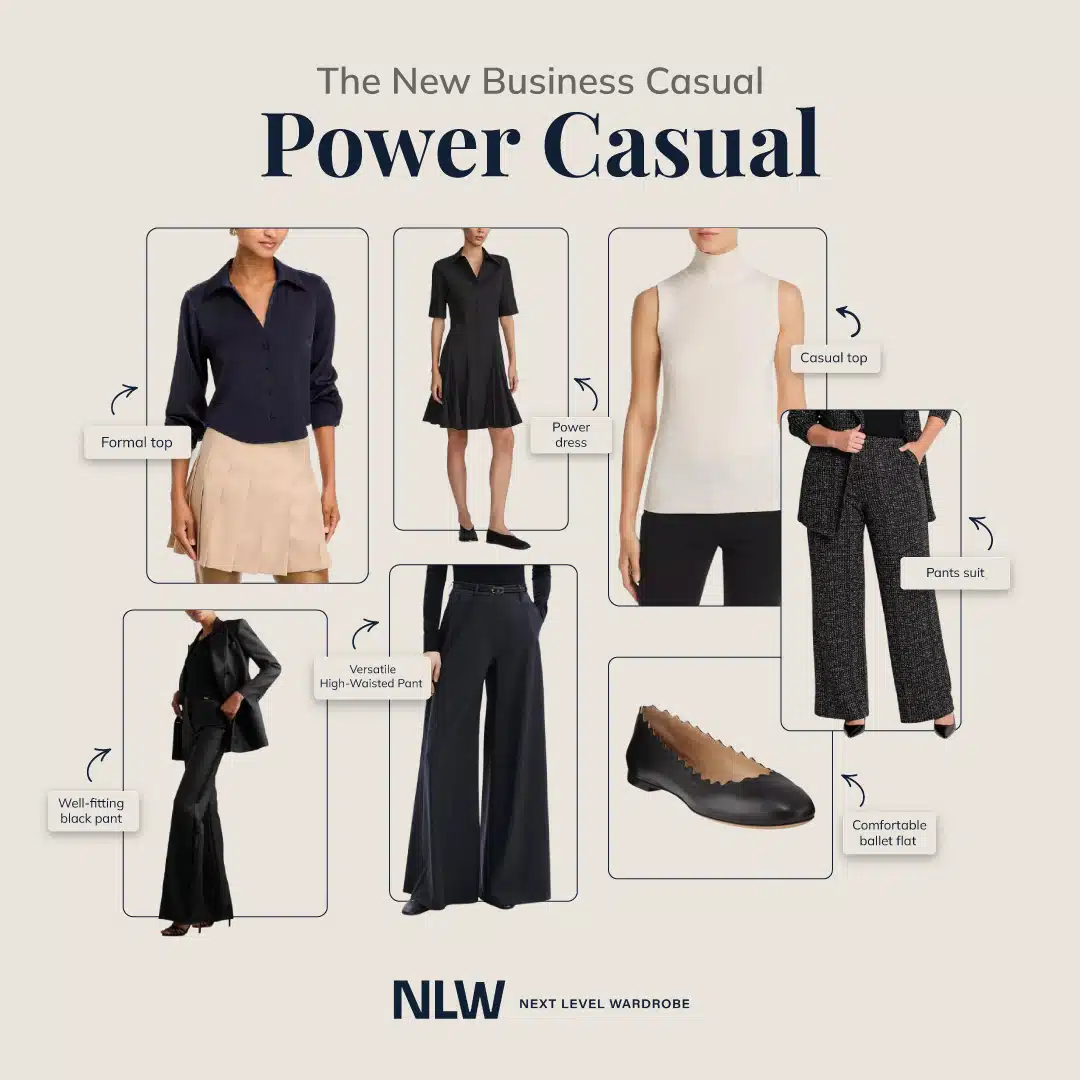
Business Casual For Women
Business casual for women offers more options, but that can also make it confusing. Here are the usual choices:
Tops
- Blouses, button-down shirts, and simple sweaters work well.
- Avoid tops that are too revealing, have big logos, or are very casual (like tank tops).
- A neat cardigan or blazer can be added for a more polished look.
Bottoms
- Dress pants, chinos, knee-length skirts, or simple dresses are all good.
- Make sure skirts and dresses are not too short. Knee-length or just above is usually safe.
- Dark, well-fitting jeans are sometimes allowed, but always check the dress code.
Shoes
- Flats, low heels, loafers, and dress boots are common.
- Avoid flip-flops, very high heels, or sneakers unless they are dressy.
Accessories
- Keep jewelry and makeup simple and professional.
- Scarves or light jewelry can add some personality without being distracting.
- Use a simple handbag or tote.
Example Outfit
- Black dress pants
- Light blue blouse
- Beige cardigan
- Black flats
- Small silver earrings
What To Avoid In Business Casual
While business casual is flexible, some items almost never fit the dress code:
- T-shirts with graphics, slogans, or big logos
- Ripped or distressed jeans
- Shorts or mini-skirts
- Flip-flops or very casual sandals
- Athletic wear (like gym clothes, sweatpants, or hoodies)
- Caps or hats (unless for religious or medical reasons)
- Tank tops or tops with spaghetti straps
These items can make you look unprofessional or too relaxed for a work environment.
The Role Of Culture And Industry
What counts as business casual can change based on your country, company, and type of job. For example:
- Tech companies are often more relaxed. Jeans and sneakers may be fine.
- Banks or law firms usually expect more formal business casual—no jeans or sneakers.
- Creative jobs (like design or marketing) might allow more color and personal style.
In some countries, business casual may mean more formal clothing than in others. Always look at what others wear or ask for advice if you are not sure.
Tip: On your first day at a new job, dress a little more formally. You can always adjust later based on what you see others wearing.
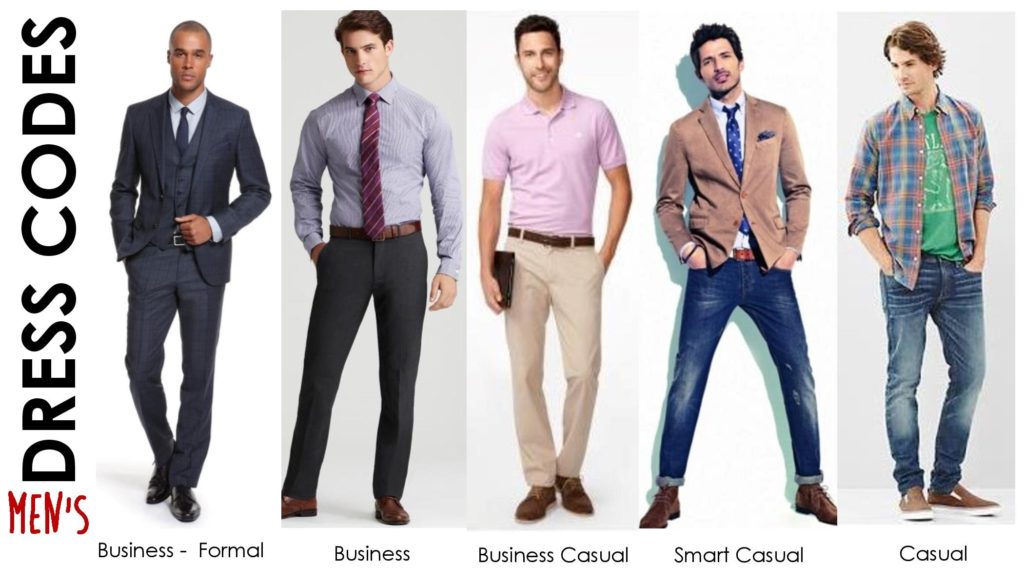
Comparing Business Casual To Other Dress Codes
Sometimes it helps to compare business casual to other common dress codes. Here’s a useful table:
| Dress Code | What It Means | Key Examples |
|---|---|---|
| Formal Business | Very professional, traditional | Suit, tie, dress shoes, formal dress |
| Business Casual | Professional but relaxed | Button-down shirt, chinos, blouse, flats |
| Casual | No restrictions, very relaxed | T-shirt, jeans, sneakers |
Business casual is the middle ground—more relaxed than formal business, but more polished than everyday casual.
Tips To Get Business Casual Right
If you want to look your best in a business casual setting, try these practical tips:
- Choose neutral colors for main pieces. Navy, black, gray, beige, and white always look professional.
- Add personality with accessories—like a scarf, watch, or small piece of jewelry.
- Layer smartly. A blazer or cardigan can upgrade a simple outfit.
- Check company guidelines. Some places share a dress code document. If not, observe what managers and colleagues wear.
- Avoid strong perfumes. They can be distracting in close workspaces.
- Keep it simple. Fewer items, well chosen, often look better than lots of details.
- Mind your shoes. Clean, closed-toe shoes are safest.
- Stay comfortable. If you feel good in your clothes, you’ll act more confident.
Common Mistakes And How To Avoid Them
Some mistakes are easy to make when learning business casual. Here are a few, and how to avoid them:
Mistake 1: Too Casual
Wearing jeans with holes, T-shirts with slogans, or gym shoes can look sloppy. Always choose neat, classic pieces.
Mistake 2: Too Formal
Wearing a full suit and tie or a cocktail dress when everyone else is dressed more casually can make you stand out for the wrong reasons. Try to match the level of formality in your office.
Mistake 3: Ignoring Fit
Clothes that are too tight or too loose will never look right. Tailor your clothes or choose sizes that fit you well.
Mistake 4: Not Checking The Dress Code
Some companies allow jeans, others do not. Always check before you wear something new.
Mistake 5: Over-accessorizing
Too much jewelry or loud patterns can be distracting. Keep it simple and let your personality show in small ways.

Credit: www.youtube.com
Business Casual For Different Occasions
Business casual is not just for the office. You may need it for interviews, business trips, networking events, or conferences. Each situation can have its own unwritten rules.
Job Interviews
It’s usually best to dress a little more formally than you think is needed. A blazer over your business casual outfit shows you take the opportunity seriously.
Business Meetings
If you’re meeting clients or higher-ups, step up your look with a blazer or dress shoes.
Company Events
Some events are more relaxed. A neat polo and chinos for men, or a dressy blouse and pants for women, often work well.
Video Calls
Even when working remotely, business casual can help you look professional on camera. Choose solid colors and avoid busy patterns, which can look strange on screen.
Business Casual Around The World
If you travel or work in an international office, remember that business casual can look different in each country. For example:
- In some Asian countries, long sleeves and closed-toe shoes are expected.
- In Europe, people often dress more formally even for business casual.
- In warmer climates, lighter fabrics are common, but shorts are usually not allowed.
If you are unsure, ask your colleagues or check the company’s policy.
The Psychology Of Business Casual
How we dress affects how we feel and how others see us. Studies show that dressing professionally—even in a relaxed way—can increase confidence and help people focus better at work. When you feel good in your clothes, you’re more likely to speak up, share ideas, and connect with others.
Business casual also helps build trust. If you look neat and professional, clients and coworkers may feel you are organized and reliable. On the other hand, dressing too casually can sometimes make people think you do not take your job seriously.
Non-obvious Insights Most People Miss
Even if you understand the basics, there are some details that many beginners overlook:
1. Quality Over Quantity
Having a few well-chosen, high-quality pieces is better than many cheap items. Good fabrics last longer, fit better, and look more professional.
2. The Power Of Shoes
Shoes are often the first thing people notice. Investing in one or two pairs of clean, classic shoes can upgrade your whole look.
3. Seasonal Adjustments
Business casual can change with the seasons. In summer, lighter fabrics like linen are acceptable, but avoid sandals. In winter, a smart sweater or boots are fine, as long as they look professional.
4. Grooming Matters
Even the best outfit can look unprofessional if your hair, nails, or overall grooming are not tidy. Paying attention to small details shows you care.
5. Subtle Branding
Some companies allow small, tasteful logos on shirts or bags. But large, flashy brands can look unprofessional. Always choose subtle over bold.
Building Your Own Business Casual Wardrobe
If you are starting from scratch, focus on the basics first. Here’s a simple guide for building a business casual wardrobe:
For Men
- 3–4 button-down shirts (white, blue, gray)
- 2–3 pairs of chinos or dress pants (navy, black, khaki)
- 1–2 sweaters
- 1 blazer (navy or gray)
- 1 pair of loafers, 1 pair of dress shoes
- 1–2 belts
For Women
- 3–4 blouses or button-down shirts
- 2–3 pairs of dress pants or skirts
- 1–2 dresses (knee-length)
- 1 blazer or cardigan
- 1 pair of flats, 1 pair of low heels
- 1 simple handbag or tote
Over time, you can add more color, pattern, or personal style as you get comfortable.
How Employers Communicate Dress Codes
Companies share dress codes in different ways. Some have detailed documents, while others just mention it during orientation. If you are unsure, ask your manager or HR. Sometimes, companies use images or examples rather than written rules. Always look around at what others are wearing—this is often the best guide.
If you want more information about office dress codes and their effect on work culture, check out this Wikipedia article on dress codes.
Adapting Business Casual To Your Style
You don’t have to give up your personality to dress business casual. Here’s how to make the style your own:
- Add a pop of color with a scarf, tie, or blouse.
- Choose patterned shirts or skirts, but keep the rest of your outfit simple.
- Use unique accessories—like a watch or bag—to show your taste.
- Try different textures, like a knit sweater or suede shoes, for interest.
Just remember to keep the overall look neat and professional.
The Impact Of Remote Work On Business Casual
As more people work from home, business casual is changing. Many companies allow more relaxed outfits, but looking professional on video calls is still important. Simple, solid tops, neat hair, and good lighting can help you look your best online.
It’s smart to avoid pajamas or gym clothes, even if no one can see your pants.
Some people find that dressing up a little, even when working from home, helps them focus and feel ready for the day.
Sustainability And Business Casual
Many workers today care about sustainable fashion. You can make your business casual wardrobe more eco-friendly by:
- Buying fewer, better-quality items that last longer
- Choosing natural fibers like cotton or wool
- Supporting brands that use ethical practices
This not only helps the environment but also gives you a wardrobe that looks good for years.
How To Handle Dress Code Conflicts
Sometimes, people disagree about what business casual means. Maybe a manager thinks your outfit is too relaxed, or you feel uncomfortable with what others wear. Here’s how to handle it:
- Ask for feedback in a polite way.
- Refer to the written dress code if there is one.
- If you feel uncomfortable with a rule (for example, for religious reasons), talk to HR. Most companies want everyone to feel included.
Credit: gardner-webb.edu
Measuring The Impact Of Business Casual
Does what you wear really affect your work? Research suggests it does. Companies that adopt business casual dress codes often see:
- Higher employee satisfaction
- Better morale
- A feeling of trust between workers and management
But it’s important to set clear guidelines so everyone knows what’s expected. Too much freedom can sometimes lead to confusion or even conflict.
Here’s a look at some survey data:
| Company Dress Code | Employee Satisfaction (%) | Productivity Impact (%) |
|---|---|---|
| Formal Business | 63 | -5 |
| Business Casual | 82 | +8 |
| Casual | 78 | +2 |
As the table shows, business casual often strikes the best balance between comfort and professionalism.
Frequently Asked Questions
What Is The Difference Between Business Casual And Smart Casual?
Business casual is more formal than smart casual. Business casual often means dress pants, button-down shirts, and closed-toe shoes. Smart casual allows for more personal style and relaxed pieces, such as stylish jeans or trendy sneakers, but still looks neat and put-together.
Can I Wear Jeans For Business Casual?
It depends on your company. Some places allow dark, clean jeans with no holes as part of business casual. Others do not. Always check your company’s rules or see what your coworkers wear.
Are Sneakers Ever Okay In Business Casual?
In some modern offices, clean, simple sneakers can be allowed, especially in creative or tech industries. However, classic leather shoes or loafers are usually safer choices. Avoid running shoes or athletic sneakers.
Do I Need To Wear A Blazer Or Jacket?
A blazer or jacket is not required for business casual, but it can make your outfit look more polished, especially for meetings or interviews. You can skip it for normal days unless your company expects it.
How Can I Add My Personality To Business Casual?
Use accessories like scarves, watches, or subtle jewelry. Choose clothes in colors or patterns you enjoy, but keep the rest of your outfit simple. Personal style is possible—just make sure your look stays professional.
---
Dressing business casual may seem confusing at first, but once you understand the basics, it gets easier. Remember to focus on neatness, fit, and professionalism. Pay attention to your company’s culture, and don’t be afraid to ask for guidance. With a few well-chosen pieces and some confidence, you can build a business casual wardrobe that helps you look and feel your best at work.
