

What to Wear to Work Business Casual: Stylish Outfit Ideas
What To Wear To Work Business Casual
Walking into the workplace, you want to feel confident, comfortable, and appropriate. But with the rise of business casual dress codes, many people ask: “What does business casual really mean?” The answer isn’t always simple. Some offices lean more formal, while others are relaxed. The right outfit helps you fit in, show professionalism, and let your personality shine—without feeling overdressed or too casual.
Dressing business casual isn’t just about picking clothes that look good. It’s about understanding your company culture, choosing the right fit, and knowing what works for your day-to-day tasks. In this guide, you’ll discover what business casual means, what you should (and shouldn’t) wear, how to build your wardrobe, and how to handle tricky situations.
You’ll also find practical tips, real examples, and answers to the questions people ask most.
Understanding Business Casual
Business casual is a flexible dress code that balances professional style with comfort. It’s less strict than traditional business wear, but it’s not as relaxed as everyday casual clothes. The challenge: the definition can change depending on your industry, your company, and even your location.
Key Features Of Business Casual
- Polished appearance: Clean, neat, and well-fitted clothes.
- Mix of formal and relaxed pieces: Dress pants or chinos instead of jeans, blouses or button-downs instead of T-shirts.
- Neutral or soft colors: Bold patterns are usually avoided, but small accents are fine.
- Practical shoes: Loafers, flats, or low heels are common; sneakers and flip-flops are not.
- Subtle accessories: Simple jewelry, belts, and watches.
What Business Casual Is Not
It’s easy to confuse business casual with “casual Friday” or weekend wear. Business casual does not mean:
- Ripped jeans
- Graphic T-shirts
- Shorts or athletic wear
- Flip-flops or sandals
- Hoodies or sweatshirts
Mistaking these for business casual is a common error, especially for those starting their careers or moving to a new company.
How Business Casual Differs By Industry
Not all workplaces see business casual the same way. Let’s compare some common industries:
| Industry | Typical Business Casual | More Formal Items | Items to Avoid |
|---|---|---|---|
| Finance/Legal | Dress pants, button-down shirts, blouses, blazers | Ties, formal skirts, closed-toe shoes | Denim, sneakers, short skirts |
| Tech/Startups | Chinos, polos, neat sweaters, casual blazers | Jeans (dark, no rips), minimal sneakers | Graphic tees, shorts, flip-flops |
| Education | Khakis, cardigans, comfortable flats, dresses | Blazers, scarves, dress shoes | Tank tops, distressed clothing, sandals |
| Creative/Design | Trendy tops, colored pants, statement accessories | Blazers with patterns, unique shoes | Too formal suits, overly casual wear |
Insight: Even with a business casual code, always observe what your managers and colleagues wear, especially on your first week. If unsure, dress slightly more formal until you know the culture.
Essential Pieces For A Business Casual Wardrobe
Building a business casual wardrobe does not mean buying everything new. Focus on versatile basics that mix and match easily.
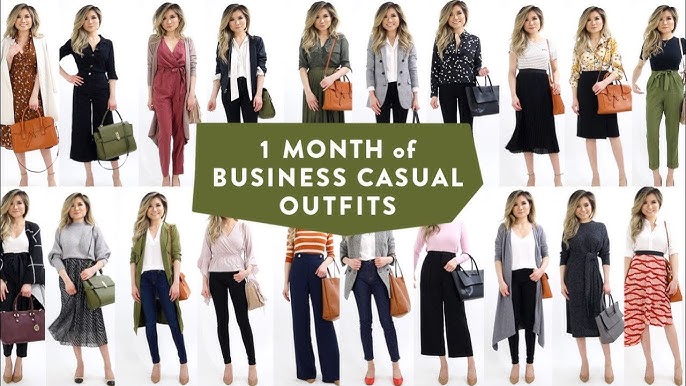
For Women
- Blouses and Tops: Solid colors or simple patterns. Avoid sheer fabrics unless layered.
- Dress Pants or Chinos: Navy, gray, black, or beige.
- Knee-Length Skirts: Pencil or A-line styles work best.
- Sweaters and Cardigans: Neutral tones or soft pastels.
- Blazers: One or two well-fitted options.
- Dresses: Simple cuts, not too tight or revealing.
- Flats or Low Heels: Closed-toe is safest.
- Simple Accessories: Stud earrings, thin belts, classic watches.
For Men
- Button-Down Shirts: White, blue, or soft checks/stripes.
- Polo Shirts: For less formal environments.
- Chinos or Dress Pants: Avoid baggy or overly tight fits.
- Sweaters: V-neck or crew neck, worn over shirts.
- Blazers or Sports Jackets: Optional, but useful for meetings.
- Leather Shoes or Loafers: Avoid athletic styles.
- Minimal Belts and Ties: Ties are usually optional.
Pro Tip: Quality over quantity. A few well-chosen pieces can create many different outfits with simple changes.
What To Avoid In Business Casual
Even when the dress code seems relaxed, some items never fit into business casual. Wearing them can make you look unprofessional or out of place.
Common Mistakes
- Too casual shoes: Sneakers, flip-flops, or UGG boots.
- Overly casual tops: T-shirts, tank tops, or anything with a large logo.
- Shorts or athletic wear: Even if it’s hot outside, shorts are rarely acceptable.
- Wrinkled or stained clothes: Always check before leaving home.
- Heavy perfume or cologne: Many offices have scent-free policies.
Non-obvious Mistakes
- Visible undergarments: Bra straps, undershirts, or see-through fabrics can look unprofessional.
- Too many accessories: Large earrings or multiple bracelets can distract in meetings.
- Seasonal confusion: Wearing summer dresses or sandals in winter (or vice versa) can look out of place.
- Worn-out clothing: Even if you love a favorite sweater, replace it if it’s faded or has pilling.
How To Mix And Match For More Outfits
A smart business casual wardrobe stretches your budget and keeps your look fresh. Here’s how to get the most from a few basics:
| Item | Dress Up | Dress Down |
|---|---|---|
| Navy blazer | With dress pants and a button-down | With chinos and a sweater |
| Black dress pants | With silk blouse and heels | With polo shirt and flats |
| White shirt | Under a sweater vest | Open collar with rolled sleeves |
| Simple dress | With blazer and belt | With cardigan and flats |
Tip: Stick to a color scheme (like navy, gray, white, and one accent color). This makes mixing much easier.
Business Casual Outfit Examples
Let’s look at some real outfit combinations for both men and women. These work in most offices and show how to adapt your look.
Women’s Outfits
- Monday: Black dress pants, light blue blouse, navy blazer, black flats.
- Tuesday: Knee-length gray skirt, white button-down, cardigan, nude pumps.
- Wednesday: Dark blue dress, thin belt, patterned scarf, closed-toe heels.
- Thursday: Tan chinos, soft pink sweater, simple necklace, loafers.
- Friday: Black jeans (if allowed), striped top, long cardigan, ballet flats.
Men’s Outfits
- Monday: Charcoal chinos, white shirt, navy blazer, brown loafers.
- Tuesday: Gray dress pants, light blue button-down, patterned sweater, black shoes.
- Wednesday: Navy dress pants, checked shirt, leather belt, oxfords.
- Thursday: Khaki chinos, pale pink polo, dark brown loafers.
- Friday: Dark jeans (if allowed), casual shirt, pullover sweater, clean sneakers.
Non-obvious insight: On days with client meetings or presentations, add a blazer or choose more formal shoes, even if your office leans casual.
How To Adjust For Weather And Seasons
Staying comfortable year-round is possible with smart choices.
Hot Weather
- Choose lightweight fabrics like cotton, linen, or blends.
- Short-sleeved blouses or polo shirts (but not tank tops).
- Skirts and dresses are fine, but keep hemlines professional.
- Light-colored clothing reflects heat.
- Avoid open-toe shoes unless clearly allowed.
Cold Weather
- Layer with sweaters, cardigans, and blazers.
- Wool or thicker fabrics keep you warm.
- Tights or leggings under skirts.
- Leather boots are fine as long as they’re clean and simple.
- Keep a scarf handy for commuting, but remove it indoors.
Mistake to avoid: Wearing heavy winter boots all day indoors. Bring a pair of shoes to change into.
Shoes: The Final Touch
Shoes say a lot about your professionalism. In business casual, your shoes should be clean, in good repair, and match your outfit.
For Women
- Flats: Simple ballet flats or loafers.
- Low to mid heels: Avoid sky-high heels or platform shoes.
- Boots: Ankle or knee-high, plain styles.
- No flip-flops or athletic shoes.
For Men
- Loafers
- Oxfords
- Dress boots
- Simple, clean sneakers (if your office allows)
Practical tip: Keep a backup pair of shoes at your desk, especially if you commute in less formal footwear.
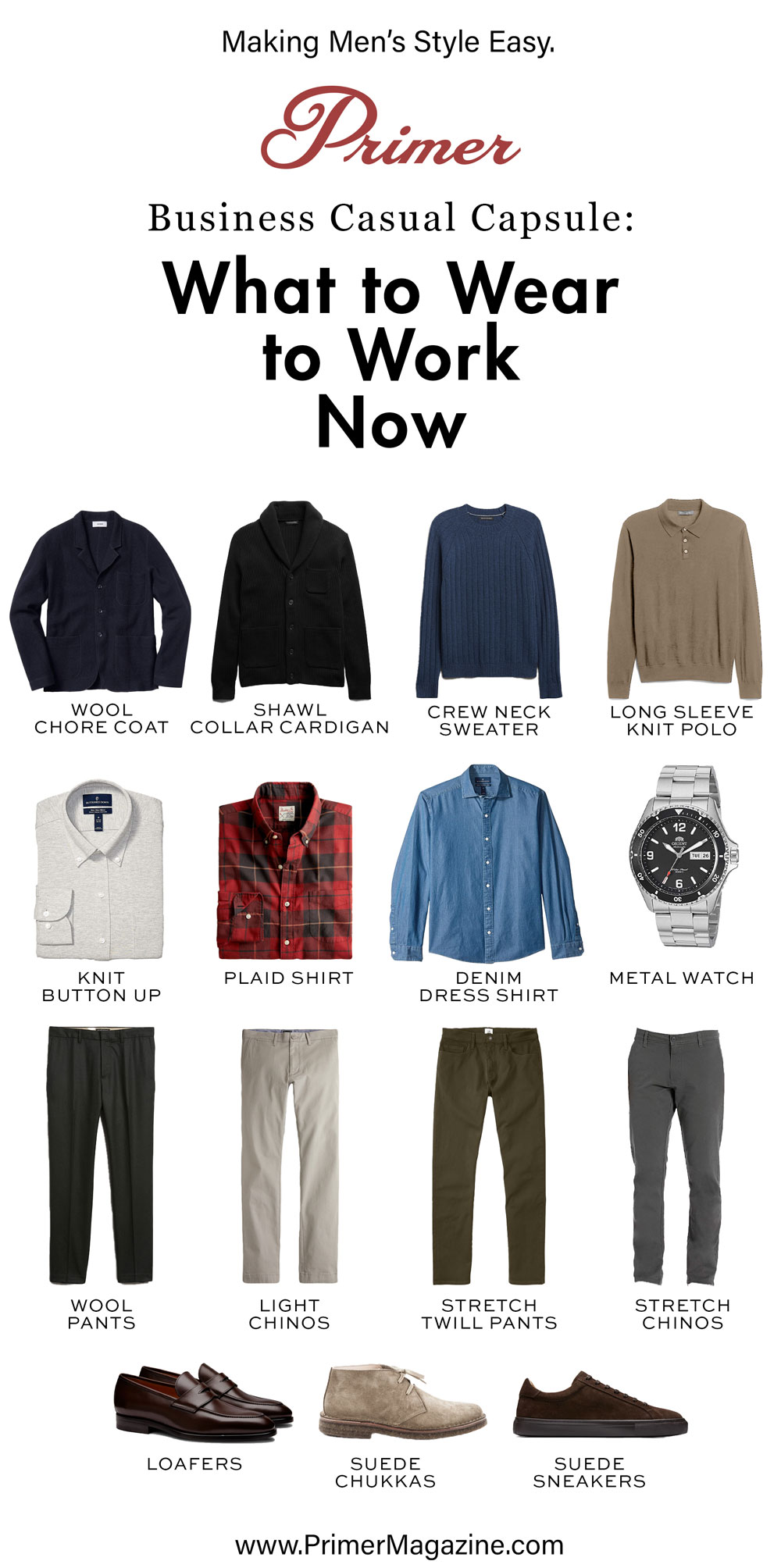
Credit: www.primermagazine.com
Accessories And Personal Style
Business casual lets you add some personality, but moderation is key.
- Jewelry: Small earrings, a watch, or a simple necklace work well.
- Belts: Match your belt to your shoes for a polished look.
- Bags: Simple leather tote, briefcase, or backpack in a neutral color.
- Scarves: A patterned scarf can brighten up a basic outfit.
Common mistake: Over-accessorizing. Too many statement pieces can distract from your work.
Grooming And Hygiene
Looking put together is more than clothes. Employers notice the details.
- Hair: Clean, neat, and styled simply.
- Facial hair: Trimmed and tidy for men.
- Nails: Short, clean, and polish (if worn) not chipped.
- Scent: Use light deodorant, avoid strong perfumes.
Pro tip: Keep a small grooming kit (comb, lint roller, stain remover pen) in your bag or desk drawer.

Credit: unifi.com
Handling Special Situations
Sometimes, business casual needs a small adjustment.
Presentations And Meetings
- Add a blazer or jacket.
- Choose darker colors for authority.
- Wear closed-toe shoes.
Client Visits
- Dress one step up from your office’s usual style.
- Avoid anything too trendy or revealing.
Company Events
- Company picnics: Polo shirt and chinos or a casual dress with flats.
- Holiday parties: Festive but not flashy; keep hemlines and necklines appropriate.
Unexpected insight: If you travel for work, pack wrinkle-free clothes and neutral basics. This makes it easy to adapt to different offices.
When In Doubt: How To Decide What’s Appropriate
If you’re unsure, use these guidelines:
- Check the company handbook or HR policies.
- Observe what managers and team leaders wear.
- Dress slightly more formal for your first week.
- Ask HR or a trusted colleague for advice.
Mistake to avoid: Relying only on what your friends wear at other companies. Every office is different.
Saving Money On Business Casual
A good business casual wardrobe doesn’t have to be expensive.
- Shop end-of-season sales for basics.
- Choose versatile pieces that mix and match.
- Buy higher quality for items you wear often (like shoes or pants).
- Thrift stores often have blazers and dress pants at low prices.
- Build your wardrobe slowly, adding one or two pieces each month.
Insight for beginners: Spend more on shoes and outerwear. Cheap shoes wear out quickly and can make the whole outfit look sloppy.
Business Casual For Different Body Types
Dressing business casual is easier when you know what flatters your body.
- Tall: Try wide-leg pants and long cardigans. Avoid too-short sleeves or pants.
- Petite: Choose fitted blazers and skirts above the knee. Avoid oversized tops.
- Curvy: Wrap dresses, A-line skirts, and high-rise pants look great. Avoid clingy fabrics.
- Athletic: Structured blazers, pleated skirts, or layered tops add dimension.
Pro tip: Tailoring makes a huge difference. Even affordable clothes can look custom if they fit well.
How To Transition From College Or Home To Business Casual
Moving from college (or remote work) to an office can be a big shift.
- Start with a few basics: Black pants, white shirt, one cardigan or blazer.
- Keep your look simple; you can add personal touches later.
- Invest in shoes and a bag first.
- Practice your morning routine so you’re not rushed.
- Take a photo before you leave home—sometimes a mirror doesn’t show the full picture.
Beginner insight: Don’t wait to buy everything at once. Get feedback, then fill gaps as you learn what works.
Common Business Casual Myths
Let’s clear up some misunderstandings.
- “Jeans are always okay.” Not all offices allow jeans, and never distressed or ripped styles.
- “Business casual means no suits.” You can wear a suit, just break up the pieces for a more relaxed look.
- “Women can wear any dress.” Only professional cuts and lengths are appropriate.
- “Expensive clothes are required.” Fit and neatness matter more than price.
- “Only neutral colors are allowed.” Small pops of color or pattern are fine—just avoid too bright or clashing combinations.
Business Casual Around The World
If you work with international teams or offices, keep these differences in mind.
- Europe: Business casual leans more formal (often blazers and dress shoes).
- Asia: Modesty is important; avoid low necklines or sleeveless tops.
- Australia: More relaxed, but neatness still matters.
- Middle East: Covering arms and legs is usually expected.
If you travel or have video calls, check local norms with your HR team.
Sustainability And Business Casual
Many are choosing to build wardrobes that are good for the planet and their wallet.
- Buy fewer, higher-quality items.
- Choose natural fibers (cotton, wool, linen) over synthetics.
- Support brands with ethical practices.
- Donate or recycle old clothes instead of throwing them away.
Resource: Learn more about sustainable fashion at Fashion Revolution.
Sample Two-week Business Casual Capsule Wardrobe
Want a simple plan? Here’s a two-week capsule for women and men. Mix and match these pieces for 10 workdays.
Women
- 2 dress pants (black, navy)
- 2 skirts (gray, navy)
- 3 blouses (white, pastel, print)
- 2 sweaters (neutral, color)
- 1 blazer (navy)
- 1 dress (simple, dark)
- 2 pairs shoes (flats, heels)
- 1 cardigan
Men
- 2 chinos (gray, khaki)
- 2 dress pants (navy, black)
- 3 shirts (white, blue, check)
- 2 sweaters (navy, gray)
- 1 blazer (navy)
- 2 pairs shoes (brown, black)
- 1 polo shirt
Tip: Lay out your outfits on Sunday night. You’ll save time each morning.
Frequently Asked Questions
What Is Business Casual For Women?
Business casual for women means dress pants or skirts, blouses, sweaters, cardigans, and simple dresses. Shoes should be flats or low heels, and accessories should be minimal. Avoid jeans, T-shirts, and flip-flops unless your office clearly allows them.
Can I Wear Jeans In A Business Casual Office?
Only if your company specifically allows jeans. Even then, choose dark, non-distressed styles, and pair them with a polished shirt and shoes. Save ripped or faded denim for weekends.
What Shoes Are Best For Business Casual?
For women, flats, loafers, or low heels work well. For men, loafers, oxfords, or dress boots are best. Avoid sneakers unless your office culture accepts them. Shoes should always be clean and in good repair.
How Do I Dress Business Casual In Hot Weather?
Choose lightweight fabrics like cotton or linen, lighter colors, and short-sleeved tops (not sleeveless). Dresses and skirts are fine if the length is appropriate. Avoid shorts, tank tops, and sandals unless your company allows them.
How Can I Add Personality To Business Casual Outfits?
Add colorful scarves, patterned blouses, unique jewelry, or statement watches—but keep it subtle. The goal is to look professional while expressing your style. One standout item per outfit is a good rule.
---
Dressing business casual doesn’t have to be confusing or expensive. With a few versatile pieces, attention to fit, and smart accessorizing, you’ll look polished, feel comfortable, and always be ready for whatever your workday brings. Remember: when in doubt, aim for neat, modest, and professional. Your clothes should support your success—not distract from it.
Credit: www.youtube.com
