

What to Wear And What Not to Wear to Court: Expert Tips
When you step into a courtroom, your appearance says a lot before you speak. Judges, lawyers, and juries notice how people present themselves. Dressing correctly is not just about looking nice—it's about showing respect for the court, helping your case, and avoiding distractions.
Many people feel nervous or unsure about what to wear and what not to wear to court. This article will guide you through smart choices, common mistakes, and practical tips so you feel confident and prepared.
Why Your Courtroom Appearance Matters
Your clothes can affect how others see you, including the judge and jury. A study by the National Center for State Courts found that people who dress professionally are more likely to be seen as honest and trustworthy. When you dress well, you send a message: you take the situation seriously. In contrast, wearing casual or inappropriate clothes can make you look careless or disrespectful.
Judges often mention attire in their comments, and lawyers sometimes warn clients that poor dress choices can hurt their case. This is true whether you are a witness, defendant, plaintiff, or just attending a hearing. Some courts even have dress codes posted online or at the entrance.
Beyond first impressions, your clothing can impact how much attention people pay to your words. For example, if you wear loud patterns or revealing outfits, the judge or jury might focus on your appearance instead of your testimony. On the other hand, neat and simple clothes help people listen to what you say.
For non-native English speakers or anyone feeling nervous, looking well-dressed can give a boost of confidence, making it easier to speak clearly and answer questions.
Non-obvious insight: Court staff and security officers may treat you differently based on your appearance. Well-dressed individuals are less likely to face extra questioning or delays at the entrance.
General Guidelines For Courtroom Attire
Start with these simple rules:
- Dress conservatively and neatly.
- Avoid flashy colors, bold prints, or clothes that attract attention.
- Choose clothes that are clean and pressed.
- Wear closed-toe shoes.
- Keep accessories minimal.
- Cover tattoos and remove visible piercings when possible.
Think of dressing for court like preparing for a job interview—but even more serious. Courtrooms are formal places, and every detail counts.
Even if you are nervous, planning your outfit ahead of time makes the morning less stressful. Lay out everything the night before, including shoes and accessories, to avoid rushing and forgetting something important.
Non-obvious insight: The temperature inside courtrooms can be unpredictable. Even in warm weather, air conditioning can make rooms chilly. A light sweater or blazer in a neutral color is a smart addition, even if you plan to remove it later.
What To Wear To Court
For Men
Men should aim for a classic, professional look. Here are some options:
1. Business Suit
A suit is always a safe choice. If you have one, wear it. Choose dark colors like navy, black, or gray. Pair with a light-colored shirt, such as white or pale blue.
A suit jacket can be removed if the judge allows, but always wear it when you enter the courtroom. Even if you don't normally wear suits, borrowing one from a friend or family member can make a big difference.
2. Dress Pants And Button-down Shirt
If you don’t own a suit, dress pants and a button-down shirt work well. Add a blazer if possible. Avoid jeans and T-shirts.
Choose shirts with collars and long sleeves. Short-sleeve shirts are sometimes accepted, but long sleeves look more formal. If it's hot, roll up sleeves only outside the courtroom.
3. Tie
A tie adds formality, but it is not always required. If you have one, wear it. Choose a simple design.
Solid colors or subtle stripes are best. Avoid cartoon or novelty ties, which can appear unprofessional.
4. Dress Shoes
Wear polished, closed-toe shoes in black or brown. Avoid sneakers, sandals, or boots.
If your shoes are older, take time to clean them. Shoe polish can make even worn shoes look presentable.
5. Belt
A matching belt completes your outfit. Make sure it looks clean and fits well.
A leather belt in black or brown is ideal. Avoid flashy buckles or colors.
Adding a watch is optional, but if you wear one, choose a classic style. Avoid sports or digital watches with bright colors.
For Women
Women have several good options for court attire:
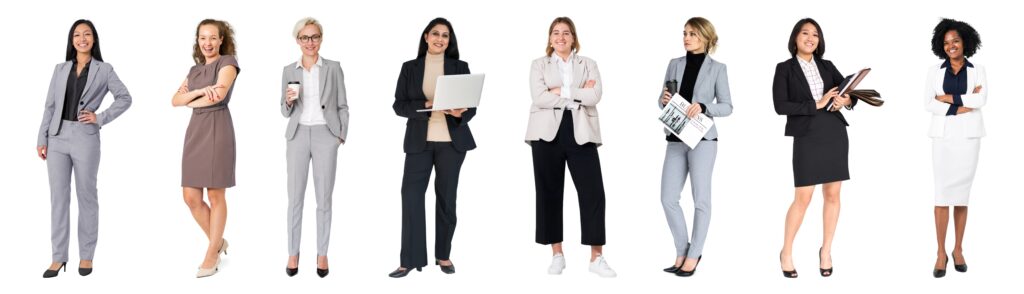
1. Business Suit Or Pantsuit
A suit (skirt or pants) is a strong choice. Choose dark or neutral colors. Avoid short skirts—knee-length or longer is best.
Blazers and jackets add formality and can help you stay warm. If you don’t have a matching suit, a simple blazer over a dress or blouse can be just as effective.
2. Dress Or Skirt With Blouse
A modest dress or skirt with a blouse is also acceptable. Make sure the dress is not too tight or revealing.
Patterns should be small and colors neutral. Avoid lace, sequins, or anything that draws too much attention.
3. Dress Pants And Blouse
Dress pants paired with a blouse or sweater looks professional. Avoid low-cut tops or sheer fabrics.
If you prefer a sweater, choose one without logos or bright patterns. Layering a cardigan over a blouse can be both modest and comfortable.
4. Closed-toe Shoes
Wear comfortable, closed-toe shoes. Heels should be moderate—no more than 2-3 inches. Avoid sandals, flip-flops, or flashy shoes.
If you must wear flats, choose simple styles in black, brown, or navy. Make sure your shoes are clean and not scuffed.
5. Simple Accessories
Keep jewelry simple and minimal. Avoid large, noisy, or distracting pieces.
A small necklace, stud earrings, or a simple bracelet are fine. Avoid dangling earrings or large rings.
Remember to bring a hair tie or clip if you have long hair. Pulling hair back looks neater and prevents you from playing with it during stressful moments.
For Children And Teens
Children and teens should dress neatly and modestly. Even for juvenile court, respect is important.
- Collared shirt and slacks or skirt
- Closed-toe shoes
- Avoid graphic T-shirts, shorts, or ripped clothing
For younger children, polo shirts and khaki pants are a good choice. For teens, following the adult guidelines as much as possible is best. If your child must wear a school uniform, check with the court to see if it is acceptable.
Non-obvious insight: Some courts may be more lenient with children, but setting a good example teaches respect for the legal process.
For Witnesses And Jurors
Witnesses and jurors should follow similar rules. Jurors, in particular, are often asked to dress business casual.
- Men: Dress pants, collared shirt, belt, closed-toe shoes
- Women: Slacks, skirt, blouse, closed-toe shoes
Jurors may sit for long hours, so comfort matters. Avoid tight collars, stiff fabrics, or shoes that pinch. If you have a medical need, let the court know in advance.
Religious And Cultural Clothing
If you wear religious attire (such as a hijab, turban, or yarmulke), courts generally allow it. However, avoid additional accessories or clothing that is not part of your faith tradition.
Many judges and court staff are trained to respect religious diversity. If you are worried about a specific item, call ahead or bring documentation from your religious leader. The main goal is to look respectful and avoid unnecessary attention.
Acceptable Colors And Patterns
Neutral colors are safest:
- Black
- Navy
- Gray
- Beige
- White
Avoid bright colors like red, orange, or yellow. Patterns should be subtle—small stripes or checks are fine.
Earth tones such as olive or soft brown are also acceptable, but keep the look simple. If you want to add color, try a muted scarf or tie rather than a bold shirt or dress.
What Not To Wear To Court
Certain clothing choices can hurt your image or even get you turned away at the door. Here’s what you should avoid:
1. Casual Clothes
Do not wear jeans, shorts, T-shirts, tank tops, or sweatshirts. These suggest a lack of respect.
Even expensive designer jeans are not appropriate. Save them for another day.
2. Revealing Or Tight Clothing
Avoid low-cut tops, short skirts, crop tops, or see-through fabrics.
If you are unsure about a piece of clothing, choose something more modest. Remember, it’s better to be slightly overdressed than underdressed.
3. Athletic Wear
No workout clothes, tracksuits, leggings, or sneakers.
Yoga pants, gym shorts, and sports jerseys send the wrong message.
4. Graphic Prints Or Logos
Skip clothes with slogans, logos, pictures, or bold designs.
Even positive messages can distract or offend someone in court.
5. Hats And Caps
Hats are not allowed in most courtrooms. Exceptions exist for religious reasons.
Remove all headwear at security unless you have a religious exemption.
6. Flip-flops And Sandals
These are too casual and are often banned.
If you have a foot injury and must wear sandals, bring a doctor’s note.
7. Ripped Or Dirty Clothing
Never wear torn or stained clothes.
Even small holes or stains can be seen as disrespectful.
8. Heavy Makeup Or Perfume
Keep makeup light and natural. Strong scents can distract others.
Some people are allergic to perfumes, so avoid strong fragrances.
9. Large Accessories
Avoid big earrings, chunky necklaces, or noisy bracelets.
Jury members and judges may be distracted by shiny or noisy items.
10. Visible Tattoos And Piercings
Cover tattoos if possible. Remove piercings except for simple earrings.
If you have facial piercings, consider removing them temporarily.
11. Outerwear
Coats, jackets, and hoodies should be removed before entering the courtroom.
Use a coat check or leave outerwear at your seat.
12. Shorts
Even on hot days, shorts are not appropriate.
If you must wear shorts for medical reasons, notify the court in advance.
Non-obvious insight: Some courts will provide a wrap, shawl, or even a large T-shirt to cover inappropriate clothing. These items are usually uncomfortable and may make you stand out.
Common Courtroom Dress Code Policies
Many courts have posted dress codes. Here’s a typical comparison of allowed and banned items:
| Allowed | Banned |
|---|---|
| Business suit | Shorts |
| Dress pants | T-shirts |
| Collared shirt | Flip-flops |
| Closed-toe shoes | Tank tops |
| Blouse | Hats (non-religious) |
| Simple accessories | Heavy jewelry |
Courts may differ in their exact requirements, but most follow these basic rules.
If you are traveling to a different city or state for court, check the local court’s website for details. Some areas are stricter than others, especially federal courts or high-profile cases.
How Clothing Can Influence Your Case
Studies show that appearance influences perception in court. For example, a survey by the American Bar Association found that 67% of lawyers believe that clients who dress well have a better chance of making a positive impression.
If you dress appropriately, you may:
- Gain more respect from the judge
- Appear trustworthy and responsible
- Reduce distractions for the jury
- Show you are taking the process seriously
If you dress poorly, you risk:
- Being seen as disrespectful
- Losing credibility
- Distracting from your case
- Getting turned away or delayed
Judges have wide discretion in courtrooms. If you appear in a way that offends or distracts, the judge may be less patient with your case. Even if your case is strong, poor dress can make it harder for your lawyer to argue in your favor.
Non-obvious insight: Jurors are influenced by unconscious biases. If you wear professional clothes, you are less likely to be judged unfairly based on age, background, or culture.
Credit: www.danielstark.com
Examples Of Courtroom Dress Success And Mistakes
Success Stories
- A defendant wore a navy suit and tie, polished shoes, and kept accessories minimal. The judge commented on his professionalism, and his lawyer said it helped his case.
- A witness wore a modest dress and cardigan, with simple jewelry. The jury listened closely and later said she seemed trustworthy.
Small details matter. For example, a woman who wore a simple scarf to cover a tattoo received a compliment from the court staff for showing respect for the rules.
Mistakes To Avoid
- One plaintiff wore jeans and a T-shirt with a slogan. The judge asked her to change before starting the hearing.
- A juror arrived in shorts and flip-flops. He was sent home to change, causing delays.
A young man once wore a baseball cap into court. When he refused to remove it, he was held in contempt and fined. These stories show that ignoring dress codes can have real consequences.
Non-obvious insight: Some courts provide clothing to people who arrive inappropriately dressed, but this is rare and often uncomfortable. Always plan ahead.
Preparing For Different Types Of Court Hearings
Not all hearings are the same. Here’s how to prepare for different situations.
Criminal Court
Dress as formally as possible. Judges in criminal cases expect high standards. A suit or conservative dress is best.
First impressions are especially important in criminal cases, where credibility and respect can affect bail, sentencing, or jury decisions.
Civil Court
Business casual is usually acceptable, but always aim for neatness and modesty.
Even in less formal cases, such as disputes over money, looking professional shows you respect the court’s time.
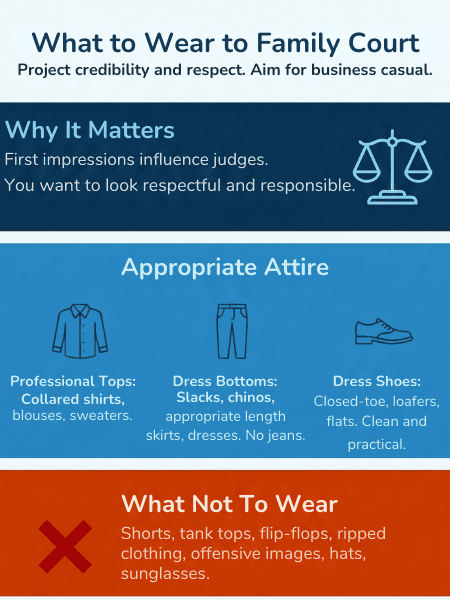
Family Court
Judges appreciate modesty and respect. Avoid flashy or revealing clothes.
Family court often deals with sensitive matters. Dressing simply can help lower stress and show you are focused on the issues.
Traffic Court
Even for minor cases, avoid casual wear. Dress pants and a collared shirt are minimum requirements.
Many people make the mistake of wearing shorts or T-shirts to traffic court, thinking it’s not important. Dress as if you’re attending a job interview.
Small Claims
Business casual is usually enough, but avoid jeans or T-shirts.
If you are representing yourself, a blazer or neat sweater can help you look prepared and organized.
Non-obvious insight: In every type of court, showing you made an effort with your clothes is noticed—even if you do not own expensive items.
Practical Tips For Choosing Court Clothes
1. Try On Your Outfit Early
Make sure clothes fit well and feel comfortable. Don’t wait until the morning of your hearing.
2. Check For Stains Or Damage
Look over your clothes for holes, stains, or wrinkles.
Bring a stain remover pen or lint roller for emergencies.
3. Iron Or Press Clothes
Wrinkled clothes look sloppy. Iron shirts and pants.
Hang your clothes overnight to help wrinkles fall out.
4. Choose Comfort
You may be in court for hours. Wear clothes you can sit in easily.
If you need to walk or stand, test your shoes at home first.
5. Pack Extra Items
Bring a backup shirt or blouse, just in case.
If you spill coffee or food before your case, you’ll be glad you have a spare.
6. Ask Your Lawyer
If you’re unsure, ask your lawyer or check the court’s website.
Lawyers have seen many dress code problems and can offer good advice.
7. Avoid Last-minute Changes
Stick to your planned outfit. Don’t switch to something untested.
New clothes might be uncomfortable or have tags you forget to remove.
8. Carry Minimal Items
Avoid large bags or backpacks. Use a small purse or folder.
Security screening is faster with fewer items.
9. Mind The Weather
If it’s cold, wear a sweater or blazer. Remove outerwear before entering.
Bring an umbrella or raincoat if needed, but leave them in the waiting area.
10. Cover Tattoos And Piercings
If possible, use makeup or clothing to cover tattoos.
Choose neutral makeup to avoid drawing attention.
Non-obvious insight: If you are traveling for court and forget something, local thrift stores can be a good place to find affordable, appropriate clothing.
Choosing The Right Outfit: A Step-by-step Guide
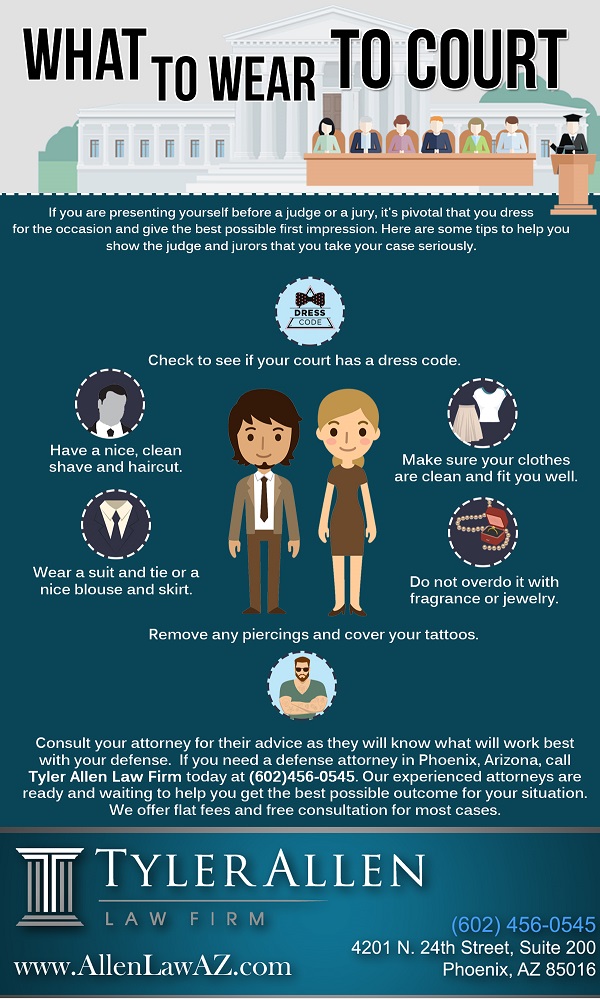
Here’s a step-by-step checklist for getting ready:
- Pick neutral-colored clothes (navy, black, gray).
- Choose a collared shirt or blouse.
- Add dress pants or a skirt (knee-length or longer).
- Select closed-toe shoes.
- Keep jewelry and accessories simple.
- Check for stains, holes, or wrinkles.
- Remove hats, sunglasses, and outerwear.
- Cover tattoos and remove visible piercings.
- Avoid heavy perfume or makeup.
- Review your outfit in the mirror.
Double-check that everything fits well. If you feel comfortable and look neat, you are ready.
Credit: www.allenlawaz.com
Dress Code For Court Staff And Lawyers
Court staff and lawyers follow strict dress codes. Lawyers usually wear full suits, ties, and polished shoes. Staff members often wear uniforms or business attire. Here’s a comparison of typical dress codes:
| Role | Dress Code |
|---|---|
| Lawyer | Suit, tie, dress shoes, minimal accessories |
| Court Clerk | Business attire, closed-toe shoes |
| Bailiff | Uniform, closed-toe shoes |
| Judge | Robe over professional attire |
| Juror | Business casual, minimal accessories |
Non-obvious insight: If you appear as a lawyer or staff member in court, your dress code may be enforced more strictly than for others.
For clients, seeing their lawyer dressed sharply is reassuring and can increase trust in their case.
Special Circumstances: Medical And Accessibility Concerns
If you have medical needs, such as wearing braces, casts, or special shoes, inform the court before your hearing. Courts usually make allowances for medical devices. If you require comfortable clothing due to disability, bring a doctor’s note if possible.
Don’t let a medical condition stop you from attending court, but aim for neat and modest clothing wherever possible.
If you need to bring a service animal or special equipment, check the court’s accessibility policy in advance. Arriving early helps you get through security and find accessible seating.
Dress Code For Virtual Court Hearings
Online court hearings are more common now. Dress rules still apply, even if you are at home.
- Wear professional clothing from head to toe—don’t assume only your top is visible.
- Avoid distracting backgrounds.
- Keep hair neat and face visible.
- Don’t eat, smoke, or drink during the hearing.
Set up your camera before the hearing to check your appearance. Sit in a well-lit area and keep your background simple—a blank wall or bookshelf works well.
Some people forget about pants or shoes, but judges notice if you stand up or move. Treat virtual court like in-person court.
Non-obvious insight: Virtual hearings can be recorded, so your appearance may be reviewed later. Good attire helps you look consistent and credible on camera.
Data: Court Dress Code Violations
Court dress code violations are more common than people expect. According to a survey of court clerks, about 25% of people arrive in inappropriate clothing at least once. Common violations include:
- Wearing shorts or flip-flops
- Displaying tattoos or piercings
- Wearing graphic T-shirts
Most courts allow people to change or reschedule, but some turn people away immediately.
Consequences for not following dress codes can include delays, rescheduled hearings, or even fines. Don’t let a simple mistake make your day in court more difficult.
Credit: www.divorcenet.com
Frequently Asked Questions
What Should I Wear If I Don’t Own A Suit?
You do not need a suit to attend court. Choose dress pants and a collared shirt or blouse. Make sure clothes are clean, neat, and fit well. Avoid jeans, T-shirts, or casual shoes.
Borrow clothes from friends or visit a local thrift store if needed. Looking respectful is more important than wearing expensive brands.
Can I Wear Religious Clothing In Court?
Yes, most courts allow religious attire such as hijabs, turbans, or yarmulkes. If you have questions, contact the court before your hearing. Avoid additional accessories not related to your faith.
Is It Okay To Wear Makeup Or Jewelry?
You can wear light makeup and simple jewelry. Avoid heavy makeup, strong perfume, or large, noisy accessories. The goal is to look neat and not distract others.
If you wear nail polish, choose neutral colors. Remove chipped or bright polish before your hearing.
What Happens If I Wear Inappropriate Clothes To Court?
If you wear inappropriate clothing, you may be asked to change, sent home, or delayed. Some courts provide temporary clothing, but this is rare. Always check the dress code before attending.
How Can I Find My Court’s Dress Code?
Most courts post their dress code online or at the entrance. Visit the court’s website or call ahead. For more details, see this New York Courts Dress Code.
Final Thoughts
Dressing for court is not just about style—it’s about respect, credibility, and making a positive impression. Choose conservative, neat, and comfortable clothes. Avoid anything casual, flashy, or distracting. If you’re unsure, ask your lawyer or check the court’s rules. Take time to prepare your outfit, and you’ll show the judge, jury, and everyone else that you take the process seriously.
Remember, your appearance can help your case more than you think.
A little preparation goes a long way. Make your courtroom appearance count.
