

What to Wear And What Not to Wear to an Interview: Expert Tips
What to Wear And What Not to Wear to an Interview
First impressions matter more than most people realize, especially during a job interview. The way you dress sends a message before you even speak. It can show you are professional, prepared, and serious—or the opposite. Many candidates focus only on their resume or interview answers, but interview attire is often the silent factor that influences hiring decisions. Choosing the right outfit can build instant trust, while mistakes can push your application aside.
This guide will help you understand what to wear and what not to wear to an interview. You’ll find clear rules, practical examples, and deep insights about interview clothing—so you’re never left guessing. Whether you’re applying for an office job, creative role, or a hands-on position, you’ll learn how to choose clothes that match the company culture and make you look your best. Plus, you’ll discover common mistakes that many smart people make, and how to avoid them. Let’s make sure your outfit opens doors instead of closing them.
Why Interview Attire Matters
The clothes you wear to an interview are not just about style. They are about confidence, respect, and fitting in. Employers notice your appearance in the first few seconds. According to a survey by CareerBuilder, 49% of employers say they know if a candidate is a good fit within the first five minutes. Your attire plays a big part in that initial impression.
When your outfit matches the company’s expectations, you look like you belong. You show you understand their culture. You also demonstrate attention to detail, which is a valued skill in any job. Dressing poorly, on the other hand, can make you seem careless or out of touch.
Non-obvious insight: Some companies use attire as a quick filter. If you don’t dress right, they may assume you didn’t research or you lack basic professionalism—even if your skills are strong.
Understanding Dress Codes
Before you choose your interview clothes, it’s important to understand the company’s dress code. There are three main types:
| Dress Code Type | Typical Attire | Common Industries |
|---|---|---|
| Business Formal | Suits, ties, formal dresses | Law, finance, corporate offices |
| Business Casual | Collared shirts, slacks, skirts | Tech, education, marketing |
| Casual | Jeans, simple shirts, clean sneakers | Startups, creative agencies, retail |
If you’re unsure about the dress code, it’s better to be slightly overdressed than underdressed. You can research the company’s website, social media, or ask someone who works there. If you cannot find clear information, choose business casual as a safe middle ground.
What To Wear: Business Formal Interviews
For jobs in law, banking, or senior positions, business formal is expected. Here’s what works:
Men
- Suit: Dark, solid color (navy, black, gray). Avoid loud patterns.
- Shirt: White or light-colored, well-ironed.
- Tie: Simple, not flashy. Classic patterns or solid colors.
- Shoes: Black or brown dress shoes, polished.
- Belt: Matches shoes.
- Socks: Dark, plain, no wild prints.
- Accessories: Minimal—watch, wedding ring.
Women
- Suit: Pantsuit or skirt suit in dark, neutral colors.
- Blouse: Simple, not low-cut or overly bright.
- Shoes: Closed-toe, low to medium heel.
- Bag: Small, professional.
- Jewelry: Simple studs or a small necklace.
- Hosiery: If wearing a skirt, choose neutral pantyhose.
- Makeup: Light and natural.
Non-obvious insight: Fit matters more than brand. A cheap suit that fits well looks better than an expensive suit that is too loose or tight.
What To Wear: Business Casual Interviews
Many modern workplaces prefer business casual. It’s less strict but still requires professionalism.
Men
- Shirt: Collared, button-down. No T-shirts.
- Pants: Slacks or chinos, not jeans.
- Shoes: Loafers or clean dress shoes.
- Blazer (optional): Adds polish.
- Accessories: Simple belt, watch.
Women
- Top: Blouse, sweater, or collared shirt.
- Bottom: Slacks, skirt (knee-length or longer).
- Shoes: Flats or low heels.
- Jacket (optional): Blazer or cardigan.
- Jewelry: Minimal, not distracting.
- Bag: Professional tote or purse.
Non-obvious insight: Even in business casual, avoid athletic wear, ripped jeans, or sandals. These can make you seem careless.
What To Wear: Casual Interviews
Startups, retail, and creative companies often allow casual attire. But casual doesn’t mean sloppy.
Men
- Shirt: Polo, casual button-down, or clean T-shirt.
- Pants: Clean jeans or chinos.
- Shoes: Casual loafers or neat sneakers.
- Jacket (optional): Denim or bomber jacket.
Women
- Top: Simple blouse, sweater, or T-shirt.
- Bottom: Jeans, casual pants, or skirt.
- Shoes: Flats, clean sneakers, or low boots.
- Bag: Casual but tidy.
Insight: Always avoid graphic prints or slogans. You want the focus to stay on you, not your shirt.
What Not To Wear: Interview Clothing Mistakes
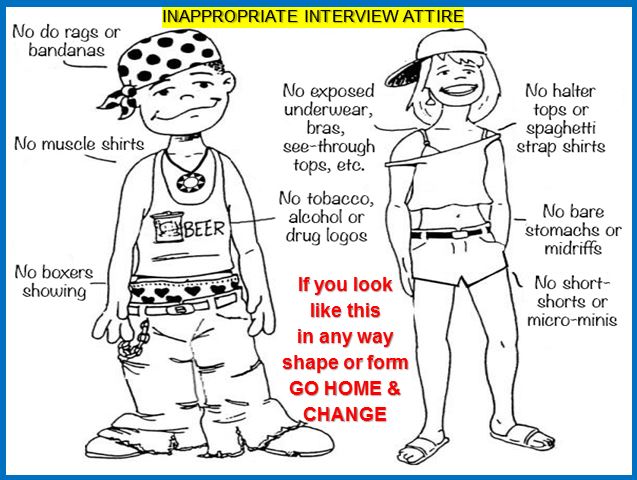
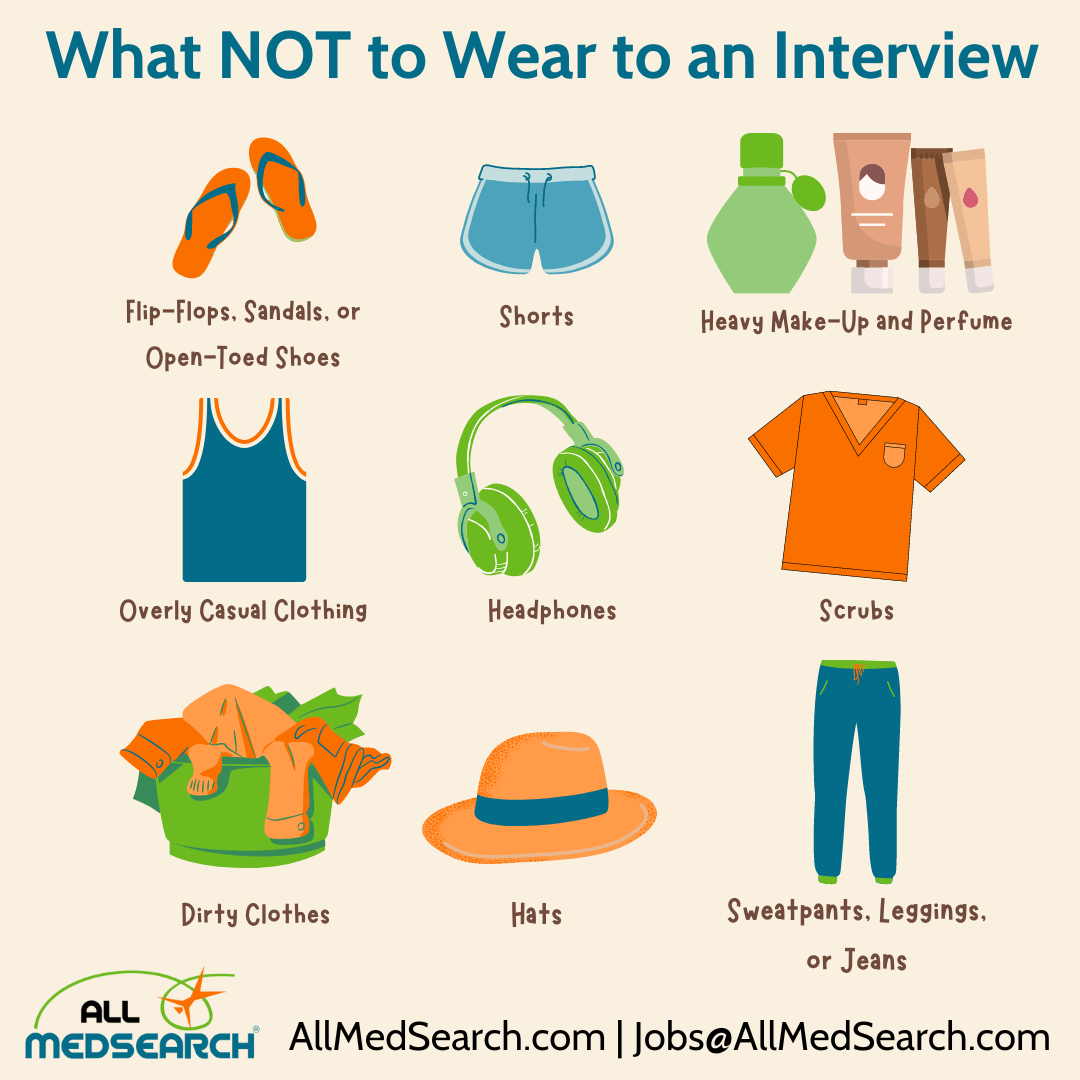
Many candidates lose opportunities because of simple clothing errors. Here’s what to avoid:
- Too casual attire: Shorts, tank tops, flip-flops.
- Dirty or wrinkled clothes: Shows lack of preparation.
- Strong perfumes or colognes: Can distract or irritate interviewers.
- Heavy jewelry: Draws attention away from your face.
- Revealing outfits: Low-cut tops or very short skirts are unprofessional.
- Bright neon colors: Distracting and not businesslike.
- Large logos or slogans: Sends the wrong message.
- Athletic wear: Tracksuits, running shoes, gym shorts.
- Unkempt hair: Messy or greasy hair is noticed instantly.
- Over-accessorizing: Too many rings, bracelets, or scarves.
Common mistake: Some candidates try to show personality with bold fashion. It’s better to let your skills and answers show personality, not your clothes.
Dressing For Different Industries
Every industry has its own culture. Here’s how to match your outfit to the job:
| Industry | Recommended Attire | What to Avoid |
|---|---|---|
| Finance | Business formal suit | Casual shirts, jeans, flashy accessories |
| Tech | Business casual (or smart casual for startups) | Too formal (unless for management), athletic wear |
| Creative | Smart casual, add a touch of style (scarf, creative color) | Overly formal, boring colors, sloppy casual |
| Healthcare | Business formal or business casual | Open-toe shoes, strong perfumes |
| Retail | Casual but neat | Dirty shoes, wrinkled clothes, heavy makeup |
Example: For a graphic design interview, you can add a subtle splash of color or a unique accessory, but keep the base outfit professional.
Dressing Tips For Remote Or Virtual Interviews
Video interviews are now common. But many candidates treat them as less serious. Here’s how to dress for success online:
- Dress as you would for an in-person interview: At least business casual.
- Avoid bright white or busy patterns: These can look bad on camera.
- Keep jewelry and accessories simple: They can reflect light and distract.
- Choose solid colors: Blue, gray, or soft pastels.
- Make sure your outfit is clean and fits well: Even if only your top half is visible.
- Background matters: Make sure your surroundings are tidy.
Non-obvious insight: Even your lower half matters. If you stand up or move, make sure you’re wearing full professional attire.
Grooming And Personal Presentation
Clothing is just part of your presentation. Grooming is equally important.
Key Grooming Tips
- Hair: Clean, combed, no extreme styles.
- Face: Shave or trim facial hair (men), natural makeup (women).
- Hands: Nails clean, no chipped nail polish.
- Breath: Avoid garlic or strong smells before the interview.
- Accessories: Keep it minimal.
Tip: If you wear glasses, clean them before your interview. Smudges are visible and can make you look careless.
Cultural And Gender Considerations
Interview attire norms can depend on cultural expectations and gender identity. If you are unsure, focus on neutral colors, modest styles, and simple accessories. For gender-diverse candidates, wear what feels professional and authentic to you, but avoid anything too bold or informal.
Real-world insight: Many companies now value authenticity. If you dress comfortably and professionally, you will look confident.
Choosing Colors And Fabrics
Color and fabric choice can change how interviewers see you.
Best Colors
- Navy blue: Trustworthy, professional
- Gray: Balanced, neutral
- Black: Powerful, formal
- White: Clean, simple
- Soft pastels: Calm, approachable
Colors To Avoid
- Bright red: Too aggressive
- Neon shades: Distracting
- Heavy prints: Draw attention away from you
Fabrics
- Cotton: Comfortable, easy to iron
- Wool: Great for suits, keeps shape
- Polyester blends: Less wrinkling
- Silk: Use only for accessories
Non-obvious insight: Some fabrics look great in person but show every wrinkle on video calls. Test your outfit on camera before your interview.
Shoes And Accessories
Shoes and accessories may seem minor, but they matter.
Shoes
- Polished dress shoes: Best for formal or business casual
- Clean flats: Good for women in business casual
- Simple sneakers: Only for casual workplaces
- Avoid: Sandals, flip-flops, worn-out shoes
Accessories
- Watch: Classic, not oversized
- Belt: Matches shoes
- Bag: Simple, professional
- Jewelry: Small, not flashy
Practical tip: If your shoes are noisy (e.g., clicking heels), consider softer soles. Loud shoes can distract in quiet offices.
Weather And Season Considerations
Adapting your outfit to the weather is important. Here’s how:
- Hot weather: Light fabrics, short sleeves (if appropriate), avoid heavy layers.
- Cold weather: Layer with sweaters or a blazer, choose wool or thicker fabrics.
- Rainy days: Carry a clean umbrella, avoid wet shoes.
Mistake to avoid: Showing up sweaty or wet. Plan extra time to freshen up before entering the building.
How To Prepare Your Interview Outfit
Preparation is key. Here’s a checklist:
- Try on your outfit a few days before.
- Check for stains, wrinkles, missing buttons.
- Iron or steam clothes.
- Polish shoes.
- Lay out accessories.
- Pack a backup (extra shirt or blouse) if traveling.
- Choose your bag or folder for documents.
Non-obvious insight: Always have a backup plan. If your first outfit doesn’t feel right, you’ll be less nervous knowing you have another option.

Credit: www.youtube.com
How Appearance Influences Interview Outcomes
Many studies show that appearance influences hiring decisions. According to the National Association of Colleges and Employers, 60% of interviewers say attire is a major factor. Even small details, like wrinkled clothes or strong scents, can change the result.
Interviewers often link neatness in appearance to neatness in work. If you look organized, they trust you will work organized. If you look messy, they worry about your work habits.
Real example: In one study, candidates who wore business formal had a 30% higher callback rate for finance jobs than those who dressed casual.
Special Situations: Second Interviews And Panel Interviews
For second interviews or panel interviews, raise your standard. If you wore business casual for the first round, step up to business formal if you are unsure. Panel interviews mean more people will judge your appearance.
- Dress slightly more formally than before.
- Add a blazer or tie.
- Check your outfit for consistency (no mismatched colors).
Tip: For panel interviews, your outfit must look good from all angles. Avoid clothes that bunch up or lose shape when sitting.
Credit: championpersonnel.net
How To Ask About Dress Code
If you can’t find information, it’s okay to ask. Here’s how:
- Contact HR or your recruiter: “Could you please advise on the expected dress code for my interview?”
- Ask politely: Shows you care about making a good impression.
Non-obvious insight: Many companies appreciate candidates who ask. It shows you pay attention to details.
Interview Attire For Entry-level Vs. Senior Positions
Entry-level candidates often worry about appearing too formal. For junior roles, business casual is usually safe. For senior positions, business formal is expected.
Entry-level
- Business casual or smart casual
- Avoid over-accessorizing
- Focus on neatness and fit
Senior-level
- Business formal
- High-quality fabrics
- Subtle accessories
Mistake: Trying to dress down to “fit in.” It’s better to look slightly more formal than less.
Credit: www.allmedsearch.com
Real-life Examples And Success Stories
Many people have won jobs simply by dressing right. Here are two stories:
- Finance job candidate: Wore a tailored navy suit, simple tie, and polished shoes. The interviewer said the candidate “looked ready for the boardroom.” They got the job over others with similar skills.
- Startup applicant: Wore clean jeans, a casual button-down, and neat sneakers. The CEO said they “fit the culture.” The candidate was chosen over someone wearing a full suit.
Key lesson: Matching your outfit to the company matters more than following a strict rule.
Quick Checklist For Interview Day
Here’s a fast checklist to help you get ready:
- Outfit clean, pressed, and fits well
- Shoes polished and appropriate
- Accessories minimal and tidy
- Hair neat, face clean
- Nails trimmed
- Bag or folder ready
- No strong scents
- Backup item packed
Bonus tip: Take a final look in the mirror before you leave. Small adjustments can make a big difference.
Comparison: Good Vs. Bad Interview Attire
See the clear difference between strong and weak choices:
| Good Attire | Bad Attire |
|---|---|
| Dark suit, white shirt, simple tie | Bright shirt, shorts, flip-flops |
| Blouse, slacks, closed-toe shoes | Graphic T-shirt, ripped jeans, sneakers |
| Polished loafers, minimal jewelry | Dirty shoes, heavy accessories |
| Neat hair, clean nails | Unkempt hair, chipped nail polish |
Frequently Asked Questions
What Should I Wear To A Virtual Interview?
Dress as you would for an in-person interview. Choose business casual or business formal, depending on the company. Avoid bright colors or busy patterns, as they can look distracting on camera. Make sure your background is tidy and your outfit is clean and fits well.
Can I Wear Jeans To An Interview?
Jeans are only acceptable for casual workplaces, like some startups or retail jobs. Even then, choose dark, clean jeans with no rips. If you are unsure, choose slacks or chinos instead. For formal or business casual interviews, avoid jeans.
How Do I Know The Company’s Dress Code?
Check the company website, social media, or ask your recruiter. Look at employee photos for clues. If you cannot find information, ask HR politely or choose business casual as a safe option. If you are still unsure, it is better to be slightly overdressed.
Should I Wear A Tie For A Business Casual Interview?
A tie is not required for business casual, but it can add polish. If you want to look extra professional, wear a simple tie. If you notice employees don’t wear ties, skip it. For business formal interviews, a tie is required.
Are Accessories Important For Interview Attire?
Yes, but keep them minimal. A classic watch, simple belt, small jewelry, and a professional bag are best. Avoid heavy or flashy accessories, as they distract from your answers. Make sure everything is clean and fits the overall look.
Making the right clothing choices for an interview is more than just following rules. It’s about showing respect, fitting the culture, and feeling confident. With careful preparation and smart decisions, your outfit can help you stand out for all the right reasons. Remember, your skills and personality matter—but your clothes are the first thing employers notice. Dress for the job you want, and let your attire open doors. For more guidance on professional dress, visit CareerBuilder.
