

What Time of the Day is Best for Gym: Unlock Peak Performance
What Time Of The Day Is Best For Gym
Many people ask themselves, "When should I go to the gym for the best results? " This question matters, whether you are trying to lose weight, build muscle, or simply feel healthier. Some say mornings are best, while others feel stronger in the evening.
The truth is more complex. The best time to exercise depends on your body, your schedule, and even your fitness goals. This article will help you understand how workout timing can affect your performance, motivation, and results.
We will look at what science says, discuss real-world experiences, and compare the pros and cons of mornings, afternoons, and evenings at the gym. If you want to make the most of your workouts, understanding the best time for you is a powerful tool.
We’ll also cover common myths, share expert tips, and answer the questions most people have about gym timing. By the end, you’ll have a clear idea of what works—and why.
How Your Body Clock Affects Exercise
Every person has an internal clock called the circadian rhythm. This clock controls when you feel sleepy, hungry, or full of energy. It also affects your body temperature, hormones, and heart rate. All these things play a big role in how you perform at the gym.
During the early morning, your body temperature is lower. Muscles may feel stiff and less flexible. Hormone levels like cortisol are higher, which can help with fat burning but also make some people feel tense or anxious. As the day goes on, your temperature rises, reaching a peak in the late afternoon or early evening. Muscles are warmer, joints move better, and reaction time improves. This is why many athletes set their personal records in the evening.
But not everyone is the same. Some people feel alert and ready in the morning, while others struggle to get moving before lunch. These differences are partly genetic. Your lifestyle and sleep schedule also change how your body responds at different times.
A key insight: If you always exercise at the same time each day, your body adapts. Over weeks, you may see better results simply because of this routine.
Morning Workouts: Benefits And Drawbacks
Many fitness experts recommend morning workouts. There are good reasons for this, but also some things to watch out for.
Benefits Of Working Out In The Morning
- Creates a habit: Morning exercise is less likely to get interrupted by work, family, or social plans. This makes it easier to stick to your routine.
- Boosts mood and focus: Studies show that exercise in the morning can improve your mood and mental focus for the rest of the day.
- Increases metabolism: Your body keeps burning calories at a higher rate for a few hours after you finish. For some, this may help with weight loss.
- Better sleep: People who work out in the morning often find it easier to fall asleep at night. Evening workouts can sometimes make sleep harder.
- Empty gym: In many places, gyms are less crowded early in the morning. This means less waiting for equipment and a quieter environment.
Drawbacks Of Morning Workouts
- Stiff muscles: Your body temperature is lower, so you may feel stiff or weak at first. A longer warm-up is important to avoid injury.
- Lower strength: Most people are not as strong or fast in the early morning compared to later in the day.
- Hard to wake up: If you are not a “morning person,” getting up early for the gym can feel like a big challenge. Motivation may be lower.
- Empty stomach: Some people feel lightheaded or weak if they exercise before eating. Others do well with a small snack first.
Data Comparison: Morning Vs Evening Strength
Here’s a simple comparison showing how strength can differ by time of day:
| Time of Day | Average Strength Level | Typical Flexibility |
|---|---|---|
| Morning | Slightly lower | Lower, needs more warm-up |
| Afternoon | Medium | Medium |
| Evening | Highest | Highest |
Practical Tips For Morning Exercise
- Set out your clothes and gym bag the night before.
- Start with 10 minutes of light cardio and stretching.
- Eat a small snack if you feel weak, such as a banana or yogurt.
- Go to bed earlier so you’re not sleep-deprived.
- Track your progress for a few weeks and notice how you feel.
Afternoon Gym Sessions: The Midday Advantage
For many people, the afternoon is the best time for the gym. Your body temperature is higher, muscles are ready, and you may be more awake than in the morning.
Benefits Of Afternoon Workouts
- Peak energy: Most people’s energy levels are high in the afternoon, especially after a healthy lunch.
- Higher performance: Studies show strength, power, and flexibility are better in the afternoon.
- Stress relief: A gym break in the afternoon can lower work stress and improve your mood for the rest of the day.
- Easier to warm up: Your body is already warm, so you need less time to stretch and get moving.
- Stable blood sugar: After eating breakfast and lunch, your blood sugar is steady, giving you more energy.
Drawbacks Of Afternoon Workouts
- Busy schedule: Work or school may make it hard to find time in the afternoon.
- Crowded gyms: In some places, the gym is busiest around lunchtime.
- Less routine: Afternoon workouts can be interrupted by meetings, errands, or other plans.
Example: Who Benefits From Afternoon Workouts?
People who work from home, have flexible schedules, or attend school with a break in the middle of the day often do well with afternoon workouts. Professional athletes often train in the afternoon for peak performance.
Data Comparison: Performance By Time
A study found that people who exercised in the afternoon lifted about 5% more weight and had better reaction time than those who worked out in the morning.
| Time | Strength Increase | Reaction Time |
|---|---|---|
| Morning | Baseline | Slower |
| Afternoon | +5% | Faster |
| Evening | +8% | Fastest |
Tips For Afternoon Gym Sessions
- Have a light, balanced lunch at least an hour before exercise.
- Use your gym session as a break from work or study.
- Schedule reminders to avoid missing your workout.
- Bring a water bottle to stay hydrated.
Evening Workouts: Pros, Cons, And Surprising Facts
For some, evening workouts offer the most benefits. If you want to build strength or lift heavy, this might be your best window.
Benefits Of Evening Workouts
- Peak strength: Muscle strength, endurance, and reaction time are usually highest between late afternoon and early evening.
- Stress reduction: Exercise helps clear your mind after a long day, making it easier to relax.
- More flexible: You usually have more time after work or school, so you can train longer or try new routines.
- Social energy: Many people find it fun to work out with friends or join group classes in the evening.
- Easier to eat after: You can refuel with dinner after your workout, helping muscle recovery.
Drawbacks Of Evening Workouts
- Sleep problems: For some, evening exercise can make it harder to fall asleep, especially with very intense workouts.
- Busy gyms: Many gyms are crowded after work hours, which can mean waiting for equipment.
- Possible fatigue: After a long day, you might feel tired and less motivated.
- Late meals: Eating late after the gym can cause digestive discomfort for some people.
Example: Evening Workouts And Bodybuilders
Many bodybuilders and strength athletes prefer evening workouts. Their muscles are fully warmed up, and their energy and focus are highest. This is a common reason why personal records and competition events often happen in the evening.
Insights: Evening Workouts And Hormones
Your body’s testosterone and cortisol balance may be best for building muscle in the evening. Testosterone helps muscle growth, while lower cortisol helps reduce stress.
Tips For Evening Workouts
- Avoid caffeine late in the day if you have trouble sleeping.
- Warm up well, especially if you sit a lot during the day.
- Plan your dinner so you don’t eat too late.
- Try group classes or meet a friend for motivation.

Credit: everestkitchennc.com
Early Morning Vs Late Night: Extreme Workout Times
Some people can only go to the gym very early or very late. Shift workers, parents with young children, or those with busy schedules often ask, “Is it okay to work out at odd hours? ”
Early Morning (before 6 Am)
Pros:
- It’s done before anything else can get in the way.
- Gyms are usually very quiet.
Cons:
- Higher risk of injury if you skip a good warm-up.
- Harder to be consistent if you’re not a morning person.
- Sleep loss can hurt recovery and results.
Late Night (after 9 Pm)
Pros:
- Fewer people in the gym.
- Can help reduce stress from a busy day.
Cons:
- May make it hard to sleep, especially with heavy training.
- Harder to find a workout partner.
- Some gyms close early or reduce staff at night.
Practical Advice For Extreme Times
- Always focus on safety, especially if you’re alone.
- Make sure you get enough sleep—this is more important than workout timing.
- Keep workouts shorter if you’re tired or low on energy.
- Listen to your body and adjust as needed.
How Workout Timing Affects Results: Fat Loss, Muscle Gain, And Endurance
You might wonder, "Does the time I train really change my results?" The answer is: it depends on your goal.
Fat Loss
Some research suggests that morning exercise can help with fat loss, especially if you work out before breakfast. This is called “fasted cardio.” Your body may burn more fat for energy when your blood sugar is low. However, the difference is small, and total calories burned matters more.
Muscle Gain
Building muscle is most effective when your strength is highest. For most people, this happens in the afternoon or evening. Hormones that help muscle growth, like testosterone, are also higher. However, consistency and good nutrition are more important than timing.
Endurance
Endurance training, like running or cycling, can be done at any time. Many athletes prefer afternoons or evenings, when their lungs and muscles work best. Still, some top runners train in the morning to prepare for early races.
Example: Study On Gym Timing
A study found that people who always worked out at the same time of day for 12 weeks had better results than those who kept changing their schedule. The body adapts to regular routines, and your performance may improve over time.
Key Insight
If you can train at the same time each day, your body will adjust. This can help you see results faster, no matter what your goal.
Myths And Mistakes About Gym Timing
Many people hear “rules” about the best time for the gym that are not always true. Let’s clear up a few common myths.
Myth 1: Morning Workouts Burn More Fat
While it’s true that you may burn more fat in the morning if you haven’t eaten, the effect is small. The total calories you burn, and what you eat, matter much more.
Myth 2: You Should Never Work Out At Night
Some people sleep worse after late-night exercise, but others have no problems. If you sleep well and feel strong, evening workouts are fine.
Myth 3: Only Professional Athletes Need To Worry About Timing
Even beginners benefit from choosing a time that fits their schedule and energy levels. Consistency is more important than perfect timing.
Mistake: Ignoring Your Own Body
Everyone is different. The best time for your friend might not work for you. Pay attention to when you feel strongest and most motivated.
Choosing The Best Time: Step-by-step Guide
Here’s how to find your best gym time:
- Check your schedule: Write down when you have free time each day.
- Notice your energy: For one week, make a note of when you feel most awake and strong.
- Try different times: Test morning, afternoon, and evening workouts for at least three sessions each.
- Track your results: Record how you feel, your strength, and your motivation.
- Pick a routine: Once you find what works, stick to it as much as you can.
- Adjust as needed: If your life changes, don’t be afraid to switch times.
Example: Sarah’s Story
Sarah works a full-time job and has two children. She tried working out at night but always felt too tired. Then she switched to early mornings before her family woke up. It was hard at first, but after two weeks, she felt more energetic and was able to stick to her routine.
Her story shows that the best time is the one that fits your life.
The Role Of Nutrition And Sleep
No matter when you work out, nutrition and sleep are critical for your progress.
- Eat a balanced meal 1–2 hours before exercise if you can.
- Refuel with protein and healthy carbs after your workout.
- Get enough sleep—at least 7 hours for most adults.
- Drink water before, during, and after your session.
If you miss sleep to work out early, you may hurt your results. Likewise, training too late and skipping dinner can slow down recovery.
The Social And Lifestyle Factor
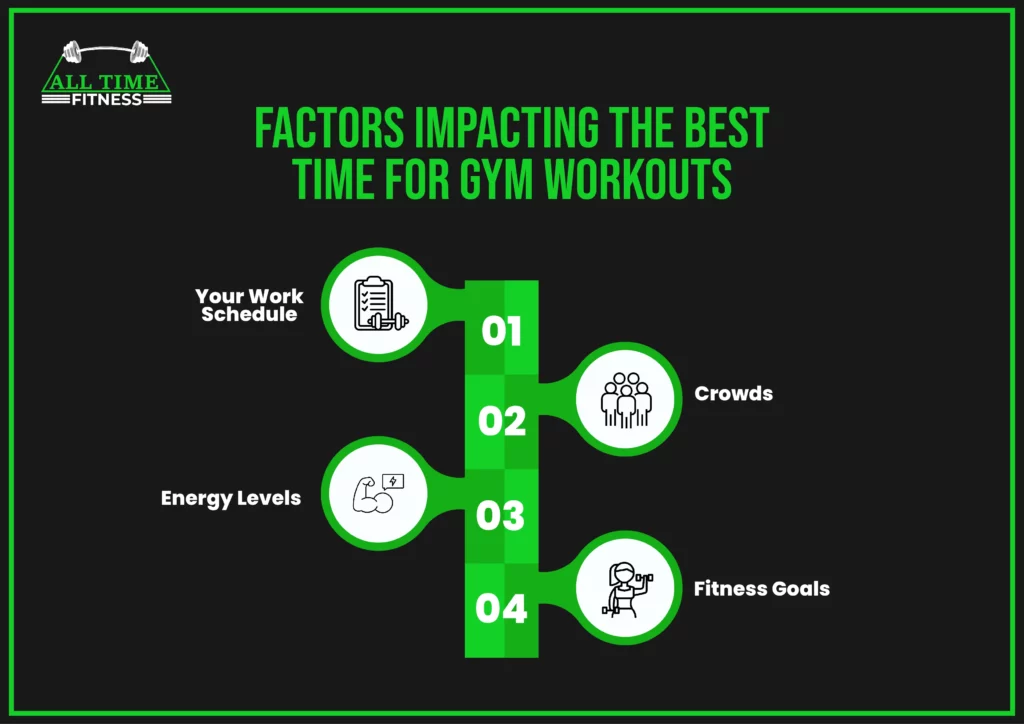
For many, the best time is not just about biology but about lifestyle.
- Morning people often like the peace and quiet.
- Parents may have to fit workouts around their children’s needs.
- Students might prefer afternoon sessions between classes.
- Friends or groups may meet after work for motivation.
The key is to pick a time that you can keep up, week after week.
Credit: www.alltimefitness.ca
Special Situations: Shift Workers, Athletes, And Older Adults
Shift Workers
People who work night shifts or irregular hours face extra challenges. The best advice is to work out when you feel most alert, even if that means exercising at midnight. Make sure you get enough sleep first.
Athletes
Athletes often train at the same time as their competitions. If your sport has games in the evening, practice then. If you race in the morning, train early.
Older Adults
Older adults may feel stiff in the morning. Afternoon workouts can be safer and more comfortable, reducing the risk of falls or injuries.
Comparing Gym Crowds And Atmosphere
The gym’s atmosphere changes depending on the time. Here’s a quick look:
| Time | Typical Crowd | Noise Level | Equipment Availability |
|---|---|---|---|
| Early Morning | Few people | Quiet | Very good |
| Midday | Moderate | Medium | Good |
| After Work | Very busy | Loud | Poor |
| Late Night | Few people | Quiet | Very good |
If you prefer a quiet gym, early mornings or late nights are best. If you like a social vibe, go after work or during popular class times.
The Importance Of Consistency
No matter when you choose to go to the gym, consistency is the most important factor. Regular exercise, week after week, will bring better results than changing your time often or missing sessions. Research shows that building a habit at the same time each day can help you stay motivated and reach your goals faster.
Non-obvious Insights Beginners Miss
- Warm-up time changes by day: In the morning, your body needs a longer warm-up to avoid injuries. In the afternoon and evening, your muscles are already warmer, so you can start faster. Adjust your routine based on the time of day.
- Your best time can change: As your life changes—new job, family, or goals—your best gym time may also change. Review your routine every few months and adjust as needed.

Credit: everestkitchennc.com
Summary: What’s The Best Time For The Gym?
There is no single answer for everyone. The best time depends on your body, your lifestyle, and your goals. Morning workouts are great for building a habit and starting your day right. Afternoon sessions can give you peak performance and energy.
Evening workouts are perfect for strength and social support.
The most important thing is to choose a time you can stick with. Listen to your body, notice when you feel strongest, and build a routine around that. Consistency, good nutrition, and enough sleep matter more than the clock.
For more on exercise science, see Healthline.
Frequently Asked Questions
What If I Can Only Work Out At Different Times Each Day?
It’s still better to exercise at different times than not at all. Try to keep your routine as regular as possible, but don’t skip workouts just because the time changes. Your body will adapt over time.
Does Working Out On An Empty Stomach Burn More Fat?
Morning “fasted cardio” may burn slightly more fat, but the difference is small. Total calories burned and your diet matter more. If you feel weak or dizzy, eat a small snack before your workout.
Will Evening Workouts Affect My Sleep?
For some people, intense evening exercise can make it harder to fall asleep. Others have no problems. If you have trouble sleeping, try moving your workout earlier or lowering the intensity.
Is It Safe To Exercise Late At Night?
Yes, as long as you are careful. Make sure the gym is open and safe. Warm up properly, and don’t sacrifice sleep for late-night workouts.
Should Beginners Worry About The Best Time For The Gym?
Beginners should focus more on building a habit and enjoying their workouts. The best time is the one you can stick with. As you gain experience, you can fine-tune your routine for better results.
