

What Time of the Day is Best for Gym: Maximize Your Results
What Time Of The Day Is Best For Gym
Many people wonder: what is the best time to go to the gym? Some say mornings are best, others prefer evenings, and some fit in workouts during lunch breaks. But is there really one perfect time? Or does it all depend on your lifestyle, goals, and body clock? If you want to maximize your gym results—whether it’s muscle gain, weight loss, or just feeling better—understanding how workout timing affects your body can help you make smarter choices.
In this guide, you’ll discover how your body responds to exercise at different times, the pros and cons of each slot, and how to find the right schedule for you. We’ll also look at common mistakes, tips to build a lasting habit, and answer the most asked questions about gym timing.
By the end, you’ll have all the facts—and some surprising insights—to help you choose your best time for the gym.
Understanding Your Body Clock: The Science Of Exercise Timing
Your body clock (also called the circadian rhythm) controls many things—when you feel sleepy, when you feel hungry, and even how you respond to exercise. This internal clock runs on a 24-hour cycle. It affects your hormone levels, body temperature, and energy throughout the day.
Your body temperature is usually lowest just before you wake up. It rises through the day and peaks in the late afternoon or early evening. This change impacts your muscle flexibility, reaction time, and even your strength. Hormones like testosterone (important for muscle growth) and cortisol (the stress hormone) also follow daily patterns.
Here are two important facts most beginners miss:
- Consistency is more important than time: Research shows your body adapts to the time you regularly work out. If you always train at 7 am, your body will start to prepare for activity at that time.
- Sleep quality matters: Sleeping well is more critical than workout timing. If your schedule forces you to skip sleep just to train at a “perfect” time, your results will suffer.
Let’s explore what happens if you train at different hours.
Morning Workouts: Benefits And Drawbacks
For many, early mornings are the only time to fit in the gym. But are there unique benefits to starting your day with exercise?
Pros Of Morning Gym Sessions
- Boosts metabolism: Morning exercise can increase your calorie burn for the rest of the day. This is called the “afterburn” effect.
- Improved consistency: Life is less likely to get in the way at 6 am than in the evening. Fewer distractions mean you’re more likely to stick to your plan.
- Enhances mood: Exercise releases endorphins, which can make you feel happier and more alert all day.
- Better focus: Many people report improved concentration and productivity after a morning workout.
Possible Drawbacks
- Stiff muscles: Your body temperature is lowest in the morning, so you may feel less flexible or strong.
- Requires adjustment: If you’re not a natural early riser, it can be tough to wake up early and perform well.
- Lower strength: Studies suggest your muscles are 5-10% weaker in the morning compared to later in the day.
Example: Jane’s Routine
Jane struggled to find time for exercise after work due to family commitments. She switched to 6:30 am workouts. At first, she felt slow and stiff, but after two weeks, her body adjusted. She now finds she’s more energetic at work and rarely skips the gym.
Practical Tips For Morning Gym Goers
- Warm up extra: Spend at least 10 minutes warming up to reduce injury risk.
- Eat something light: A banana or a small yogurt can prevent dizziness if you train fasted.
- Prepare the night before: Lay out your clothes and pack your gym bag to save time.
Credit: www.ctcd.edu
Afternoon Gym Sessions: The Science And Advantages
Training in the afternoon (from about 12 pm to 5 pm) is a popular choice for students, shift workers, or anyone with a flexible schedule. How does your body respond during these hours?
Pros Of Afternoon Workouts
- Peak performance: Your body temperature and hormone levels are higher, which can improve strength and flexibility.
- Lower injury risk: Muscles are warmer and joints are more lubricated, making movement safer.
- Stress relief: Exercising after a tough morning can help you reset and boost mood for the rest of the day.
- Better reaction time: Studies show coordination and speed are often at their best.
Possible Drawbacks
- Busy gyms: Many people use the gym during lunch or after classes, so equipment may be harder to access.
- Disrupted workday: Leaving work or studies for a gym session may not be possible for everyone.
- Energy crashes: Some people feel a dip in energy after lunch, making it harder to push hard.
Example: Carlos’s Experience
Carlos works from home and schedules his gym time at 3 pm. He finds he can lift more weight and recover faster compared to mornings. However, he sometimes struggles to get back into work mode after his session.
Tips For Successful Afternoon Workouts
- Eat a balanced lunch: Include protein and complex carbs to fuel your workout.
- Hydrate well: Drink water throughout the morning so you’re not dehydrated.
- Plan recovery: If you must return to work, allow time to cool down and change.
Evening Workouts: Energy, Strength, And Sleep
Many people prefer to hit the gym after work or school. The evening (5 pm to 9 pm) has its own advantages and challenges.
Pros Of Evening Gym Time
- Maximum strength: Studies show you’re at your strongest in the early evening.
- Stress release: Great way to “reset” after a long, tiring day.
- Warmer muscles: Your body is fully awake and mobile, reducing injury risk.
- Flexible schedule: More free time after daily obligations.
Possible Drawbacks
- Crowded gyms: Most people have the same idea, so gyms are often packed.
- Late-night energy: Working out too late can make it harder to fall asleep.
- Social plans: Evening sessions can clash with friends, family, or events.
Example: Priya’s Routine
Priya feels most energetic at 7 pm and uses this time for intense weight training. She sleeps well as long as she finishes her workout at least two hours before bedtime.
Helpful Tips For Evening Gym Sessions
- Don’t eat too heavy before: A big meal can slow you down. Try a light snack if needed.
- Wind down: Give yourself 30–60 minutes to relax post-gym to help with sleep.
- Stay hydrated: Drink water, especially if you sweat a lot.
Comparing Morning, Afternoon, And Evening Workouts
To help you see the differences at a glance, here’s a comparison:
| Time of Day | Strength & Performance | Energy Level | Best For | Common Challenges |
|---|---|---|---|---|
| Morning | Lower | Can be low at first | Consistency, busy people | Stiffness, motivation |
| Afternoon | Medium-High | Improving | Peak performance | Work/study conflicts |
| Evening | Highest | Often high | Strength, stress relief | Crowded, sleep impact |
How Your Fitness Goals Affect The Best Time For Gym
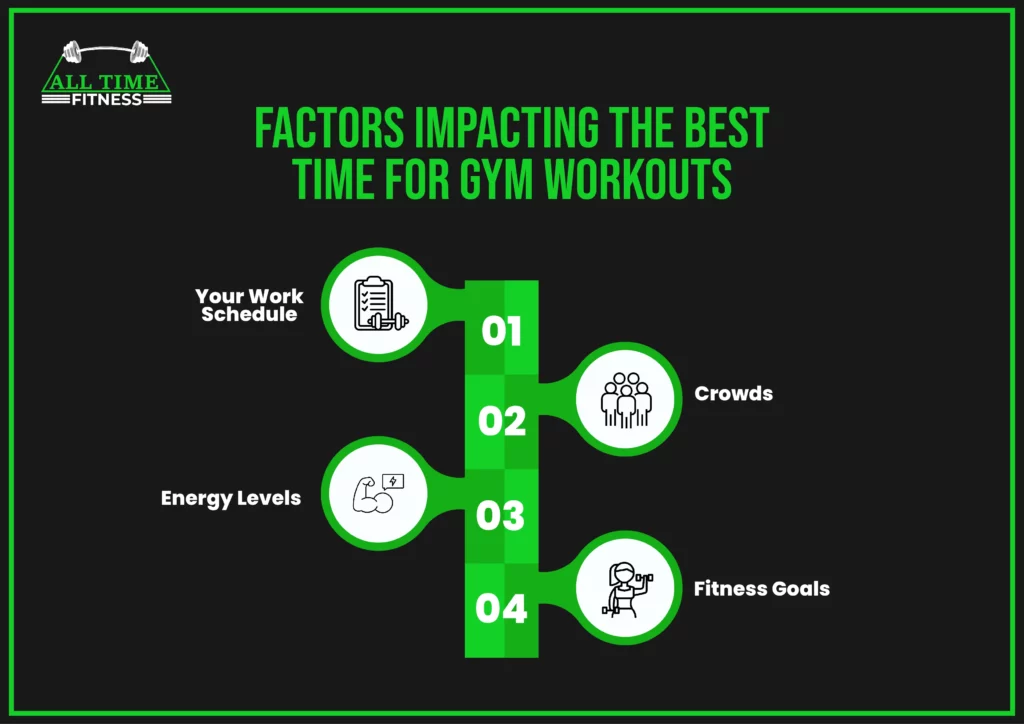
Not everyone goes to the gym for the same reason. The best time for you may depend on your main fitness goal.
Weight Loss
Many believe that fasted morning cardio burns more fat. The science is mixed. While you may burn slightly more fat during a fasted morning workout, the difference over weeks is small. What matters most is the total calories burned and your diet.
Best time: Whenever you can train hardest and most often. For some, that’s morning; for others, evening.
Muscle Gain And Strength
Testosterone and body temperature both rise through the day, peaking in late afternoon and early evening. This can help with heavy weightlifting and muscle building.
Best time: Afternoon or early evening, when your body is primed for strength.
Stress Relief And Mental Health
Exercise releases endorphins and can reduce anxiety. The best time is when you feel most stressed or need a mood boost.
Best time: Morning for a positive start, or evening to “reset” after a tough day.
Building A Habit
Consistency is key for all goals. Studies show you’re more likely to stick to a habit if you work out at the same time daily.
Best time: When you can reliably show up, day after day.
Credit: www.alltimefitness.ca
The Role Of Chronotype: Are You A Morning Or Night Person?
Some people love mornings; others are night owls. This is not just preference—it’s called your chronotype. Your chronotype is partly genetic and affects when you feel alert or sleepy.
- Morning types: Wake up early, feel energetic in the first half of the day.
- Evening types: Stay up late, feel best in the afternoon or night.
- Intermediate types: Most people are somewhere in the middle.
Trying to train against your natural rhythm is hard. If you’re a night owl, waking up at 5 am to work out may leave you tired and unmotivated. If you’re a morning person, late-night gym sessions can harm your sleep.
Non-obvious insight: Your chronotype can shift over time, especially with consistent routines and exposure to natural light.
Social, Cultural, And Practical Factors
Your schedule is shaped by more than just biology. Work, family, religious practices, and even local gym hours all play a role.
- Work and school: Shift workers may have limited windows for exercise.
- Family: Parents may only have time early before kids wake up, or after they go to bed.
- Gym crowd: Some gyms are packed in the evenings, making it hard to use equipment.
Pro tip: If you hate waiting for machines, try training at “off-peak” hours like late morning or early afternoon.
Common Mistakes When Choosing Gym Time
- Ignoring sleep: Skipping sleep for a workout hurts progress.
- Being too rigid: Life changes—be flexible if you miss your ideal time.
- Forgetting nutrition: Don’t train on an empty stomach if you feel weak or dizzy.
- Chasing trends: Your friend’s perfect time may not work for you.
- Not listening to your body: If you always feel tired at your chosen time, try switching.
How To Find Your Best Time For The Gym
Choosing your perfect workout time takes some trial and error. Here’s a step-by-step way to discover what works best for you:
- Test for a week: Try morning workouts for 7 days. Take notes on energy, mood, and results.
- Switch to afternoons: Repeat for a week, then compare.
- Try evenings: Do the same for the evening slot.
- Compare notes: When did you feel strongest? Most motivated? Least rushed?
- Consider your life: Which time fits your job, family, and other duties best?
- Commit for 30 days: Once you pick a time, stick to it for a month. Your body will adjust, and you’ll see real results.
Does Fasting Or Eating Before Gym Matter?
Some like to train on an empty stomach, especially in the morning. Others feel weak and need a meal first. Here’s what matters:
- Fasted training: Can help burn fat but may reduce performance for some.
- Fed training: Usually supports heavier lifting and longer sessions.
Non-obvious insight: For most people, what you eat throughout the whole day matters more than your pre-workout meal.
Tips For Sticking To Your Chosen Gym Time
- Book it like an appointment: Treat gym time as fixed as a work meeting.
- Prepare ahead: Lay out clothes, pack your bag, and plan your workout.
- Use reminders: Set phone alerts or calendar notifications.
- Find a buddy: Training with a friend boosts accountability.
- Celebrate wins: Track progress and reward yourself for consistency.
Special Considerations: Age, Gender, And Medical Conditions
Age
- Younger adults: Can adapt to most times but may prefer later workouts.
- Older adults: Morning or mid-day may be best, especially for joint health and sleep.
Gender
- Women: Hormone cycles can affect energy and strength. Some women feel stronger mid-cycle; others prefer mornings for better focus.
- Men: Tend to have more stable hormone patterns, but individual differences still matter.
Medical Conditions
- Diabetes: Monitor blood sugar levels and eat accordingly.
- High blood pressure: Some find morning workouts help, but check with your doctor.
Always consult a healthcare professional if you have medical concerns.
Environmental Factors: Temperature, Light, And Air Quality
- Heat: Afternoon and evening workouts may be hotter, especially in summer.
- Air quality: Outdoor exercise is best in the morning when pollution levels are lower.
- Light exposure: Morning sunlight helps set your body clock and improves sleep.
How Professional Athletes Plan Their Training Times
Top athletes often train at the same time as their competitions. For example, a football player with evening games will schedule gym sessions in the evening. This helps the body perform at its best when it matters most.
Non-obvious insight: Even elite athletes adjust their training for travel, jet lag, and life events.
Myth-busting: “best Time” For Gym Is Personal
You might hear claims like “Morning workouts are best for fat loss” or “Evening is best for strength.” The truth is, science shows only small differences. What truly matters is:
- Consistency
- Intensity
- Enjoyment
- Recovery
If you love your routine and stick with it, you’ll see results no matter the time.
Real-world Data: When Do Most People Go To The Gym?
Fitness centers often track usage patterns. Here’s a look at typical gym crowd times:
| Time Slot | Gym Busyness | Who Usually Attends |
|---|---|---|
| 6 am – 9 am | Medium | Professionals, parents |
| 12 pm – 2 pm | High | Students, office workers |
| 5 pm – 8 pm | Peak | Everyone |
| 9 pm – 11 pm | Low | Night owls, shift workers |
Sample Weekly Schedules For Different Lifestyles
Below are sample routines for different types of people:
| Lifestyle | Suggested Gym Time | Why It Works |
|---|---|---|
| Busy professional | Early morning (6–7 am) | Least interruptions |
| Student | Afternoon (1–3 pm) | Between classes, high energy |
| Parent | Evening (7–9 pm) | After kids’ bedtime |
| Shift worker | Varies | Fits changing schedule |
When To Avoid The Gym
Sometimes, the best time to skip the gym is as important as knowing when to go. Avoid working out when:
- You’re sick or have a fever
- You have not slept at all
- You feel dizzy, weak, or extremely sore
- You’re injured
Always listen to your body.
Useful Tools And Technology
Modern technology makes it easier to stick to a gym routine:
- Fitness trackers: Monitor your heart rate and sleep to find your best time.
- Apps: Remind you of workouts and track progress.
- Smart gym equipment: Adjusts to your strength and goals.
Final Thoughts: Choosing Your Best Time
There is no “one size fits all” answer to the best time for gym. Your perfect time is when you feel most energetic, can be most consistent, and enjoy your workout. For some, that’s dawn; for others, it’s late at night. Listen to your body, test different times, and focus on building a routine you love. Remember, the best time is the one that fits your life, not someone else’s.
If you want more scientific detail, this Sleep Foundation guide provides more research-backed insights.
Frequently Asked Questions
What Is The Healthiest Time To Go To The Gym?
The healthiest time is when you feel best and can train regularly. For some, that’s early morning; for others, it’s afternoon or evening. Listen to your body and pick a time you can stick with for the long term.
Does Working Out At Night Affect Sleep?
Intense workouts right before bed can make it harder to fall asleep for some people. Try to finish your workout at least 1–2 hours before sleeping. If you have trouble sleeping, consider moving your session earlier.
Is It Better To Work Out On An Empty Stomach?
Some people enjoy fasted workouts and feel lighter. Others feel weak without food. There is no major difference in fat loss or muscle gain. Try both and see what works for you.
Will I Get Different Results Training In The Morning Vs. Evening?
Minor differences exist—strength may be higher in the evening, and morning workouts may burn more fat. But the most important factor is consistency and effort, not the clock.
Can I Split My Workout Between Morning And Evening?
Yes, many advanced lifters and athletes do “double sessions. ” For most people, one good workout per day is enough. If you split your workout, make sure you rest and eat well between sessions.
By understanding your body, goals, and lifestyle, you can confidently choose the best time for the gym—and see real results, day after day.

Credit: everestkitchennc.com
