

What Should You Not Wear to the Gym: Top Fashion Mistakes
What Should You Not Wear To The Gym
Stepping into the gym is more than just lifting weights or running on a treadmill. Your clothes play a big role in your comfort, safety, and performance. Wearing the wrong things can distract you, cause injuries, or even make others uncomfortable.
If you’ve ever wondered why some outfits just don’t belong in the gym, this guide will help you understand exactly what to avoid. Whether you are new to working out or a regular gym-goer, making smart wardrobe choices can boost your confidence and keep your training safe.
Why Gym Clothes Matter
Gym clothing is not just about style. The right outfit helps you move freely, stay cool, and avoid injuries. Poor choices can restrict your movements, increase sweating, or even lead to skin problems. A study from the American Council on Exercise found that wearing moisture-wicking fabrics can reduce skin irritation and discomfort during workouts. Plus, gym etiquette is important. Your clothes affect how others feel around you. When you choose wisely, you show respect for yourself and everyone else in the gym.
Common Mistakes: What Not To Wear
Let’s explore the most frequent clothing mistakes people make at the gym and why they should be avoided.
1. Everyday Jeans
Jeans are designed for fashion, not fitness. They restrict movement, absorb sweat, and can chafe your skin. Denim is heavy and doesn’t breathe well, which makes you uncomfortable quickly. You’ll find it hard to squat, stretch, or even sit on gym equipment comfortably.
2. Cotton T-shirts
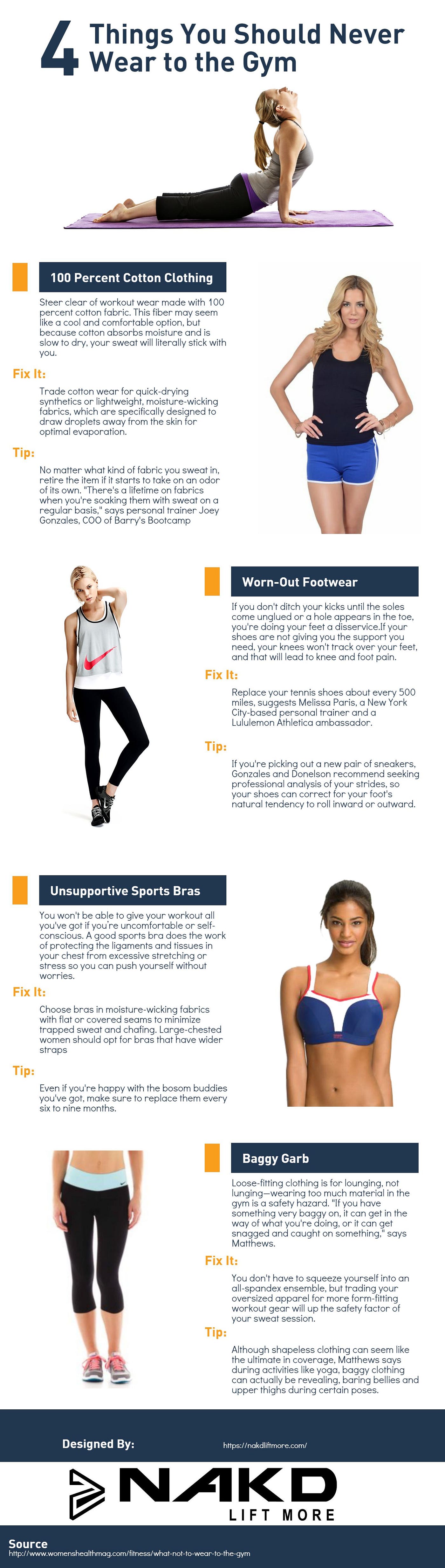
Cotton feels soft but it’s not the best for workouts. Cotton absorbs sweat and holds onto it, making your shirt heavy and damp. This can lead to skin irritation and increase the risk of bacterial growth. Instead, choose moisture-wicking fabrics that pull sweat away from your body.
3. Flip-flops Or Sandals
Footwear is crucial in the gym. Flip-flops and sandals don’t provide support or protection. They can slip easily, increasing your risk of injury. Closed-toe athletic shoes with good grip and support are much safer.
4. Baggy Clothes
Loose clothing can get caught in machines or weights. This is not just unsafe—it can be embarrassing if your clothes slip or shift during movement. Baggy pants or oversized shirts hide your form, making it hard for trainers to check your posture.
5. Revealing Outfits
Some gym clothes are too revealing. While confidence is important, outfits like very short shorts or deep-cut tops may make others uncomfortable. Overly tight clothes can also restrict movement and cause chafing.
6. Heavy Jewelry
Large rings, necklaces, and bracelets can snag on equipment. They also get sweaty and uncomfortable. Plus, jewelry can distract you or others during workouts.
7. Street Shoes
Wearing shoes you use outside brings dirt and germs into the gym. Street shoes may lack proper grip, causing slips. Athletic shoes designed for gym use protect your feet and keep the gym clean.
8. Clothes With Offensive Graphics
Words or images that are controversial or offensive should never be worn in a public gym. They can upset others and break gym rules.
9. Scented Lotions And Strong Perfumes
Some people wear strong scents to the gym. Perfumes and lotions can mix with sweat, creating unpleasant smells. They can also cause allergic reactions in others.
10. Unwashed Gym Clothes
Reusing sweaty clothes without washing is not only unhygienic but also smells bad. Clean clothes help prevent skin problems and keep the gym pleasant for everyone.

Credit: www.youtube.com
Why These Items Are Unsafe Or Uncomfortable
Let’s dig deeper into why these clothing choices are actually harmful or uncomfortable.
Restriction Of Movement
Jeans and tight clothes limit your range of motion. When you squat, stretch, or jump, your body needs to move freely. Restricted movements can cause injuries or poor form.
Poor Moisture Management
Cotton and denim soak up sweat, making you feel wet and sticky. This can cause rashes or even fungal infections. Moisture-wicking fabrics keep you dry and comfortable.
Increased Injury Risk
Flip-flops, sandals, and street shoes don’t protect your feet. If a weight falls or you slip, you could get hurt. Proper gym shoes have soles designed for grip and support.
Distraction And Discomfort
Heavy jewelry and revealing clothes can distract you and others. If your clothes shift or jewelry moves during exercise, you might focus more on adjusting than on your workout.
Hygiene Problems
Unwashed clothes and street shoes bring germs into the gym. This can lead to skin infections or unpleasant odors. Clean, gym-specific attire protects everyone’s health.
Comparison: Good Vs. Bad Gym Outfits
To make things clearer, here’s a direct comparison between common bad choices and good alternatives.
| What Not to Wear | Better Choice |
|---|---|
| Jeans | Stretchy leggings or shorts |
| Cotton T-shirt | Polyester or nylon workout shirt |
| Flip-flops | Closed-toe athletic shoes |
| Baggy sweatpants | Fitted joggers or tights |
| Heavy jewelry | No jewelry or small, secure items |
| Street shoes | Gym-specific sneakers |
| Offensive graphics | Plain or motivational prints |
Credit: medium.com
The Science Behind Gym Fabrics
Fabrics matter. The right material can keep you cool, dry, and comfortable. According to the National Institutes of Health, synthetic fibers like polyester and nylon are the best for activewear because they wick moisture and dry quickly. Cotton traps sweat, increasing your risk of irritation.
Moisture-wicking Vs. Cotton
Here’s a quick comparison of how cotton and moisture-wicking fabrics perform during workouts:
| Fabric Type | Absorbs Sweat? | Dries Quickly? | Comfort Level |
|---|---|---|---|
| Cotton | Yes | No | Low after sweating |
| Polyester/Nylon | No | Yes | High |
Gym Footwear: What Not To Wear And Why
Your feet are the foundation of every workout. Wearing the wrong shoes can lead to pain, injuries, and poor performance. Gym floors are often slippery, and weights can fall unexpectedly. Flip-flops, sandals, and dress shoes don’t offer grip, stability, or protection.
Risks Of Poor Footwear
- Lack of support can cause ankle sprains.
- Open shoes increase the risk of dropping weights on your toes.
- Dirty shoes bring germs onto workout mats.
Choosing Safe Gym Shoes
- Pick shoes with good arch support and non-slip soles.
- Make sure shoes fit snugly but aren’t too tight.
- Avoid shoes with worn-out soles.
Jewelry And Accessories: Hidden Dangers
It’s tempting to keep your favorite accessories on, but gym equipment and jewelry don’t mix well. Rings can get stuck, bracelets can catch, and necklaces can swing dangerously.
Real Examples
- A person wearing a necklace got it caught in a treadmill, causing neck injury.
- Loose bracelets slipped off during lifting and distracted the user, leading to a dropped weight.
Modesty And Gym Etiquette
Gyms are public spaces. Wearing very revealing outfits can make others uncomfortable and even break gym dress codes. Many gyms have rules about minimum coverage. You may feel confident, but consider how others feel.
Why Modesty Matters
- Respect for all members
- Focus on workout, not appearance
- Comfortable atmosphere for everyone
Perfumes, Lotions, And Scents
Strong perfumes or scented lotions may seem harmless, but they can cause headaches or allergic reactions. When mixed with sweat, these scents become stronger and unpleasant.
How To Stay Fresh
- Use unscented deodorant.
- Wash gym clothes after every use.
- Avoid heavy fragrances before workouts.
Hygiene: Clean Clothes And Shoes
Sweat builds bacteria fast. Wearing unwashed clothes is unhealthy for you and those around you. It also causes bad odors, which can make workouts unpleasant.
Data Point
According to a survey by Fitness Magazine, 62% of gym-goers said bad smells made their experience worse. Clean clothes keep the environment safe and enjoyable.
What About Accessories?
Some gym-goers bring bags, hats, or headphones. While these are usually safe, there are exceptions.
Unsafe Accessories
- Large bags left on the floor can trip others.
- Headphones with long cords may catch on equipment.
- Hats with wide brims can block vision.
Dress Codes And Gym Rules
Most gyms have dress codes. These rules protect members and equipment. If you’re unsure, ask staff or check signs around the gym.
Typical Dress Code Rules
- No open-toed shoes
- No offensive clothing
- No dirty or muddy shoes
- Minimum coverage required
How Your Clothing Choices Affect Your Workout
Wearing the right clothes boosts your performance. The wrong clothes can make you tired faster, distract you, or even cause injuries.
Example
A runner wearing cotton socks and shoes without arch support is more likely to get blisters and sore feet than someone with moisture-wicking socks and proper running shoes.
Gym Clothing For Special Conditions
Some people have special needs—like sensitive skin, medical conditions, or disabilities. Choosing the right fabrics and fits is even more important.
Tips For Sensitive Skin
- Avoid rough seams and tight bands.
- Use hypoallergenic fabrics.
- Wash clothes with gentle detergents.

Credit: www.bibliotecaoscura.com
Children And Teens: Special Considerations
Young gym-goers often copy adults. Make sure they wear safe, comfortable clothes. Avoid school uniforms, jeans, or sandals.
Parent Tips
- Choose stretchy, breathable clothes.
- Make sure shoes fit well.
- Avoid loose items that could catch on equipment.
Cultural And Religious Sensitivity
Some gym members wear clothing for religious or cultural reasons. Respect is key, but safety still matters.
Practical Advice
- Look for sports hijabs or modest workout wear.
- Choose fabrics that cover but breathe well.
Gym Fashion Trends: What’s Popular Vs. What’s Practical
Trendy clothes sometimes sacrifice function for style. For example, mesh panels, cut-outs, or ultra-tight fits may look good but aren’t practical.
What To Avoid
- Clothes with too many decorative straps.
- Outfits that restrict movement.
- Items that need constant adjustment.
The Role Of Technology In Gym Clothing
Modern gym clothes use technology to improve comfort. Some brands offer antimicrobial fabrics, cooling technology, and compression wear. These features can help but aren’t always necessary.
Smart Shopping Tips
- Don’t pay extra for features you won’t use.
- Look for UPF protection if you train outdoors.
Real-life Experiences: Gym-goers Share Their Stories
Hearing from other gym users can help you avoid mistakes. Here are a few examples:
- “I wore my work shoes to the gym once and slipped during squats. Never again.”
- “My cotton shirt soaked up sweat, and I felt heavy. Switching to synthetic made a big difference.”
- “Loose shorts rode up on the treadmill. I now wear fitted running shorts.”
Data Table: Most Common Gym Clothing Mistakes
To understand the issue, here’s data from a survey of 500 gym-goers about their biggest wardrobe mistakes.
| Clothing Mistake | Percent (%) |
|---|---|
| Cotton t-shirts | 34 |
| Jeans | 21 |
| Flip-flops | 15 |
| Baggy pants | 12 |
| Heavy jewelry | 10 |
| Other | 8 |
Special Situations: Group Classes And Yoga
Different workouts require different clothes. Yoga and Pilates need stretchy, close-fitting clothes. Group classes often involve jumping or dancing, so secure, supportive outfits are best.
What Not To Wear In Classes
- Baggy pants (can trip you up)
- Loose tops (may shift during moves)
- Shoes without grip (dangerous on polished floors)
Why Some Mistakes Are Easy To Fix
Beginners often don’t realize the impact of their choices. For example, switching from cotton to synthetic shirts can improve comfort instantly. Buying proper gym shoes prevents injuries.
Two Non-obvious Insights
- Dark-colored clothes hide sweat stains but may make you hotter if training outdoors. Light colors reflect heat.
- Compression wear can help muscle recovery but is only effective when sized correctly. Too tight, and it restricts blood flow.
How To Build A Gym-friendly Wardrobe
You don’t need expensive gear. The best gym clothes are simple, comfortable, and functional.
Step-by-step Guide
- Start with basics: Moisture-wicking shirts, fitted shorts or leggings, and proper shoes.
- Add layers for cold weather, like a light jacket.
- Avoid anything that feels restrictive or distracting.
- Test new items at home before wearing them to the gym.
Final Checks Before You Leave For The Gym
Before heading out, check:
- Are your clothes clean and dry?
- Is your outfit suitable for your workout?
- Are your shoes gym-specific?
- Have you removed jewelry?
- Are you free of strong fragrances?
What To Do If You’re Unsure
If you’re new or uncertain, ask gym staff or trainers for advice. Most gyms have guidelines, and staff are happy to help. You can also check reputable sources like CDC Physical Activity Guidelines.
Frequently Asked Questions
What Is The Worst Thing To Wear To The Gym?
The worst thing to wear is jeans or flip-flops. Jeans restrict movement and absorb sweat, while flip-flops can cause slips and foot injuries.
Can I Wear Cotton Shirts If I Don’t Sweat Much?
Cotton shirts are fine for light activity. But even if you don’t sweat much, moisture-wicking fabrics are always safer and more comfortable.
Is It Okay To Wear Jewelry In The Gym?
Small, secure items are usually safe. Avoid loose, heavy jewelry that can catch on equipment or distract you.
Are Leggings Always Better Than Shorts?
Both are good if they fit well and are made of moisture-wicking material. Choose based on your comfort and the type of workout.
How Often Should Gym Clothes Be Washed?
Wash gym clothes after every workout. This prevents odors, skin irritation, and keeps the gym environment clean.
Making smart choices about what not to wear to the gym is simple but important. You don’t need expensive gear, just the right materials and a bit of care. Your comfort, safety, and respect for others all start with your outfit.
With these tips, you can focus on your workout—and leave wardrobe worries behind.
