

What Not to Wear to the Gym: Top Fashion Mistakes to Avoid
What Not To Wear To The Gym
Walking into a gym for the first time can feel intimidating. Even regulars sometimes wonder if their workout clothes are right for the gym. What you wear affects not just your appearance, but your comfort, safety, and performance. Choosing the wrong outfit can lead to discomfort, injuries, or even embarrassment. While people often focus on what to wear, it's just as important to know what not to wear to the gym. Some clothes and accessories can hold you back, make you sweat more than you should, or even create hygiene problems. This guide will show you which items to avoid, why they’re risky, and how to make smarter choices for your workouts. You'll also discover some surprising facts about gym wear that many beginners miss.
Why Clothing Matters At The Gym
When you exercise, your body heats up and sweats. The right clothes help manage this process, keeping you cool and dry. The wrong clothes can trap sweat, cause chafing, and even make you sick. But the impact goes beyond comfort.
Studies show that what you wear can also change how confident and motivated you feel. A recent survey found that 76% of gym-goers said their outfit affects their confidence and willingness to work out.
Safety is another key issue. Loose clothes can catch on equipment, and the wrong shoes can lead to slips or twisted ankles. Hygiene matters too; some fabrics hold onto bacteria and odors, making the gym an unpleasant place for you and others.
Common Mistakes: What Not To Wear To The Gym
Some clothing mistakes are obvious. Others are easy to miss, especially if you’re new to fitness. Here’s a breakdown of the most common gym outfit mistakes and why you should avoid them.
1. Everyday Cotton T-shirts And Tops
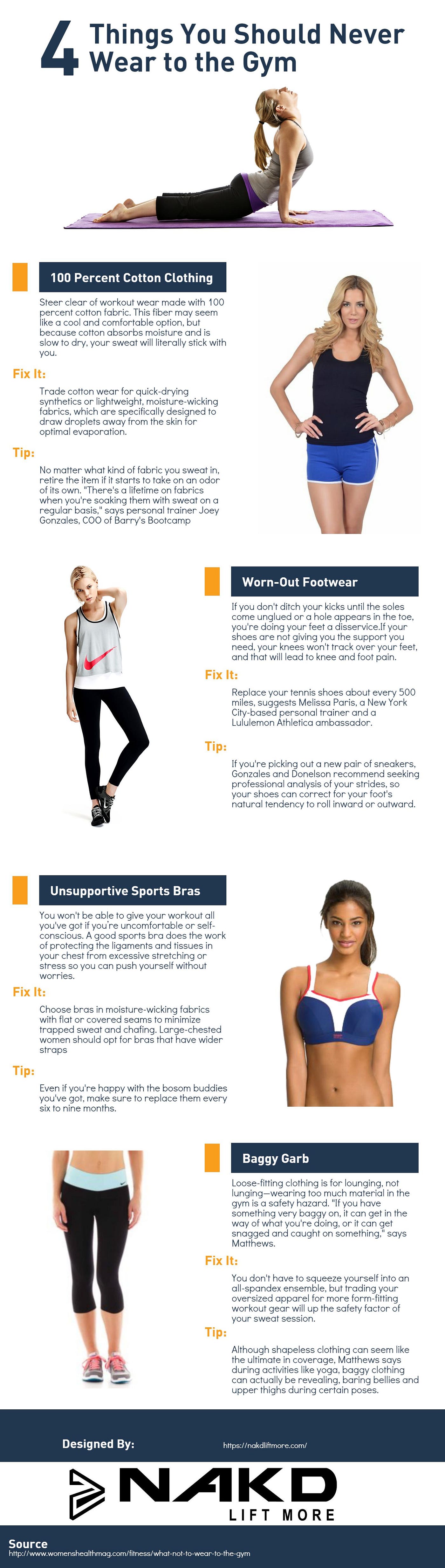
Cotton might feel soft and breathable at first, but it’s a poor choice for exercise. Cotton absorbs sweat but dries slowly, so it becomes heavy and uncomfortable. Wet fabric can cause chafing and increase your risk for skin irritation or fungal infections.
Better option: Choose synthetic materials like polyester or nylon blends. These fabrics wick sweat away from your skin and dry quickly, reducing discomfort.
2. Street Shoes Or Fashion Sneakers
Many people walk into the gym wearing the same shoes they use every day. Fashion sneakers or casual shoes lack proper support, especially for running, jumping, or lifting weights. They increase your risk for blisters, rolled ankles, and foot pain.
Better option: Wear athletic shoes designed for your activity—running shoes for the treadmill, cross-trainers for gym classes, or flat shoes for weightlifting.
3. Denim Jeans Or Shorts
Denim is heavy, restrictive, and doesn’t stretch. It traps heat and moisture, leading to discomfort and even rashes. Jeans also limit your range of motion, making many exercises difficult or unsafe.
Better option: Athletic shorts, leggings, or sweatpants made from flexible, moisture-wicking fabric.
4. Jewelry And Watches
Many people forget to remove their jewelry before a workout. Rings, bracelets, necklaces, and watches can snag on equipment, scratch surfaces, or even cause injuries. Sweat can also tarnish metals and damage watches.
Better option: Leave valuables at home or in your locker. If you track workouts with a smartwatch, use a soft, sweat-resistant band and make sure it’s snug.
5. Open-toed Shoes Or Sandals
Wearing flip-flops or sandals to the gym is unsafe. These shoes offer no support and leave your feet exposed to dropped weights or bacteria on the floor.
Better option: Closed-toe, supportive athletic shoes.
6. Loose, Baggy Clothing
Oversized shirts and pants might seem comfortable, but they can catch on machines or weights. This increases the risk of accidents. Baggy clothes also make it hard for trainers to check your form.
Better option: Wear fitted, but not tight, athletic wear that allows you to move freely.
7. Revealing Or Inappropriate Clothing
Clothes that are too revealing can make you and others uncomfortable. Some gyms have dress codes for this reason. Very short shorts, see-through tops, or low-cut shirts may not be allowed.
Better option: Pick clothing that covers you well, supports your body, and follows your gym’s rules.
8. Heavy Makeup And Perfume
Sweating with a face full of makeup can clog pores and lead to breakouts. Heavy perfume can also cause allergies or discomfort for others in closed spaces.
Better option: Go makeup-free and use a mild deodorant instead of strong perfume.
9. Unwashed Or Reused Gym Clothes
Wearing yesterday’s gym clothes can spread bacteria and odor. Even if clothes look clean, they may hold germs that cause skin problems.
Better option: Always wear fresh clothes and wash your gear after every workout.
10. Compression Gear Worn Incorrectly
Compression clothing can help with performance and recovery, but only if used correctly. Wearing gear that’s too tight or for the wrong activity can restrict blood flow and cause numbness.
Better option: Use compression wear as recommended, and make sure it fits properly.
The Science Behind Gym Clothing
Athletic clothes have evolved with technology. Modern fabrics use special weaves and coatings to keep you dry and cool. For example, polyester blends are designed to pull sweat away from your body—a process called moisture-wicking. This helps reduce overheating and skin irritation.
Research from sports medicine journals shows that proper gym wear can improve your performance. Clothes that fit well and stretch with your movements allow for a full range of motion. Poorly chosen outfits can limit mobility and focus, increasing the chance of injury. In fact, a study by the American Council on Exercise found that proper footwear reduced ankle injuries by 40% in gym settings.
Here’s a quick comparison of gym clothing materials and how they perform:
| Material | Moisture Control | Comfort | Odor Resistance |
|---|---|---|---|
| Cotton | Poor | Good (when dry) | Low |
| Polyester | Excellent | Very good | Moderate |
| Nylon | Excellent | Very good | Moderate |
| Merino Wool | Good | Excellent | High |
| Bamboo | Very good | Soft | High |
Choosing the right fabric can help prevent many of the discomforts that make people quit the gym early.
Footwear Fails: What Shoes Not To Wear
The wrong shoes can ruin your workout and even cause injury. It’s common to see beginners wearing running shoes for every activity, or worse, showing up in sandals or boots. Let’s break down the risks of different footwear mistakes.
Casual Sneakers Or Fashion Shoes
These often have flat soles, poor grip, and little arch support. They’re made for looks, not workouts. Using these shoes for gym activities can lead to sore feet, poor posture, and even slips.
Running Shoes For Lifting
Running shoes are built to absorb shock from forward motion, but they’re not stable for squats or deadlifts. The thick, cushioned heel can throw off your balance and reduce force transfer.
Sandals, Flip-flops, Or Bare Feet
Wearing open-toed shoes is unsafe in the gym. You risk stubbed toes, dropped weights, or picking up infections. Some gyms ban barefoot workouts for hygiene reasons.
Here’s a comparison of common gym shoe types and their best uses:
| Shoe Type | Best For | Not Recommended For |
|---|---|---|
| Running Shoes | Treadmill, Cardio | Heavy Lifting |
| Cross-Trainers | Classes, General Gym Use | Specialty Sports |
| Weightlifting Shoes | Squats, Deadlifts | Cardio |
| Sandals/Flip-Flops | None | All Gym Activities |
It’s worth investing in at least one good pair of athletic shoes designed for your main activity.
Hygiene Hazards: Clothing And Accessories That Spread Germs
Gyms are shared spaces. Sweat, bacteria, and fungi can build up on surfaces and clothing. The wrong outfit makes these problems worse.
Damp Or Unwashed Clothes
Wearing clothes that haven’t dried properly or haven’t been washed since the last workout is one of the main causes of gym odor. Even if you don’t smell it, bacteria thrive in damp fabric. This can lead to athlete’s foot, ringworm, or other skin infections.
Shared Accessories
Some people bring personal towels or yoga mats and never wash them. Others borrow gym-provided mats or belts without wiping them down. These habits spread germs quickly.
Long Hair Left Loose
Long hair can pick up sweat and bacteria from equipment. It also distracts you during exercise. Tie it back to keep things clean and safe.
A study from the International Journal of Environmental Research and Public Health found that gym equipment can harbor more bacteria than public toilets. Wearing clean, quick-drying clothes and wiping down gear protects you and others.
The Impact Of Ill-fitting Clothes
Clothing that’s too tight can restrict blood flow, cause numbness, or even lead to rashes. On the other hand, clothing that’s too loose can catch on machines or hide your form, making it harder to maintain proper technique.
Too Tight
- Restricts movement
- Reduces circulation
- Can cause chafing or rashes
Too Loose
- Gets caught on equipment
- Hides your posture, making injuries more likely
- Distracts from your workout
How do you know if your clothes fit? You should be able to squat, lift, or stretch without feeling pinched or tangled. Clothes should move with you, not against you.
The Dangers Of The Wrong Underwear
Underwear is often overlooked, but it’s essential for comfort. The wrong type can cause chafing, hold sweat, or even lead to infections.
Cotton Underwear
Cotton absorbs sweat but dries slowly. This can cause irritation and increase the risk of yeast or fungal infections.
Thongs Or Lacy Underwear
These styles can rub and irritate your skin during movement. Lace is also more likely to trap bacteria.
No Underwear
Some people skip underwear under gym clothes, but this can lead to direct contact with bacteria on benches or machines.
Better option: Choose moisture-wicking, seamless underwear made for athletic use. These reduce friction, manage sweat, and keep you healthier.
Overlooked Accessories: What Not To Bring Or Wear
Accessories can be useful or dangerous in the gym. Here’s what to avoid:
Regular Belts
Some people forget to remove their everyday belts, which can restrict breathing or catch on equipment.
Large Bags Or Purses
Bringing bulky bags onto the gym floor creates tripping hazards for you and others. Leave them in the locker room.
Headphones With Long Cords
Wired headphones can get caught on machines or weights. Wireless options are safer.
Non-sports Glasses
Regular eyeglasses can slide off or break during activity. Sports-specific glasses or contacts are better.
Credit: medium.com
Gym Dress Codes: Why They Exist
Many gyms have rules about what you can and cannot wear. These dress codes protect safety, hygiene, and comfort for everyone. Common rules include:
- No open-toed shoes
- No jeans or restrictive pants
- Shirts required at all times
- No offensive slogans or images
Dress codes aren’t just about appearance; they help prevent injuries and keep shared spaces clean. Always check your gym’s policy before showing up in new gear.
Surprising Insights Most Beginners Miss
- Moisture-wicking doesn’t mean sweat-proof: Even the best athletic clothes need washing after every use. Bacteria still build up, even if you feel dry.
- Some “athletic” brands focus on fashion, not function: Just because a shirt looks sporty doesn’t mean it’s good for exercise. Always check the fabric and fit.
- Bright colors and reflective gear matter for outdoor workouts: If you transition from the gym to outdoor running, choose clothes with reflective details for safety.
- Layering can backfire: Too many layers can trap heat, leading to overheating. Dress for your activity, not the season.

Credit: www.bibliotecaoscura.com
How To Choose The Right Gym Clothes
Knowing what to avoid is helpful, but how do you make the best choice? Here are key tips for building a gym-ready wardrobe:
- Fit: Clothes should be snug but not tight. Test movement before buying.
- Fabric: Look for moisture-wicking, breathable materials.
- Support: Choose sports bras, shoes, and underwear with adequate support.
- Purpose: Match your outfit to your activity. Yoga, weightlifting, and cardio all need different gear.
- Easy Care: Pick clothes that are easy to wash and dry quickly.
Here’s a summary of dos and don’ts for gym wear:
| Do Wear | Don’t Wear |
|---|---|
| Moisture-wicking tops | Cotton T-shirts |
| Supportive athletic shoes | Sandals or casual shoes |
| Fitted shorts/leggings | Jeans or restrictive pants |
| Sports bras and underwear | Lace or cotton underwear |
| Minimal, secure accessories | Jewelry, large bags |
Real-world Examples: Gym Clothing Mistakes
- A beginner wore jeans and a belt to a spin class. Within minutes, the jeans became soaked and heavy, causing chafing and discomfort.
- Someone wore open-toed sandals in the weight room and dropped a dumbbell, injuring their foot.
- A regular gym-goer wore the same unwashed T-shirt for multiple sessions. This led to a skin rash that required medical treatment.
- An athlete used running shoes for heavy squats. The soft soles led to unstable footing and poor lifting technique.
- A new member wore a loose tank top that caught on a machine handle, resulting in a minor accident.
Each of these could have been avoided with better clothing choices.
The Social Side: How Your Outfit Affects Others
Wearing strong perfumes, loud jewelry, or revealing clothes can make others uncomfortable in shared gym spaces. Remember, gyms are social environments. Respecting the space means considering not just your comfort, but others’ as well. Sweat and body odor are normal, but wearing clean clothes and using deodorant goes a long way.
Sustainability And Gym Wear
Fast fashion affects the planet, and gym clothes are no exception. Many cheap athletic outfits wear out quickly, leading to more waste. Choosing higher quality, durable items not only saves money over time but also helps the environment.
Some brands use recycled materials or eco-friendly production methods. If sustainability matters to you, look for these options when buying new gym gear. For more information on sustainable athletic clothing, visit Wirecutter.

Credit: www.youtube.com
Frequently Asked Questions
What Is The Worst Thing To Wear To The Gym?
The worst items are jeans, open-toed shoes, and heavy cotton shirts. They restrict movement, trap sweat, and can lead to injuries or hygiene issues.
Can I Wear Regular Clothes To The Gym If I Don’t Have Athletic Wear?
It’s possible, but not recommended. Regular clothes don’t manage sweat or allow for easy movement. At minimum, wear comfortable, stretchy clothes and closed-toe shoes.
How Often Should I Wash My Gym Clothes?
Wash after every use. Even if they don’t smell, bacteria and sweat build up quickly. This helps prevent skin problems and keeps your clothes lasting longer.
Are Certain Colors Or Fabrics Better For The Gym?
Bright colors can boost mood, but fabric is more important than color. Choose moisture-wicking materials like polyester or nylon blends for best results.
Why Do Gyms Have Dress Codes?
Dress codes protect safety and hygiene. They also help create a comfortable environment for all members by preventing distractions and reducing risks.
The next time you pack your gym bag, remember: what you leave out is just as important as what you bring. Choosing the right clothes can make your workouts safer, more comfortable, and more enjoyable for everyone around you. Avoid these common mistakes, and you’ll feel more confident every time you hit the gym.
