

What is Women’s Business Casual? Your Essential Style Guide
What Is Women’s Business Casual
When you walk into an office or attend a professional event, you may notice a wide variety of clothing styles. Some people wear suits, others dress more simply. For women, business casual is a popular dress code. But what does it really mean? Many people find it confusing, especially because the rules are not always clear. This article will help you understand women’s business casual, so you can dress confidently and appropriately for any workplace.
Business casual for women is not just about looking neat. It’s about finding the right balance between professional and comfortable. Different companies have different interpretations, and your role, industry, and location can affect what is considered business casual. We’ll break down the main elements, show real examples, compare business casual to other dress codes, and answer common questions. You’ll find practical tips and insights that go beyond basic advice.
Defining Women’s Business Casual
Business casual is a dress code that sits between formal business attire and everyday casual wear. For women, it means choosing pieces that look polished but are not as strict as a suit. You want to appear professional, but also relaxed and approachable.
At its core, business casual includes:
- Tailored pants or skirts
- Blouses or dress shirts
- Knit tops or sweaters
- Closed-toe shoes or modest heels
You should avoid anything too casual, like ripped jeans or gym clothes. But you also don’t need to wear a full suit or high heels every day.
Key Elements Of Business Casual
- Fit and Quality: Choose clothes that fit well. Baggy or tight clothes look unprofessional. High-quality fabrics like cotton, wool, or polyester blends work best. The fit of your clothing signals attention to detail—well-tailored pants or skirts show you care about your appearance, while poorly fitted items can make you look careless.
- Colors and Patterns: Neutral colors such as black, navy, gray, and beige are safest. Simple patterns are fine, but avoid loud prints or flashy colors. If you want to add personality, a subtle stripe or small floral can work, but keep the print toned down. Soft pastels can also be acceptable, especially in creative workplaces.
- Accessories: Keep jewelry and accessories simple. A small necklace or stud earrings are appropriate. For watches or rings, opt for classic styles. Scarves can be a nice touch if they aren’t too bright or bulky.
- Shoes: Closed-toe shoes are standard. Flats, loafers, or low heels are common. Shoes should be clean and in good condition—scuffed or worn shoes can ruin the overall look.
- Outerwear: Cardigans, blazers, or simple jackets can add polish. Choose structured pieces for a sharper appearance. Avoid outerwear that looks sporty or casual, like hoodies.
What To Avoid
- Shorts, mini skirts, or sundresses
- Flip-flops, sneakers, or sandals
- T-shirts with logos or slogans
- Overly revealing tops
- Heavy makeup or large, distracting jewelry
Small details matter. Wrinkled clothes or visible undergarments can make even a good outfit look sloppy.
Types Of Business Casual Outfits
Women’s business casual can include many kinds of outfits. Let’s look at some common combinations. This will help you picture what business casual looks like in real life.
Classic Business Casual
- A blouse tucked into tailored pants
- Simple loafers or low heels
- A cardigan or blazer for layering
This combination works in almost any office. You can switch up colors or add a thin belt for extra detail.
Modern Business Casual
- A knee-length dress with a cardigan
- Ankle boots or ballet flats
- Minimal jewelry
Modern business casual often includes trendy touches, like a wrap dress or a printed skirt. But keep the prints understated.
Seasonal Variations
- In warmer months: Sleeveless blouses (with wide straps), lighter fabrics, cropped pants. Linen and cotton are breathable and comfortable.
- In colder months: Sweaters, wool pants, boots. Layer with scarves and thick cardigans for warmth.
Examples Of Business Casual Outfits
- Navy slacks, white blouse, gray cardigan, black flats. Add a slim watch for detail.
- Black pencil skirt, light blue button-up shirt, nude loafers. Pair with a simple tote bag.
- Patterned dress (subtle print), cream blazer, brown ankle boots. A thin belt can define your waist.
Many women mix and match these items to create their own style, while staying within the business casual guidelines. Experimenting with textures, like a silk blouse or tweed skirt, can add visual interest without breaking the rules.

Credit: www.sumissura.com
Comparing Business Casual To Other Dress Codes
It’s helpful to see how business casual compares to other dress codes. Here’s a table showing the main differences:
| Dress Code | Description | Common Items |
|---|---|---|
| Formal Business | Very professional, strict, often suits | Pant or skirt suits, dress shirts, heels |
| Business Casual | Polished but relaxed, mix-and-match | Slacks, blouses, cardigans, flats |
| Casual | Comfortable, everyday wear | Jeans, t-shirts, sneakers |
Business casual is less strict than formal business, but more polished than everyday casual. It’s designed for comfort and professionalism.
Why Business Casual Is Popular
Many companies prefer business casual because it helps employees feel comfortable while still looking professional. It promotes a friendly atmosphere, especially in creative fields, tech companies, or modern offices. Research shows that companies with relaxed dress codes often see higher employee satisfaction and productivity.
This flexibility can make it easier for employees to focus on their work instead of worrying about strict dress codes.
A non-obvious benefit: Business casual can help break down barriers between employees and management. When everyone dresses comfortably, communication feels easier and more natural.
Common Mistakes In Women’s Business Casual
Even experienced professionals make mistakes with business casual. Here are some errors to watch for:
- Too Casual: Wearing jeans with holes, graphic tees, or sneakers. Even clean jeans may not be accepted in some offices.
- Too Formal: Dressing in full suits or eveningwear, which can make you stand out in the wrong way. Avoid cocktail dresses or heavy makeup, which are meant for social occasions.
- Improper Fit: Clothes that are too tight or too loose look unprofessional. Baggy cardigans or tight skirts distract from your message.
- Over-accessorizing: Big jewelry, flashy belts, or bright scarves distract from your look. Aim for one statement piece at most.
- Ignoring Company Culture: Some offices are stricter; others are relaxed. Always observe what others wear.
One non-obvious mistake: Many beginners think “business casual” means they can wear any comfortable clothes. But comfort alone does not guarantee a business casual look. Focus on professional polish first, comfort second.
Another detail: Avoid clothing with visible stains or damage. Even minor issues can make you look careless.
Choosing Business Casual For Different Workplaces
Business casual is not the same in every company. The industry, location, and job role all affect what is acceptable.
Corporate Offices
Most corporate offices expect a more formal version of business casual. Stick to tailored pants, button-up shirts, blazers, and closed-toe shoes. Avoid denim and casual dresses.
Creative Industries
Fields like design, advertising, or media are often more flexible. You can experiment with colors, patterns, or trendy styles, but keep the look neat. Statement jewelry or bold prints may be allowed, but always check with your manager.
Tech Companies
Tech firms usually have relaxed dress codes. You can wear dark jeans (without rips), nice sweaters, or casual dresses, as long as the outfit looks clean. Some tech offices even allow stylish sneakers, but check the policy.
Retail And Hospitality
Front-line jobs require business casual that looks approachable to customers. Choose simple dresses, skirts, and comfortable shoes. Shoes should be easy to walk in, as you may be on your feet all day.
Geographic Differences
In some cities, business casual is more formal (like New York or Chicago). In others, it’s relaxed (like San Francisco or Austin). Always consider your location.
If you travel for work, pack versatile pieces that suit multiple dress codes. You can adjust your outfit by adding or removing a blazer or switching shoes.
Business Casual Vs. Smart Casual
Many people confuse business casual with smart casual. Let’s clarify the difference.
| Business Casual | Smart Casual |
|---|---|
| Office-focused, polished but relaxed | Flexible, stylish, often for events |
| Blouses, slacks, cardigans, flats | Dark jeans, trendy tops, heels, statement accessories |
| Minimal accessories, neutral colors | More fashion-forward, bold colors allowed |
Smart casual is more about personal style, while business casual focuses on professionalism. Smart casual is common for after-work events, dinners, or networking.
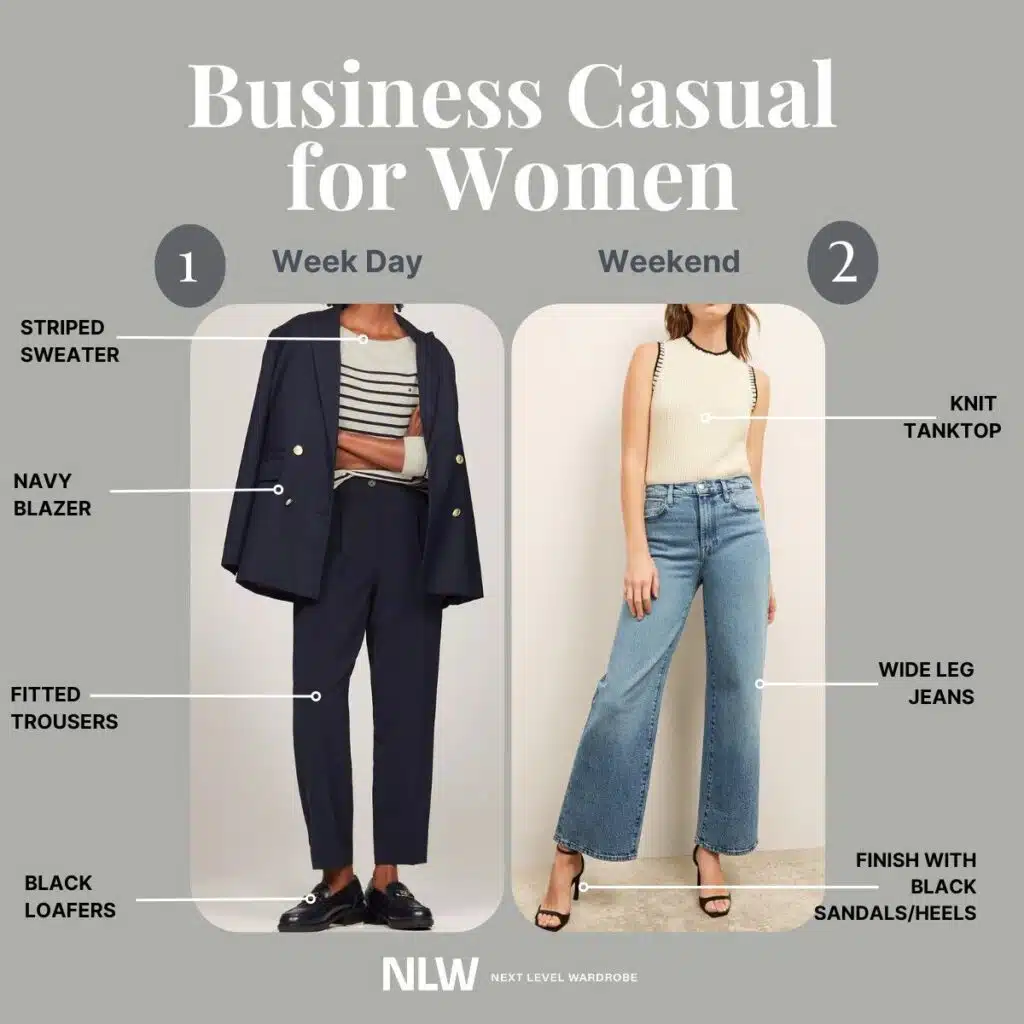
A practical tip: If you’re unsure whether an event is business casual or smart casual, choose a classic business casual outfit and add one stylish accessory or shoe. You’ll fit in most settings.
Credit: nextlevelwardrobe.com
Building A Business Casual Wardrobe
If you’re starting from scratch, or updating your closet, here’s how to build a practical business casual wardrobe.
Essential Pieces
- 3–4 pairs of tailored pants
- 2–3 skirts (knee-length or midi)
- 5–7 blouses or tops
- 2 cardigans
- 1–2 blazers
- 2–3 pairs of flats or loafers
- 1 pair of low heels
You don’t need to buy everything at once. Start with basic colors, then add patterns or brighter shades as you get comfortable. Choosing pieces that layer well extends your wardrobe.
Tips For Shopping
- Try clothes on before buying. Fit is key. Sizes can vary across brands.
- Choose machine-washable fabrics for easy care. Dry-cleaning can be expensive.
- Invest in quality shoes—they last longer and feel better. Avoid shoes that pinch or rub.
- Look for pieces that mix and match easily. Neutral colors help.
A non-obvious insight: Many beginners focus on tops, but pants and skirts matter just as much. Well-fitted bottoms make your entire outfit look more professional. Also, don’t overlook the importance of comfortable undergarments—they affect how your clothes fit and look.
How To Style Business Casual Outfits
Styling business casual is about combining pieces for a polished look. Here are practical ways to style your outfits:
Layering
Layering adds depth and keeps you comfortable. Wear a blouse under a cardigan or blazer. In colder months, add a scarf. Layering also helps you adjust to changing temperatures in the office.
Mixing Patterns
You can mix patterns, but keep them subtle. For example, a striped blouse with a solid skirt. Avoid too many bold prints. If you’re new to patterns, start with one patterned piece and keep the rest solid.
Accessorizing
- Wear simple jewelry: Stud earrings, a thin bracelet
- Use a structured handbag
- Avoid oversized bags or flashy accessories
A neat bag completes your look and helps you stay organized.
Color Combinations
Stick to 2–3 colors per outfit. Neutral tones (black, gray, navy) always work. You can add a pop of color with a scarf or shoes. If your office allows, try soft pinks, blues, or greens.
Experiment with textures, like mixing a smooth blouse with a tweed skirt, for extra interest.
Business Casual For Different Body Types
Finding business casual clothes that fit well is important for all body types.
Petite
- Choose cropped pants and fitted tops
- Avoid oversized blazers
Fitted clothes help petite women avoid looking overwhelmed by fabric. Shorter skirts (knee-length) can elongate the legs.
Plus Size
- Look for structured jackets and skirts with stretch
- Wrap dresses are flattering and comfortable
Choose fabrics that drape well and avoid clingy materials. A-line skirts and high-waisted pants flatter curves.
Tall
- Long blouses and pants with proper inseam
- Avoid skirts that are too short
For tall women, tunics and midi skirts are often more comfortable. Look for brands with tall sizing.
Most brands now offer extended sizing, so you can find business casual pieces for every body shape. Don’t be afraid to tailor clothes for a perfect fit.
Business Casual For Special Occasions
Sometimes you need business casual for meetings, interviews, or events. Here’s how to adjust your look.
Job Interviews
Choose conservative colors and simple styles. A blazer over a blouse with tailored pants or a skirt is safest. Closed-toe shoes are best. Avoid distracting prints or bright colors.
Client Meetings
Add a blazer or jacket for extra polish. Closed-toe shoes and minimal accessories help you look professional. A structured bag shows you are organized.
Office Parties
You can wear a patterned dress or stylish blouse, but avoid anything too revealing. Keep the look neat. Add one statement accessory if allowed.
A tip: Always check the invitation or ask HR for guidance if you’re unsure.
Business Casual On A Budget
You don’t need to spend a lot to look professional. Here are ways to build a business casual wardrobe without overspending.
Shopping Tips
- Buy versatile pieces that work for both work and weekends. For example, a neutral cardigan can be worn at work or casually.
- Shop sales, outlets, or thrift stores for deals. Many second-hand stores offer high-quality brands at low prices.
- Invest in quality basics, then add affordable accessories.
Many beginners miss the value of second-hand stores. You can find high-quality business casual pieces for much less than retail prices. Also, swap clothes with friends or colleagues for variety.
How Business Casual Has Changed
Business casual has evolved over time. Years ago, it was more formal. Now, workplaces are more flexible. Remote work has also changed the rules. Many companies allow jeans, sneakers, or even t-shirts, as long as they look neat.
Surveys show that over 60% of US companies have a business casual dress code. Tech companies are even more relaxed. But some industries, like finance or law, still expect a more traditional look.
The pandemic accelerated changes. Video meetings led to new standards—many professionals focus only on the top half of their outfit.
Business Casual In Different Cultures
Business casual is not the same everywhere. In some countries, women are expected to wear skirts or dresses. In others, pants are fine. Always check local customs if you’re working abroad.
For example, in Japan, business casual is more formal. In Australia, it’s relaxed. In Europe, it depends on the city and company.
If you travel, pack pieces that can adapt to different standards. Always ask your manager or HR about local dress codes.
Caring For Business Casual Clothes
Maintaining your business casual wardrobe helps it last longer and always look good.
Washing
- Follow care labels
- Use gentle detergents for delicate fabrics
- Air dry when possible
Avoid mixing dark and light colors to prevent fading.
Storing
- Hang blouses and jackets
- Fold pants and skirts
- Keep shoes clean and polished
Use shoe racks or boxes to avoid scuffs.
Repairs
- Fix loose buttons or hems quickly
- Take shoes to a cobbler for worn soles
Proper care saves money and keeps your outfits looking sharp. Iron clothes before wearing for a crisp appearance.
Real-world Examples And Statistics
Let’s look at some real-world data and examples.
- According to a survey by the Society for Human Resource Management, over 60% of US offices prefer business casual.
- In a poll, 75% of female employees said they feel more comfortable and productive in business casual outfits.
A manager at a tech firm shared: “Business casual allows our team to show personality without losing professionalism. It helps us connect better with clients.”
Another insight: In customer-facing roles, business casual can improve trust. Clients see you as approachable and competent.
An additional example: A marketing agency in London allows employees to wear patterned blouses and trendy skirts, but asks them to avoid denim and sneakers. This mix keeps the team creative and client-ready.
Business Casual: Common Questions And Answers
Many women have similar questions about business casual. Here are answers to the most frequent ones.
| Question | Answer |
|---|---|
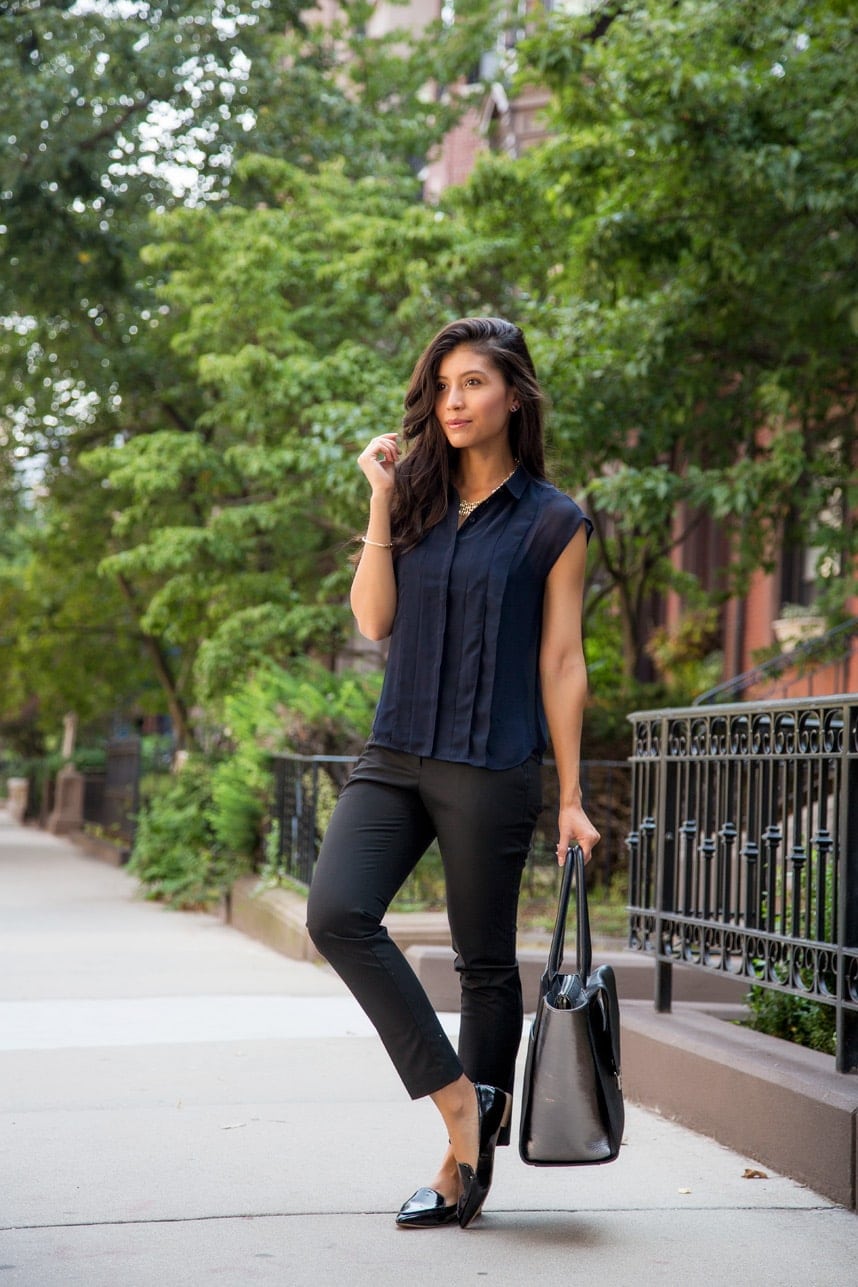
| Can I wear jeans? | Only if they are dark, well-fitted, and without rips. Some offices allow them, others do not. |
| Are sandals allowed? | Usually not. Closed-toe shoes are safer. |
| Is a dress business casual? | Yes, if it is knee-length or longer, and not too revealing. |
| Can I wear bright colors? | Neutral colors are safest, but some offices allow subtle bright shades. |
| Do I need a blazer? | Not always, but a blazer adds polish for meetings or interviews. |
Credit: stylishlyme.com
Frequently Asked Questions
What Is The Safest Outfit For Women’s Business Casual?
The safest option is tailored pants, a neutral blouse, and closed-toe shoes. Add a cardigan or blazer for extra polish. This works in most offices and industries.
How Do I Know If My Company Is Business Casual?
Observe what colleagues wear and check your company handbook or HR guidelines. If you’re unsure, start with a classic business casual look and adjust as needed.
Can I Wear Accessories With Business Casual?
Yes, but keep them simple. Small earrings, a watch, or a delicate necklace are best. Avoid large, flashy pieces.
Is Business Casual Different For Remote Work?
Remote work often allows more flexibility. Still, choose neat and professional tops for video meetings. Avoid pajamas or graphic tees.
Where Can I Find More Examples Of Business Casual Outfits?
Many fashion blogs and office style websites show business casual looks. You can also visit Britannica for detailed guidelines.
Final Thoughts
Women’s business casual is about finding the right mix of professional and comfortable. It changes depending on your workplace, industry, and location. The key is to look polished, feel confident, and adapt to your company’s culture. Avoid extremes—don’t dress too casual or too formal.
Build your wardrobe with quality basics, add layers and accessories, and always check your fit.
Remember, business casual is flexible. You can show your personality through color, pattern, or style, as long as you keep the overall look neat and professional. With these tips and examples, you’ll be ready for any business casual situation. Confidence and good judgment are just as important as the clothes you wear.
